




Iran has 10 days left to respond to conditions set by France, Britain and Germany to halt the reactivation of UN sanctions, after the European powers notified the Security Council on Aug. 28 of their plan to trigger the so-called “snapback” mechanism against Tehran.
The sanctions – suspended under the 2015 nuclear deal between Iran and six world powers – would automatically return in six packages covering finance, banking, oil, gas and defense. The process leaves Tehran little room to maneuver before the month-long deadline expires.
The European trio has demanded that Iran allow International Atomic Energy Agency (IAEA) inspectors to resume their work in the country, disclose the fate of about 440 kg of highly enriched uranium said to have gone missing after US and Israeli strikes in June, and engage in direct talks with Washington to reach a new nuclear agreement.
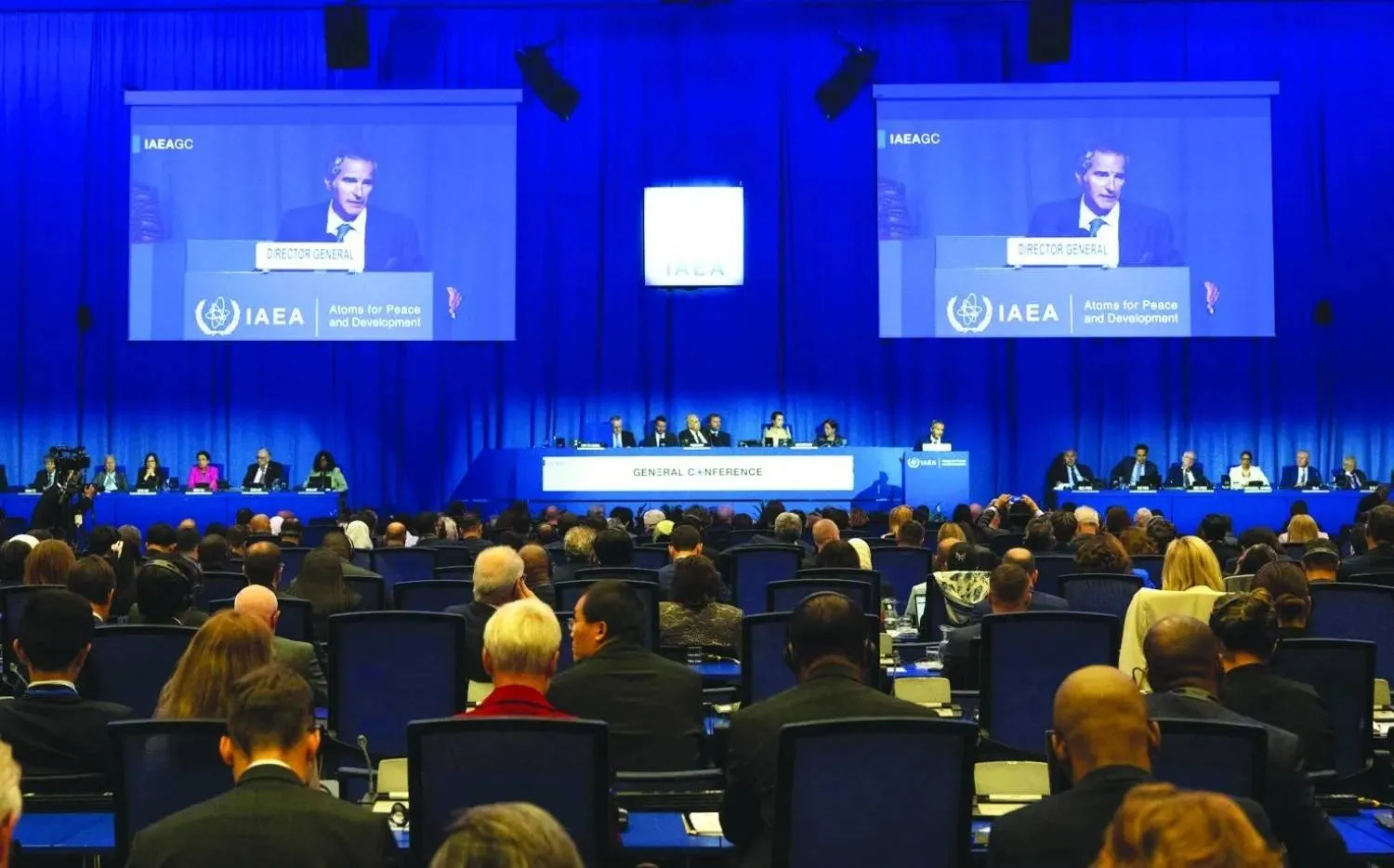
Iranian nuclear chief Mohammad Eslami addressed the IAEA’s annual conference in Vienna on Sept. 15, underscoring Tehran’s rejection of the European move, which it says lacks legitimacy after the United States quit the deal under President Donald Trump.
Tehran swiftly launched a diplomatic campaign with Russia and China to counter the European initiative. Moscow circulated a draft resolution, backed by Beijing, calling for an extension of UN resolution 2231 that endorsed the 2015 deal, while stripping the Europeans of the right to invoke snapback during the new grace period.
But diplomats said the draft was never tabled, fearing a Western veto or insufficient votes in the Council. By design, the snapback mechanism cannot be blocked by veto, making it largely automatic once triggered.
The European move has already rattled Iran’s economy, sending the rial tumbling, while reviving the prospect of the broad sanctions regime lifted a decade ago. A report by New York-based Soufan Center said the US and its allies view snapback as a way to keep Iran strategically weak and unable to rebuild its nuclear program damaged in recent Israeli and US strikes.
Iranian leaders, it added, see it as a Western bid to cripple the economy indefinitely, potentially fueling unrest that could threaten Iran’s survival.
Inside Iran, hardliners have urged a defiant response, including expelling IAEA inspectors, quitting the Nuclear Non-Proliferation Treaty (NPT), and pursuing nuclear weapons – steps reminiscent of North Korea.
But President Masoud Pezeshkian and Foreign Minister Abbas Araghchi have so far pursued a softer line, agreeing to conditional engagement with Europe. That led to a Sept. 9 agreement in Cairo between Araghchi and IAEA chief Rafael Grossi, brokered by Egypt, for inspectors to resume work in Iran.
The deal allows visits to all sites, including those hit in Israeli and US strikes during June’s 12-day war. Grossi said the new framework covered “all facilities and infrastructure in Iran” and required reporting of nuclear material at damaged sites.
European diplomats see the move as a partial concession by Tehran – fully meeting the first condition on inspections, and partly addressing the second on uranium stockpiles.
As a goodwill gesture, Araghchi also signaled that Tehran may soon release two French nationals held for three years on spying charges, a move aimed at softening Paris’ stance.
The most difficult demand remains the third: direct talks with Washington. With Israel warning of more military action and US officials calling for the dismantling of Iran’s uranium enrichment and plutonium reprocessing capacity, Iranian leaders face a dilemma.
“The key question is whether the Europeans will consider the concessions made so far sufficient to delay snapback,” one European diplomat in Paris said.
Attention is now turning to next week’s UN General Assembly in New York, where Pezeshkian and Araghchi are expected to attend. Araqchi told Iran’s IRNA news agency that several regional states – not only Qatar but also Oman – had offered to mediate with Washington, but insisted the issue was political will rather than who played go-between.
The US has meanwhile pressed Iran to act “swiftly and concretely” to honor its obligations, while the Europeans issued a Sept. 10 statement urging full compliance with safeguards and unrestricted inspections.
Western capitals remain wary. Energy Secretary Chris Wright told the IAEA meeting in Vienna on Monday that Washington’s goal was the “complete dismantling” of Iran’s path to a nuclear weapon. At the same time, he voiced hope that dialogue could resume.
Iran, for its part, renewed calls for security guarantees against further military strikes and reiterated its right to peaceful nuclear energy.
For now, the standoff could swing between cautious engagement, temporary freezes, or a sharp escalation if the snapback takes effect. Whether Europe will blink before the deadline – and on what terms – remains the central question.


