
Iranian President Masoud Pezeshkian has said that the world has moved beyond unipolar dominance, citing deepening cooperation between Iran and Russia as evidence of a shifting global order.
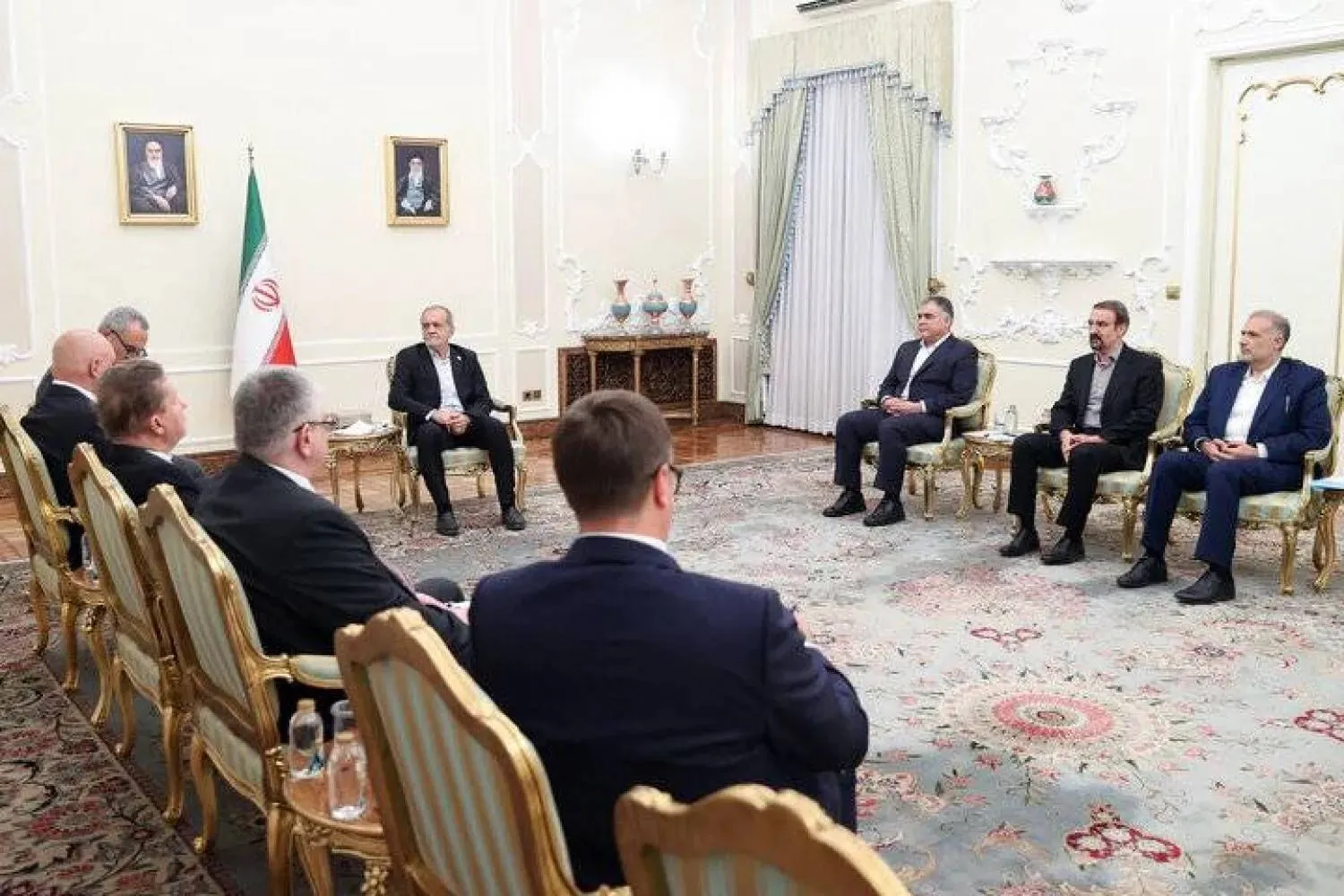
Speaking in Tehran while hosting Russian Energy Minister Sergei Tsivilev and his delegation, Pezeshkian said Thursday: “The successful model of cooperation between independent countries such as Iran and Russia proves that the era of unipolarity is over. These nations are capable of achieving growth and progress without reliance on hegemonic powers.”
According to the Mehr News Agency, Pezeshkian expressed satisfaction with the trajectory of bilateral cooperation, particularly in transport, energy, and power station projects. He stressed that implementing agreements with Moscow remains a top priority for Tehran. “All the infrastructure necessary for cooperation exists, and there are no obstacles to our partnership,” he said.
The Iranian president urged both governments to accelerate the translation of technical discussions into action, highlighting the determination of both sides and the “serious commitment” of Russian President Vladimir Putin.
For his part, Tsivilev conveyed Putin’s greetings to Pezeshkian and presented a report on his meetings in Iran. He affirmed that constructive cooperation under the Joint Economic Committee continues on a regular basis, with officials from both sides working closely to fast-track agreements.
“Russia is ready to implement bilateral agreements swiftly,” Tsivilev said, stressing that no sanctions or external pressures could derail the economic and trade partnership between Moscow and Tehran.
The Russian minister also met with Iranian Chief of Staff of the Armed Forces Major General Abdolrahim Mousavi who said: “Iran has shown the world it has never initiated war with Israel or the United States. Diplomacy and dialogue remain our preferred means of resolving disputes.”
Tsivilev echoed the importance of expanding defense and economic collaboration, calling for committees to intensify efforts aimed at raising cooperation to “the highest levels.”
Russian energy giant Gazprom confirmed that discussions in Tehran included extensive talks on energy cooperation, especially in natural gas.
In June 2024, Gazprom signed a strategic memorandum of understanding with Iran’s National Gas Company to establish a framework for Russian gas supplies to Iran.
Following a recent meeting of the Iran-Russia Joint Economic Committee in Moscow, Iranian Oil Minister Mohsen Paknejad revealed that the two countries agreed on the transfer of 55 billion cubic meters of gas annually, equivalent to about 150-151 million cubic meters per day.
He explained that various routes were considered, but both sides settled on a land pipeline through Azerbaijan, with deliveries to begin at the border town of Astara. A second phase of the project is under review.
Tsivilev confirmed that Moscow and Tehran had reached an understanding on the pipeline route through Azerbaijan and that negotiations were in their final stage to determine pricing.