
Italy Deploys Navy Ship to Help Gaza Aid Flotilla After Drone Attack

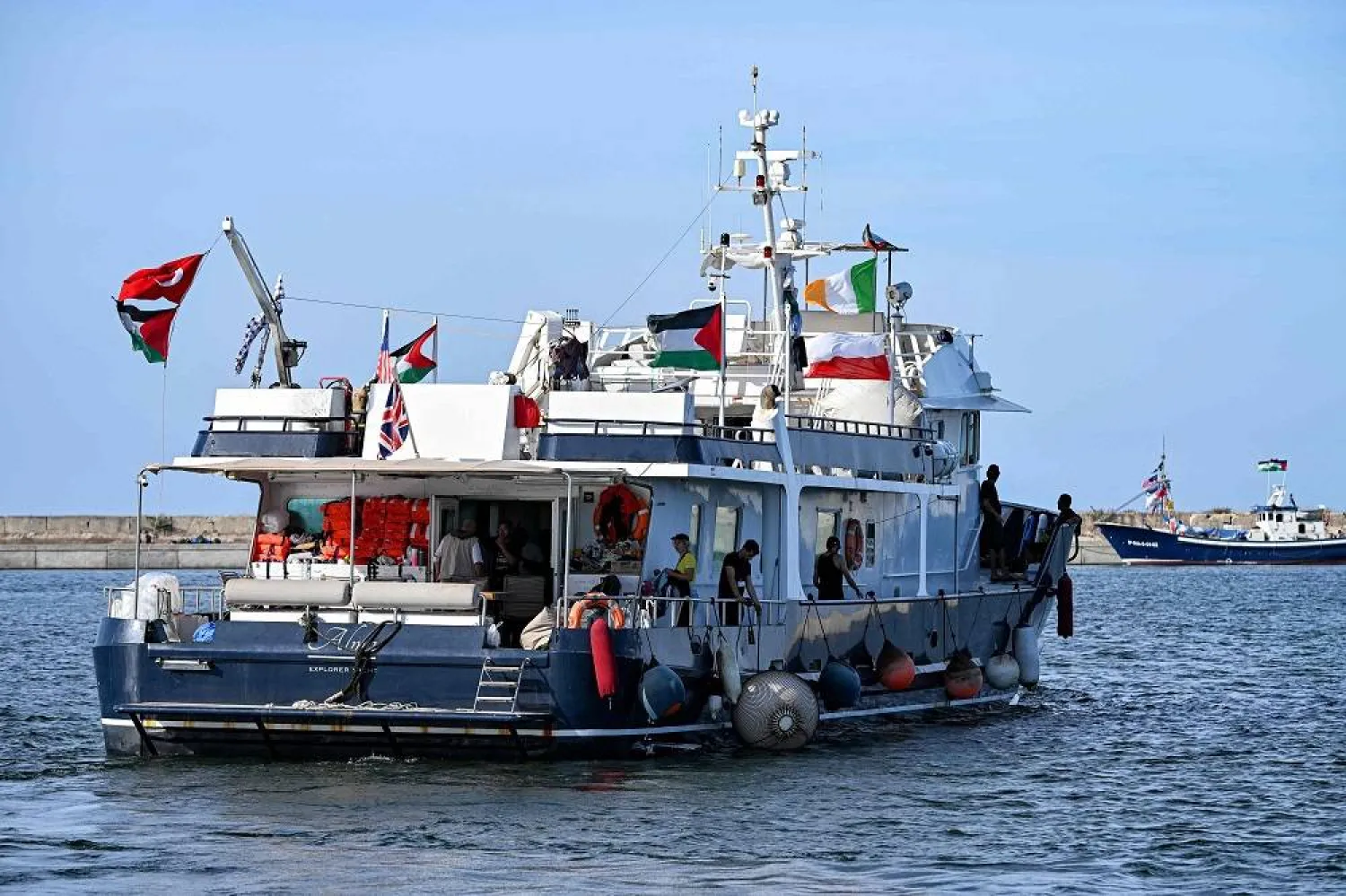
Activists and human rights defenders ride aboard the yacht Alma, departing from Tunisia's northern port of Bizerte, on September 14, 2025 to join the last boats taking part in the Global Sumud Flotilla, bound for the Gaza Strip to break Israel's blockade on the Palestinian territory. (AFP)
TT

Italy Deploys Navy Ship to Help Gaza Aid Flotilla After Drone Attack

Activists and human rights defenders ride aboard the yacht Alma, departing from Tunisia's northern port of Bizerte, on September 14, 2025 to join the last boats taking part in the Global Sumud Flotilla, bound for the Gaza Strip to break Israel's blockade on the Palestinian territory. (AFP)

An international aid flotilla trying to deliver aid to Gaza said on Wednesday it was attacked overnight by drones in international waters off Greece, prompting Italy to send a navy ship to come to its assistance. The Global Sumud Flotilla is using about 50 civilian boats to try and break Israel's naval blockade of Gaza, with many lawyers and activists onboard, including Swedish climate campaigner Greta Thunberg. 

The vessels were attacked by 12 drones in international waters 30 nautical miles (56 km) off the Greek island of Gavdos, said Marikaiti Stasinou, a spokesperson for March to Gaza Greece, which is part of the flotilla. 

All passengers are safe after drones exploded over the vessels, she told Reuters. 

GSF said the attack affected 11 vessels and blamed Israel and its allies for "explosions, unidentified drones and communications jamming," saying it would not be intimidated and would continue to sail. 

ITALIAN NAVY SHIP MOBILIZED 

Italian Defense Minister Guido Crosetto said in a statement the sea convoy had been targeted by "currently unidentified perpetrators". He expressed the "strongest condemnation" of the incident. 

He ordered the Italian multi-purpose frigate Fasan, previously sailing north of Crete, to head towards the flotilla "for possible rescue operations", focusing primarily on Italian citizens. 

The GSF called on other nations to "ensure and facilitate effective protection, including (with) maritime escort, accredited diplomatic observers, and an overt protective State presence. Italy has now taken a first step in this direction." 

Israel has repeatedly criticized the flotilla, accusing its activists of complicity with the Hamas group. 

On Wednesday, the foreign ministry repeated an invitation for the flotilla to drop humanitarian aid in an Israeli port, leaving it to Israeli authorities to take it to Gaza, or else face consequences. 

"Israel will not allow vessels to enter an active combat zone and will not allow any breach of the lawful naval blockade," a ministry statement said. 

It made no comment on whether it was responsible for the drones. 

Earlier this month, the flotilla blamed Israel for other drone strikes on its boats while they were moored in a Tunisian port. Israel did not respond to those accusations. 

STUN GRENADES AND ABBA MUSIC 

The drones came in the middle of the night dropping stun grenades and itching powder, damaging the sails of some boats, according to two leftist Italian members of the European Parliament aboard the flotilla. 

Before the attack, onboard radios started playing "very loud ABBA music," Annalisa Corrado of the Democratic Party said in a video message. "We thought it was a joke, but no, it was the first act of intimidation, to tell us they were close enough to get into our radio systems." 

The attack lasted around three hours until 4 am local time (0100 GMT), Benedetta Scuderi of the Greens-European Free Alliance group told Italian public radio RAI. 

A Greek coastguard official told Reuters that members of the flotilla contacted them around 2 am (2300 GMT) to inform them of the incident. When approached by the European Union's border agency Frontex, however, the flotilla said it did not require assistance, the official added. 

EU SOLIDARITY 

In Brussels, a European Commission spokeswoman said "any use of force against the flotilla is not acceptable", adding that "we totally understand" the activists' desire to raise awareness about the situation in Gaza.  

Israel launched the nearly two-year war in Gaza in response to the October 7, 2023 attacks on the country by Hamas which killed some 1,200 people and saw 251 taken hostage, according to Israeli tallies. 

Since then, the conflict has killed more than 65,000 Palestinians, according to Gaza health authorities, and has spread famine, destroyed most buildings, and displaced the population, in many cases multiple times. 


Australia Bans Visitors from Iran

Commuters walk past Wynyard Station in Sydney, Australia, March 25, 2026. REUTERS/Hollie Adams
TT

Australia Bans Visitors from Iran

Commuters walk past Wynyard Station in Sydney, Australia, March 25, 2026. REUTERS/Hollie Adams

Australia banned visitors from Iran on Thursday, saying war in the Middle East increased the risk they would refuse to fly home once their short-term visas expired.

For the next six months people travelling on Iranian passports will be barred from visiting Australia for tourism or work, the Home Affairs department said.

"The conflict in Iran has increased the risk that some temporary visa holders may be unable or unlikely to depart Australia when their visas expire," it said in a statement.

Some exceptions would be made on a case-by-case basis, the department added, such as for the parents of Australian citizens.

"There are many visitor visas which were issued before the conflict in Iran which may not have been issued if they were applied for now," Home Affairs Minister Tony Burke said.

"Decisions about permanent stays in Australia should be deliberate decisions of the government, not a random consequence of who booked a holiday."

More than 85,000 Australian residents were born in Iran, according to government figures, with vibrant diaspora communities found in major cities such as Sydney and Melbourne.

Australia angered Iran this month when it granted asylum to seven players and officials from the visiting women's football team.

The players were branded "traitors" at home after refusing to sing the national anthem before an Asian Cup match -- a gesture seen as an act of defiance against the Iranian republic.

Five of those seven later reversed their decisions to seek sanctuary in Australia, fueling suspicions their families had come under threat.


Iran and the US Harden their Positions as Tehran Keeps Its Grip on the Strait of Hormuz

FILE - A thick plume of smoke rises from an oil storage facility hit by a US-Israeli strike in Tehran, Iran, March 8, 2026. (AP Photo/Vahid Salemi, File)
TT

Iran and the US Harden their Positions as Tehran Keeps Its Grip on the Strait of Hormuz

FILE - A thick plume of smoke rises from an oil storage facility hit by a US-Israeli strike in Tehran, Iran, March 8, 2026. (AP Photo/Vahid Salemi, File)

Iran and the United States hardened their positions as diplomacy aimed at reaching a ceasefire in the war in the Middle East appeared to be faltering on Thursday. Tehran moved to formalize its control over the crucial Strait of Hormuz while Washington prepared for the arrival of US combat forces in the region that could be used on the ground in the Iranian Republic.

Iran is instituting a “de facto ‘toll booth’ regime,” industry experts say, with some ships paying in Chinese yuan to pass through the strait, where 20% of all traded oil and natural gas is transported in peacetime.

Meanwhile, a strike group anchored by the amphibious assault ship USS Tripoli drew closer to the Mideast with some 2,500 Marines. Also, at least 1,000 paratroopers from the 82nd Airborne have been ordered to the region, The Associated Press said.

The troop movements don’t guarantee US President Donald Trump will try to use force to compel Iran to open the strait and halt its attacks on Gulf Arab states.

Trump previously deployed a large force in the Caribbean before the American military captured former Venezuelan leader Nicolás Maduro in January. In the current situation, the US is seen as focused on possibly seizing Iran’s oil terminal at Kharg Island or other sites near the strait.

US Navy Adm. Brad Cooper, who commands the American military in the region, said his forces have hit more than 10,000 targets since Israel and the US started the war Feb. 28, destroying 92% of Iran's largest ships and more than two-thirds of the country's missile, drone and naval production facilities.

“We’re not done yet,” said Cooper, who heads the US Central Command, in a video message. “We are on a path to completely eliminate Iran’s wider military apparatus.”

Iran seen as operating Strait of Hormuz as ‘de facto toll booth’

With its stranglehold on traffic through the Strait of Hormuz, which leads from the Arabian Gulf toward the open ocean, Iran has been blocking ships it perceives as linked to the US and Israeli war effort, but letting through a trickle of others.

The Fars and Tasnim news agencies, both close to Iran’s paramilitary Revolutionary Guard, quoted lawmaker Mohammadreza Rezaei Kouchi as saying that parliament was working to formalize the process of charging fees to let ships pass.

“We provide its security, and it is natural that ships and oil tankers should pay such fees,” he was quoted as saying.

Lloyd’s List Intelligence called it a “de facto ‘toll booth’ regime.”

The shipping intelligence firm said vessels have to provide manifests, crew details and their destination to Iran’s Guard for sanctions screening, cargo alignment checks that currently prioritizes oil over all other commodities, and for what is described as ‘geopolitical vetting.’”

“While not all ships are paying a direct toll, at least two vessels have and the payment is settled in yuan,” Lloyd’s List said, referring to China’s currency.

Iran's grip on the strait and relentless attacks on Gulf regional energy infrastructure has sent oil prices skyrocketing and concerns of a global energy crisis surging. Brent crude, the international standard, traded at US$104 early Thursday, up more than 40% from the day the war started.

“To make it crystal clear, this war is a catastrophe for world's economies,” German Defense Minister Boris Pistorius told reporters during a visit to Australia.

US maintains negotiations are ongoing but Iran says there are no talks

Using Pakistan as an intermediary, Washington has delivered to Iran a 15-point ceasefire proposal, which includes the reopening of the Strait of Hormuz.

Trump, speaking at a fundraiser Wednesday night in Washington, insisted that Iran still wants to cut a deal.

“They are negotiating, by the way, and they want to make a deal so badly, but they’re afraid to say it because they figure they’ll be killed by their own people,” Trump said.

Iran’s Foreign Minister Abbas Araghchi said in an interview on state TV, however, that his government has not engaged in talks to end the war, “and we do not plan on any negotiations.”

Araghchi said the US had tried to send messages to Iran through other nations, “but that is not a conversation nor a negotiation.”

Press TV, the English-language broadcaster on Iranian state television, said Iran has its own five-point proposal, which includes “sovereignty over the Strait of Hormuz.”

A wave of Israeli airstrikes hits as Iran fires on Gulf neighbors

Israel said it carried out a wave of attacks early on Thursday targeting Iranian infrastructure, and air defenses were heard in Tehran, while heavy strikes were also reported around Isfahan, a city some 330 kilometers (205 miles) south of the Iranian capital.

Ifahan is home to a major Iranian air base and other military sites, as well as one of the nuclear sites bombed by the US during the 12-day war between Israel and Iran in June.

Sirens sounded very early on Thursday morning in parts of Tel Aviv and cities in central Israel. Rescue workers said two people were injured in a blast in Kfar Qasim.

Saudi Arabia's Defense Ministry said it intercepted multiple drones over its oil-rich Eastern Province, the United Arab Emirates' air defenses also worked to intercept incoming fire, and Bahrain reported extinguishing a blaze in a neighborhood that is home to the Bahrain International Airport.

Since the war began, more than 1,500 people have been killed in Iran, its Health Ministry says. Twenty people have been killed in Israel; two Israeli soldiers have also been killed in Lebanon. At least 13 US military members have been killed. More than a dozen civilians in the occupied West Bank and Gulf Arab states have also died.

Nearly 1,100 people have died in Lebanon, authorities said. In Iraq, where Iranian-supported militant groups have entered the conflict, 80 members of the security forces have been killed.


Pentagon Reaches Deals with Defense Firms to Expand Munitions Production

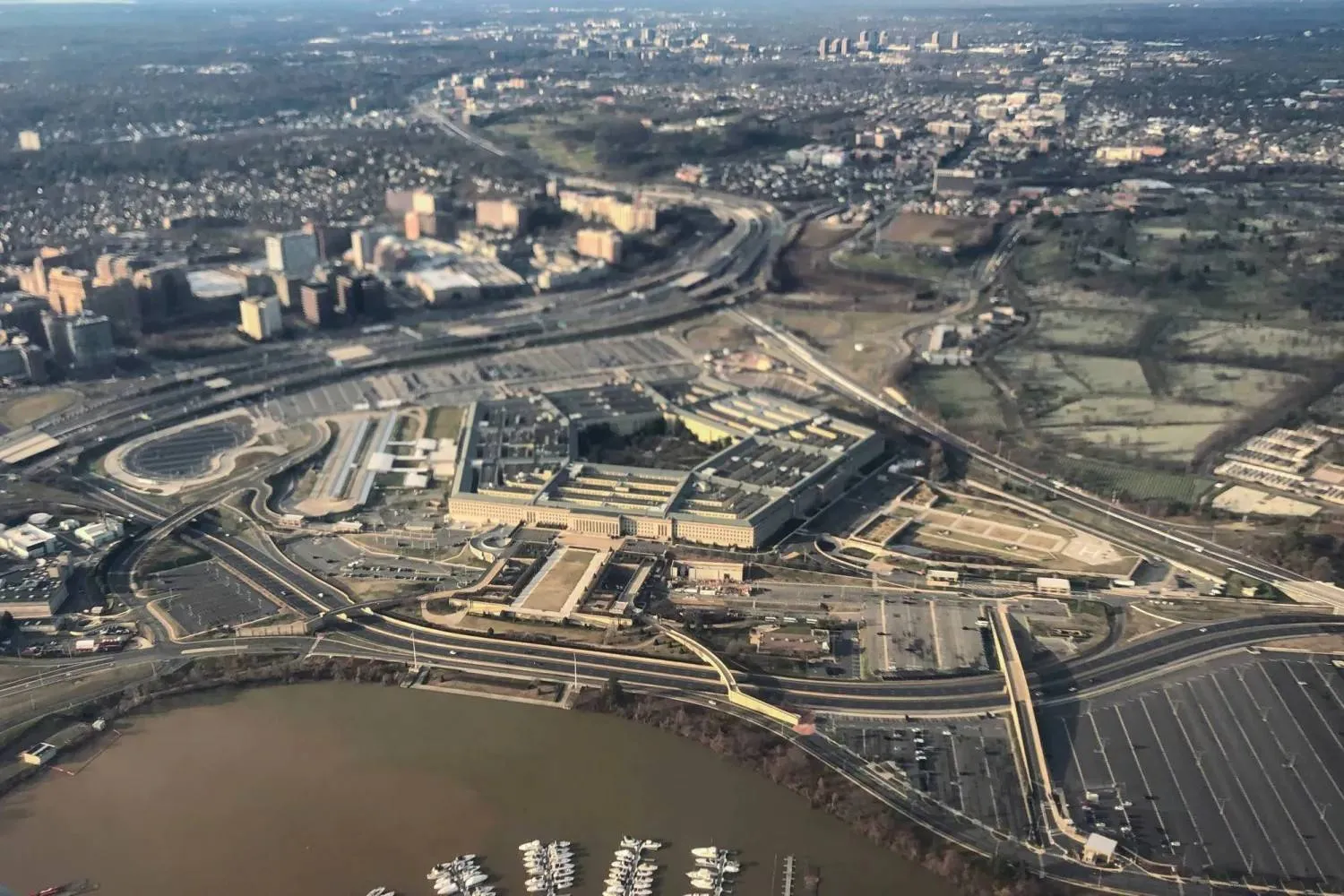
A general view of the Pentagon in Washington, DC (AP) 
TT

Pentagon Reaches Deals with Defense Firms to Expand Munitions Production

A general view of the Pentagon in Washington, DC (AP) 

The Pentagon said on Wednesday it had reached framework agreements with BAE Systems, Lockheed and Honeywell to boost production of defense systems munitions as part of a push to put the US military on a “wartime footing.”

The ‌announcements come more than three weeks after US President Donald Trump and Israel launched a war on Iran. They also follow Trump's meeting earlier this month with executives from seven defense contractors as the Pentagon sought to replenish weapons stocks depleted by US strikes on Iran and other recent military operations.

The Pentagon also plans to send thousands of airborne troops to ⁠the Gulf to give Trump more options to order a ground assault, Reuters reported on Tuesday.

Under the agreements, Honeywell Aerospace will “surge production of critical components for America's munitions stockpile,” as part of a $500 million multi-year investment, the Pentagon said.

BAE Systems and Lockheed Martin will also quadruple production of seekers for the Terminal High Altitude Area Defense (THAAD) interceptor, while a new framework agreement with Lockheed will accelerate production of its Precision Strike Missile, the Pentagon added.

Honeywell said the agreement would support increased output of navigation systems, missile steering actuators and electronic warfare products used ‌across ⁠US military platforms.

Honeywell Aerospace CEO Jim Currier said the company was ready to help meet the urgent demand.

Lockheed Martin CEO Jim Taiclet also said the company was “working closely with the Department of War and the US Army to scale production to meet operational demand.”

Trump in January signed an executive order directing ⁠officials to identify contractors deemed to be underperforming on government contracts while continuing to return profits to shareholders. His administration has also stepped up pressure on defense companies to prioritize production over shareholder payouts.

“We discussed ⁠production and production schedules,” Trump said of the earlier meeting, which included executives from Lockheed Martin, RTX, BAE Systems, Boeing, Honeywell Aerospace, L3Harris Technologies and Northrop Grumman.

The United States has drawn ⁠down billions of dollars worth of weapons from its stockpiles since Russia invaded Ukraine in 2022, and during Israel's military operations in Gaza, including artillery systems, ammunition and anti-tank missiles.