



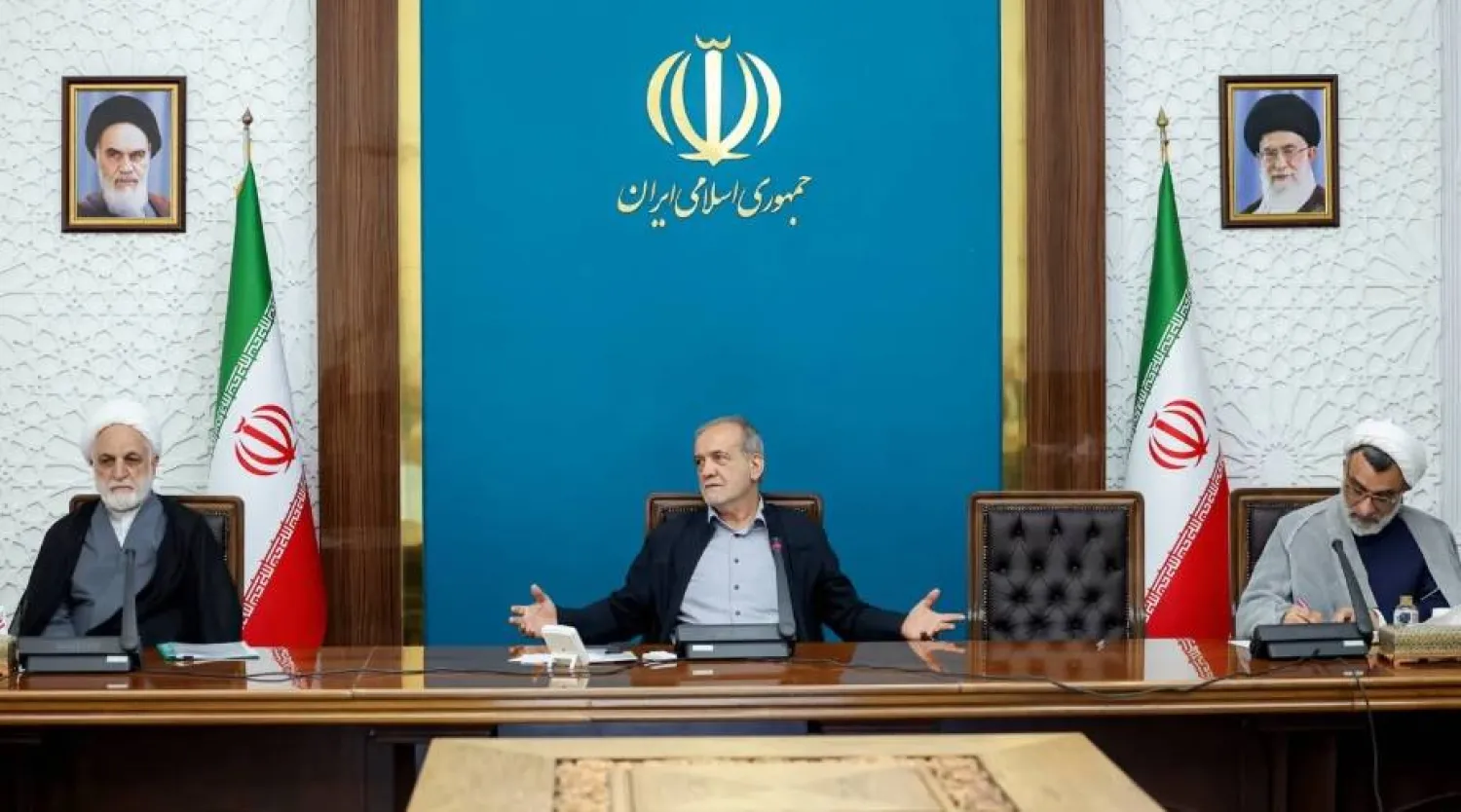

Iranian President Masoud Pezeshkian said on Tuesday the United States “does not have the will” to resolve Iran's nuclear issue through negotiations and “just reason.”
Meanwhile, Foreign Minister Abbas Araghchi said excessive demands by the United States, backed by European countries, prevented reaching an agreement during nuclear talks.
In a meeting with the Supreme Council of the Cultural Revolution on Tuesday, Pezeshkian said “the illegal and irrational behavior of US officials confirms that Washington is not willing to reach a nuclear deal with Tehran.”
The President said his recent visit to New York, where he participated in the 80th session of the United Nations General Assembly, “formed an important opportunity to review Iran's unwavering positions.”
“This visit was an opportunity to present the firm positions of the Iranian people, and to expose the crimes committed by the Zionist entity against the Palestinian people in Gaza, amid the silence and negligence of international organizations and some governments,” Pezeshkian said.
He noted that the US “refused to engage with Iran’s constructive proposals for a nuclear deal, and sought to use the snapback mechanism to put more pressure on the Iranian people and foment discontent inside Iran.”
For his part, Araghchi said that during his visit to New York last month, messages were exchanged with Washington both “directly and indirectly,” but the outcome reinforced Iran’s conviction that talks with the US lead nowhere.
“As the Leader said, negotiations with the Americans are an absolute dead end. This was once again shown in this process,” he affirmed.
The FM said he also discussed Iran’s positions with UN Secretary-General Antonio Guterres, noting that “from now on, Iran will have a legal challenge at the Security Council and the UN.”
In his comments, Araghchi downplayed the impact of the snapback sanctions. “They thought the monster they created from snapback mechanism would frighten us so much that we would be ready to give any concession. Certainly, that is not the case,” he said.
The FM added that Iran had previously lived under similar resolutions and would endure again if necessary.
Sweeping UN economic and military sanctions have been reimposed on Iran, 10 years after they were lifted in a deal over its nuclear program.
The new measures took effect after the UK, France and Germany activated the so-called ‘snapback mechanism,’ accusing Iran of continued nuclear escalation and lack of co-operation.


