




Tehran stressed on Monday that recent Security Council resolutions on the re-imposition of UN sanctions against Iran create “no legal obligation for other UN member states to implement.”
Iran’s Foreign Ministry spokesperson, Esmaeil Baqaei, sharply criticized France, Germany and Britain for activating the ‘Snapback Mechanism,” which restores the provisions of six UN Security Council resolutions passed between 2006 and 2010.
Baqaei described the E3 move as “illegal, obstinate, and carried out at Washington’s request.”
“The European action creates no legal obligation for other countries,” said the spokesperson.
At a press conference in Tehran, Baqaei said the provisions of Resolution 2231 should have expired on its scheduled date of October 18, and that the Iranian nuclear file should have been removed from the agenda of the Security Council.
Baqaei said, “Iran will use every diplomatic instrument available to defend its rights and counter this unlawful action.”
Responding to US President Donald Trump’s remarks at the 80th session of the United Nations General Assembly about Iran’s nuclear rollback, Baqaei said: “Repeating these allegations does not change reality; Iran’s nuclear program has always been peaceful, and the attacks by the US and the Israeli regime are criminal acts in violation of international law.”
No Plans for Future Talks
Baqaei said the Iranian delegation in New York made every effort to stop the illegal move by the three European countries.
He added that while Iran made every reasonable effort toward a logical solution, “the other sides either lacked the will or the ability to reach one.”
A proposal was made to hold joint meetings with the participation of a US representative to prevent the snapback mechanism, Baqaei said, adding that “Iran had no objection to this proposal and expressed its readiness to demonstrate goodwill, but the other parties declined to attend.”
At present, the spokesperson noted, “we have no plans for negotiations with Europe. Our focus is on assessing the implications and consequences of the Western illegal actions.”
He added that Iran will use every diplomatic instrument available to defend its rights and counter this unlawful action.
Responding to a question about mediation efforts by certain countries to resume talks between Iran and the US, the Iranian FM spokesperson said: “Iran appreciates these initiatives. However, the reality is that the challenges between Iran and the US have largely arisen from Washington’s miscalculations and excessive demands.”
Baqaei said that during negotiations, the other side insisted that Iran’s enriched materials be transferred abroad, while their only proposal in return was to delay, for three to six months, the rei-imposition of UN sanctions.
“Such a proposal reflects the peak of their misjudgment about Iran and their lack of understanding of Iran’s legitimate and rational positions,” he said.
Baqaei then called on all countries — particularly neighbors and friends — to refrain from implementing or giving effect to the UN sanctions, which he said are “unlawful and lack a legitimate Security Council foundation.”
Reacting to Türkiye’s move to implement the provisions of UN Security Council resolutions against Iran, he said: “This action is unnecessary and illegal, as the basis claimed by the three European countries to reinstate the terminated Security Council resolutions is entirely devoid of legal validity.”
Cooperation with IAEA
When asked about the Cairo understanding between Iran and the International Atomic Energy Agency (IAEA), Baqaei said, “Should any hostile action be taken against Iran — including activation of the snapback mechanism — the Cairo understanding would become inapplicable. We are now precisely at that stage, and the responsibility lies with the three European countries.”
He added: “The final decision regarding the future of Iran–IAEA relations must be made by higher authorities, including the Supreme National Security Council.”
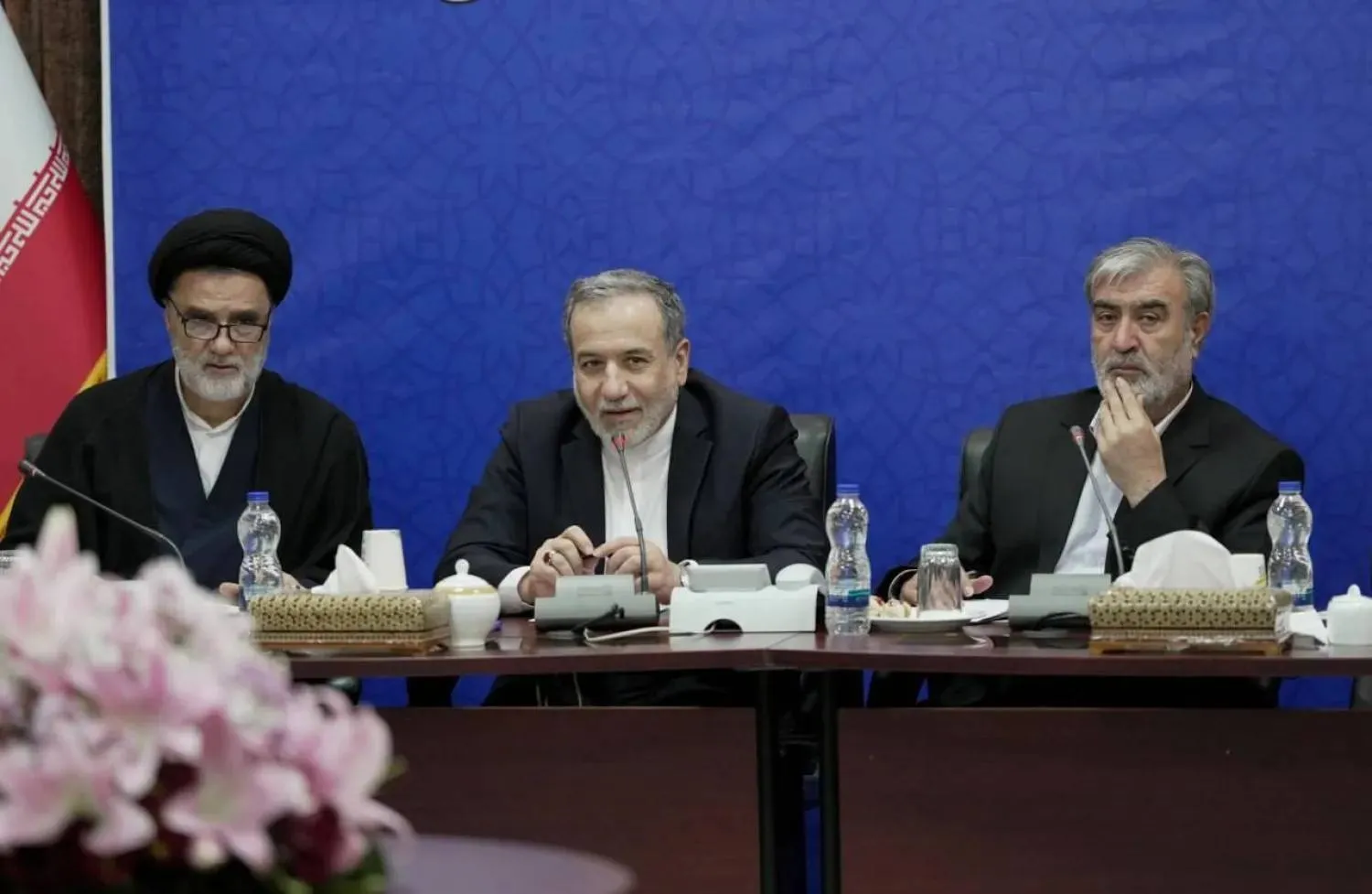
On Monday, Iranian Foreign Minister Abbas Araghchi met with members of Parliament’s National Security and Foreign Policy Committee and briefed the lawmakers on Iranian President Masoud Pezeshkian’s recent visit to New York during which he attended the 80th session of the United Nations General Assembly (UNGA).


