



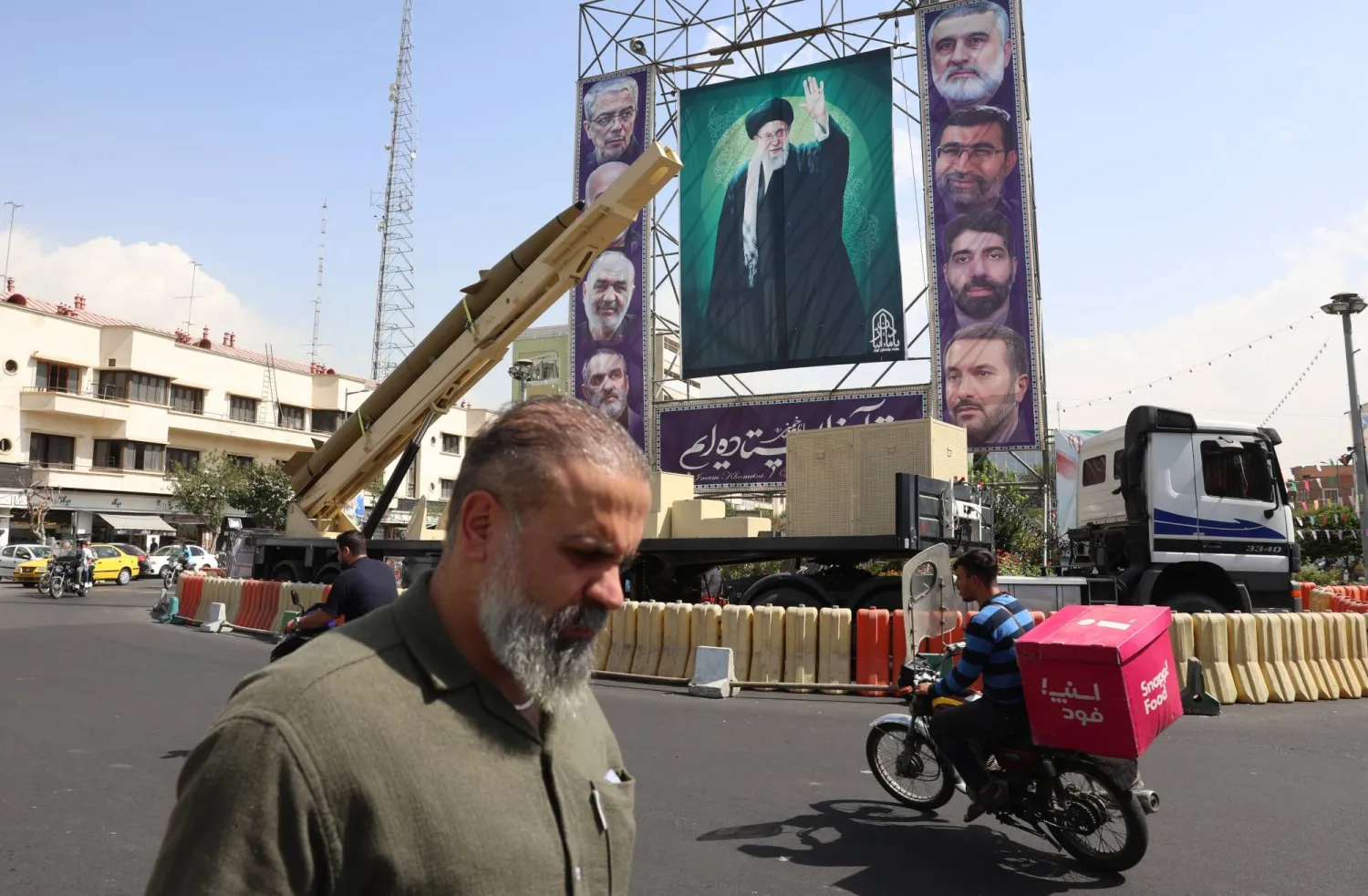

The commander of the Iranian Revolutionary Guards Corps' Aerospace Force said on Tuesday that Iranian forces were ready to respond to any fresh attack amid warnings of renewed conflict between Iran and Israel.
“We are in full readiness to decisively and swiftly counter any enemy threat or adventure,” Mousavi said, according to Iranian media outlets.
He pointed out that the Aerospace Force had managed to repair the damage from the 12-day war in June with Israel. Mousavi survived an Israeli strike that targeted leaders of the Force, including his predecessor, Amir Ali Hajizadeh, who was killed.
Last week, senior Iranian commander Mohammad Jafar Asadi announced plans to extend the range of Iran’s ballistic missiles beyond the current 2,000-kilometer limit, arguing that missile power had already shortened Israel’s June war to 12 days.
For his part, IRGC official Major General Mohsen Rezaei, who is also a member of Iran's Expediency Discernment Council, denounced recent foreign demands that Iran restrict its missile capabilities to ranges below 400 kilometers, calling such limits unacceptable infringements on national defense.
In February, Supreme Leader Ali Khamenei, stated: "Suppose one day we set a certain limit for ourselves regarding missile accuracy, for example. Now we feel that this limit is not sufficient, it is not enough!"
Israeli Prime Minister Benjamin Netanyahu was quoted as saying on Tuesday that Iran was developing intercontinental ballistic missiles with a range of about 8,000 kilometers, warning that Tehran’s expanding weapons program could threaten major American cities.
Russian President Vladimir Putin and Netanyahu discussed the situation in the Middle East, including US President Donald Trump’s plan to end the Gaza conflict, in a phone call, the Kremlin said Monday.
Putin and Netanyahu also expressed interest in finding negotiated solutions to the Iranian nuclear program and to stabilize the situation in Syria, it added.
The conversation came after Newsweek reported that Iran may be preparing to acquire dozens of Sukhoi Su-35 fighter jets in a landmark deal with Moscow.
Iran likely carried out an undeclared missile test in mid-September.
Lawmaker Mohsen Zanganeh told Iranian television back then that “two nights ago we tested one of the most advanced missiles in the country, which had not been tested until now, and it succeeded.”
"Even under these circumstances, we are conducting a security test with an intercontinental missile," he added.


