


Russia Says No EU Asset Seizure if Russian Assets are Spared Confiscation

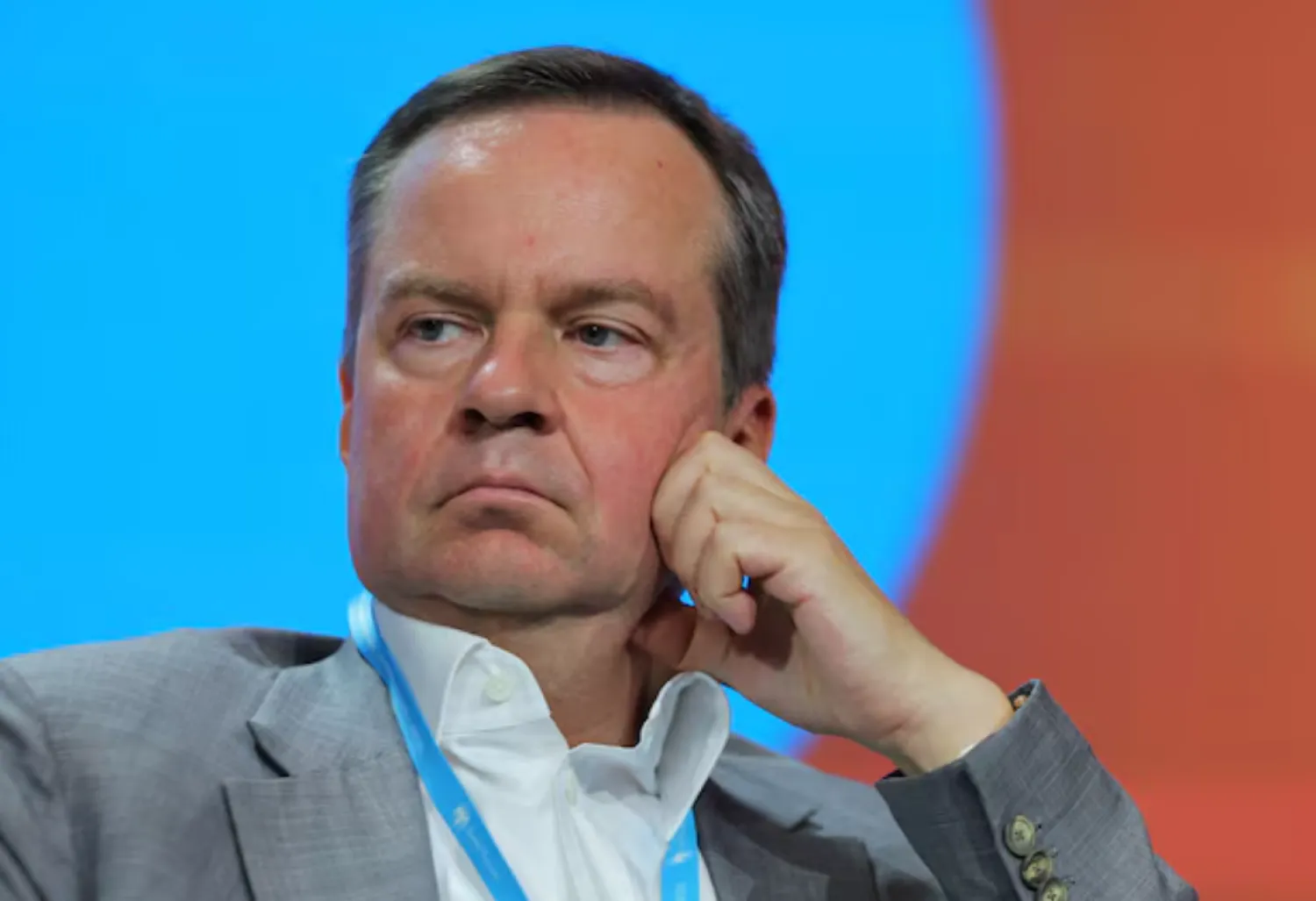
Russian Deputy Finance Minister Alexei Moiseev attends a session of the conference "10 years of the Megaregulator: yesterday, today, tomorrow" in Moscow, Russia September 1, 2023. REUTERS/Evgenia Novozhenina P
TT

Russia Says No EU Asset Seizure if Russian Assets are Spared Confiscation

Russian Deputy Finance Minister Alexei Moiseev attends a session of the conference "10 years of the Megaregulator: yesterday, today, tomorrow" in Moscow, Russia September 1, 2023. REUTERS/Evgenia Novozhenina P

Russia has no plans to seize any European assets, including companies and banks, but will consider its position if the European Union confiscates frozen Russian sovereign assets, a senior Finance Ministry official said on Wednesday.

As much as $250 billion worth of Russian assets have been frozen in the EU since the US and its allies prohibited transactions with Russia's central bank and finance ministry after Moscow sent forces into Ukraine in February 2022, Reuters reported.

EU leaders are discussing ways to use the frozen assets to finance Ukraine's defense and reconstruction without directly confiscating them due to legal issues and amid concerns about such a course of action voiced by the European Central Bank and some EU member states.

Russian Deputy Finance Minister Alexei Moiseev noted Europe had so far avoided outright confiscation of the frozen assets and said Moscow would do the same unless the EU changed course.

"We are not confiscating anything yet. The Europeans haven't called for confiscation, so we won't confiscate anything until they do. If they do end up confiscating, then we will consider it," he told reporters on the sidelines of a conference.

Moiseev also said that a recent presidential decree on the accelerated privatisation of state-held assets was in no way linked to plans to seize European assets.

In the decree, President Vladimir Putin appointed PSB, a bank which serves the military-industrial complex and is under Western sanctions, as the government's agent in state property sales.

The decree also introduced an accelerated sale mechanism, requiring mandatory valuation of an asset within 10 days after a contract for such a valuation is signed, along with faster property rights registration.

The decree text said the measures were a response to "unfriendly" actions by the US and its allies. That prompted speculation that it was designed to help Russia swiftly retaliate if its frozen assets were seized.

But Moiseev said that private European companies and banks that are still operating in Russia had not been seized by the state, and were therefore not subject to the new decree on privatisation.

"Forget about European assets (in relation to the decree). No one is considering or discussing these issues," Moiseev said, arguing that the real purpose of the decree was to create another channel for property sales.

Authorities have seized assets worth around $50 billion since the start of what Moscow calls its "special military operation" in Ukraine, including the assets of fleeing Western companies.

Major domestic companies have also changed hands on the basis of corruption claims, alleged privatisation violations, or due to poor management.

The nationalisations have marked the biggest property redistribution since the 1990s, when Soviet state assets were sold off to private investors at bargain prices.

Russian government officials pledged to find new private owners for seized assets quickly. "There are many assets and they need to be sold quickly," said Moiseev.



Kremlin Says Russia Is Toughening Its Stance on Ukraine After Drone Attack

Russian President Vladimir Putin (R) chairs a meeting to discuss Russia's "special military operation" in Ukraine, as Defense Minister Andrei Belousov (2-R) sits nearby, at the Kremlin in Moscow, Russia, 29 December 2025. (EPA/Mikhail Metzel/Sputnik/Kremlin Pool)
TT

Kremlin Says Russia Is Toughening Its Stance on Ukraine After Drone Attack

Russian President Vladimir Putin (R) chairs a meeting to discuss Russia's "special military operation" in Ukraine, as Defense Minister Andrei Belousov (2-R) sits nearby, at the Kremlin in Moscow, Russia, 29 December 2025. (EPA/Mikhail Metzel/Sputnik/Kremlin Pool)

The Kremlin said on Tuesday that a Ukrainian drone attack on a presidential residence in ​the Novgorod region would toughen Russia's position on a possible peace deal to end the fighting.

Ukrainian President Volodymyr Zelenskiy has dismissed the Russian accusations as "another round of lies" aimed to justify additional attacks against Ukraine and to ‌prolong the ‌war.

Kremlin spokesman Dmitry Peskov ‌noted ⁠Ukraine's ​denial of ‌the drone attack - and said that many Western media were playing along with Kyiv's denial.

"This terrorist action is aimed at collapsing the negotiation process," Peskov told reporters. "The diplomatic consequence will be to toughen ⁠the negotiating position of the Russian Federation."

The Russian military, ‌he said, knew how ‍and when ‍to respond.

"We see that Zelenskiy himself is ‍trying to deny this, and many Western media outlets, playing along with the Kyiv regime, are starting to spread the theme that ​this did not happen," Peskov said. "This is a completely insane assertion."

Peskov declined ⁠to say where Putin was at the time of the attack, saying that in light of recent events such details should not be in the public domain.

When asked if Russia had physical evidence of the drone attack, he said air defenses shot the drones down but that the question of wreckage ‌was for the defense ministry.


Russia Urges Restraint as Trump Warns Iran of Possible Strike

Iranians drive past an anti-Israeli billboard carrying a sentence in Persian reading "We are ready, are you ready?" hanging at Palestine Square in Tehran, Iran, 24 December 2025. (EPA)
TT

Russia Urges Restraint as Trump Warns Iran of Possible Strike

Iranians drive past an anti-Israeli billboard carrying a sentence in Persian reading "We are ready, are you ready?" hanging at Palestine Square in Tehran, Iran, 24 December 2025. (EPA)

The Kremlin on Tuesday said it was ​necessary to develop a dialogue with Iran and urged all parties to refrain from escalation after ‌US President ‌Donald Trump ‌said ⁠Washington ​would ‌support another massive strike on Iran.

Flanked by Israeli Prime Minister Benjamin Netanyahu, Trump suggested on Monday ⁠that Tehran may be ‌working to ‍restore ‍its weapons programs after ‍a US strike in June. Iran denies it has a nuclear ​weapons program.

Moscow has cultivated closer ties ⁠with Tehran since the start of its war in Ukraine, and this year signed a strategic partnership treaty with Iran.


Russia’s Nuclear-Capable Oreshnik Missiles Have Entered Active Service, Moscow Says

In this image made from video provided by Russian Defense Ministry Press Service on Monday, Dec. 29, 2025, Russia's Oreshnik missile system is seen during a training in an undisclosed location in Belarus. (Russian Defense Ministry Press Service via AP)
TT

Russia’s Nuclear-Capable Oreshnik Missiles Have Entered Active Service, Moscow Says

In this image made from video provided by Russian Defense Ministry Press Service on Monday, Dec. 29, 2025, Russia's Oreshnik missile system is seen during a training in an undisclosed location in Belarus. (Russian Defense Ministry Press Service via AP)

Russia’s nuclear-capable Oreshnik missile system has entered active service, Russia’s Ministry of Defense said Tuesday, as negotiators continue to search for a breakthrough in peace talks to end Moscow’s war in Ukraine.

Troops held a brief ceremony to mark the occasion in neighboring Belarus where the missiles have been deployed, the ministry said. It did not say how many missiles had been deployed or give any other details.

Russian President Vladimir Putin said earlier in December that the Oreshnik would enter combat duty this month. He made the statement at a meeting with top Russian military officers, where he warned that Moscow will seek to extend its gains in Ukraine if Kyiv and its Western allies reject the Kremlin’s demands in peace talks.

The announcement comes at a critical time for Russia-Ukraine peace talks. US President Donald Trump hosted Zelenskyy at his Florida resort Sunday and insisted that Kyiv and Moscow were “closer than ever before” to a peace settlement.

However, negotiators are still searching for a breakthrough on key issues, including whose forces withdraw from where in Ukraine and the fate of Ukraine’s Russian-occupied Zaporizhzhia nuclear power plant, one of the 10 biggest in the world. Trump noted that the monthslong US-led negotiations could still collapse.

Putin has sought to portray himself as negotiating from a position of strength as Ukrainian forces strain to keep back the bigger Russian army.

At a meeting with senior military officers Monday, Putin emphasized the need to create military buffer zones along the Russian border. He also claimed that Russian troops were advancing in the eastern Donetsk region of Ukraine and pressing their offensive in the southern Zaporizhzhia region.

Moscow first used the Oreshnik, which is Russian for “hazelnut tree,” against Ukraine in November 2024, when it fired the experimental weapon at a factory in Dnipro that built missiles when Ukraine was part of the Soviet Union.

Putin has praised the Oreshnik’s capabilities, saying that its multiple warheads, which plunge toward a target at speeds up to Mach 10, are immune to being intercepted.

He warned the West that Moscow could use it against Ukraine’s NATO allies who've allowed Kyiv to use their longer-range missiles to strike inside Russia.

Russia’s missile forces chief has also declared that the Oreshnik, which can carry conventional or nuclear warheads, has a range allowing it to reach all of Europe.

Intermediate-range missiles can fly between 500 to 5,500 kilometers (310 to 3,400 miles). Such weapons were banned under a Soviet-era treaty that Washington and Moscow abandoned in 2019.