Putin Directs Drills of Russian Nuclear Forces as His Summit with Trump is Put on Hold

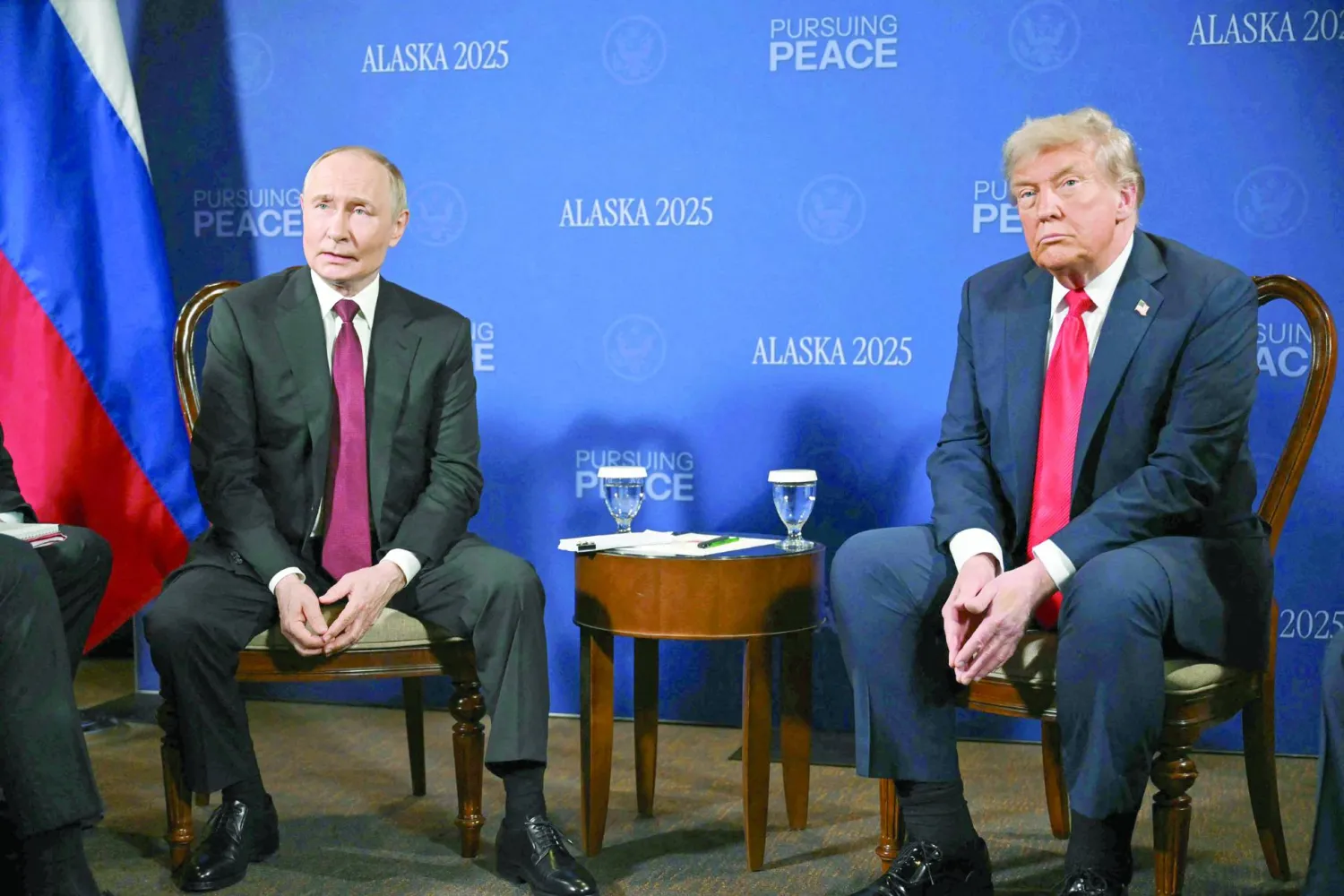
(FILES) US President Donald Trump and Russian President Vladimir Putin meet during a US-Russia summit on Ukraine at Joint Base Elmendorf-Richardson in Anchorage, Alaska, on August 15, 2025. (Photo by ANDREW CABALLERO-REYNOLDS / AFP)
TT

Putin Directs Drills of Russian Nuclear Forces as His Summit with Trump is Put on Hold

(FILES) US President Donald Trump and Russian President Vladimir Putin meet during a US-Russia summit on Ukraine at Joint Base Elmendorf-Richardson in Anchorage, Alaska, on August 15, 2025. (Photo by ANDREW CABALLERO-REYNOLDS / AFP)

Russian President Vladimir Putin on Wednesday directed drills of the country’s strategic nuclear forces that featured practice missile launches, an exercise that came as his planned summit on Ukraine with US President Donald Trump was put on hold.
The Kremlin said that as part of the maneuvers involving all parts of Moscow's nuclear triad, a Yars intercontinental ballistic missile was test-fired from the Plesetsk launch facility in northwestern Russia, and a Sineva ICBM was launched by a submarine in the Barents Sea. The drills also involved Tu-95 strategic bombers firing long-range cruise missiles, The Associated Press said.
The exercise tested the skills of military command structures, the Kremlin said in a statement.
The chief of the military's General Staff, Gen. Valery Gerasimov, reported to Putin via video link that the drills were intended to "practice procedures for authorizing the use of nuclear weapons.”
Putin, sitting alone at a round white table, faced big screens showing Gerasimov and Defense Minister Andrei Belousov. All three men would be involved in launching nuclear weapons in case of conflict.
While Putin emphasized that the maneuvers had been planned in advance, they came hours after President Donald Trump said Tuesday his plan for a swift meeting with Putin in Budapest was on hold because he didn’t want it to be a “waste of time.”
The decision about the meeting in Budapest, Hungary, which Trump had announced last week, was made following a call Monday between US Secretary of State Marco Rubio and Russian Foreign Minister Sergey Lavrov.
Lavrov made clear in comments Tuesday that Russia is opposed to an immediate ceasefire in Ukraine. Trump, meanwhile, has been shifting his stance all year on key issues in the conflict, including whether a ceasefire should come before longer-term peace talks, and whether Ukraine could win back land seized by Russia during almost four years of fighting.
Kremlin spokesman Dmitry Peskov on Wednesday emphasized that the planned Putin-Trump summit needs to be thoroughly prepared.
“No one wants to waste time: neither President Trump nor President Putin," Peskov told reporters. "These are the two presidents who are accustomed to working efficiently with high productivity. But effectiveness always requires preparation.”



Iran Command Says Has Closed Hormuz Again over US Blockade

A satellite image shows the ship movement at the Strait of Hormuz on April 2, 2026, in Space. EUROPEAN UNION/COPERNICUS SENTINEL-2/Handout via REUTERS
TT

Iran Command Says Has Closed Hormuz Again over US Blockade

A satellite image shows the ship movement at the Strait of Hormuz on April 2, 2026, in Space. EUROPEAN UNION/COPERNICUS SENTINEL-2/Handout via REUTERS

Iran's central military command announced on Saturday it would resume "strict management" of the Strait of Hormuz, reversing a decision to unblock the strategic channel as part of negotiations with Washington.

In a statement shared on state television, the headquarters said Washington had broken a promise by continuing its naval blockade of ships sailing to and from Iran's ports.

Until the United States restores freedom of movement for all vessels visiting Iran, "the situation in the Strait of Hormuz will remain strictly controlled," the statement said.

The announcement came after US President Donald Trump said the blockade of the Strait will remain and attacks will resume if no agreement is reached with Iran.


Australia, Japan Sign Contracts to Start $7 Billion Warship Deal

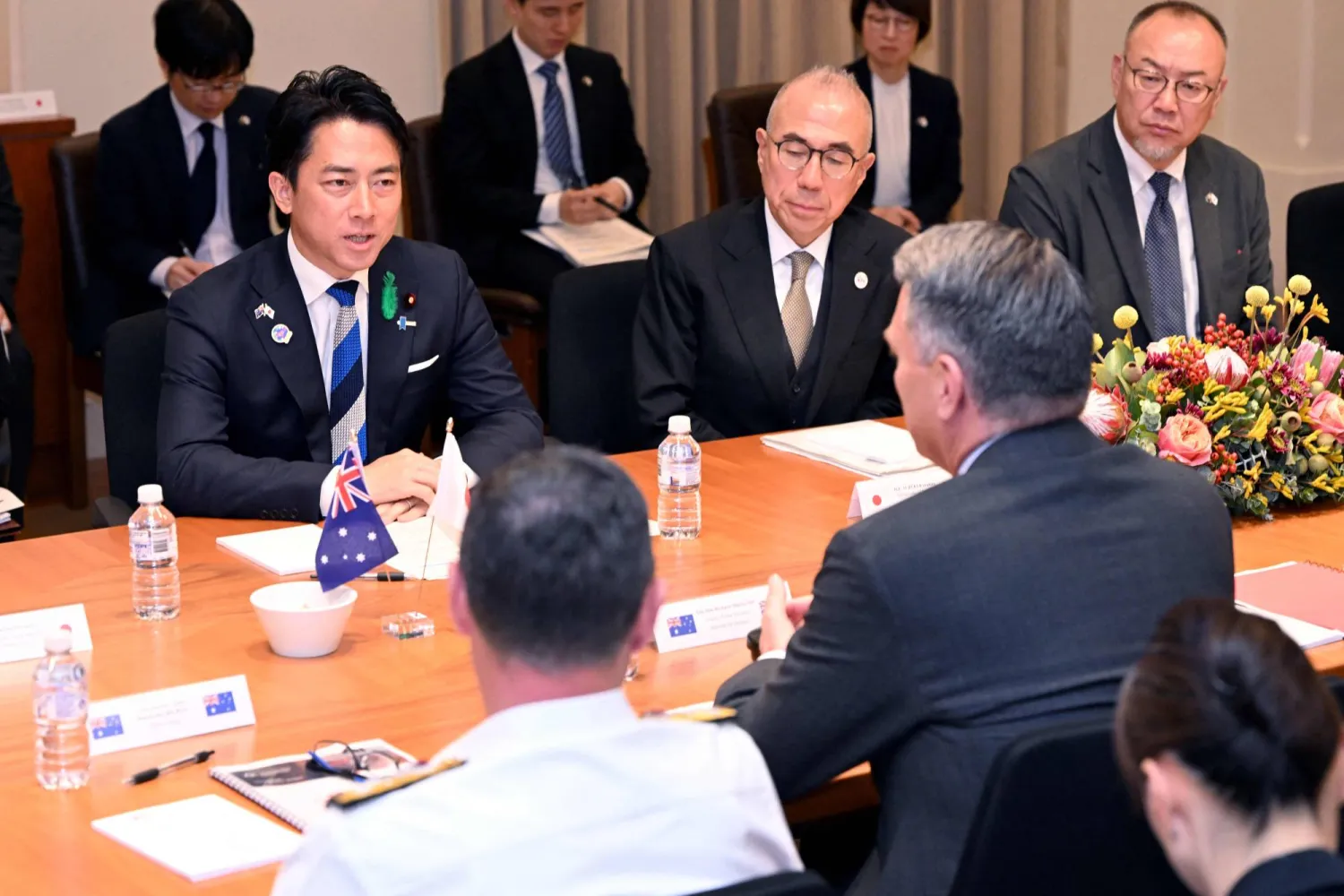
Australia's Deputy Prime Minister and Minister for Defense Richard Marles (R) listens to Japan's Minister of Defense Koizumi Shinjiro (L) during a Defense Ministers' Meeting at the Commonwealth Parliament Offices in Melbourne on April 18, 2026. (Photo by William WEST / AFP)
TT

Australia, Japan Sign Contracts to Start $7 Billion Warship Deal

Australia's Deputy Prime Minister and Minister for Defense Richard Marles (R) listens to Japan's Minister of Defense Koizumi Shinjiro (L) during a Defense Ministers' Meeting at the Commonwealth Parliament Offices in Melbourne on April 18, 2026. (Photo by William WEST / AFP)

Australia and Japan signed contracts on Saturday launching their landmark A$10 billion ($7 billion) deal to supply Australia with warships, Tokyo's most consequential military sale since ending a military export ban in 2014.

Defense Ministers Richard Marles and Shinjiro Koizumi signed a memorandum "reaffirming the Australian and Japanese governments' shared commitment to the successful delivery" of the warships, Marles said in a statement.

The deal struck in ⁠August anchors Japan's ⁠push away from its postwar pacifism to forge security ties beyond its alliance with the US to counter China.

Mitsubishi Heavy Industries is to supply the Royal Australian Navy with three upgraded Mogami-class ⁠multi-role frigates built in Japan from 2029. Eight more frigates will be built in Australia.

Japan's Defense Ministry posted on X that Koizumi and Marles welcomed the "conclusion of contracts for General Purpose Frigates, and confirmed to further strengthen bilateral defense ties" in the signing in Melbourne.

Contracts were signed for the first three frigates, to be built ⁠in ⁠Japan, before there is a "transition to an onshore build" at the Henderson shipyard near Perth in Western Australia, Reuters quoted Marles as saying.

Australia plans to deploy the ships - designed to hunt submarines, strike surface ships and provide air defense - to defend critical maritime trade routes and its northern approaches in the Indian and Pacific Oceans, where China's military footprint is expanding.


Iran Partially Reopens Airspace

FILE - Two police officers walk in front of an anti-US billboard in Tehran, Iran, Sunday, April 5, 2026. (AP Photo/Vahid Salemi, File)
TT

Iran Partially Reopens Airspace

FILE - Two police officers walk in front of an anti-US billboard in Tehran, Iran, Sunday, April 5, 2026. (AP Photo/Vahid Salemi, File)

Iran partially reopened its airspace on Saturday to international flights crossing the eastern part of its territory, the country's Civil Aviation Authority said.

"Air routes in the eastern section of the country's airspace are open for international flights transiting through Iran," it said, adding that some airports had also reopened at 7:00 am (0330 GMT).

More than three hours later, however, flight tracker websites still showed no international flights crossing Iran, and several avoiding its airspace by making long detours.