



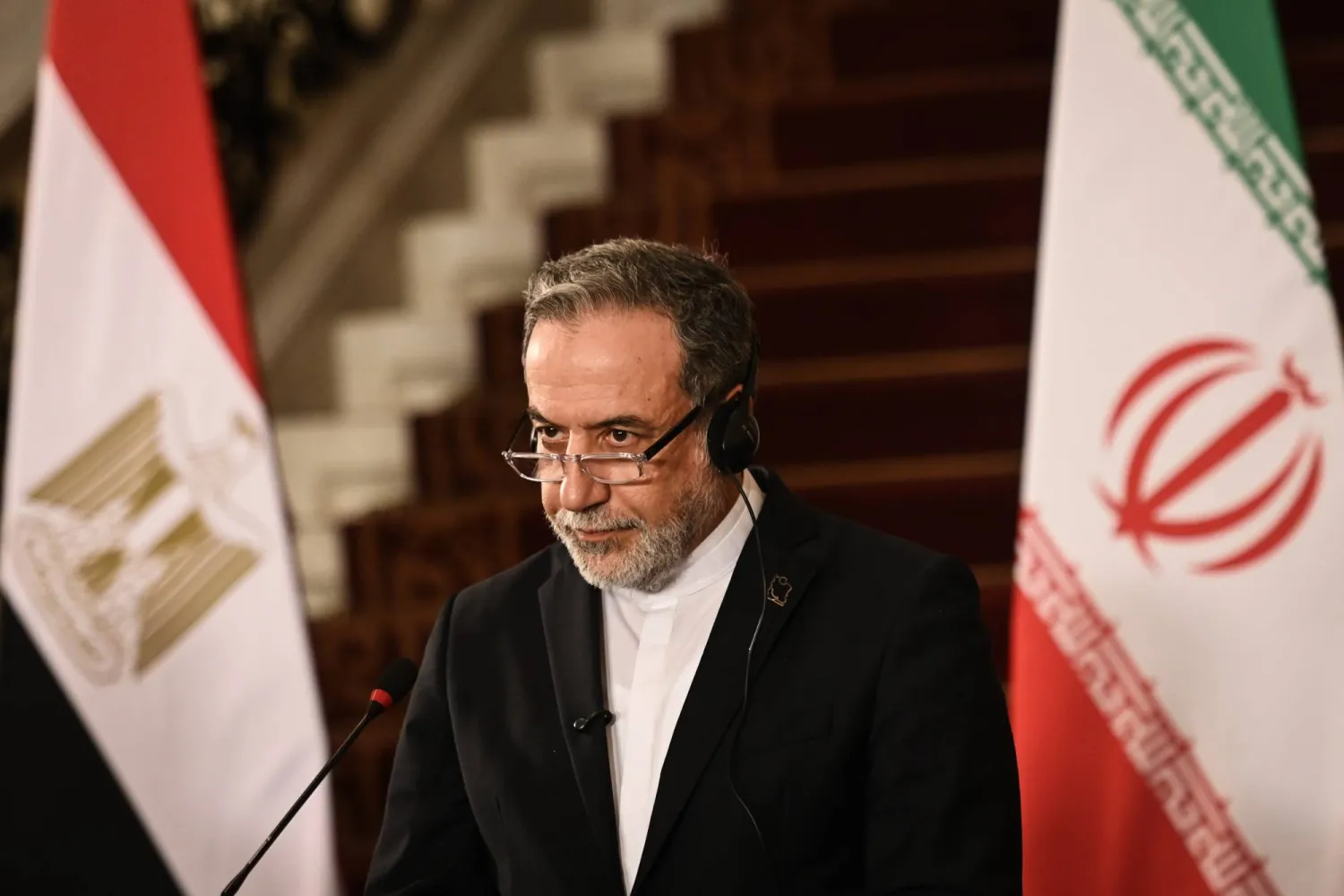

Iran's Foreign Minister Abbas Araghchi said on Wednesday that Tehran will not return to the negotiating table unless the United States abandons “excessive demands” and “unreasonable” requests.
Tehran and Washington engaged in five rounds of indirect nuclear negotiations that ended with the 12-day air war in June in which Israel and the US bombed Iranian nuclear sites.
“Talks that were ongoing with the US as well as New York negotiations were suspended and did not go forward because of excessive US demands,” Araghchi said, according to state-run ISNA news agency.
“As long as the Americans persist in their policy of overreach and continue to make unreasonable demands, we will not return to the negotiating table,” the FM said at the second Regional Conference on Provincial Diplomacy, held in Mashhad.
The FM said that later, in New York, there was also an opportunity for a reasonable, mutually beneficial agreement -- but once again, the talks failed because of America’s excessive demands.
Araghchi said that Iran had contacts with US Special Envoy to the Middle East Steve Witkoff through mediators, reiterating that Iran “has always been committed to diplomacy and peaceful solutions.”
Last month an Iranian insider told Reuters that “several messages have been conveyed to Washington for resumption of talks via mediators in the past weeks, but Americans have not responded.”
Earlier this month Iran's government spokesperson Fatemeh Mohajerani said that American officials did not attend a meeting proposed by Iran in New York during the UN General Assembly.
“The Islamic Republic of Iran is a nation of peace and diplomacy. We have always demonstrated our commitment to dialogue, but that does not mean we will compromise on the rights of the Iranian people,” Araghchi said on Wednesday.
He further emphasized that Iran will pursue diplomatic avenues wherever its national interests can be safeguarded.
“However, the other side has repeatedly shown that it does not adhere to diplomatic principles,” he said.
According to the FM, this year alone, after five rounds of indirect negotiations, the United States effectively joined Israel’s military attacks against Iran, further complicating any potential agreement.
Araghchi’s new stance comes two days after Iranian Supreme Leader Ali Khamenei on Monday rejected an offer of renewed talks from US President Donald Trump and denied his assertion that the United States has destroyed Iran’s nuclear capabilities.
“Trump says he is a dealmaker, but if a deal is accompanied by coercion and its outcome is predetermined, it is not a deal but rather an imposition and bullying,” Khamenei said according to state media.
“The US president proudly says they bombed and destroyed Iran's nuclear industry. Very well, keep dreaming!” the leader added.
Last week, Trump told the Israeli parliament that it would be great if Washington could negotiate a “peace deal” with Tehran, following the start of a ceasefire in Gaza.
Western powers accuse Iran of covertly trying to develop a nuclear bomb through enrichment of uranium, and want it to cease such activity.
Tehran denies seeking to weaponize enrichment, saying the program has solely civilian energy purposes.
Three senior Iranian officials, speaking on condition of anonymity, told Reuters on Wednesday Tehran believes the US, its Western allies and Israel are intensifying sanctions to fuel unrest in Iran.
Deepening economic disparities between ordinary Iranians and a privileged clerical and security elite, economic mismanagement, galloping inflation and state corruption - reported even by state media - have fanned discontent.
“The establishment knows protests are inevitable, it is only a matter of time ... The problem is growing, while our options are shrinking,” said one of the officials.
The second Iranian official said the clerical elite increasingly worry that mounting public distress could reignite mass protests that have erupted periodically since 2017 among lower- and middle-income Iranians.


