


Troubled By US Venezuela Operation, Europeans Limit Intel Sharing

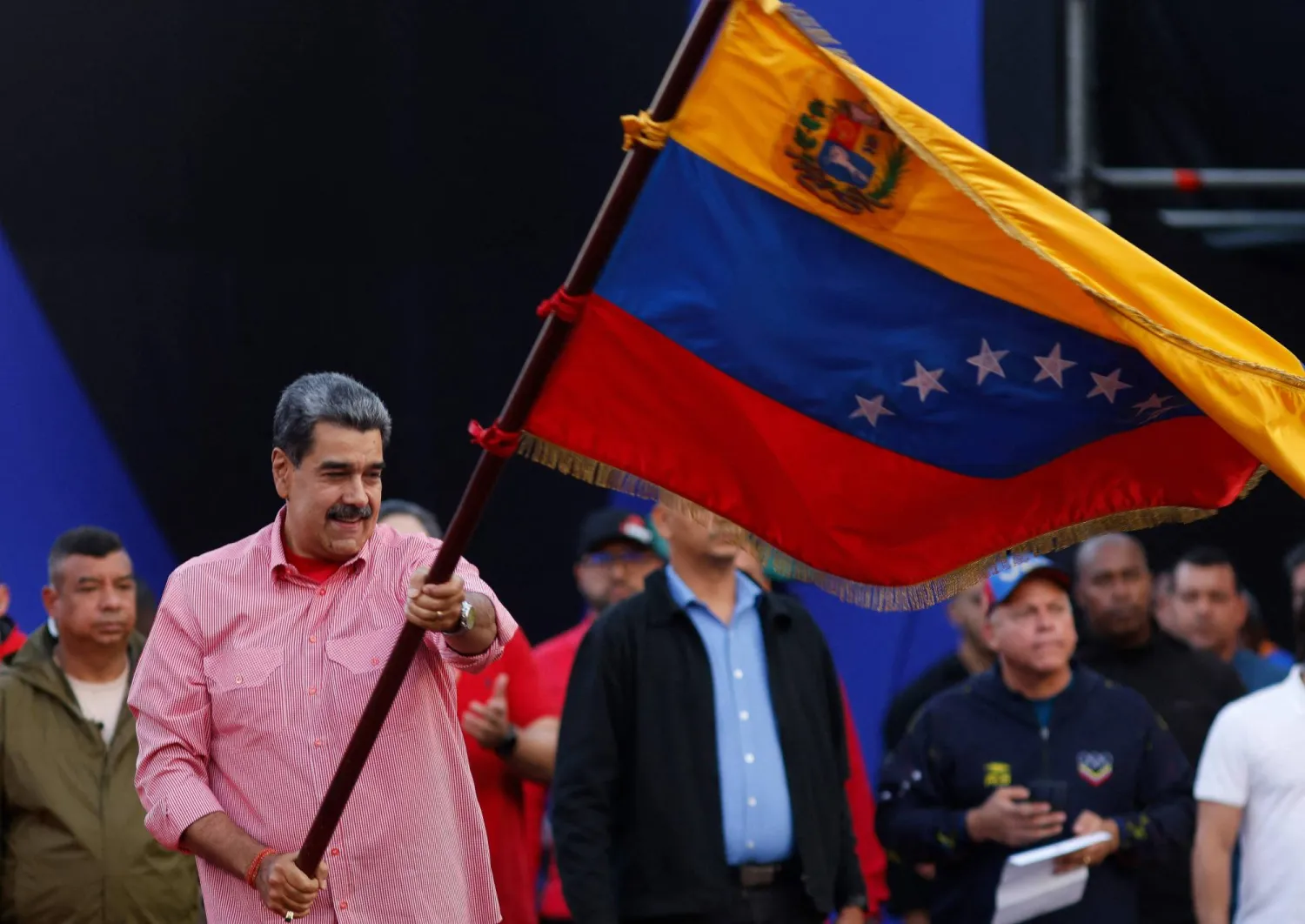
Venezuela's President Nicolas Maduro waves a Venezuelan flag during a demonstration for the swearing-in of Bolivarian committees in Caracas on November 15, 2025. (Photo by AFP)
TT

Troubled By US Venezuela Operation, Europeans Limit Intel Sharing

Venezuela's President Nicolas Maduro waves a Venezuelan flag during a demonstration for the swearing-in of Bolivarian committees in Caracas on November 15, 2025. (Photo by AFP)

The US military operation against Venezuelan alleged drug traffickers coupled with threats by Donald Trump for a ground assault against President Nicolas Maduro have troubled European powers who retain strategically located territories in the Caribbean, observers say.

The concern of France, the Netherlands and the UK is such that they have started limiting intelligence sharing with Washington about the Caribbean over worries it could be used for strikes that would be considered illegal in their countries, according to officials and sources who spoke to AFP.

The UK retains small overseas territories in the Caribbean from the colonial era, while the large islands of Martinique and Guadeloupe as well as French Guiana on the South American mainland are now officially part of France.

The Netherlands is the most geographically implicated, with three islands off the coast of Venezuela dubbed the ABC -- Aruba, Bonaire and Curacao -- all part of the kingdom.

Venezuela has accused Washington of seeking regime change in Caracas with its military build-up, including an aircraft carrier group, warships and several stealth jets.

Washington accuses Maduro of leading a "terrorist" drug cartel, a charge he denies. Since September, US forces have killed at least 83 people via air strikes on boats accused of ferrying drugs in international waters, according to an AFP tally of publicly released figures.

The United States has released no details to back up its claims that the people targeted in both the Caribbean and eastern Pacific in the more than 20 strikes were traffickers.

Trump has said he believes Maduro's days were numbered and on Monday refused to rule out boots on the ground while adding he was open to talks with the leftist leader.

"The Dutch are concerned about their ABC islands... located about 50 kilometers (31 miles) off the coast of Venezuela," a French military official said, asking not to be named.

They "would find themselves on the front line" in the event of war, a European military source added, also asking not to be named as they were not authorized to speak on the record.

With few options in the face of Trump's resolve, these three countries have decided to stop sharing certain intelligence with Washington, multiple sources said.

"We are particularly vigilant regarding the politicization of our services and human rights violations," Erik Akerboom, director of the Dutch civilian intelligence and counterintelligence service, told the newspaper De Volkskrant.

"No European country, France included, will send operational intelligence to the Americans in the current situation if they could use it as a basis for a military strike on a ship," a senior French police official, Dimitri Zoulas, head of the OFAST anti-drug service, told Radio Caraibes (RCI).

This position has not been publicly confirmed by French authorities. But a security source said: "It is 100 percent clear that Europeans are not currently giving any intelligence to the United States that could lead to a strike."

In the UK, the Times reported that attorney general Richard Hermer, the government's top legal advisor, told ministers to cut off intelligence sharing over fears Trump could "assassinate" drug dealers in the Caribbean.

US Secretary of State Marco Rubio earlier this month dismissed reports the UK had stopped sharing such intelligence as "fake news".

Richard Dearlove, former head of the British MI6 foreign intelligence service, told AFP the situation was not unique and avoided Europeans being complicit in an action that was perhaps legal in an American jurisdiction but not in their countries.

"It doesn't affect the overall intelligence exchange. It's a local and a specific issue. And it's occurred before in my experience," he said.

Europeans are aware of the risk of antagonizing the Trump administration.

"Before saying no to the United States and making it known, we have to think twice, because they provide a lot" of information to their allies, said a source from a European intelligence service.

But the Europeans' contribution to American intelligence work in the field is very limited, said a former US military officer who worked in counter-narcotics operations in the region.

The Europeans' restraint has a "theoretical" effect because the United States doesn't need the information, according to the French security source.

Dearlove insisted that as it is "strictly speaking a legal problem" this should not affect the wider picture of transatlantic intelligence sharing.

"The CIA understands this extremely well. It's a well known area which is sometimes problematic but it does not indicate a fundamental change in the intelligence relationship," he said.



Strikes Near Iran, Israel Nuclear Sites Risk ‘Unmitigated Catastrophe’, Says UN

 A drone view shows a damage in a residential neighborhood, following a night of Iranian missile strikes which injured dozens of Israelis, amid the US-Israel conflict with Iran, in Dimona, southern Israel March 22, 2026. (Reuters)
A drone view shows a damage in a residential neighborhood, following a night of Iranian missile strikes which injured dozens of Israelis, amid the US-Israel conflict with Iran, in Dimona, southern Israel March 22, 2026. (Reuters)
TT

Strikes Near Iran, Israel Nuclear Sites Risk ‘Unmitigated Catastrophe’, Says UN

 A drone view shows a damage in a residential neighborhood, following a night of Iranian missile strikes which injured dozens of Israelis, amid the US-Israel conflict with Iran, in Dimona, southern Israel March 22, 2026. (Reuters)
A drone view shows a damage in a residential neighborhood, following a night of Iranian missile strikes which injured dozens of Israelis, amid the US-Israel conflict with Iran, in Dimona, southern Israel March 22, 2026. (Reuters)

Strikes around Iran and Israel's nuclear sites risk unleashing an "unmitigated catastrophe", the United Nations rights chief said Wednesday, warning that the Middle East war had created an "extremely dangerous" situation.

Speaking before the UN Human Rights Council, where countries were holding an urgent debate on Tehran's attacks across the Gulf, Volker Turk warned that many of the strikes in the weeks-long war "raise serious concerns under international law".

In particular, Turk cautioned that "recent missile strikes near nuclear sites in both Israel and Iran underscore the immense danger of further escalation".

"States are flirting with unmitigated catastrophe."

His comments came after the UN nuclear watchdog said Iran had informed it that "another projectile hit the premises" of the Bushehr nuclear power plant on Tuesday, without damaging it.

Over the weekend, an Iranian strike hit the southern Israeli town of Dimona, home to a nuclear facility, in what Tehran said was in response to an earlier attack on its nuclear site at Natanz.

"The situation is extremely dangerous and unpredictable, and has created chaos across the region," Turk said, insisting that "we cannot go back to war as a tool of international relations".

The UN rights chief also warned that "this conflict has an unprecedented power to ensnare countries across borders and around the world".

"The complex dynamics could ignite further national, regional or global crises at any moment, with an appalling impact on civilians and people everywhere."


Hungary Says Will Phase Out Gas Deliveries to Ukraine

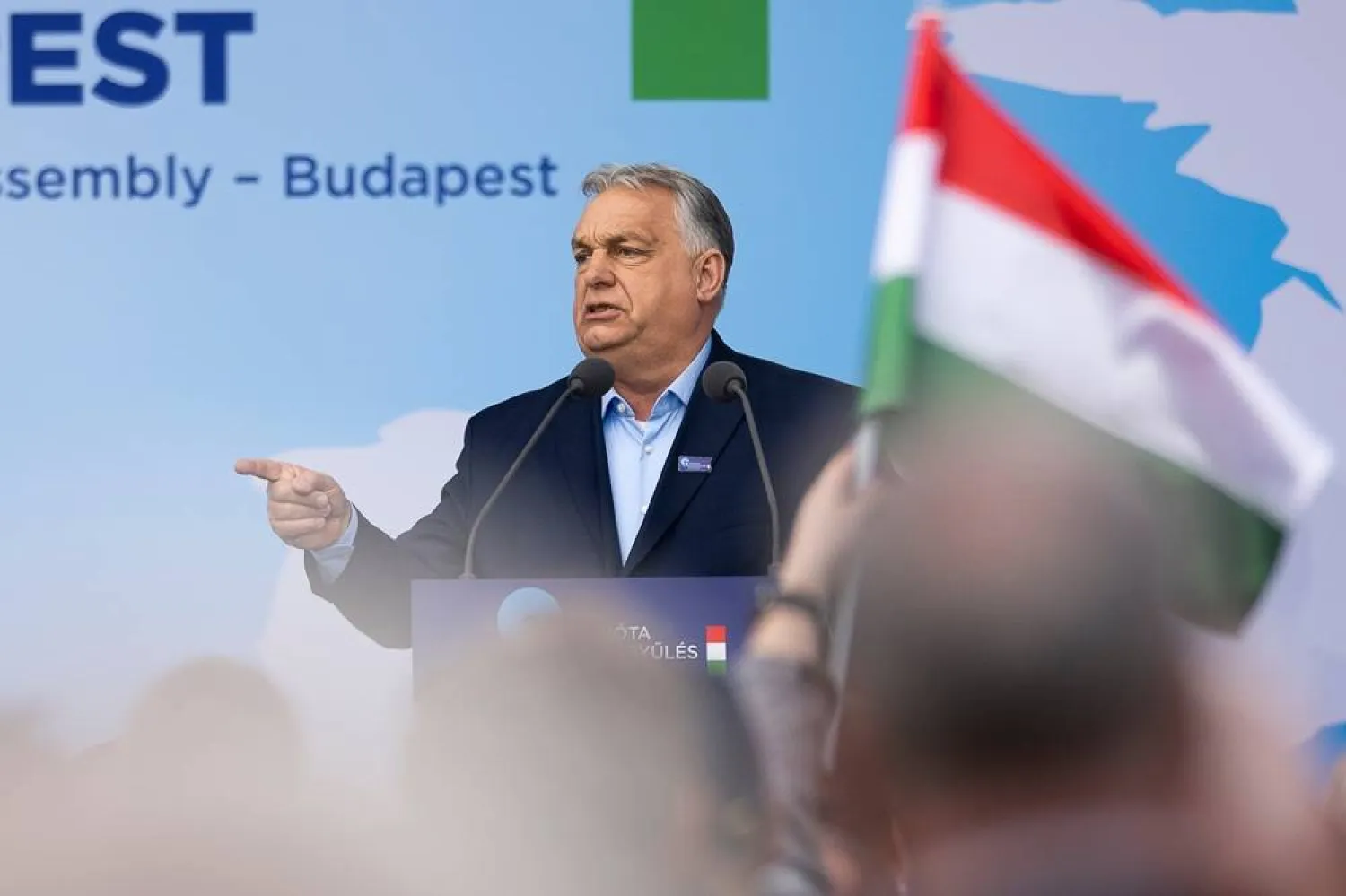
Hungarian Prime Minister Viktor Orban speaks during an assembly of European far-right parties with Orban’s Patriots for Europe group, in Budapest, Hungary, Monday, March 23, 2026. (AP)
TT

Hungary Says Will Phase Out Gas Deliveries to Ukraine

Hungarian Prime Minister Viktor Orban speaks during an assembly of European far-right parties with Orban’s Patriots for Europe group, in Budapest, Hungary, Monday, March 23, 2026. (AP)

Hungary's prime minister said on Wednesday that Budapest would phase out gas deliveries to Ukraine, the latest salvo in a bitter feud between the two countries over a damaged pipeline transporting Russian oil. 

Hungarian Prime Minister Viktor Orban, whose country is a major gas supplier to Ukraine, has accused Kyiv of delaying repairs on the pipeline, effectively stopping the flow of Russian oil to Hungary and its neighbor Slovakia. 

"To break the oil blockade and guarantee the security of Hungary's energy supply, new measures are now necessary," Orban said in a video posted on Facebook. 

"We are gradually halting gas shipments from Hungary to Ukraine and storing the gas that remains here domestically. Until Ukraine supplies oil, it will receive no gas from Hungary," he added. 

Ukrainian authorities have said that the Druzhba (Friendship) pipeline, which crosses its territory, was damaged by Russian airstrikes on January 27. 

Hungary and Slovakia, which have obtained exemptions from the European Union to continue purchasing Russian oil, accuse Kyiv of dragging their feet to repair it. 

In retaliation, Orban -- who is facing crucial parliamentary elections next month -- is blocking a European loan of 90 billion euros ($104 billion) to Ukraine. 

Last week, European Commission President Ursula von der Leyen announced that the EU would help reopen the Druzhba pipeline. 

Budapest and Bratislava are also blocking the official adoption of new economic sanctions against Russia, endorsed by other EU countries. 

According to analysts at the pro-government Hungarian Economic Research Foundation (Oeconomus), Hungary has become one of Ukraine's main gas suppliers. 

Ukraine imported 2.94 billion cubic meters of gas from Hungary in 2025, the top source for Ukrainian imports, accounting for 45.5 percent of all Ukrainian imports, Ukrainian consultancy ExPro said in a report. 

ExPro said separately that Ukraine's imports from Hungary were already slightly dropping as a share in 2026, down to 34 percent of Ukraine's import mix in March 2026. 

Ukraine's total gas consumption in 2025 was 21 billion cubic meters, the Dixi group consultancy said in a report in March, meaning Hungary accounted for 14 percent of Ukraine's total gas use in 2025. 


Iran Speaker Warns US Not to Test 'Resolve to Defend Our Land'

FILED - 12 October 2024, Lebanon, Beirut: Iranian Parliament speaker Mohammad Bagher Ghalibaf speaks during a press conference in Beirut. Photo: Hassan Ibrahim/Lebanese Parliament/dpa
TT

Iran Speaker Warns US Not to Test 'Resolve to Defend Our Land'

FILED - 12 October 2024, Lebanon, Beirut: Iranian Parliament speaker Mohammad Bagher Ghalibaf speaks during a press conference in Beirut. Photo: Hassan Ibrahim/Lebanese Parliament/dpa

Iran's parliament speaker on Wednesday warned Washington not to test Tehran’s determination to defend its territory after the United States was reported to be sending more troops to the Middle East.

"We are closely monitoring all US movements in the region, especially troop deployments.

What the generals have broke, the soldiers can't fix; instead, they will fall victim to (Israeli Prime Minister Benjamin) Netanyahu's delusions," said Mohammad Bagher Ghalibaf in an X post in English.

"Do not test our resolve to defend our land."

At least 1,000 troops from the 82nd Airborne Division will be sent to the Mideast in the coming days, three people with knowledge of the plans told The Associated Press. They spoke on condition of anonymity to discuss sensitive military plans.

The Pentagon is also in the process of deploying two Marine units that will add about 5,000 Marines and thousands of sailors to the region.