



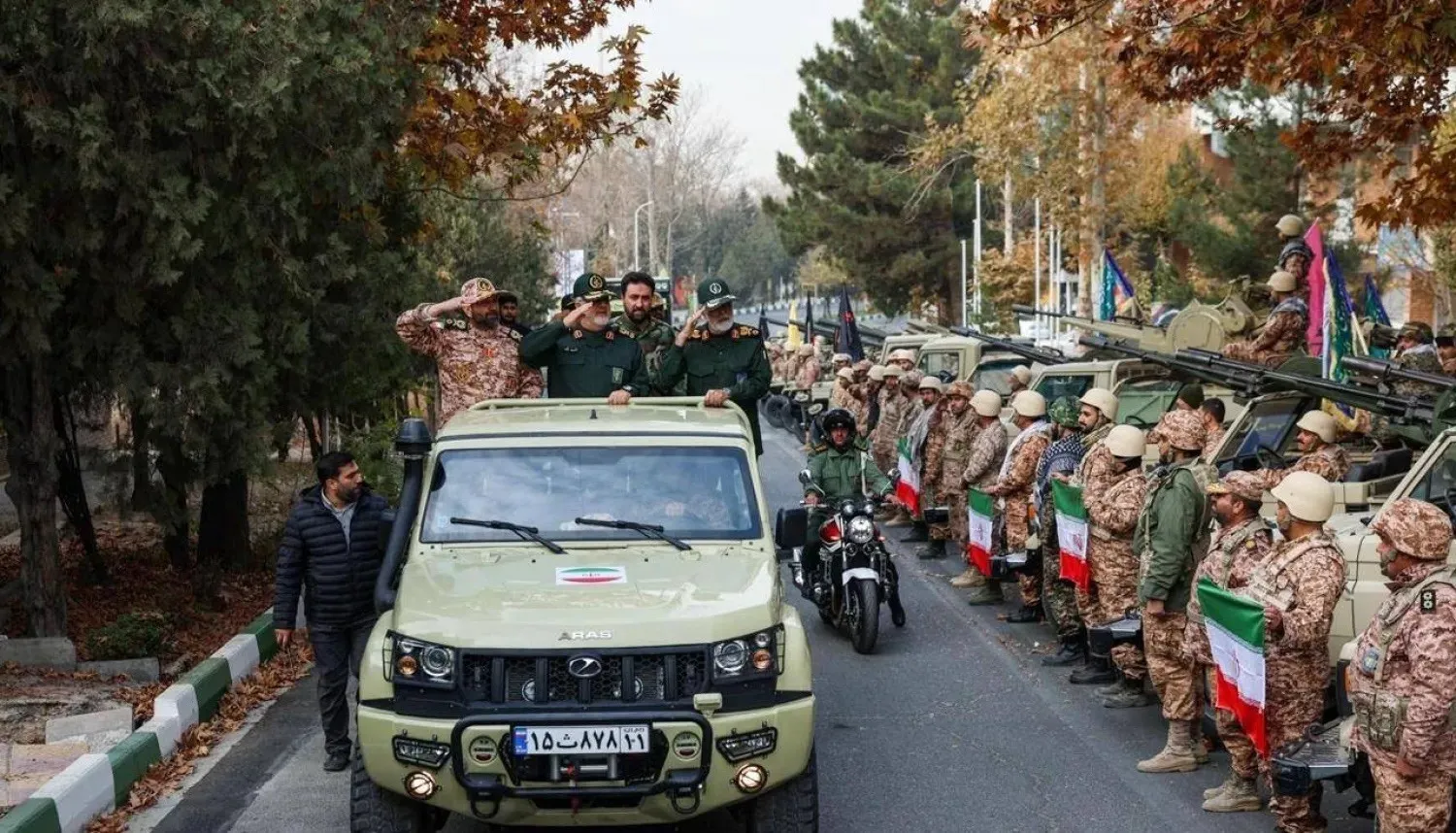

A senior adviser to the commander of Iran’s Revolutionary Guard Corps (IRGC), Mohammad Reza Naqdi, warned on Thursday that Iran would not stop any future conflict until Israel is “completely destroyed.” His remarks came as Basij militia units launched urban combat drills across cities throughout Iran.
Speaking on the sidelines of the exercises, Naqdi told the state-run IRNA news agency: “The enemy is at its weakest point today. We are counting down to the final confrontation and are ready to endure any hardship.”
Naqdi rejected suggestions of a split between Iran’s leadership and its citizens.
“In the Islamic Republic, the people and the state are not separate. The state is the people, and the people are the state. This formula is what forced the world’s greatest power to back down,” he said.
He added that the Iranian system has “stood firm for 46 years against enemy plots,” arguing that Iran’s foes “never dared a direct confrontation and always resorted to proxies,” a reference to Iranian opposition groups. Naqdi described Israel as “Washington’s last remaining proxy,” declaring that the “era of proxy wars has ended.”
“We stand by our values to the last breath, the last man, and the last drop of blood, and will continue on this path until final victory,” he added.
Earlier this month, an IRGC spokesperson said its forces were preparing for a conflict “more complex” than the 12-day war fought between Iran and Israel in June. He nonetheless downplayed the chances of renewed fighting, saying current threats amounted to “nothing more than psychological operations.”
Naqdi’s latest warnings follow his abrupt dismissal weeks ago as IRGC Coordinating Deputy, a position now held by Brigadier General Hojjatollah Qureshi.
A week before his removal, Naqdi appeared in a media interview denying reports that officials in his office had been arrested on suspicion of spying for Israel. The Iranian news website Alef had reported the detention of two senior officers from his office as part of an investigation into the “Khatam al-Anbiya” Joint Operations Headquarters, which Israel had struck at its location inside Iran’s General Staff.
Among the first killed in that attack was Major General Gholam Ali Rashid, Iran’s chief of operations. His successor, General Ali Shadmani, was also killed during the 12-day conflict.
Marking its anniversary, the Basij militia began nationwide drills as Intelligence Minister Esmail Khatib warned of attempts to provoke unrest inside Iran. Senior IRGC commander Mohammad Pakpour attended the opening of the exercises in Tehran.
State television quoted the IRGC commander in Tehran, Brigadier General Hassan Hassanzadeh, as saying that all IRGC units were on full alert and ready to confront “any threat - soft, hard, or semi-hard.” He claimed Tehran alone had two million Basij members, adding that all units had fully trained and deployable forces.


