


Khamenei Warns Against Internal Divisions, Urges Iranians to ‘Stand Firm Against Enemies’

Khamenei delivers a televised address on Thursday evening. (State television)
TT

Khamenei Warns Against Internal Divisions, Urges Iranians to ‘Stand Firm Against Enemies’

Khamenei delivers a televised address on Thursday evening. (State television)

Iran’s Supreme Leader Ali Khamenei warned against internal divisions, calling on Iranians to stand together “against the enemies.”

In a televised address, he said the United States and Israel had “failed” to achieve their objectives in the 12-day war in June.

Khamenei, 86, has made only minimal public appearances since the war, after Israeli officials threatened to target him, sparking speculation in Iranian media about efforts to designate a potential successor. Khamenei assumed the post in 1989, succeeding Khomeini, and ultimately holds the country’s final say on all major decisions.

Speaking to the nation for the third time since the conflict erupted five months ago, Khamenei claimed Iran had “thwarted the goals of the United States and Israel,” arguing that both parties “returned empty-handed and achieved none of their aims.”

In his account of the war, Khamenei said the enemy’s losses “were far greater than those suffered by Iran,” despite Israel’s use of “the most advanced offensive and defensive weaponry, including submarines, fighter jets, and sophisticated defense systems.” Nevertheless, he said, Israel “was unable to achieve what it sought.”

“They attempted to deceive the Iranian people and drag them into following their lead, but the outcome was the opposite,” he continued. “The Iranian people became more united in confronting America and succeeded in frustrating the adversary.”

“They came to commit crimes, only to be struck back and return empty-handed... This is the true meaning of defeat,” Khamenei said.

He linked the war’s outcome to what he described as “the failure of decades-long plans,” citing reports of “20 years of Israeli preparations” aimed at provoking a confrontation inside Iran.

Instead, he argued, the conflict “produced internal cohesion, even among groups that previously had disagreements with the system,” describing the result as “a general unity in the country that must be valued and preserved.”

Khamenei acknowledged that Iran suffered casualties, saying: “This is the nature of war. People fight, and people are killed; but the Islamic Republic has proven itself a center of willpower and strength, capable of making decisions and standing firm without fear.”

He rejected media reports claiming that Iran had sent indirect messages to the United States, calling them “pure lies,” and accused Washington of “betraying even its own allies” and “sparking wars around the world.”

Khamenei also conceded the existence of political divisions within Iran, but stressed the need to avoid deepening them. “Differences among factions and groups are natural,” he said, “but what matters is that everyone stands together in the face of the enemy.”

He urged Iranians to repeat what he described as the “national alignment” that accompanied the recent conflict. He called on citizens and political forces to “strengthen national unity,” describing it as “a decisive factor in the country’s strength and its ability to confront threats.”



US to Leave Iran 'Pretty Quickly' and Return if Needed, Trump Tells Reuters

03 March 2026, US, Washington: US President Donald Trump speaks during a meeting in the White House. Photo: Kay Nietfeld/dpa
TT

US to Leave Iran 'Pretty Quickly' and Return if Needed, Trump Tells Reuters

03 March 2026, US, Washington: US President Donald Trump speaks during a meeting in the White House. Photo: Kay Nietfeld/dpa

The United States will be "out of Iran pretty quickly" and could return for "spot hits" if needed, President Donald Trump told Reuters on Wednesday, hours before he was scheduled to make a primetime address to the nation. Trump also said he would express his disgust with NATO for what he considers the alliance's lack of support for US objectives in Iran.
He said he is "absolutely" considering an attempt to withdraw the United States from NATO, Reuters reported.

Asked when the United States would consider the Iran war over, Trump said: "I can't tell you exactly .... we're going to be out pretty quickly."

He said US action has ensured Iran will not have a nuclear weapon.

"They won't have a nuclear weapon because they are incapable of that now, and then I'll leave, and I'll take everybody with me, and if we have to we'll come back to do spot hits," Trump said.


19 Migrants Found Dead by Italian Coastguard off Lampedusa

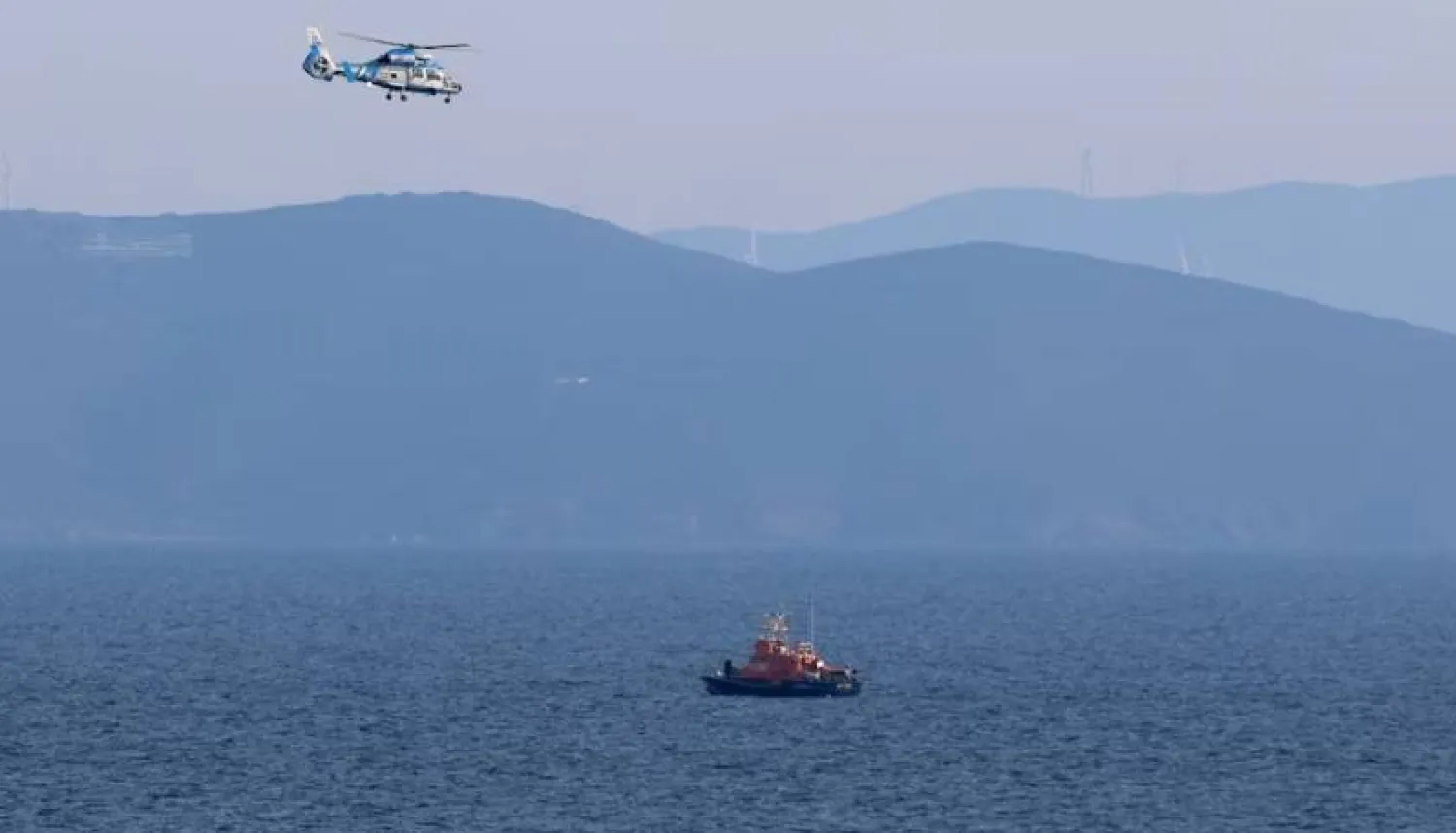
Hellenic coast guard performs SAR operation, following migrant's boat collision with coast guard off the Aegean island of Chios, near Mersinidi, Greece, February 4, 2026. REUTERS
TT

19 Migrants Found Dead by Italian Coastguard off Lampedusa

Hellenic coast guard performs SAR operation, following migrant's boat collision with coast guard off the Aegean island of Chios, near Mersinidi, Greece, February 4, 2026. REUTERS

The bodies of 19 migrants were recovered from a boat off the coast of Lampedusa on Wednesday by the Italian coastguard, the island's mayor told AFP.

Mayor Filippo Mannino said seven other migrants, including two children, were being treated for "hypothermia and intoxication from hydrocarbon fumes".

The coastguard rescue was staged some 135 kilometers (85 miles) off the Italian island, according to news agency ANSA.

The coastguard did not respond to AFP requests for information.

The rescue operation occurred in the early hours of Wednesday inside Libya's search-and-rescue zone, ANSA reported.

"All are believed to have died of hypothermia," wrote the agency, which cited strong winds, rain, and temperatures of 10C, in the area.

Lampedusa is a key landing point for migrants crossing the Mediterranean Sea from North Africa, with many dying trying the dangerous journey.

So far this year, 624 migrants have died or gone missing in the central Mediterranean, according to the UN's International Organization for Migration.

Lampedusa's last migrant disaster occurred in August last year, when 27 people died in two shipwrecks off the coast.

According to the interior ministry, 6,117 migrants have landed on Italy's shores so far this year.


Starmer Says UK to Host Multi-nation Meeting on Hormuz Shipping

British Prime Minister Keir Starmer speaks during a press conference to update on the latest situation in the Middle East and how the government is supporting families at home at 10 Downing Street in London, on April 1, 2026. (Photo by Frank Augstein / POOL / AFP)
TT

Starmer Says UK to Host Multi-nation Meeting on Hormuz Shipping

British Prime Minister Keir Starmer speaks during a press conference to update on the latest situation in the Middle East and how the government is supporting families at home at 10 Downing Street in London, on April 1, 2026. (Photo by Frank Augstein / POOL / AFP)

Britain will this week hold a meeting of about 35 countries to discuss how to reopen the strategic Strait of Hormuz which has been crippled by the Middle East war, Prime Minister Keir Starmer announced Wednesday.

UK Foreign Secretary Yvette Cooper will host the discussions, Starmer told reporters during a Downing Street press conference, without specifying the day of the talks.

The meeting will "assess all viable diplomatic and political measures that we can take to restore freedom of navigation, guarantee the safety of trapped ships and seafarers and resume the movement of vital commodities", Starmer said.

"Following that meeting, we will also convene our military planners to look at how we can marshal our capabilities and make the strait accessible and safe after the fighting has stopped," he added.

The discussions will include countries who recently signed a statement saying they were ready "to contribute to appropriate efforts to ensure safe passage through the Strait of Hormuz", Starmer said.

Britain, France, Germany, Italy, Japan and the Netherlands are among those to have signed it.

Iran has virtually closed the vital strait since the US-Israeli strikes that started the war on February 28, causing global oil and gas prices to soar.

A fifth of the world's oil and liquefied natural gas passes through the strait in peacetime.

"I do have to level with people on this. This (reopening) will not be easy," Starmer said.

The UK leader also backed NATO following renewed criticism of the eight-decade-old alliance by US President Donald Trump.

"NATO is the single most effective military alliance the world has ever seen, and it has kept us safe for many decades, and we are fully committed to NATO," Starmer said.

Trump told Britain's Telegraph newspaper in an article published Wednesday that NATO was a "paper tiger".

Asked whether he would reconsider US membership, he replied: "Oh yes, I would say (it's) beyond reconsideration," the paper reported.

Last month, Trump told the Financial Times that it would be "very bad for the future of NATO" if members fail to help reopen the vital waterway.

On Tuesday, he said that countries which have not joined the war but are struggling with fuel shortages should "go get your own oil" in the Strait of Hormuz, adding that the US would not help them.