
US Seizes Shipment Headed to Iran with Military-Related items

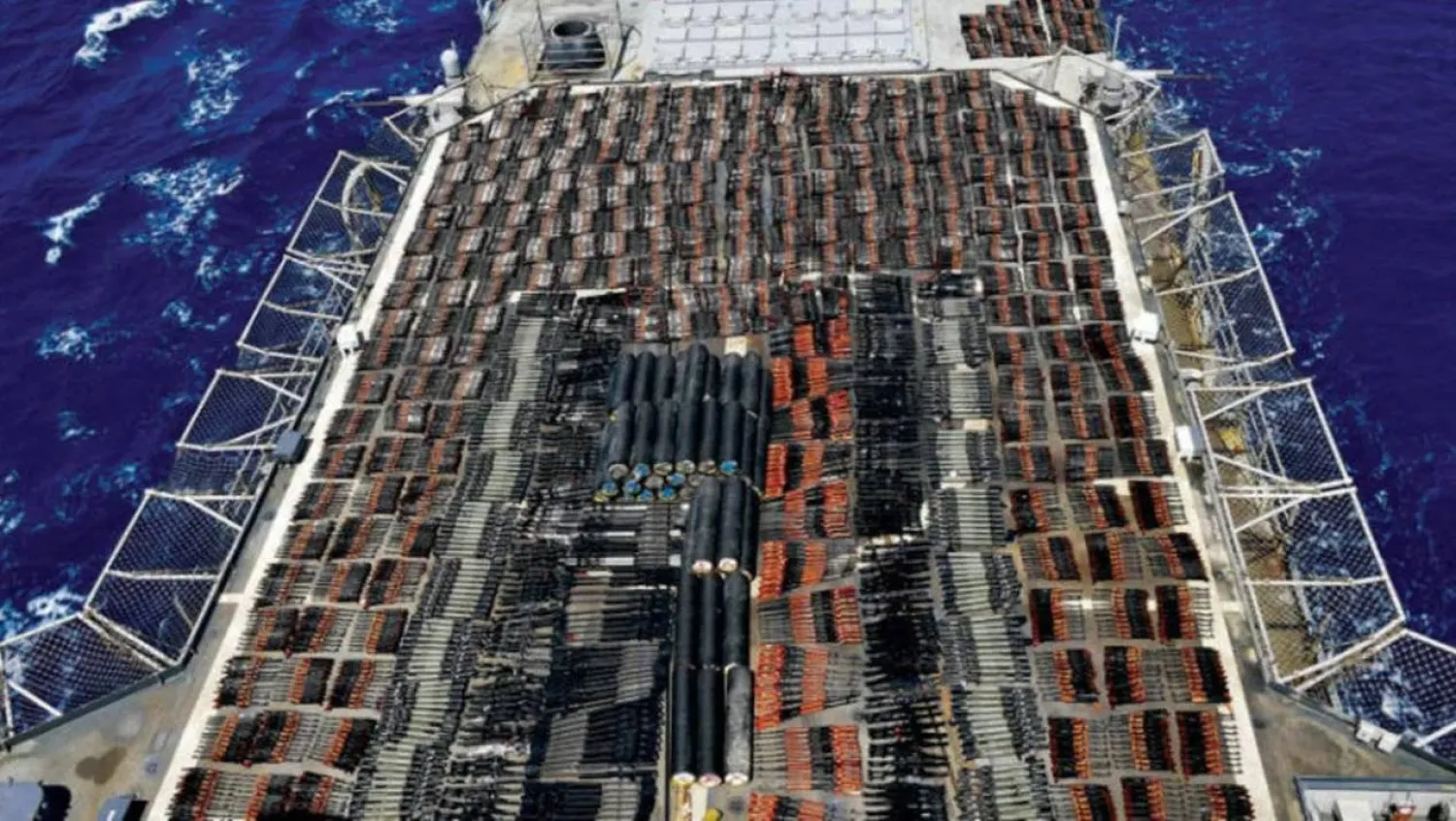
An arms shipment belonging to Iran seized by the US in May 2021. AP file photo
TT

US Seizes Shipment Headed to Iran with Military-Related items

An arms shipment belonging to Iran seized by the US in May 2021. AP file photo

A US special operations team raided a dual-use items ship in the Indian Ocean last month and seized military-related articles headed to Iran, US officials told The Wall Street Journal.

The newspaper said the ship’s cargo consists of components potentially useful for the Iranian conventional weapons.

A US special operations team in the Indian Ocean raided a ship headed to Iran from China last month and seized military-related articles, the Journal said citing US officials.

US forces boarded the ship several hundred miles off the coast of Sri Lanka, according to the newspaper, which added the vessel was later allowed to proceed.

It said the shipment consisted of dual-use items — ones with potential applications in civilian and military fields — that could be used in Iran’s missile program.

The report cited a US official as saying US intelligence indicated the shipment was headed for Iranian companies known to be intermediaries for the country’s missile development efforts.

The action was part of a campaign by the US Defense Department to cut off Iran’s covert arms supply networks.

A US official told The New York Times that “the rare operation at sea aimed at blocking Tehran from rebuilding its military arsenal.”

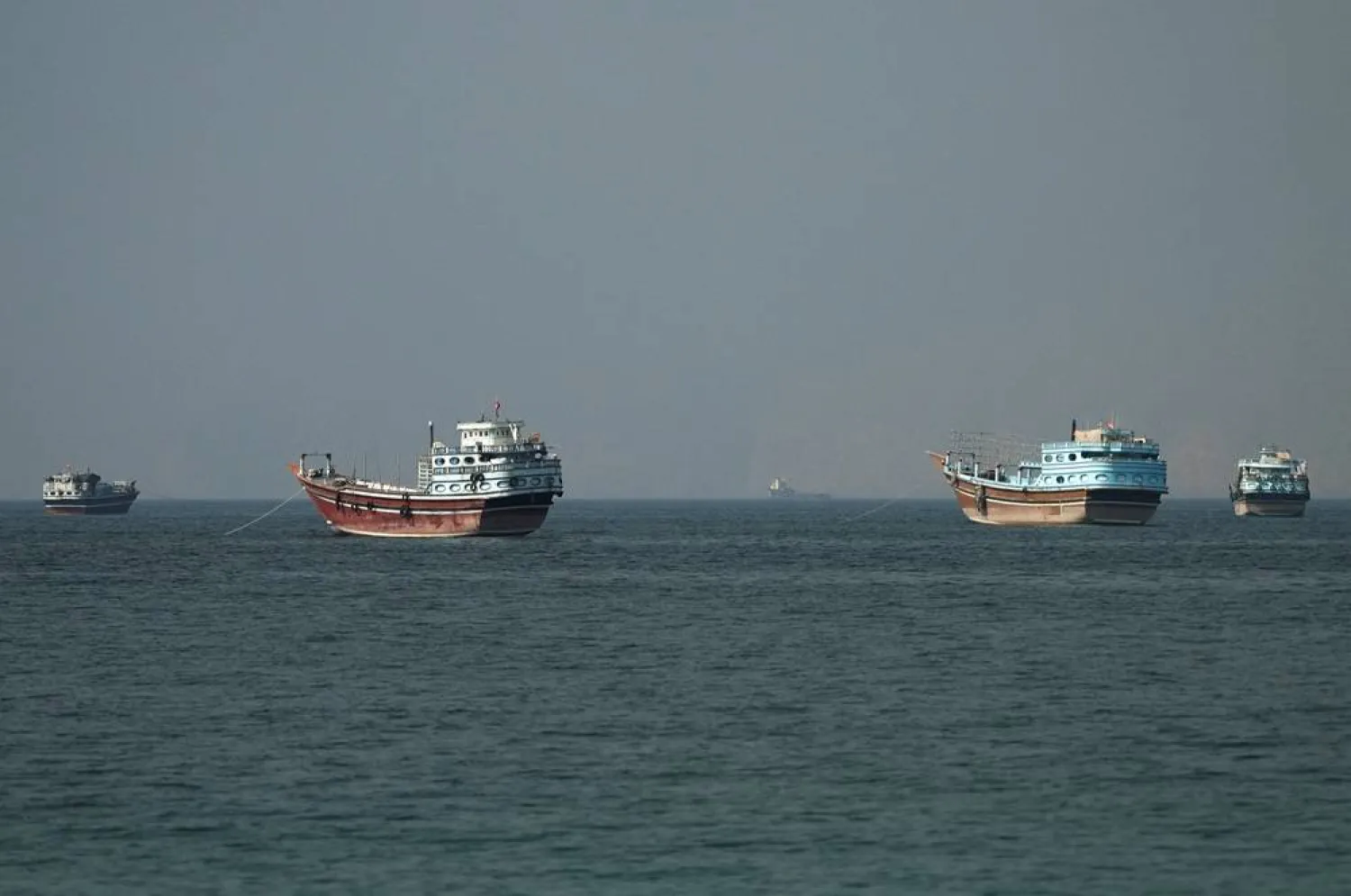
In a separate incident, Iran seized an oil tanker it claimed was illegally transporting Iranian fuel in the Gulf of Oman, Iranian media said overnight Friday to Saturday. Tehran’s move came amid suggestions it was a retaliatory measure against another country.

Iranian media said 18 crew members from India, Sri Lanka and Bangladesh were on board the oil tanker.

“An oil tanker carrying six million liters of contraband diesel fuel has been boarded off the coast of the Sea of Oman,” the Fars news agency said, quoting an official from the southern province of Hormozgan.

“The vessel had disabled all its navigation systems.”

Iranian forces regularly announce the interception of ships it says are illegally transporting fuel in the Gulf.

Mojtaba Ghahramani, head of the Judiciary in Hormozgan Province, said Iran has seized a foreign oil tanker in the Sea of Oman. He claimed the operation targeted fuel smuggling networks and their operators.

He confirmed to state television that the tanker was carrying 6 million liters of diesel in the Sea of Oman, and was intercepted in Iranian territorial waters near Jask.

Ghahramani added that the vessel was operating without valid maritime travel documents or a cargo manifest for its fuel shipment. All navigation and auxiliary systems aboard the ship had been deliberately turned off, he said.

The information has not yet been confirmed by independent sources. State broadcaster did not mention the name of the vessel or give its nationality on its website.

According to Ghahramani, the tanker carried a crew of 18, composed of nationals from India, Sri Lanka, and Bangladesh.

The latest interception came two days after the United States seized the oil tanker off the coast of Venezuela.

According to Washington, the ship’s captain was transporting oil from Venezuela and Iran. The US Treasury sanctioned Venezuela in 2022 for alleged ties to Iran’s Revolutionary Guard Corps and Hezbollah.

“The seizure of this vessel highlights our successful efforts to impose costs on the governments of Venezuela and Iran,” FBI Director Kash Patel said in a statement on Friday.

Sources told Reuters that the US is preparing to intercept more ships transporting Venezuelan oil.

Iran seized an oil tanker in Gulf waters last month “for carrying an unauthorized cargo.”


Shamkhani: Iran Does Not Seek Nuclear Weapons

Ali Shamkhani, advisor to Iranian Supreme Leader Ali Khamenei (AFP)
TT

Shamkhani: Iran Does Not Seek Nuclear Weapons

Ali Shamkhani, advisor to Iranian Supreme Leader Ali Khamenei (AFP)

Ali Shamkhani, adviser to Iran's Supreme Leader Ali Khamenei, spoke on the nuclear issue late Monday saying that Iran does not seek nuclear weapons and suggesting that if the talks with the US happened, they would be indirect at the beginning, then moving to direct talks if a deal appeared to be attainable.

The pan-Arab satellite channel Al Mayadeen, which is politically allied with the Iranian-backed Lebanese militant group Hezbollah, aired the interview with Shamkhani.

He also said that the US “must offer something in return” if Iran were to reduce the level of enrichment.

Shamkhani, who now sits on the country’s Supreme National Security Council and who in the 1980s led Iran's navy, wore a naval uniform as he spoke.

He suggested if the talks happened, they would be indirect at the beginning, then moving to direct talks if a deal appeared to be attainable.

Direct talks with the US long have been a highly charged political issue within Iran's theocracy, with reformists like President Masoud Pezeshkian pushing for them and hard-liners dismissing them.

The talks would solely focus on nuclear issues, he added.

Asked about whether Russia could take Iran's enriched uranium like it did in Tehran's 2015 nuclear deal with world powers, Shamkhani dismissed the idea, saying there was “no reason” to do so. Kremlin spokesperson Dmitry Peskov on Monday said Russia had “long offered these services as a possible option that would alleviate certain irritants for a number of countries.”

“Iran does not seek nuclear weapons, will not seek a nuclear weapon and will never stockpile nuclear weapons, but the other side must pay a price in return for this," he said.

Iran had been enriching uranium up to 60% purity, a short, technical step away from weapons-grade levels. The International Atomic Energy Agency had said Iran was the only country in the world to enrich to that level that wasn't armed with the bomb.

Iran has been refusing requests by the IAEA to inspect the sites bombed in the June war.

“The quantity of enriched uranium remains unknown, because part of the stockpile is under rubble, and there is no initiative yet to extract it, as it is extremely dangerous," Shamkhani said.


Almost 140 Foreigners Arrested in Central Iran over Protests

Iranians walk in a street in Tehran, Iran, 02 February 2026. EPA/ABEDIN TAHERKENAREH
TT

Almost 140 Foreigners Arrested in Central Iran over Protests

Iranians walk in a street in Tehran, Iran, 02 February 2026. EPA/ABEDIN TAHERKENAREH

Iranian authorities arrested 139 foreign nationals in central parts of the country during recent anti-government protests, local media reported Tuesday.

Iran's Tasnim news agency quoted the police chief in the city of Yazd as saying those arrested were involved "in organizing, inciting and directing riotous actions, and in some cases were in contact with networks outside the country".

The nationalities of those held were not specified, AFP reported.

"During the review of cases related to the recent rioters, it was determined that 139 of those arrested in these disturbances were foreign nationals," police chief Ahmad Negahban said.

Protests against the rising cost of living broke out in Iran on December 28 before morphing into nationwide anti-government demonstrations.

Tehran has acknowledged that more than 3,000 deaths occurred during the unrest, but insists that most were members of the security forces and innocent bystanders, attributing the violence to "terrorist acts".

The Human Rights Activists News Agency, a US-based NGO, says it has confirmed 6,854 deaths, mostly protesters killed by security forces, with other rights groups warning the figure is likely far higher.

Iranian authorities have said the rallies began as peaceful demonstrations before turning into "riots" involving killings and vandalism that were inflamed by arch-foes the United States and Israel.


Fire Breaks Out at Western Tehran Bazaar

People walk near an anti-US mural on a building in Tehran, Iran, January 31, 2026. Majid Asgaripour/WANA (West Asia News Agency) via Reuters
TT

Fire Breaks Out at Western Tehran Bazaar

People walk near an anti-US mural on a building in Tehran, Iran, January 31, 2026. Majid Asgaripour/WANA (West Asia News Agency) via Reuters

A massive fire broke out Tuesday at a bazaar west of the Iranian capital, state media reported, although the cause of the blaze was unclear.

The fire had "so far resulted in no injuries", said Mohammad Behnia, operations commander of Tehran emergency services.

The fire erupted at a market in the Jannat Abad neighborhood in Tehran's west, an area filled with stalls and shops, state TV quoted a spokesman for Tehran's fire department as saying.

"The fire is extensive, to the extent that it is visible from various parts of Tehran," Jalal Maleki said.

State TV said firefighters were immediately dispatched to the site to contain the blaze.

Footage of the fire showed thick plumes of black smoke billowing into the sky and blanketing the surrounding area.