US Says It Needs to Control Venezuelan Oil Sales Indefinitely to Drive Change

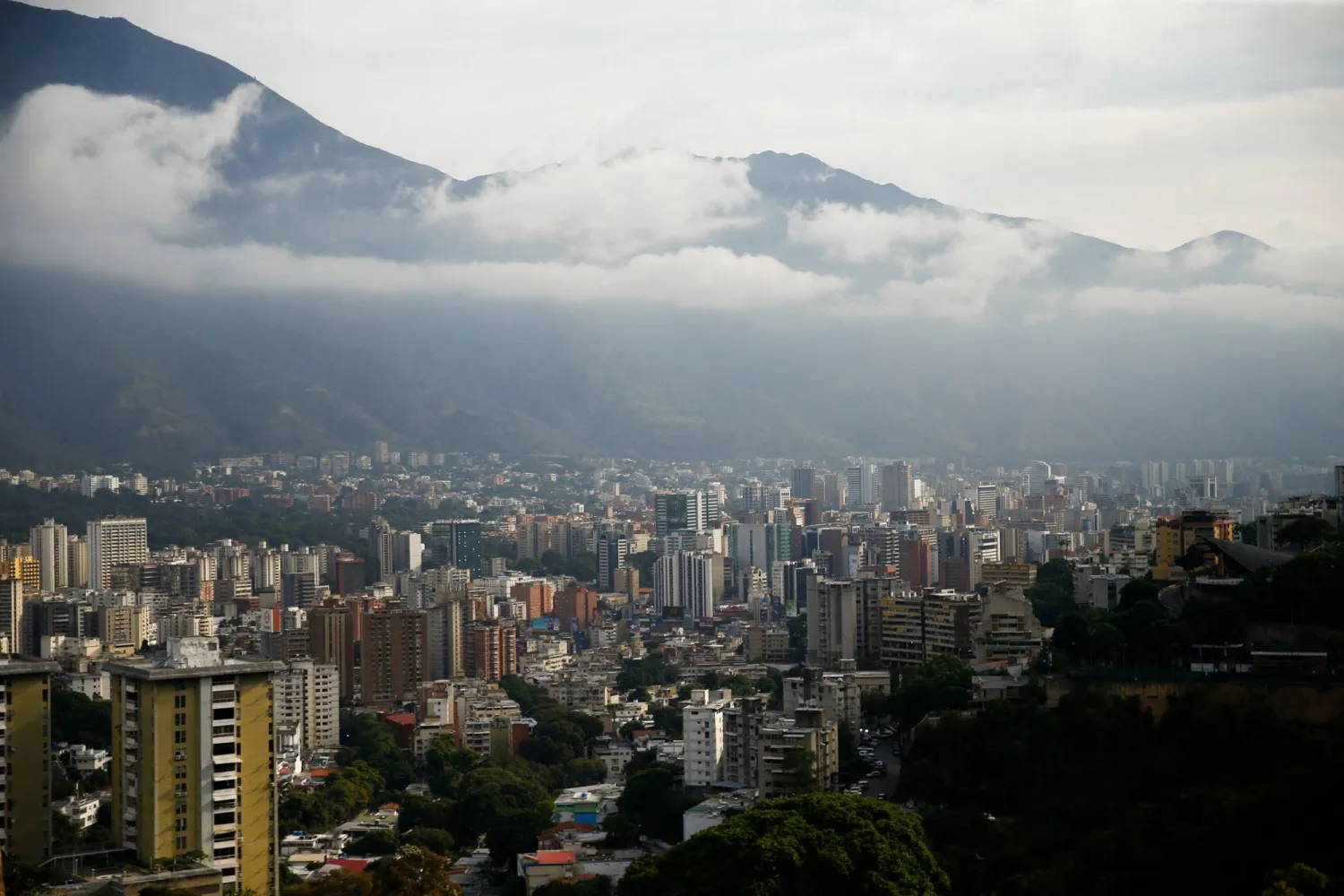
The city of Caracas, days after the US launched a strike on Venezuela and captured President Nicolas Maduro and his wife Cilia Flores, Venezuela January 7, 2026. (Reuters)
TT

US Says It Needs to Control Venezuelan Oil Sales Indefinitely to Drive Change

The city of Caracas, days after the US launched a strike on Venezuela and captured President Nicolas Maduro and his wife Cilia Flores, Venezuela January 7, 2026. (Reuters)

The United States needs to control Venezuela's oil sales and revenue indefinitely to drive the changes it wants to see in the country, Energy Secretary Chris Wright said on Wednesday.  

The comments reflect the importance of the South American country's crude oil reserves to President Donald Trump's strategy since US forces ousted Venezuelan leader Nicolas Maduro in a raid on the capital Caracas on Saturday. 

"We need to have that leverage and that control of those oil sales to drive the changes that simply must happen in Venezuela," Wright said at the Goldman Sachs Energy, CleanTech & Utilities Conference in Miami. 

STORED OIL MOVING TO MARKET FIRST 

He said ‌the US would ‌market stored Venezuelan oil first, then sell ongoing future production, including ‌to ⁠US refineries specially equipped ‌to process it, with revenues deposited into accounts controlled by the US government. 

Wright added he was speaking to US oil companies to learn what conditions would enable them to enter Venezuela to help boost production there. 

"The resources are immense. This should be a wealthy, prosperous, peaceful energy powerhouse," he said. 

"That's the plan." On Tuesday, Caracas and Washington reached a deal to export up to $2 billion worth of Venezuelan crude to the United States, an accord that would divert supplies from China while helping Venezuela avoid deeper oil production cuts. 

The agreement ⁠is a sign Venezuelan government officials are responding to Trump's demand that they open up to US oil companies or risk more military ‌intervention. 

Trump has said he wants interim President Delcy Rodriguez to give ‍the US and private companies "total access" to Venezuela's ‍oil industry. 

"Instead of the oil being blockaded as it is right now, we're going to let ‍the oil flow," Wright said at the conference. 

Selling Venezuelan oil "will benefit the American people, the American economy and global energy markets, but of course, it will also massively benefit the people of Venezuela," he said. 

Shares of US refiners Marathon Petroleum, Phillips 66 and Valero Energy were up between 2.5% and 5%. 

WHITE HOUSE MEETINGS 

Raising crude output from Venezuela is a top objective for Trump, who is scheduled to meet with the heads of major oil companies at the White House on Friday, according to sources. 

Representatives from ⁠Exxon Mobil, ConocoPhillips, and Chevron - the top three US companies, all of which have experience in Venezuela - would be present, according to a source familiar with the planning. 

The companies have declined to comment. 

Venezuela was producing as much as 3.5 million barrels per day in the 1970s. But mismanagement and limited foreign investment led to a huge drop in annual production, which averaged about 1.1 million bpd last year. 

Wright said he believed short-term production increases in Venezuela are possible, but that a bigger recovery to past production levels would take years. 

"We could get several hundred thousand barrels a day of additional production in the short to medium term if the conditions are there for just small capital deployments," Wright said. "To get back to the historical production numbers, you know that takes tens of billions of dollars and significant time," he said. 

The South American country ‌sits atop the world's largest oil reserves but accounts for only about 1% of global supply.  


Europe’s Security Cannot Be Part of Ukraine Peace Talks, EU Leaders Say

13 November 2026, Ireland, Dublin: German Chancellor Friedrich Merz speaks during a press conference on the sidelines of the EU summit at the Convention Centre in Dublin. (dpa)
TT

Europe’s Security Cannot Be Part of Ukraine Peace Talks, EU Leaders Say

13 November 2026, Ireland, Dublin: German Chancellor Friedrich Merz speaks during a press conference on the sidelines of the EU summit at the Convention Centre in Dublin. (dpa)

EU leaders said on Friday that Europe's security structure should not be a subject for Ukraine-Russia peace negotiations, but they did not answer the question of who should speak for Europe in any future talks.

The Kremlin said on Friday that Russia would be open to European countries taking part in Ukraine peace talks if it saw they were ready to contribute to the peace process.

German Chancellor Friedrich Merz described the Kremlin's comments as "the same old game" and said that Europe and the United States agreed on a clear message.

"There will be no discussions about ‌Ukraine without ‌Ukraine, and no discussions about Europe without Europe. Furthermore, there is no need ‌to ⁠talk about European ⁠security architecture. We have that already," Merz told reporters during a summit of European Union leaders in Dublin.

Russian officials have called for a broad agreement on Europe's security architecture to be reached before tackling the specifics of the war. Before its invasion of Ukraine in 2022, Russia demanded the withdrawal of NATO forces from countries that joined the alliance after 1997. NATO rejected the demand.

US negotiator Jared Kushner said in Moscow on Thursday that he had begun discussions with European partners on ⁠the continent's security architecture.

EUROPE PRIORITIZES CEASEFIRE IN RUSSIA-UKRAINE WAR

EU foreign policy chief ‌Kaja Kallas said Russian calls for discussions about Europe's ‌security architecture risked diverting attention from the need for a ceasefire. Latvian Prime Minister Andris Kulbergs called such ‌discussions "a trap".

During a meeting on Thursday, leaders from Poland, the Baltics and Nordic states warned ‌against brainstorming with the US or Russia about Europe’s security architecture, according to a European diplomat and a European official.

Forty European countries, meeting as a broader group in Dublin on Thursday, signed a declaration saying that any matter affecting European security should be decided with the involvement of Europeans.

EU leaders broadly agreed that Europe ‌needed to speak with one voice, but did not settle on a single individual to do so. Merz said discussions would continue.

"There are ⁠established institutional forms ⁠of (EU) representation — Kaja Kallas, for instance, is part of this — but the E3 format has also proven very effective," he said, in reference to an informal security grouping of France, Germany and Britain, which is no longer an EU member but a prominent NATO ally.

"Moreover, we always include Italy and Poland," Merz added.

Representatives from Britain, France, Germany, Italy and the EU attended Russia-Ukraine talks in Abu Dhabi earlier this week, where both Moscow and Kyiv cited some progress, though there was no sign of a breakthrough on key issues such as territory.

Swedish Prime Minister Ulf Kristersson said Britain, one of Europe's top three military powers, certainly had to be included in any future talks and that the five countries plus EU institutions would make sense.

"I'm quite flexible on that, so I think what we actually say is more important than the exact configuration of the people in the room," he said.


France Criticizes ‘Demagogic’ Move by Israel to Ban Hard-Left Leader Melenchon

 09 November 2026, France, Paris: France's Foreign Minister Jean-Noel Barrot, speaks during a G7 foreign ministers' meeting in Paris. (dpa)
09 November 2026, France, Paris: France's Foreign Minister Jean-Noel Barrot, speaks during a G7 foreign ministers' meeting in Paris. (dpa)
TT

France Criticizes ‘Demagogic’ Move by Israel to Ban Hard-Left Leader Melenchon

 09 November 2026, France, Paris: France's Foreign Minister Jean-Noel Barrot, speaks during a G7 foreign ministers' meeting in Paris. (dpa)
09 November 2026, France, Paris: France's Foreign Minister Jean-Noel Barrot, speaks during a G7 foreign ministers' meeting in Paris. (dpa)

France has ‌criticized as "demagogic" a decision by Israel to ban French hard-left presidential candidate Jean-Luc Melenchonand another leading figure in his France Unbowed (La France Insoumise) party from entering the country.

Israel's Foreign Ministry said on Thursday it would bar Melenchon and Mathilde Panot, the party’s parliamentary group chair, over "the extreme anti-Israel stance of La France Insoumise party and the outrageous statements made by ‌its leaders."

"This demagogic ‌decision, coming from a ‌government ⁠that has repeatedly violated international ⁠law, plays into the hands of those who, like La France Insoumise, thrive on exploiting the Israeli-Palestinian conflict," Foreign Minister Jean-Noel Barrot said on X.

"France will continue to work tirelessly toward a two-state solution and the ⁠peaceful coexistence of the Israeli and ‌Palestinian peoples,” he ‌said.

The Israeli Foreign Ministry said in a ‌statement on Thursday that both Melenchon and ‌Panot had made statements spreading "blood libels" against Israel, and that Melenchon had called for French ships to escort illegal flotillas to Gaza.

"Israel will respond ‌firmly to those who seek to harm it and will not allow ⁠individuals ⁠who act against Israel and incite against its citizens to enter the country," it said.

Melenchon told Franceinfo radio: "I am banned from entering a territory I did not ask to enter...I regret that the Israeli government is pursuing me like this."

In a campaign speech last Saturday, Melenchon made clear that, if he were elected president, French vessels would accompany activists hoping to force aid into the Gaza Strip.


UN Hails Progress in Ebola Response, Cites Insecurity as Biggest Challenge

Congolese workers wearing personal protective equipment (PPE) walk outside the Ebola Treatment Center at the Bunia General Referral Hospital following a resurgence of Ebola involving the Bundibugyo strain, in Bunia, Ituri province, the Democratic Republic of Congo, November 2, 2026. (Reuters)
TT

UN Hails Progress in Ebola Response, Cites Insecurity as Biggest Challenge

Congolese workers wearing personal protective equipment (PPE) walk outside the Ebola Treatment Center at the Bunia General Referral Hospital following a resurgence of Ebola involving the Bundibugyo strain, in Bunia, Ituri province, the Democratic Republic of Congo, November 2, 2026. (Reuters)

UN health officials on Friday hailed progress in the Ebola response six months after the outbreak first prompted global concerns, but cautioned that the disease continues to spread to more remote and dangerous parts of Congo.

With the number of confirmed cases now surpassing 11,000, the outbreak is the second-worst for Ebola on record and ‌has spread to parts ‌of east, central and ‌west ⁠Africa.

Flagged by health ⁠authorities in mid-May, the outbreak is driven by the rare Bundibugyo species of the virus, for which there are no approved treatments or vaccines.

"We do see encouraging signs," said Chikwe Ihekweazu, head of ⁠the World Health Organization's Health Emergencies Program, ‌citing falling ‌cases in former hotspots like Bunia in eastern Democratic ‌Republic of Congo.

“But what we have ‌seen now is the emergence of cases in more rural and more difficult-to-reach areas ... The biggest challenge the response faces right now ‌is the rising insecurity," he said, citing WHO data showing 80 attacks ⁠on health ⁠sites and workers so far.

French medical charity Médecins Sans Frontières has been more downbeat on the Ebola response, saying that supplies are missing and the virus is still spreading out of control.

Julien Harneis, the UN's special Ebola coordinator, said in response to the criticism: "The area of operation is vast, just unimaginable vast...But 80% of the time, and across this vast area, we're able to operate."