


US Will Exit Dozens of International Organizations as it Further Retreats from Global Cooperation

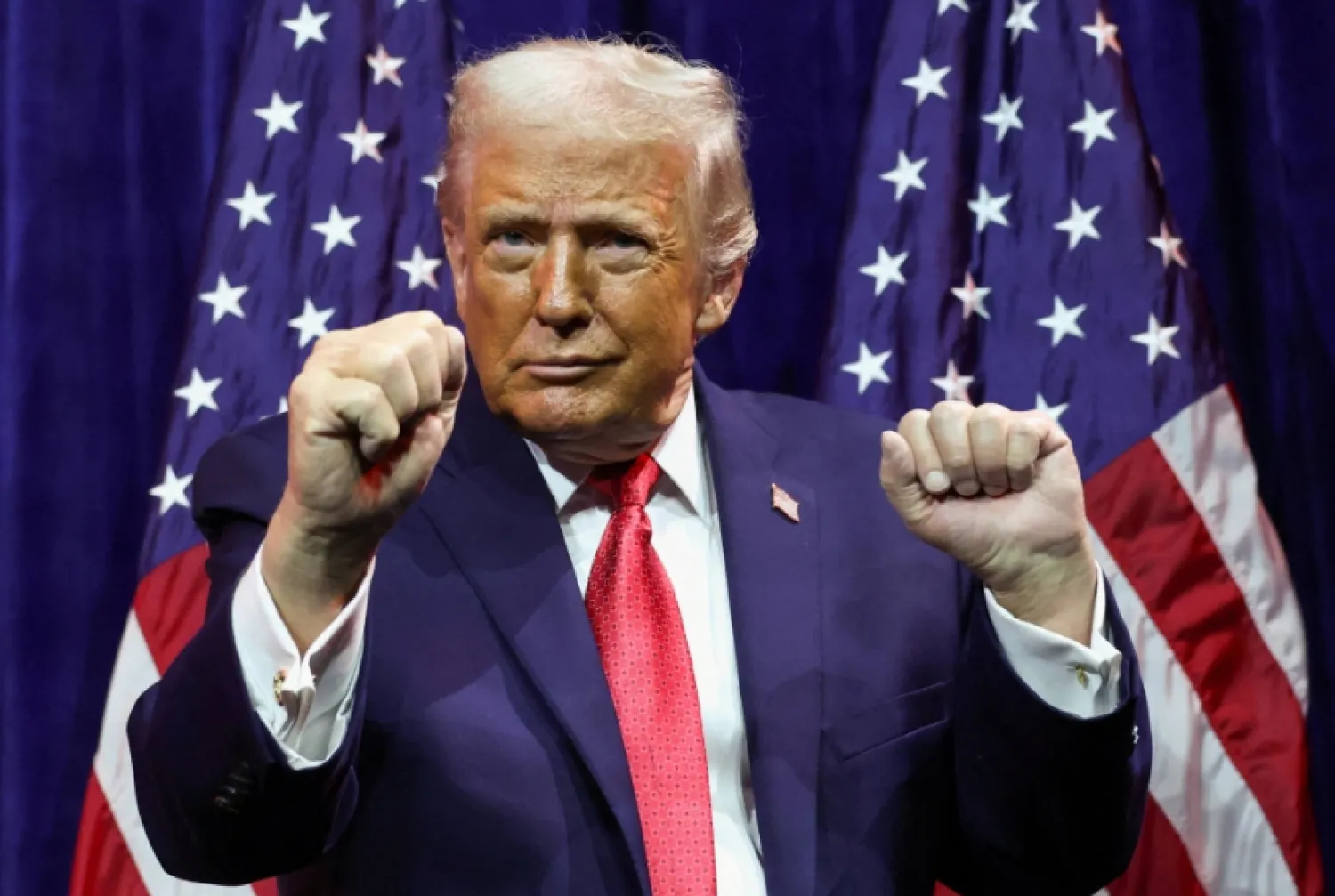
 FILE PHOTO: US President Donald Trump gestures as he addresses House Republicans at their annual issues conference retreat, at the Kennedy Center, renamed the Trump-Kennedy Center by the Trump-appointed board of directors, in Washington, D.C., US, January 6, 2026. REUTERS/Kevin Lamarque/File Photofu.
FILE PHOTO: US President Donald Trump gestures as he addresses House Republicans at their annual issues conference retreat, at the Kennedy Center, renamed the Trump-Kennedy Center by the Trump-appointed board of directors, in Washington, D.C., US, January 6, 2026. REUTERS/Kevin Lamarque/File Photofu.
TT

US Will Exit Dozens of International Organizations as it Further Retreats from Global Cooperation

 FILE PHOTO: US President Donald Trump gestures as he addresses House Republicans at their annual issues conference retreat, at the Kennedy Center, renamed the Trump-Kennedy Center by the Trump-appointed board of directors, in Washington, D.C., US, January 6, 2026. REUTERS/Kevin Lamarque/File Photofu.
FILE PHOTO: US President Donald Trump gestures as he addresses House Republicans at their annual issues conference retreat, at the Kennedy Center, renamed the Trump-Kennedy Center by the Trump-appointed board of directors, in Washington, D.C., US, January 6, 2026. REUTERS/Kevin Lamarque/File Photofu.

The Trump administration will withdraw from dozens of international organizations, including the UN's population agency and the UN treaty that establishes international climate negotiations, as the US further retreats from global cooperation.

President Donald Trump on Wednesday signed an executive order suspending US support for 66 organizations, agencies and commissions following his instructions for his administration to review participation in and funding for all international organizations, including those affiliated with the United Nations, according to a White House statement on social media.

Most of the targets are UN-related agencies, commissions and advisory panels that focus on climate, labor and other issues that the Trump administration has categorized as catering to diversity and “woke” initiatives, according to a partial list obtained by The Associated Press.

“The Trump Administration has found these institutions to be redundant in their scope, mismanaged, unnecessary, wasteful, poorly run, captured by the interests of actors advancing their own agendas contrary to our own, or a threat to our nation’s sovereignty, freedoms, and general prosperity,” the State Department said in a statement.

Trump's decision to withdraw from organizations that foster cooperation among nations to address global challenges comes as his administration has launched military efforts or issued threats that have rattled allies and adversaries alike, including capturing autocratic Venezuelan leader Nicolás Maduro and indicating an intention to take over Greenland.

This is the latest US withdrawal from global agencies The administration previously suspended support from agencies like the World Health Organization, the UN for Palestinian refugees known as UNRWA, the UN Human Rights Council and the UN cultural agency UNESCO as it has taken a larger, a-la-carte approach to paying its dues to the world body, picking which operations and agencies they believe align with Trump’s agenda and those which no longer serve US interests.

“I think what we’re seeing is the crystallization of the US approach to multilateralism, which is ‘my way or the highway,’” said Daniel Forti, head of UN affairs at the International Crisis Group. “It's a very clear vision of wanting international cooperation on Washington’s own terms.”

It has marked a major shift from how previous administrations — both Republican and Democratic — have dealt with the UN, and it has forced the world body, already undergoing its own internal reckoning, to respond with a series of staffing and program cuts.

Many independent nongovernmental agencies — some that work with the United Nations — have cited many project closures because of the US administration’s decision last year to slash foreign assistance through the US Agency for International Development, or USAID.

Despite the massive shift, the US officials, including Trump himself, say they have seen the potential of the UN and want to instead focus taxpayer money on expanding American influence in many of the standard-setting UN initiatives where there is competition with China, like the International Telecommunications Union, the International Maritime Organization and the International Labor Organization.

The global organizations from which the US is departing The withdrawal from the UN Framework Convention on Climate Change, or UNFCCC, is the latest effort by Trump and his allies to distance the US from international organizations focused on climate and addressing climate change.

UNFCC, the 1992 agreement between 198 countries to financially support climate change activities in developing countries, is the underlying treaty for the landmark Paris climate agreement. Trump — who calls climate change a hoax — withdrew from that agreement soon after reclaiming the White House.

Mainstream scientists say climate change is behind increasing instances of deadly and costly extreme weather, including flooding, droughts, wildfires, intense rainfall events and dangerous heat.

The US withdrawal could hinder global efforts to curb greenhouse gases because it “gives other nations the excuse to delay their own actions and commitments,” said Stanford University climate scientist Rob Jackson, who chairs the Global Carbon Project, a group of scientists that tracks countries’ carbon dioxide emissions.

It also will be difficult to achieve meaningful progress on climate change without cooperation from the US, one of the world’s largest emitters and economies, experts said.

The UN's population agency, which provides sexual and reproductive health across the world, has long been a lightning rod for Republican opposition and Trump himself cut funding for the agency during his first term in office. He and other GOP officials have accused the agency of participating in “coercive abortion practices” in countries like China.

When President Joe Biden took office in January 2021, he restored funding for the agency. A State Department review conducted the following year found no evidence to support these claims.

Other organizations and agencies that the US will quit include the Carbon Free Energy Compact, the United Nations University, the International Cotton Advisory Committee, the International Tropical Timber Organization, the Partnership for Atlantic Cooperation, the Pan-American Institute for Geography and History, the International Federation of Arts Councils and Culture Agencies and the International Lead and Zinc Study Group.

The State Department said additional reviews are ongoing.


Macron Accuses US of 'Turning Away' from Allies

President Emmanuel Macron delivers a speech to French ambassadors at the Elysee Palace © Michel Euler / POOL/AFP
TT

Macron Accuses US of 'Turning Away' from Allies

President Emmanuel Macron delivers a speech to French ambassadors at the Elysee Palace © Michel Euler / POOL/AFP

French President Emmanuel Macron said on Thursday that the United States was "breaking free from international rules" and "gradually turning away" from some of its allies.

Macron delivered his annual speech to French ambassadors at the Elysee Palace as European powers are scrambling to come up with a coordinated response to US assertive foreign policy in the Western hemisphere following Washington's capture of Venezuela's leader Nicolas Maduro and Donald Trump's designs on Greenland, according to AFP.

"The United States is an established power, but one that is gradually turning away from some of its allies and breaking free from international rules that it was still promoting recently," Macron told ambassadors at the Elysee Palace.

"Multilateral institutions are functioning less and less effectively," Macron added.

"We are living in a world of great powers with a real temptation to divide up the world."

Macron spoke after US special forces snatched Maduro and his wife from Venezuela on Saturday in a lightning raid and whisked them to New York, sparking condemnation the United States was undermining international law.

In the wake of his military intervention in Venezuela, President Trump set off alarm bells in Europe by repeating his insistence that he wants to take control of Greenland.

Trump has repeatedly refused to rule out using force to seize the strategic Arctic island, prompting shock and anger from controlling power Denmark and other longstanding European allies.

Copenhagen has warned that any attack would spell the end of the NATO alliance.

- 'Reinvest fully in the UN' -

The French leader said "global governance" was key in a time when "every day people wonder whether Greenland is going to be invaded" as well as whether "Canada will face the threat of becoming the 51st state".

He said it was the right moment to "reinvest fully in the United Nations, as we note its largest shareholder no longer believes in it".

The White House on Wednesday flagged the US exit from 66 global organizations and treaties -- roughly half affiliated with the United Nations -- it identified as "contrary to the interests of the United States."

Macron said Europe must protect its interests and urged the "consolidation" of European regulation of the tech sector.

He stressed the importance of safeguarding academic independence and hailed "the possibility of having a controlled information space where opinions can be exchanged completely freely, but where choices are not made by the algorithms of a few."

Brussels has adopted a powerful legal arsenal aimed at reining in tech giants -- namely through its Digital Markets Act (DMA) which covers competition and the Digital Services Act (DSA) on content moderation.

Washington has denounced the tech rules as an attempt to "coerce" American social media platforms into censoring viewpoints they oppose.

"The DSA and DMA are two regulations that must be defended," Macron said.


Trump Says US Oversight of Venezuela Could Last Years

US President Donald Trump speaks as Secretary of State Marco Rubio and Secretary of Defense Pete Hegseth look on during a press conference following a US strike on Venezuela where President Nicolas Maduro and his wife, Cilia Flores, were captured, from Trump's Mar-a-Lago club in Palm Beach - Reuters
TT

Trump Says US Oversight of Venezuela Could Last Years

US President Donald Trump speaks as Secretary of State Marco Rubio and Secretary of Defense Pete Hegseth look on during a press conference following a US strike on Venezuela where President Nicolas Maduro and his wife, Cilia Flores, were captured, from Trump's Mar-a-Lago club in Palm Beach - Reuters

The United States could oversee Venezuela and control its oil revenue for years, President Donald Trump said in an interview ​published on Thursday.

During what the New York Times described as a wide-ranging, two-hour interview, the paper said Trump also appeared to lift a threat to take military action against Venezuela's neighbor Colombia. Trump invited Colombia's leftist leader, whom he had previously called a "sick man", to visit Washington.

"Only time will tell" how long the United States will oversee Venezuela, Trump said. When asked by the newspaper if it would be three months, six months, a year or longer, Trump said: "I would say much longer."

"We will rebuild it in a very profitable way," Trump said of Venezuela, where he sent troops to seize President Nicolas Maduro in a night raid on January 3.

"We're going to be using oil, and we're going to be taking oil. We're getting oil prices down, and we're going to be giving money to Venezuela, which ‌they desperately need."

Trump ‌added that the US was "getting along very well" with the government of the interim president, ‌Delcy ⁠Rodriguez, ​a longstanding Maduro ‌loyalist who had served as the ousted leader's vice president.

'MARCO SPEAKS TO HER ALL THE TIME'

The Times said Trump declined to answer questions about why he had decided not to give power in Venezuela instead to the opposition, which Washington had previously considered the legitimate winner of an election in 2024.

Trump on Tuesday unveiled a plan to refine and sell up to 50 million barrels of Venezuelan oil that had been stuck in Venezuela under US blockade.

"They're giving us everything that we feel is necessary," Trump said, referring to the Venezuelan government.

He declined to comment when asked if he had personally spoken to Rodriguez.

"But Marco speaks to her all the time," he said, referring to Secretary of State Marco Rubio. "I will tell you ⁠that we are in constant communication with her and the administration."

COLOMBIA THREAT APPEARS TO DISSIPATE

The Times said its reporters were permitted to sit in during a phone call between Trump and ‌Colombia's President Gustavo Petro, provided the contents of the call were off the record.

In ‍a post on social media, Trump said: "It was a great ‍honor to speak with the President of Colombia, Gustavo Petro, who called to explain the situation of drugs and other disagreements that we ‍have had. I appreciated his call and tone, and look forward to meeting him in the near future."

Petro described the call, his first with Trump, as cordial.

On Sunday Trump had threatened to carry out military action against Colombia, calling Petro "a sick man who likes making cocaine and selling it to the United States, and he's not going to be doing it very long".

The Times said Trump's phone call with Petro lasted about an hour and "appeared to dissipate ​any immediate threat of US military action".

Trump's use of force in Venezuela has made some members of his own Republican Party wary, after he long criticised US military ventures abroad. The Senate is due to consider a resolution on ⁠Thursday to block Trump from taking further action without congressional authorization.

Republicans, who control the Senate with 53 seats, have defeated several such measures since Trump began military action around Venezuela late last year, but the last vote in November was a close 49-51 after two Republicans backed it. Senator Rand Paul, a Kentucky Republican co-sponsoring the resolution, said he had spoken to at least two additional Republicans now "thinking about it".

MEETING PLANNED WITH OIL COMPANIES

Trump has said the United States intends to "run" Venezuela. US officials have indicated their plan for now is to exert influence without a military occupation.

Venezuela, with the world's biggest proven oil reserves, has become impoverished in recent decades, with eight million people fleeing abroad in one of the world's biggest migration crises.

Washington and the Venezuelan opposition have long blamed corruption, mismanagement and brutality by the ruling Socialist Party. Maduro blamed the economic damage on US sanctions.

Several senior US officials said on Wednesday that the United States needs to control Venezuela's oil sales and revenues indefinitely in order to restore the country's oil industry and rebuild its economy.

Trump is scheduled to meet with the heads of major oil companies at the White House on Friday ‌to discuss ways of raising Venezuela's oil production. Representatives from the top three US oil companies, Exxon Mobil, ConocoPhillips and Chevron , would be present, according to a source familiar with the planning.

The companies, all of which have experience in Venezuela, have declined to comment.


Iran Ready to Fight Back if US or Israel Attacks again, Says Foreign Minister

The Iranian flag waves in front of the International Atomic Energy Agency (IAEA) headquarters, before the beginning of a board of governors meeting, amid the coronavirus disease (COVID-19) outbreak in Vienna, Austria, March 1, 2021. (Reuters)
TT

Iran Ready to Fight Back if US or Israel Attacks again, Says Foreign Minister

The Iranian flag waves in front of the International Atomic Energy Agency (IAEA) headquarters, before the beginning of a board of governors meeting, amid the coronavirus disease (COVID-19) outbreak in Vienna, Austria, March 1, 2021. (Reuters)

Iran does not want war with Israel or the United States, but is ready to fight back if attacked again, the country’s foreign minister said Thursday.

Speaking upon arrival in Beirut, Abbas Araghchi told reporters that Iran is also ready for negotiations with the US over its nuclear program as long as the talks are based on mutual respect rather than “dictation” by Washington.

Araghchi’s comments came as many fear that close US ally Israel will target Iran again as it did during the 12-day war it launched against Tehran in June. Israel killed a slew of top military officials and nuclear scientists, and the US bombed Iranian nuclear enrichment sites.

“America and Israel have tested their attack on Iran and this attack and strategy faced extreme failure,” the Iranian official said in Beirut at the start of a two-day visit to Lebanon. “If they repeat it, they will face the same results.”

“We are ready for any choice. We don’t desire a war but we are ready for it,” Araghchi said.

In February, US President Donald Trump reimposed a “maximum pressure” campaign on Iran in an effort to block its development of nuclear weapons. The campaign included US led strikes on three critical Iranian enrichment facilities in June.

Araghchi said Tehran is ready for “negotiations but I say that the negotiations should be based on mutual respect and mutual interests.”

“We believe that once the Americans reach the outcome that constructive and positive negotiations rather than ordering dictation are the framework, then at that time the results of the these negotiations become fruitful,” he said.

Iran had been enriching uranium up to 60% purity — a short, technical step from weapons-grade levels — after Trump unilaterally withdrew the United States from Tehran’s 2015 nuclear deal with world powers in 2018. Tehran long has maintained its atomic program is peaceful, though the West and the IAEA, the UN's nuclear watchdog, say Iran had an organized nuclear weapons program until 2003.

In late December, Trump warned Iran that the US could carry out further military strikes if the country attempts to reconstitute its nuclear program as he held talks with Israeli Prime Minister Benjamin Netanyahu in Florida.
