


Israel Sees Spike in Suicide Among Troops

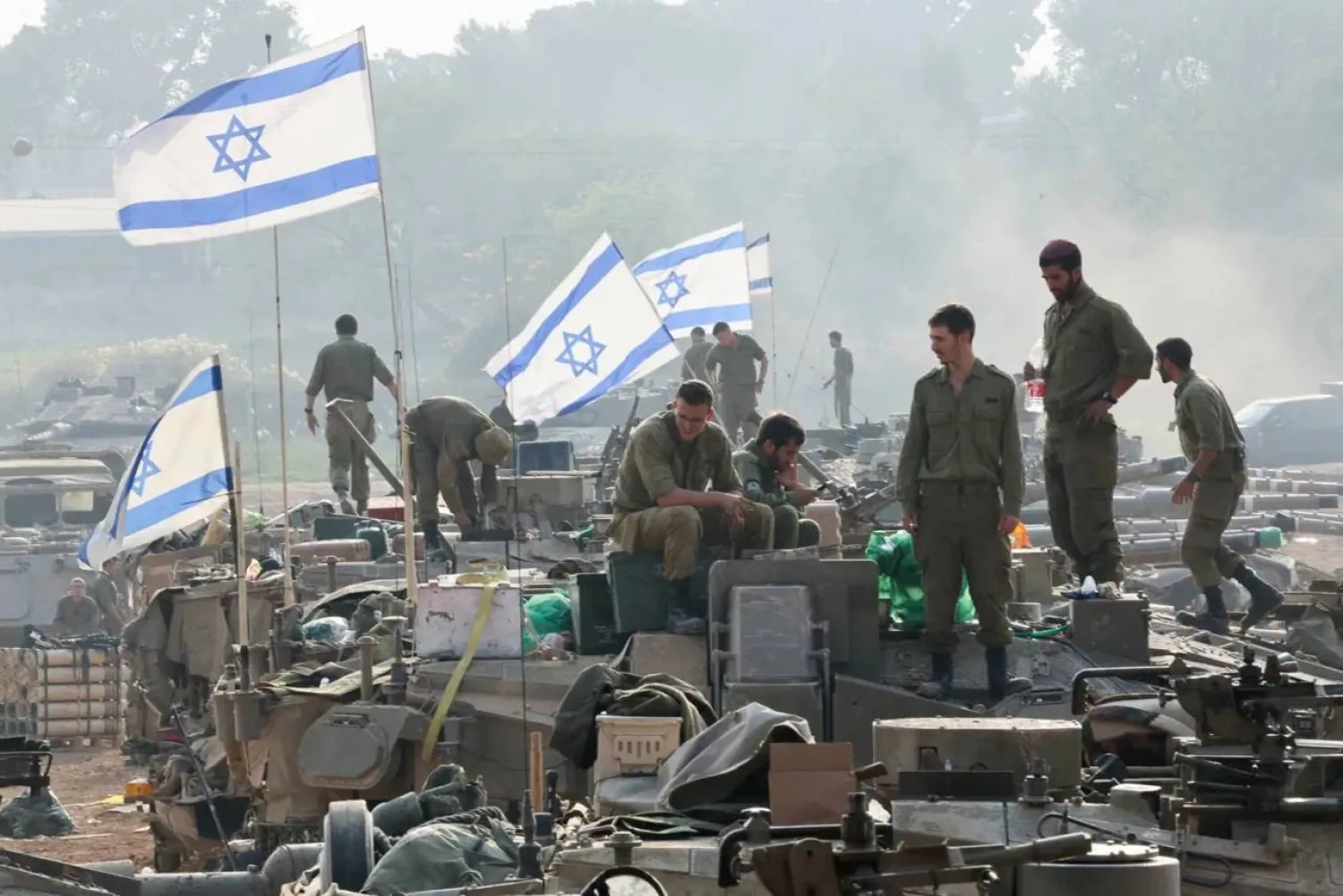
Israeli soldiers stand on tanks, amid the conflict between Israel and Hamas, near the Israel-Gaza border, in southern Israel, January 1, 2024. REUTERS/Violeta Santos Moura/File Photo
TT

Israel Sees Spike in Suicide Among Troops

Israeli soldiers stand on tanks, amid the conflict between Israel and Hamas, near the Israel-Gaza border, in southern Israel, January 1, 2024. REUTERS/Violeta Santos Moura/File Photo

Israel is grappling with a dramatic increase in post-traumatic stress disorder and suicide among its troops after its two-year assault on Gaza, precipitated by the October 7, 2023, Hamas attack on southern Israel.

Recent reports by the Defense Ministry and by health providers have detailed the military's mental health crisis, which comes as fighting persists in Gaza and Lebanon and as tensions flare with Iran, according to Reuters.

The Gaza war quickly expanded with cross-border fire between Israel and Lebanon's Hezbollah, and saw hundreds of thousands of soldiers and reservists deployed across both fronts in some of the heaviest fighting in the country's history.

Israeli forces have killed more than 71,000 Palestinians in Gaza and 4,400 in southern Lebanon, according to Gazan and Lebanese officials, and Israel says more than 1,100 service members have been killed since October 2023.

The war has left much of Gaza destroyed and its 2 million people overwhelmingly lack proper shelter, food or access to medical and health services.

Palestinian mental health specialists have said Gazans are suffering “a volcano” of psychological trauma, with large numbers now seeking treatment, and children suffering symptoms such as night terrors and an inability to focus.

Post-Trauma Cases UP 40% Among Soldiers
Israeli studies show the war has taken its toll on the mental health of soldiers carrying out Israel's stated war aims of eliminating Hamas in Gaza, retrieving hostages there and disarming Hezbollah.

Some soldiers who came under attack when their military bases were invaded by Hamas on October 7 are also struggling.

Israel's Defense Ministry said it has recorded a nearly 40% increase in PTSD cases amongst its soldiers since September 2023, and predicts the figure will increase by 180% by 2028. Of the 22,300 troops or personnel being treated for war wounds, 60% suffer from post-trauma, the ministry said.

It has expanded the health care provided to those dealing with mental health issues, expanded the budget, and said there was an increase of about 50% in the use of alternative treatments.

The country's second-largest healthcare provider, Maccabi, said in its 2025 annual report that 39% of Israeli military personnel under its treatment had sought mental health support while 26% had voiced concerns about depression.

Several Israeli organizations like NGO HaGal Sheli, which uses surfing as a therapy technique, have taken on hundreds of soldiers and reservists suffering from PTSD. Some former soldiers have therapy dogs.

Feeling Guilty
Ronen Sidi, a clinical psychologist who directs combat veteran research at Emek Medical Center in northern Israel, said soldiers were generally grappling with two different sources of trauma.

One source was related to “deep experiences of fear” and “being afraid to die” while deployed in Gaza and Lebanon and even while at home in Israel.

Many witnessed the Hamas assault on southern Israel - in which the militants also took around 250 hostages back into Gaza - and its aftermath firsthand.

Sidi said the second source is from moral injury, or the damage done to a person's conscience or moral compass from something they did.

“A lot of (soldiers') split-second decisions are good decisions,” which they take under fire, “but some of them are not, and then women and children are injured and killed by accident, and living with the feeling that you have killed innocent people... is a very difficult feeling and you can't correct what you have done,” he said.

One reservist, Paul, a 28-year-old father of three, said he had to leave his job as a project manager with a global firm because “the whistles of the bullets” above his head lingered with him even after returning home.

Paul, who declined to give his last name over privacy concerns, said he deployed in combat roles in Gaza, Lebanon and Syria.

Although fighting has abated in recent months, he said he lives in a constant state of alert.

“I live that way every day,” Paul said.

Untreated Trauma
A soldier seeking state support for their mental health must appear before a defense ministry assessment committee which determines the severity of their case and grants them official recognition.

That process can take months and can deter soldiers from seeking help, some trauma professionals said.

Israel's Defense Ministry said it provides some immediate help to soldiers once they start the evaluation process and has increased this effort since the war began.

An Israeli parliamentary committee found in October that 279 soldiers had attempted suicide in the period from January 2024 to July 2025, a sharp increase from previous years.

The report found that combat soldiers comprised 78% of all suicide cases in Israel in 2024.

The risk of suicide or self-harm increases if trauma is untreated, said Sidi, the clinical psychologist.

“After October 7 and the war, the mental health institutions in Israel are overwhelmed completely, and a lot of people either can't get therapy or don't even understand the distress that they are feeling has to do with what they have experienced.”

For soldiers, the chance of seeing combat remains high. Israel's military remains deployed in over half of Gaza and fighting has persisted there despite a US-backed truce in October, with more than 440 Palestinians and three Israeli soldiers killed.

Its troops still occupy parts of southern Lebanon, as the Lebanese army presses on with disarming Hezbollah under a separate US-brokered deal.

In Syria, Israeli troops have occupied an expanded section of the country's south since the ouster of former leader Bashar al-Assad.

As tensions flare with Iran and the US threatens to intervene, Israel could also find itself in another violent confrontation with Tehran, after last June's 12-day war.



UN Warns Hormuz Standstill Will Hit World’s Most Vulnerable

 The Parnassos crude oil tanker sits anchored as the traffic is down in the Strait of Hormuz, amid the US-Israeli conflict with Iran, in Muscat, Oman, March 10, 2026. (Reuters)
The Parnassos crude oil tanker sits anchored as the traffic is down in the Strait of Hormuz, amid the US-Israeli conflict with Iran, in Muscat, Oman, March 10, 2026. (Reuters)
TT

UN Warns Hormuz Standstill Will Hit World’s Most Vulnerable

 The Parnassos crude oil tanker sits anchored as the traffic is down in the Strait of Hormuz, amid the US-Israeli conflict with Iran, in Muscat, Oman, March 10, 2026. (Reuters)
The Parnassos crude oil tanker sits anchored as the traffic is down in the Strait of Hormuz, amid the US-Israeli conflict with Iran, in Muscat, Oman, March 10, 2026. (Reuters)

The standstill in the Strait of Hormuz caused by the Middle East war could hammer some of the world's most vulnerable people, the United Nations warned Tuesday.

The strait is the only sea passage from the Gulf towards the Indian Ocean, through which nearly a quarter of the world's seaborne oil supplies pass, as well as a significant amount of cargo.

Iran has all but blocked the waterway following the launch of the February 28 US-Israeli airstrikes on the country that triggered the war.

"The current shock comes at a time when many developing economies struggle to service their debt, face a tightening of fiscal space and limited capacity to absorb new price shocks," the UN trade and development agency UNCTAD said.

"Higher energy, fertilizer and transport costs -- including freight rates, bunker fuel prices and insurance premiums -- may increase food costs and intensify cost-of-living pressures, particularly for the most vulnerable," it said.

UNCTAD added that, in terms of seaborne trade volume, in the week before the conflict 38 percent of crude oil, 29 percent of liquified petroleum gas, 19 percent of liquified natural gas and 19 percent refined oil products went through the strait.

But while an average of 129 ships transited daily through the passage between February 1 and 27, that number dropped to just three on March 3.

UNCTAD said the disruptions underscored the vulnerability of critical maritime chokepoints and their potential for disruption to them to send shocks across supply chains and commodity markets.

"Rising energy, transport and food costs could strain public finances and increase pressure on household budgets, potentially heightening economic and social pressures... particularly in economies heavily dependent on imported energy, fertilizers and staple foods," it said.

- Food aid hit -

UN rights chief Volker Turk echoed the alarm for the effect the plunge in commercial shipping activity could have, "particularly for the world's most vulnerable".

"The impact of an oil price surge will have a knock-on effect for macro-economic and social stability in many countries, particularly those already experiencing debt distress," he said.

The UN's World Food Program said the costs and time lost to the Strait of Hormuz disruptions were already impacting its humanitarian operations.

"This is nothing less than another seminal moment in global supply chain history," Jean-Martin Bauer, the director of WFP's food and nutrition analysis service, told reporters in Geneva.

Speaking from the WFP's Rome headquarters, he said shipping lines were diverting services and adding surcharges, leading to congestion "in places that are very far from Hormuz".

"We're seeing congestion in Asia. It's quite a severe disruption that's taking place right now," Bauer said.

"We're needing to go the long way around the Cape of Good Hope to reach some of our key geographies."

WFP's biggest operation is in Sudan, but now it is facing approximately 25 days of additional shipping time.

"It's basically 50 percent more than we would usually have. So that's really extending the supply chain and adding to cost," said Bauer.


Israel Says Iran Hacked Security Cameras

People exercise on the beach in Tel Aviv, Israel, 10 March 2026. (EPA)
TT

Israel Says Iran Hacked Security Cameras

People exercise on the beach in Tel Aviv, Israel, 10 March 2026. (EPA)

Israel's cybersecurity directorate said it had identified "dozens of Iranian breaches into security cameras for espionage purposes" since the start of the war in the Middle East, urging the public to be vigilant.

"The directorate is working to alert hundreds of camera owners and calls on the public to change their passwords and update their software to prevent any security risk, whether national or personal," Cyber Israel wrote on X Monday.

Cyberattacks between Iran and Israel have been a frequent occurrence in recent years, as the two foes conducted a shadow war that culminated in open conflict last June and again on February 28.

In December 2025, former Israeli prime minister Naftali Bennett -- who is set to run against incumbent premier Benjamin Netanyahu in a general election this year -- said he had been the victim of a cyberattack targeting his Telegram account, after hackers claimed to have broken into his phone.

Private messages, videos and photographs said to be taken from Bennett's phone were published on a hacker site named after "Handala", a character symbolizing the Palestinian cause, and on an associated X account.

Iran-linked hackers have stepped up their operations in the region since strikes began on the country, an expert told AFP.

Israeli cybersecurity firm Check Point said in a report that since the launch of the US-Israeli offensive on February 28, it has seen hackers accessing surveillance cameras, which are widely used but often poorly secured.

The images were likely used to assess damage caused by the attacks or "to gather the necessary information" on "the habits (of targeted individuals) or locations to hit", Gil Messing, head of cyberintelligence at Check Point, told AFP.

The hackers "are part of (Iran's) army" and "are largely supported by the state", notably by the Revolutionary Guards and the ministry of intelligence and security, he added.

Last week, the Financial Times reported that Israel had hacked nearly all of Tehran's traffic cameras for years in preparation for the operation that killed Iran's supreme leader Ali Khamenei on the first day of the offensive.


Israeli Army Says Half of Iranian Missiles Have Cluster Munitions

An Iranian missile with cluster munitions flies toward Israel, amid the US-Israel conflict with Iran, as seen from Tel Aviv, Israel, March 9, 2026. (Reuters)
TT

Israeli Army Says Half of Iranian Missiles Have Cluster Munitions

An Iranian missile with cluster munitions flies toward Israel, amid the US-Israel conflict with Iran, as seen from Tel Aviv, Israel, March 9, 2026. (Reuters)

Israel's army estimated on Tuesday that around half of the missiles being fired at the country by Iran contained cluster munitions, posing an added danger to people on the ground.

"Approximately 50 percent of Iranian missiles fired toward Israel carry cluster warheads that disperse into smaller bombs in the air, creating additional falling debris hazards," a military official said, in comments shared by the defense ministry.

Cluster munitions explode in mid-air and scatter bomblets. Some of these submunitions do not explode on impact and can cause casualties over time, particularly among children.

"The radius of the impact is about ten kilometers. Although these contain less explosive material than a standard missile, the impact can still be lethal," the official said.

Two construction workers died from shrapnel wounds after missiles were fired at central Israel on Monday, with emergency workers at the site telling AFP the damage appeared to have been caused by a cluster munition.

Iran and Israel are not among the more than 100 countries that are party to the 2008 Convention on Cluster Munitions, which prohibits their use, transfer, production and storage.

Both have reportedly used the munitions in earlier conflicts.

During the 12-day war between Iran and Israel in June 2025, Amnesty International said Tehran used cluster munitions at least three times, based on analysis of photos and videos, as well as media reports.

In 2007, a US government investigation found that Israel had probably violated arms export agreements with Washington when it dropped US-made cluster bombs in Lebanon during its war with Hezbollah the previous year.