


UN Chief Decries Global Rise of ‘Rule of Force’ 

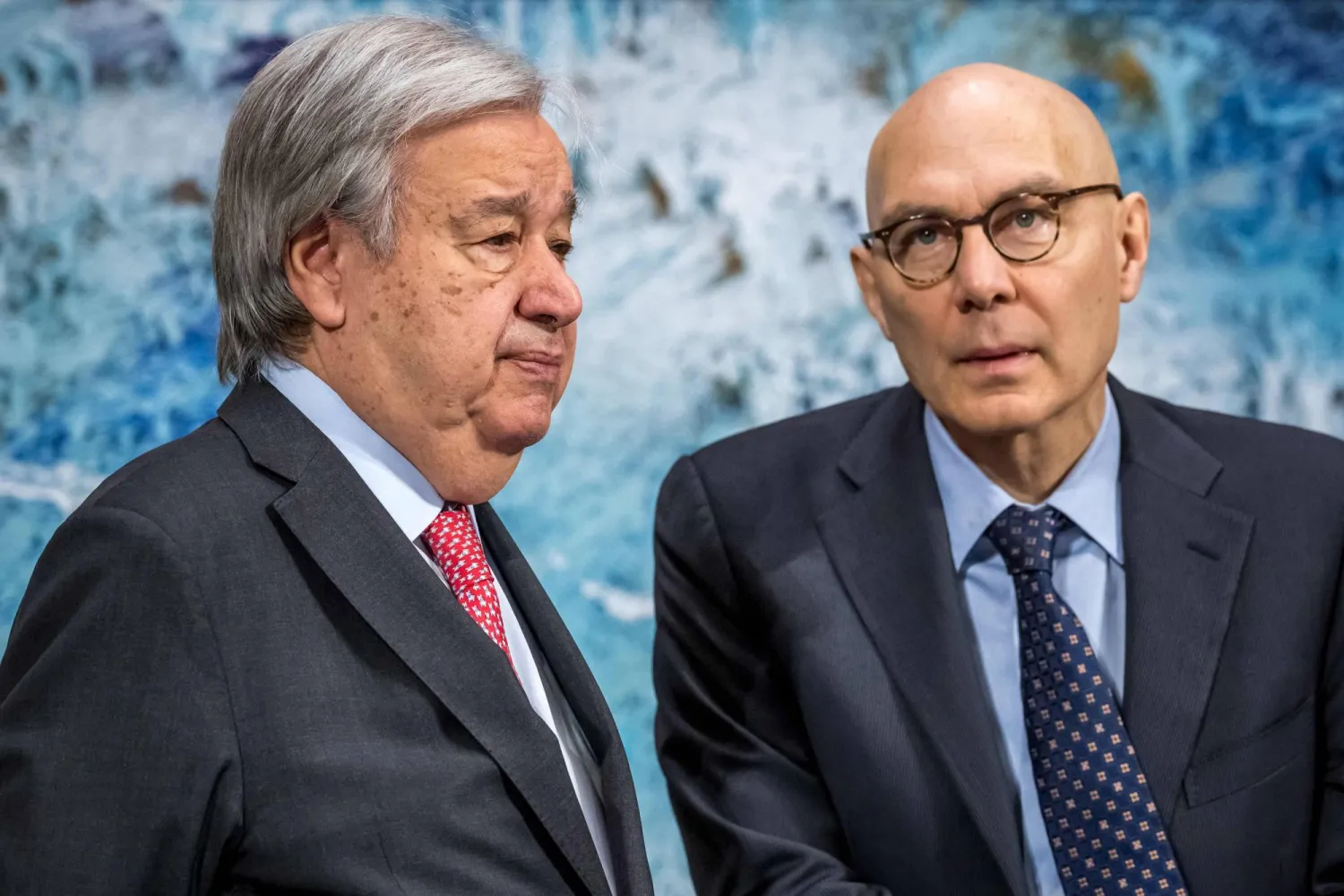
UN Secretary-General Antonio Guterres (L) stands next to UN High Commissioner for Human Rights Volker Turk at the opening of the 61st session of the UN Human Rights Council at the United Nations office in Geneva on February 23, 2026. (AFP)
TT

UN Chief Decries Global Rise of ‘Rule of Force’ 

UN Secretary-General Antonio Guterres (L) stands next to UN High Commissioner for Human Rights Volker Turk at the opening of the 61st session of the UN Human Rights Council at the United Nations office in Geneva on February 23, 2026. (AFP)

The United Nations leader warned Monday that "the rule of force" was spreading, as the powerful trample on international law and wield artificial intelligence and other technologies to attack human rights.

"Human rights are under a full-scale attack around the world," Antonio Guterres told the opening of the UN Human Rights Council's annual session in Geneva.

"The rule of law is being outmuscled by the rule of force."

The UN secretary-general stressed that "this assault is not coming from the shadows, or by surprise. It is happening in plain sight -- and often led by those who hold the greatest power."

He did not mention specific situations, although he did voice outrage at Russia's war in Ukraine, where he said more than 15,000 civilians had been killed in four years of violence.

"It is more than past time to end the bloodshed," he said.

Guterres also highlighted the "blatant violations of human rights, human dignity and international law in the Occupied Palestinian Territory".

He charged that the trajectory in the conflict-torn territories under Israeli occupation was "stark, clear and purposeful: the two-state solution is being stripped away in broad daylight".

"The international community cannot allow it to happen," he insisted.

- Rights attacked 'deliberately, strategically' -

In his final in-person address to the UN's top rights body, Guterres said the worst conflict-hit areas were not the only places where rights were eroding.

"Around the world, human rights are being pushed back deliberately, strategically and sometimes proudly," he said.

"We are living in a world where mass suffering is excused away, where humans are used as bargaining chips, where international law is treated as a mere inconvenience."

UN rights chief Volker Turk echoed the concerns.

In a "deeply worrying trend", he warned that "domination and supremacy are making a comeback".

"A fierce competition for power, control and resources is playing out on the world stage at a rate and intensity unseen for the past 80 years," he warned.

"The use of force to resolve disputes between and within countries is becoming normalized."

Turk highlighted how "the gears of global power are shifting", calling for people to band together to protect rights and create "a strong counterbalance to the top-down, autocratic trends we see today".

- 'Democracies eroding' -

While the UN says that conflicts are multiplying, impunity is spreading and humanitarian needs are exploding, its traditional top donor, Washington, has dramatically slashed its foreign aid spending since President Donald Trump's returned to power last year. Other major donors have followed.

"When human rights fall, everything else tumbles," Guterres warned.

The crisis of respect for human rights "mirrors and magnifies every other global fracture", he said, pointing out that "inequalities are widening at staggering speed."

At the same time, "climate chaos is accelerating, and technology, especially artificial intelligence, is increasingly being used in ways that suppress rights, deepen inequality and expose marginalized people to new forms of discrimination both online and offline," he warned.

Turk meanwhile lambasted leaders, without naming them, who seem to believe "that they are above the law, and above the UN Charter."

"They claim exceptional status, exceptional danger or exceptional moral judgement to pursue their own agenda at any cost," he said, pointing to how "some weaponize their economic leverage."

"They spread disinformation to distract, silence and marginalize," he charged.

What is clear, Guterres warned, was that "across every front, those who are already vulnerable are being pushed further to the margins."

"Democracies eroding... migrants harassed, arrested and expelled with total disregard for their human rights and their humanity. Refugees scapegoated," he pointed out.

Guterres, who is to step down this year after a decade at the UN helm, called for urgent action to reverse the trend.

"Do not let power write a new rulebook in which the vulnerable have no rights and the powerful have no limits," he said.

Risk of ‘Escalation’ if Iran Attacked, Warns Deputy Foreign Minister

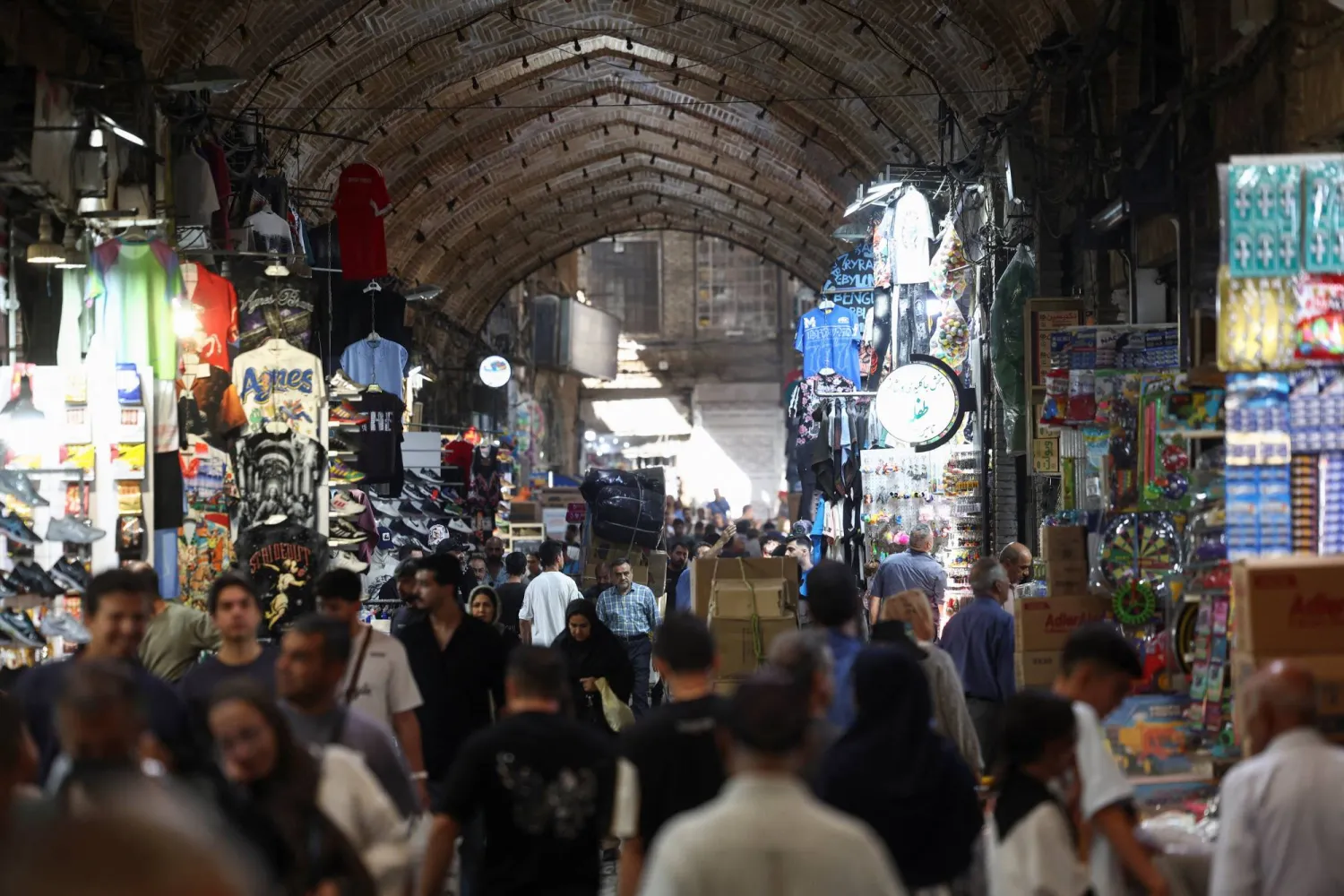
Iranians walk past shops selling food ahead of Iftar, the Ramadan fast-breaking meal, in northern Tehran on February 23, 2026. (AFP)
TT

Risk of ‘Escalation’ if Iran Attacked, Warns Deputy Foreign Minister

Iranians walk past shops selling food ahead of Iftar, the Ramadan fast-breaking meal, in northern Tehran on February 23, 2026. (AFP)

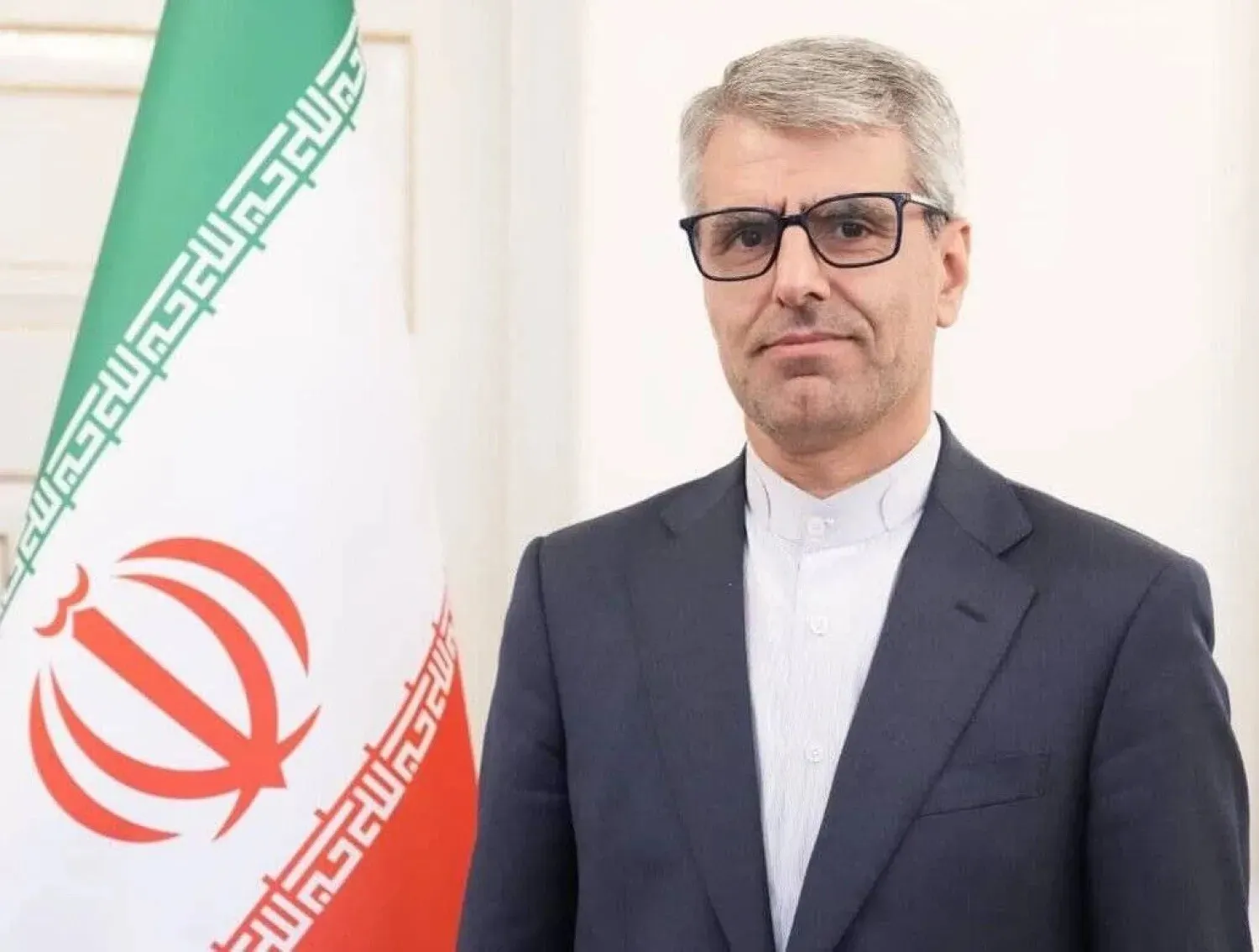
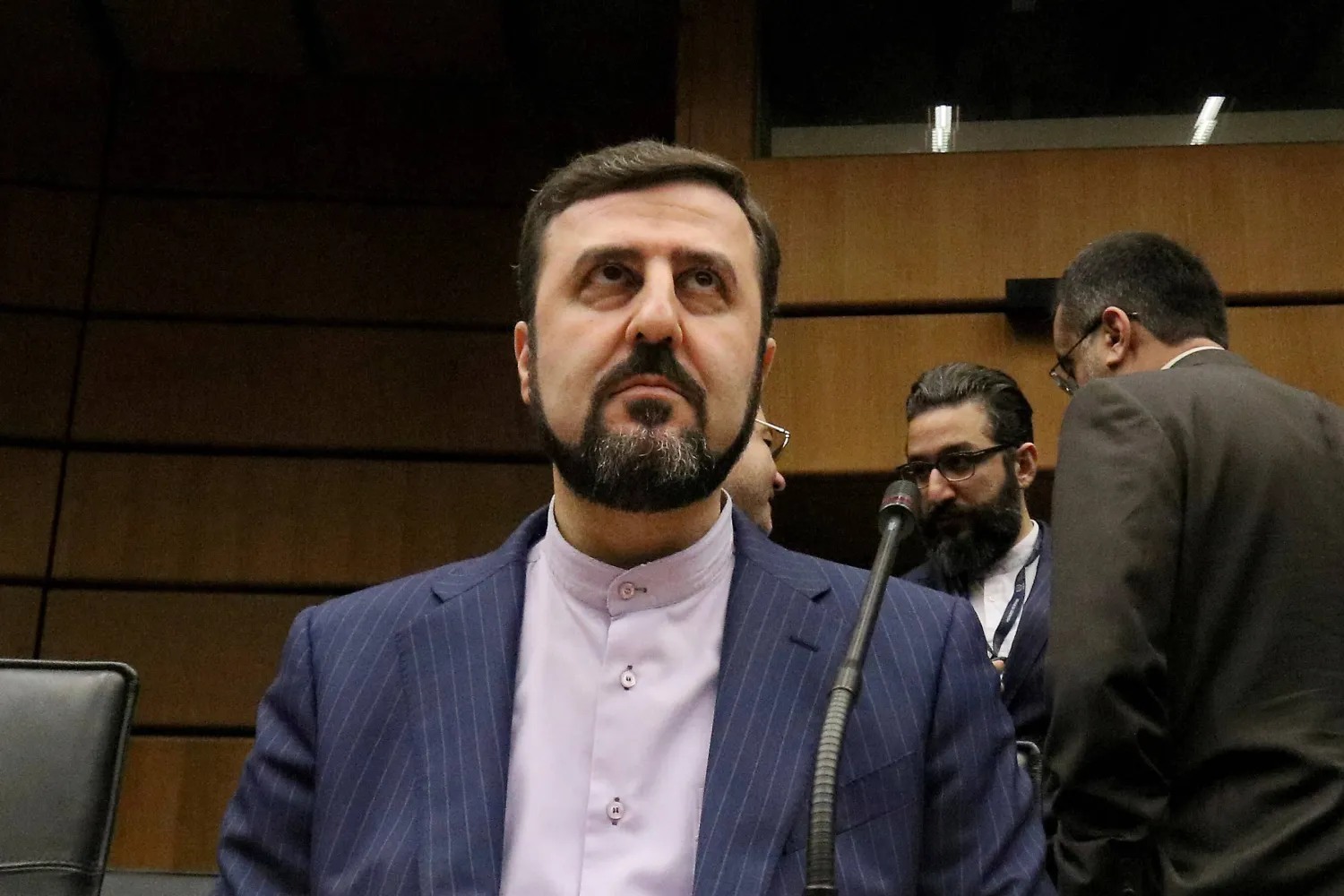
Iran's deputy foreign minister Kazem Gharibabadi warned of a wider escalation if his country was attacked, after US President Donald Trump raised the threat of strikes.

Trump has sent a major deployment of air and sea power to the Middle East and has threatened to strike Iran if it does not reach a deal on key concerns starting with its nuclear program.

"We call upon all nations committed to peace and justice to take meaningful steps to prevent further escalation," Gharibabadi said at the Conference on Disarmament in Geneva.

"The consequences of any renewed aggression wouldn't remain confined to one country -- and responsibility would rest with those who initiate or support such actions."

Iranian and US negotiators held indirect talks in Geneva last week on Tehran's nuclear program, hosted by Oman.

A fresh round of talks in the Swiss city this Thursday has been confirmed by Muscat, though not by Washington.

"Iran remains committed to diplomacy and dialogue as the most effective path towards de-escalation and sustainable security," Gharibabadi said.

"Recent diplomatic engagement here in Geneva, which will continue this Thursday, demonstrates that a new window of opportunity exists for negotiations to address differences and build confidence -- provided that they uphold mutual respect, equitable treatment and non-selective application of international norms.

"Any sustainable and credible negotiation must respect the legitimate rights of all states under international law, and deliver tangible security benefits without coercion, unilateral demands or threats of force."

- 'Chaos and change' -

The United States and Israel threatened new military action against Iran after mass protests in the regime, which the Iranian authorities crushed at a cost of thousands of lives.

After last week's indirect talks with Washington through Omani mediators in Geneva, Tehran said they had reached broad agreement on a set of guiding principles.

Gharibabadi said that while Tehran sought the path of diplomacy, it was prepared to defend its sovereignty, territory and people, insisting it would exercise its right to self-defense "if necessary".

He said meaningful progress in disarmament and non-proliferation could only be achieved through mutual, balanced and legally-binding commitments.

He called upon nuclear weapons states to engage constructively in talks towards a comprehensive nuclear weapons convention, plus offer legally-binding security assurances for countries without nuclear weapons.

Speaking just before, UN Secretary-General Antonio Guterres said the world was living through a period of "chaos and change", with international law being brazenly violated.

"The international order that defined security relations for nearly eight decades is shifting rapidly. The reckless use of force in many regions is fomenting mistrust," he warned.


Netanyahu Says Israel Facing ‘Challenging Days’ with Iran-US Tensions

Israeli Prime Minister Benjamin Netanyahu delivers a speech during a plenary session of the Knesset, the Israeli parliament, in Jerusalem, 23 February 2026. (EPA)
TT

Netanyahu Says Israel Facing ‘Challenging Days’ with Iran-US Tensions

Israeli Prime Minister Benjamin Netanyahu delivers a speech during a plenary session of the Knesset, the Israeli parliament, in Jerusalem, 23 February 2026. (EPA)

Prime Minister Benjamin Netanyahu said Monday that Israel was facing "complex and challenging days" as tensions escalate between the United States and Iran following President Donald Trump's threat of strikes should Tehran refuse to accept a new nuclear agreement.

"We are in very complex and challenging days," Netanyahu told lawmakers in a brief address to parliament. "We are keeping our eyes open and are prepared for any scenario."

He also reiterated a warning to Iran's leadership: "I have conveyed to the Iranian regime that if they make the gravest mistake in their history and attack the State of Israel, we will respond with a force they cannot even imagine."

The premier further highlighted Israel's close military cooperation with the US, as Washington continues to build up its military presence near Iran and in the Middle East.

"The alliance with the United States has never been closer," Netanyahu said.

"Between the Israel forces and the United States military, between our security agencies and their security services, there has never been anything like this," he added.

Arch-foes Israel and Iran faced each other in a first direct confrontation last June during a 12-day war in which the Israeli military targeted Tehran's nuclear facilities and ballistic missile arsenal.

Iran responded with drone and missile strikes on Israel. Later on in the war, the United States joined Israel in targeting Iran's underground nuclear facilities.


Iranian Students Protest for Third Day as US Pressure Mounts

Iranians drive along a street in Tehran, Iran, 23 February 2026. (EPA)
TT

Iranian Students Protest for Third Day as US Pressure Mounts

Iranians drive along a street in Tehran, Iran, 23 February 2026. (EPA)

Iranian students ‌defied authorities with protests for a third day on Monday, weeks after security forces crushed mass unrest with thousands killed and as the United States weighs possible air strikes against the country.

State media outlets reported students chanting anti-government slogans at Tehran University, burning flags at the all-women al-Zahra University, and scuffles at Amir Kabir University, all located in the capital.

Reuters also verified video showing students at al-Zahra University chanting slogans including "we'll reclaim Iran", but was not able ‌to confirm ‌when it was recorded.

In a new ‌sign ⁠of the mounting ⁠tension in the Middle East, the United States began pulling non-essential personnel and family members from the embassy in Beirut, a senior State Department official said.

US President Donald Trump has repeatedly threatened Iran since major nationwide protests across the country in January, saying on Thursday that "really bad things will ⁠happen" if talks between the countries fail ‌to produce a deal.

Washington wants ‌Iran to give up much of its nuclear program, which ‌it believes is aimed at building a bomb, limit the ‌range of its missiles to short distances and stop supporting groups it backs in the Middle East.

It has built up forces across the Middle East, putting increased pressure on Iran ‌as it weighs its response to US demands amid ongoing talks.

Iranian Supreme Leader Ali ⁠Khamenei ⁠already faces the gravest crisis of his 36-year tenure, with an economy struggling under the weight of international sanctions and growing unrest that broke out into major protests in January.

On Sunday Iranian President Masoud Pezeshkian said negotiations with the US had "yielded encouraging signals" even as a second US aircraft carrier headed towards the Middle East.

Trump has not laid out in detail his thinking on any possible Iran strike. A senior White House official told Reuters last week there was still no "unified support" within the administration to go ahead with an attack.