



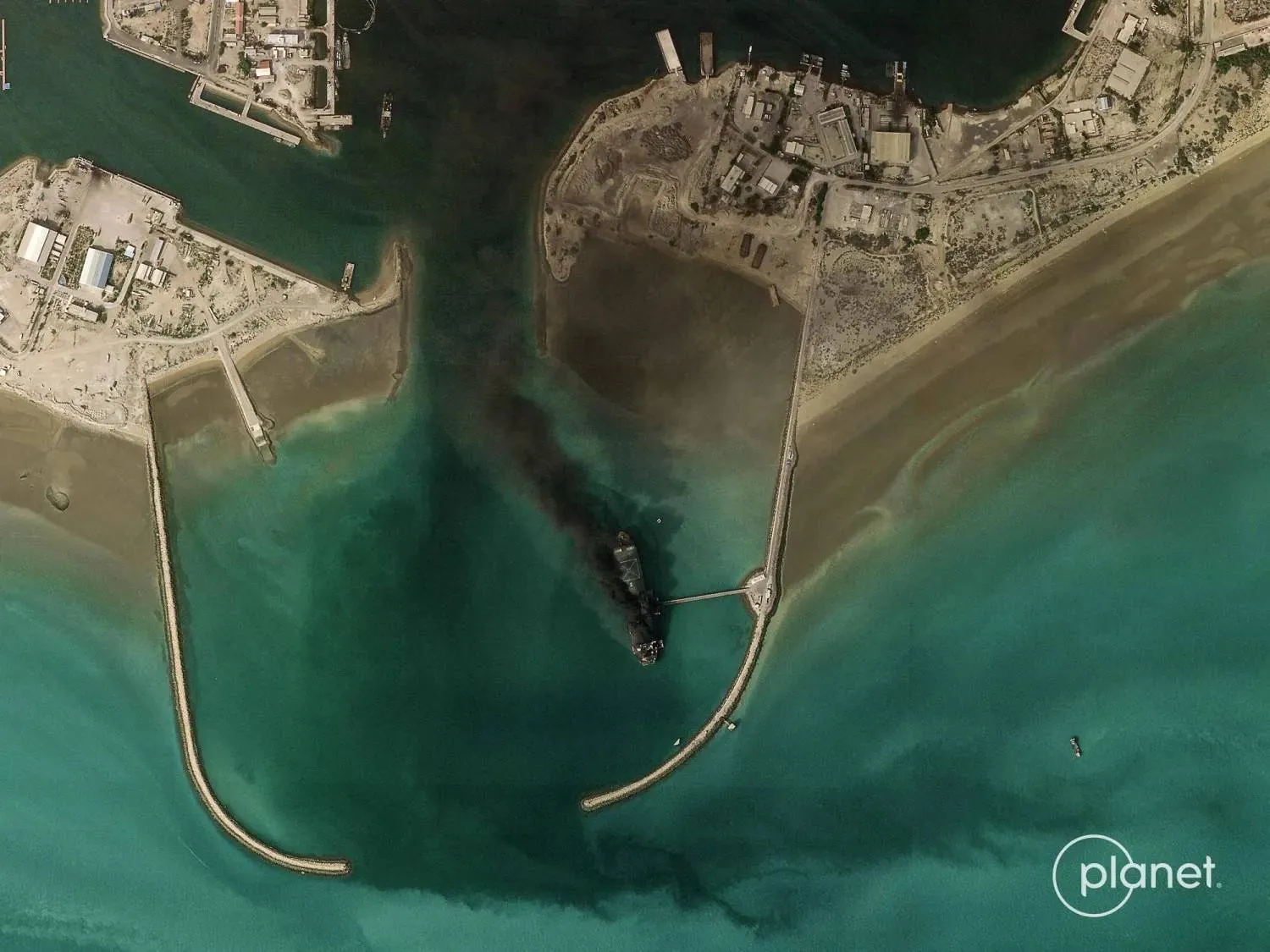

US Central Command said the Strait of Hormuz, a key shipping route for the world's oil supply, is not closed despite statements by Iranian officials, Fox News reported on Monday.
CENTCOM did not immediately respond to a request for comment, according to Reuters.
The strait lies between Oman and Iran and links the Gulf north of it with the Gulf of Oman to the south and the Arabian Sea beyond. About a fifth of the world's total oil consumption passes through the strait.
Jeremy Nixon, CEO of container carrier Ocean Network Express (ONE), said on Monday that container ships account for roughly 100 of the 750 ships ensnared in the Strait of Hormuz backups following US and Israeli attacks on Iran.
“About 10% of the container ship global fleet is caught up in this,” Nixon said at S&P Global Market Intelligence’s TPM26 container shipping conference in Long Beach.
Maritime insurers ceased covering voyages through the strait between Iran and Oman, which carries around one-fifth of oil consumed globally as well as large quantities of gas, as Iran retaliated against US and Israeli strikes.
The commander of the country's Revolutionary Guards told Iranian state television Monday that any ship that attempted to transit the strait would be set aflame.
“All of that cargo is going to start backing up” in shipping hubs and key ports in Europe and Asia, Nixon said.
ONE and rival container carriers such as industry leader MSC have stopped booking cargo to the Middle East, said Nixon, who on July 1 is stepping down as CEO of ONE.
The company is a privately held joint venture established by Japanese shipping lines Nippon Yusen Kaisha, Mitsui OSK Lines and K Line.
Industry experts also warned that an extended closure of the Strait of Hormuz would cause oil prices to soar.
“That would create a big energy spike,” Nixon said.


