


Trump Says Only Iran’s ‘Unconditional Surrender’ Can End War

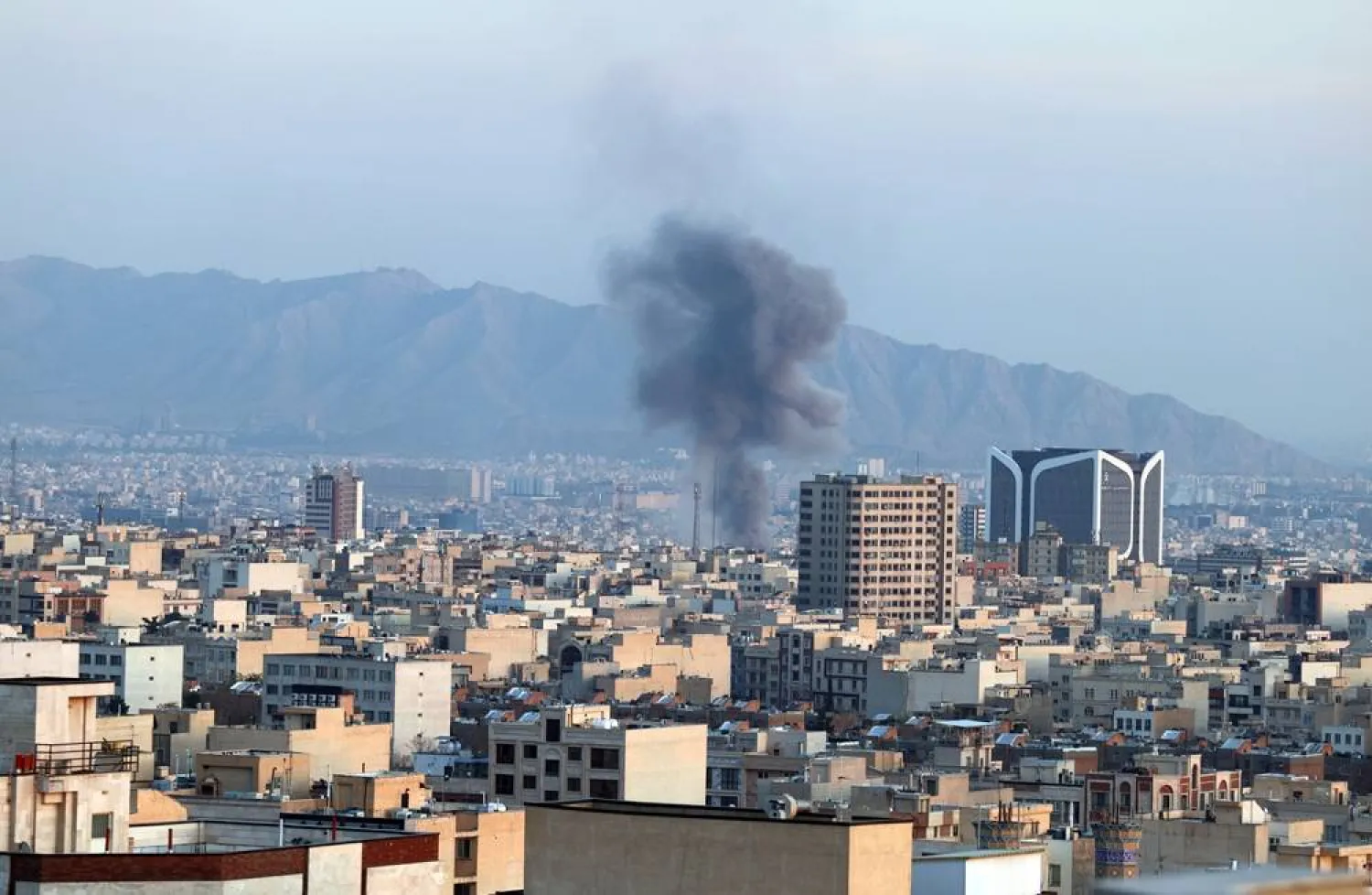
Smoke rises after an airstrike in central Tehran, Iran, 06 March 2026. (EPA)
TT

Trump Says Only Iran’s ‘Unconditional Surrender’ Can End War

Smoke rises after an airstrike in central Tehran, Iran, 06 March 2026. (EPA)

President Donald Trump said Friday that only Iran's "unconditional surrender" would bring an end to the Middle East war, as Tehran was rocked by some of the heaviest US-Israeli strikes of the spiraling, week-long conflict.

Now in its seventh day, the war has embroiled nations beyond the region, upended the world's energy and transport sectors, and brought chaos to even usually peaceful areas around the Gulf.

It has spread to Lebanon, whose prime minister warned of an impending humanitarian disaster as tens of thousands fled heavy Israeli strikes on Beirut's southern suburbs.

Trump, who has given varying reasons for starting the war that killed Iran's supreme leader Ali Khamenei last weekend, promised to help rebuild the country's economy if Tehran installed an "acceptable" new leader.

"There will be no deal with Iran except UNCONDITIONAL SURRENDER," Trump wrote on his Truth Social platform.

"MAKE IRAN GREAT AGAIN (MIGA!)," he added.

In Tehran, crowds of men and women dressed in black, some carrying Iranian flags, gathered for the first Friday prayers since the start of the war, online footage showed.

Several loud explosions sent clouds of black smoke into Tehran's sky, according to AFP journalists who described the day's strikes as the heaviest yet on the capital.

"It's really very scary," a Tehran businessman who gave his first name as Robert told AFP.

"Checkpoints have been put up in place in the city to prevent looting and ensure control," the 60-year-old said at the Armenian border with Iran.

- 'Additional surprises' -

Both Israel and the US warned on Friday they were escalating their attacks on Iran.

"We have additional surprises ahead which I do not intend to disclose," Israel's military chief Lieutenant General Eyal Zamir said.

According to Iran's health ministry, the US and Israeli strikes on the country have killed 926 people.

Iranian government spokeswoman Fatemeh Mohajerani said on Friday that 30 percent of the dead were children. AFP could not independently verify either toll.

Iran has launched missile and drone attacks at Israel and Gulf states since the war began, with AFP journalists in Tel Aviv reporting hearing several blasts on Friday.

In Israel, at least 10 people have been killed, according to first responders there.

The US military has reported the deaths of six of its personnel.

- 'We'll sleep on the road' -

The conflict has sucked in Israel's neighbor Lebanon after Tehran's proxy group Hezbollah launched missiles at Israel.

Israeli air strikes hit sites in Lebanon's south and east on Friday.

There has been widespread destruction in the southern Beirut suburbs, considered a Hezbollah stronghold and home to an estimated 600,000 to 800,000 people.

AFP correspondents on the ground saw scenes of panic on Thursday as residents massively fled after an unprecedented Israeli order to evacuate immediately if they wanted to save their lives.

Hundreds of families milled around on a Beirut beach, left with nowhere to go.

"We'll sleep on the road tonight and God alone knows what will happen to us," one man told AFP, declining to give his name.

Lebanon's Prime Minister Nawaf Salam warned that a "humanitarian disaster is looming" from the displacement.

On Friday, Hezbollah told Israeli residents to evacuate areas within five kilometers (three miles) of the Lebanese border.

The death toll in Lebanon rose to 217 on Friday, according to the country's health ministry.

Israel's army meanwhile said it had killed more than 70 Hezbollah militants.

AFP could not independently verify either toll.

Iraq, long a proxy battleground between the US and Iran, has also been dragged into the war. Drones struck an airport and two oil facilities in southern Iraq on Friday, a security official told AFP.

Earlier in the day, oil prices surged after Kurdish authorities in Iraq said crude production had been halted by a previous attack.

- 'Extraordinary mistake' -

The United Nations refugee agency said Friday it had declared the crisis a major humanitarian emergency, stressing the need for an immediate response.

The UN's rights chief also called for "impartial investigations" after Iran said a strike on a school that it blamed on the US and Israel killed more than 150 people.

Neither the US nor Israel has said it was behind the strike. US Secretary of State Marco Rubio said Monday that the Pentagon was investigating.

AFP has neither been able to access the site nor obtain independent confirmation of the toll.

The war has also come under increasing scrutiny in Europe, with Spanish Prime Minister Pedro Sanchez calling the US-Israeli strikes an "extraordinary mistake" and "not in accordance with international law".

European Union chiefs are scheduled to hold talks about the war on Monday.

The war has not spared the rich countries of the Gulf, formerly seen as a tourist hot spot and a rare Middle East safe haven.

Qatar intercepted a drone attack on a US air base on its territory early Friday, while Saudi Arabia shot down three drones east of its capital Riyadh.

Thirteen people, seven of them civilians, have been killed in Gulf countries since the war began, including an 11-year-old girl in Kuwait.

New explosions were heard in the Kuwaiti capital on Friday, an AFP journalist said.

The conflict has also expanded as far afield as the Sri Lankan coast, off of which a US submarine torpedoed an Iranian frigate, and Azerbaijan, which threatened retaliation after a drone hit an airport.

Nations have scrambled to repatriate holidaymakers in the Gulf caught up in the fighting, with air traffic severely limited as missiles and drones dominate the skies above the region.

The war has also hammered global markets and sent crude oil prices soaring by about a fifth in the week since it erupted, all but blocking shipping in the critical Strait of Hormuz.

A fire broke out on the latest ship to suffer an attack in the Strait on Friday, Iranian television reported.



Iran Police Chief Says Ordered to Open Fire at Looters during Wartime

Members of the Iranian police (archival - AP)
TT

Iran Police Chief Says Ordered to Open Fire at Looters during Wartime

Members of the Iranian police (archival - AP)

Iran's police chief Ahmad Radan said on Friday that officers had been authorized to shoot at suspected looters amid the war with Israel and the United States.

"Because we are in wartime conditions, I have issued orders to shoot at potential thieves," Radan told state TV, adding that any thieves would be "swiftly neutralized".

He also said that authorities had taken measures to maintain order online.

"We will not allow a group of paid agents to undermine the unity that the people achieved with the blood of thousands of martyrs by spreading agitation," said Radan.

War has spread across the Middle East since Saturday after the United States and Israel launched strikes on Iran which killed the Iranian republic's supreme leader Ali Khamenei.

Iran responded by attacking US bases in Gulf countries and Israel with drone and missile strikes.

Iran's health ministry said nearly 1,000 people had been killed in the US and Israeli strikes which hit military sites as well as residential areas and other infrastructure.

AFP could not independently verify the toll.

Iranian attacks killed at least 10 people in Israel according to first responders there, while the US military has reported the deaths of six of its personnel since the war began.


US State Dept Approves $151 Mn Arms Sale to Israel

US State Department in Washington, D.C. (Reuters)
TT

US State Dept Approves $151 Mn Arms Sale to Israel

US State Department in Washington, D.C. (Reuters)

The US State Department approved the sale of $151.8 million worth of munitions to Israel on Friday as the countries engage Iran in an escalating Middle East war, said AFP.

The sale of 12,000 requested 1,000-pound (470-kilogram) bomb bodies was approved by the State Department's Bureau of Political-Military Affairs, according to a press release.

"The proposed sale will improve Israel's capability to meet current and future threats, strengthen its homeland defense, and serve as a deterrent to regional threats," the bureau said in a statement.


Explosions Rock Iran's Capital, and More Attacks Target Israel as US Warns Bombing Will Intensify

Smoke columns in the sky of the Iranian capital Tehran after the bombing operations (AFP)
TT

Explosions Rock Iran's Capital, and More Attacks Target Israel as US Warns Bombing Will Intensify

Smoke columns in the sky of the Iranian capital Tehran after the bombing operations (AFP)

Explosions sent up clouds of dark smoke in the Iranian capital city early Saturday, and Tehran retaliated by firing missiles at Israel as the United States warned of a forthcoming bombing campaign that officials said would be the most intense yet in the weeklong conflict.

There was no foreseeable end to the fighting. US President Donald Trump's administration approved a new $151 million arms sale to Israel after Trump said he would not negotiate with Iran without its “unconditional surrender.” Iran's UN ambassador said the country would “take all necessary measures” to defend itself.

Associated Press video showed explosions flashing and smoke rising over western Tehran as Israel said it had begun a broad wave of strikes. Also early Saturday, loud booms sounded in Jerusalem and incoming missiles from Iran had people heading to bomb shelters across Israel.

There were no immediate reports of casualties by Israel’s emergency services.

In a sign of the widening nature of the conflict, sirens sounded early Saturday in Bahrain as Iranian attacks targeted the island kingdom. And Saudi Arabia said it destroyed drones headed toward its vast Shaybah oil field and shot down a ballistic missile launched toward Prince Sultan Air Base, which hosts US forces.

The US and Israel have battered Iran with strikes, targeting its military capabilities, leadership and nuclear program. The stated goals and timelines for the war have repeatedly shifted, as the US has at times suggested it seeks to topple Iran’s government or elevate new leadership from within.

Meanwhile, Russia has provided Iran with information that could help Tehran strike the US military, according to two officials familiar with US intelligence on the matter. Russian President Vladimir Putin had a call Friday with Iranian President Masoud Pezeshkian, expressing his condolences over the killing of Iranian Supreme Leader Ali Khamenei, the Kremlin said.

In other developments, evidence emerged suggesting that an explosion that killed scores of Iranian students at a school was likely caused by US airstrikes that also hit an adjacent compound associated with the regime’s Revolutionary Guard.

Qatar’s energy minister, Saad al-Kaabi, warned in an interview with the Financial Times that the war could “bring down the economies of the world,” predicting a widespread shutdown of Gulf energy exports that could send oil to $150 a barrel.

The price for a barrel of benchmark US crude rose above $90 on Friday for the first time in more than two years.

Russia is providing information to Iran, officials say Russia has provided Iran with information that could help Tehran strike American warships, aircraft and other assets in the region, according to two officials familiar with US intelligence on the matter.

The people, who were not authorized to comment publicly and spoke on the condition of anonymity, cautioned that the US intelligence has not uncovered that Russia is directing Iran on what to do with the information.

Still, it’s the first indication that Moscow has sought to get involved in the war.

Trump says US will help rebuild Iran once it has ‘ACCEPTABLE’ leaders

In a social media post Friday, Trump said “There will be no deal with Iran except UNCONDITIONAL SURRENDER!" After a surrender, “and the selection of a GREAT & ACCEPTABLE Leader(s),” he wrote, the US and its allies will help rebuild Iran, making it “economically bigger, better, and stronger than ever before.”

Those comments were likely to raise further questions about the endgame of the war. The fighting has killed at least 1,230 people in Iran, more than 200 in Lebanon and around a dozen in Israel, according to officials in those countries. Six US troops have been killed.

Iranian President Masoud Pezeshkian wrote on social media that “some countries” had begun mediation efforts, without elaborating.

Trump has also told media outlets that he should be involved in choosing a replacement for Khamenei, who was killed in the opening strikes of the war. Trump spoke dismissively of Khamenei’s son, Mojtaba Khamenei — a front-runner to replace his father — calling him “a lightweight.”

Iran’s UN ambassador, Amir Saeid Iravani, condemned Trump's statement and said Iran "does not accept and will never allow any foreign power to interfere in its internal affairs.”

Iranian state television reported Friday that a leadership council had started discussing how to convene the country’s Assembly of Experts, which will select the new supreme leader.

US official warns that ‘biggest bombing’ is coming

US Treasury Secretary Scott Bessent said in a television interview that the “biggest bombing campaign” of the war was still to come.

Israel has said that over the past week it has heavily bombed an extensive underground bunker that Iranian leaders had planned to use during the hostilities.

New information surfaced suggesting that a deadly Feb. 28 explosion at a school in the Iranian city of Minab, some 1,100 kilometers (680 miles) southeast of Tehran, was likely caused by US airstrikes. The information included satellite images, expert analysis, a US official and public information released by US and Israeli military forces.

Iranian state media has said more than 165 people were killed in the blast, most of them of children.

Iran has blamed Israel and the US for the explosion. Neither country has accepted responsibility, though Defense Secretary Pete Hegseth has said the US is investigating.

Fighting with Israeli troops reported in eastern Lebanon

The Iranian-backed militant group Hezbollah said its fighters clashed with an Israeli force that landed late Friday in the mountains of eastern Lebanon. The Lebanese Health Ministry said at least three people were killed.

Israel did not acknowledge the fighting, and its military did not immediately respond to requests for comment.

Israel has carried out waves of airstrikes on the southern suburbs of Beirut, where Hezbollah has a large presence, but which is also home to hundreds of thousands of civilians.

Lebanon's Health Ministry said at least 217 people have been killed by Israeli strikes since Monday and 798 wounded.

Roads in the Lebanese capital were choked with evacuating traffic as smoke rose over the city’s southern districts. Two hospitals evacuated patients and staff.

“What can we do? We prayed here under the tree. During the night, we slept in the car because there is no place to stay,” Jihan Shehadeh, one of the tens of thousands of displaced, said.