
Trump Says Iran ‘Will Be Hit Very Hard’, Threatens to Expand Targets

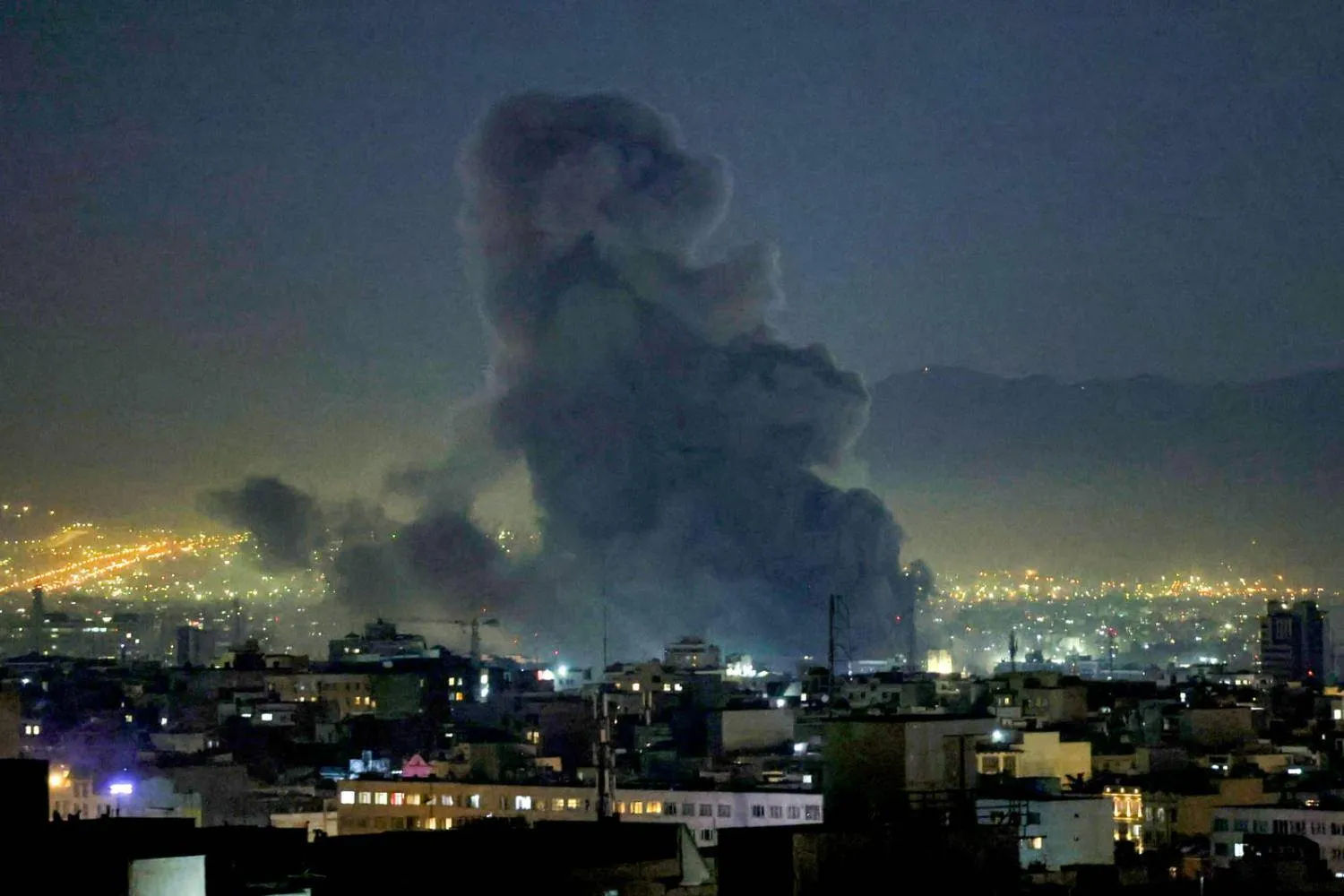
Smoke columns in the sky of the Iranian capital Tehran after the bombing operations (AFP)
TT

Trump Says Iran ‘Will Be Hit Very Hard’, Threatens to Expand Targets

Smoke columns in the sky of the Iranian capital Tehran after the bombing operations (AFP)

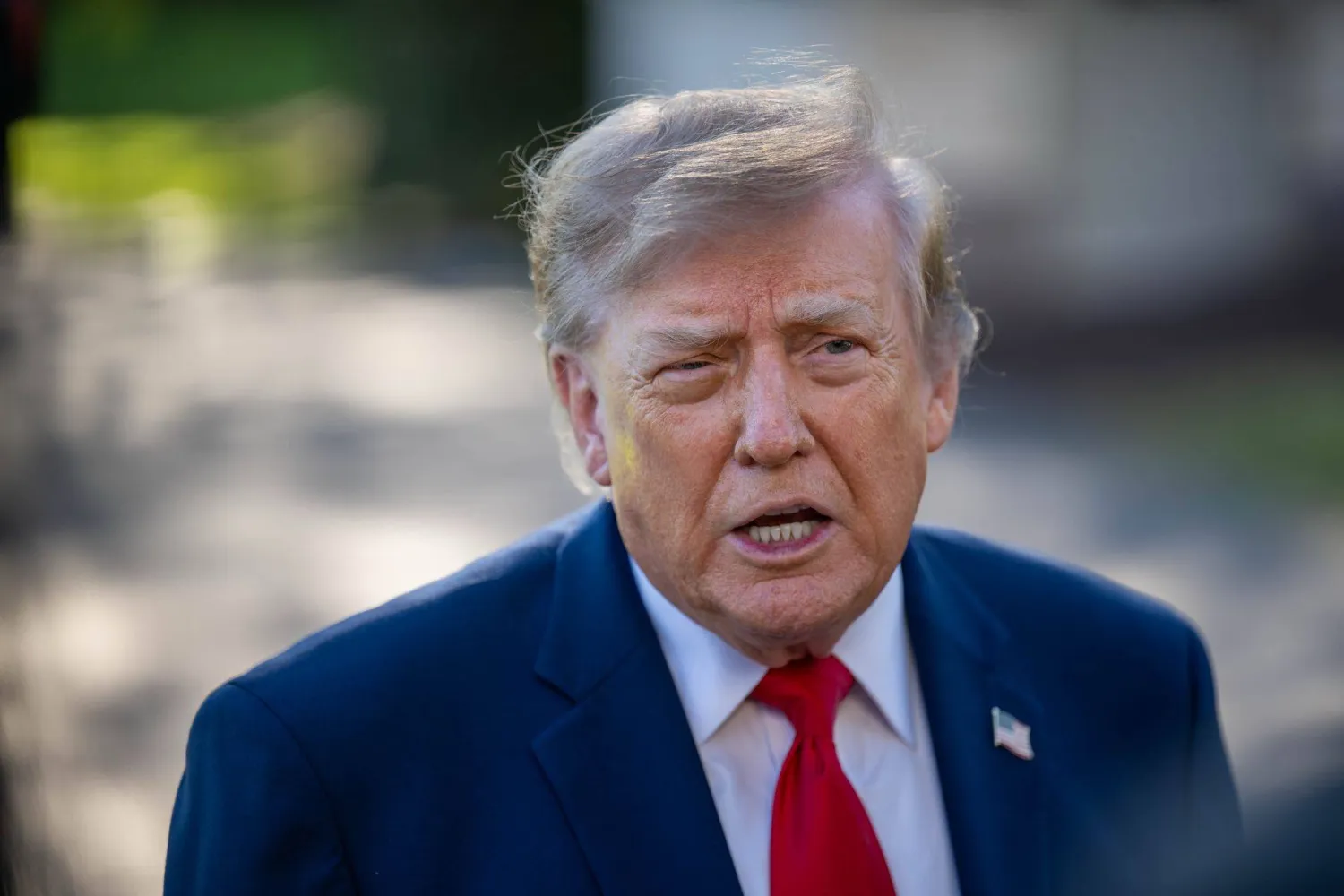
US President Donald Trump said Iran would be "hit very hard" on Saturday and that he was considering widening the ‌areas and ‌groups of ‌people ⁠being, targeted, without providing ⁠details. 

"Today Iran will be hit very hard! Under serious consideration for complete destruction and ⁠certain death, because of ‌Iran's ‌bad behavior, are ‌areas and groups ‌of people that were not considered for targeting up until this ‌moment in time" Trump said in a ⁠post ⁠on Truth Social. 

He also noted that Iran had apologized to its neighbors for its strikes against them, which he cast as a surrender.  

Israel and Iran traded attacks on Saturday as the war entered a second week, while Tehran made an unusual apology to neighboring states for its "actions", apparently seeking to calm regional anger at Iranian strikes on Gulf civilian targets. 

“I personally apologize to neighboring countries that were affected by Iran’s actions,” Iranian President Masoud Pezeshkian said, urging them not to join US-Israeli attacks on Iran. 

He said Iran’s temporary leadership council had agreed to suspend attacks on nearby states unless strikes on Iran originated from their territory. 

GULF STATES HIT BY DRONES AND MISSILES 

The US-Israeli war on Iran has already spilled beyond Iran's borders, as Tehran has responded by hitting Israel and Gulf Arab states hosting US military installations and Israel has launched fresh attacks in Lebanon. 

The UAE, Kuwait, Qatar, Bahrain and Saudi Arabia have all reported drone and missile attacks over the past week. 

Gulf states voiced immediate outrage that their civilian infrastructure - hotels, ports and oil ‌facilities - were struck despite ‌their having had no part in the US-Israeli attacks. 

How far Pezeshkian's statement reflects a decision to back off by Iran, ‌or ⁠if it should ⁠be read as a warning that Tehran remains ready to strike across the region, is not yet clear, with some strikes still reportedly directed at Gulf states on Saturday morning. 

NO DEAL WITHOUT SURRENDER, TRUMP SAYS 

While Gulf states host US military bases, they had told Washington they would not allow these to be used for any attacks on Iran. 

Iran's apparent strategy of maximum chaos has driven up the costs of the conflict by raising energy prices, hurting global business and logistics links and shaking trust in the stability of a critical region for the world's economy. 

Pezeshkian's remarks come as diplomatic prospects for an end to hostilities appear bleak, with Trump demanding Tehran's "unconditional surrender". 

"There will be no deal with Iran ⁠except UNCONDITIONAL SURRENDER!" Trump wrote on his Truth Social platform on Friday. 

"After that, and the selection of a GREAT & ACCEPTABLE Leader(s), ‌we, and many of our wonderful and very brave allies and partners, will work tirelessly to bring Iran ‌back from the brink of destruction, making it economically bigger, better, and stronger than ever before," he added. 

The US-Israeli attacks have killed at least 1,332 Iranian civilians and wounded thousands, according to ‌Iran's UN ambassador, Amir Saeid Iravani. 

Iranian attacks have killed 11 people in Israel, and at least six US service members have been killed. 

Russian President Vladimir Putin expressed his ‌condolences to Pezeshkian over the numerous civilian casualties resulting from "the armed Israeli-American aggression against Iran" and called for an immediate halt to hostilities, the Kremlin said. 

'WE WILL CRUSH THEM' 

Early on Saturday, the Iranian army said its navy had carried out drone strikes against targets in Israel as well as US gathering points and bases in Abu Dhabi and Kuwait, in an apparent response to the US attack on its ship IRIS Dena that killed dozens of sailors. 

The Revolutionary Guards said they struck three positions of separatist groups in Iraq's Kurdistan region at 4:30 a.m. local time. A spokesman for the ‌armed forces warned that if separatist groups in the Kurdistan region took any action against Iran’s territorial integrity, "we will crush them." 

Israel's military carried out a rare airborne operation that dropped troops into a town in eastern Lebanon overnight, residents and Lebanese ⁠state media said on Saturday, as heavy Israeli ⁠strikes on the area left more than a dozen people dead. 

Israel said the operation sought to retrieve the remains of Ron Arad, an Israeli air force navigator who bailed out of a plane that went down over Lebanon during a 1986 bombing mission. The military said no findings related to Arad were found. 

Israel launched what its military described as a new wave of strikes on Tehran and Isfahan, while overnight, the Israeli military said it had carried out strikes on neighboring Lebanon that it said were aimed at Hezbollah military sites. 

The Israeli military said Iran had fired six separate missile barrages at Israel, setting off air raid sirens in parts of the country and prompting Israeli air defenses to intercept incoming fire. 

IRAN REJECTS TRUMP CALL FOR SAY IN CHOOSING NEW LEADER 

The war has roiled global markets and oil prices have hit multi-year highs with the Strait of Hormuz effectively shut. About one-fifth of global oil moves daily through the strait. 

Washington will provide reinsurance for losses up to $20 billion in the Gulf region to bolster confidence for oil and gas shippers, the US International Development Finance Corp said. 

Trump has said the US Navy could escort ships in the Gulf. But Iran's Revolutionary Guards challenged him to do so, with spokesperson Alimohammad Naini saying Iran "welcomes" and is "awaiting" any US presence in the strait, state media said. 

Trump also reiterated his demand to have a say in selecting Iran's new supreme leader, a notion rejected by Iravani. 

The ambassador said new leadership would be selected "in accordance with our constitutional procedures and solely by the will of the Iranian people - without any foreign interference." 

Iran has described the conflict as an unprovoked attack and the killing of Supreme Leader Ali Khamenei as an assassination. 


NATO 'Must Remain United', Says Italy PM Meloni

FILE PHOTO: A NATO flag flutters at the Tapa military base, Estonia April 30, 2023. REUTERS/Ints Kalnins/File Photo
TT

NATO 'Must Remain United', Says Italy PM Meloni

FILE PHOTO: A NATO flag flutters at the Tapa military base, Estonia April 30, 2023. REUTERS/Ints Kalnins/File Photo

Italian Prime Minister Giorgia Meloni on Friday urged NATO allies to stick together, after a report that the United States was mulling action against Spain over its refusal to support operations against Iran.

"NATO must remain united. I believe it is a source of strength," Meloni told reporters as she attended an EU summit in Nicosia, Cyprus.

The Reuters news agency cited an anonymous US official saying the Pentagon had outlined potential measures to punish allies over their response to the Iran war, including suspending Spain from the alliance.

There is no provision in the NATO treaty allowing for the suspension or expulsion of one of the alliance's members.

US President Donald Trump has repeatedly railed against NATO allies for refusing to help out more with the Iran war, saying he viewed it as a betrayal.

Some of them -- France, Spain and Italy -- did not allow US military aircraft deployed for the war to overfly their territories or to use bases.

Britain initially also refused, but later allowed US flights from its bases for "defensive" missions in the conflict.

Trump also tried, in vain, to get European NATO members to send warships to the Strait of Hormuz, which Iran has effectively closed with military threats and attacks.

Spanish Prime Minister Pedro Sanchez, whose country was reportedly singled out for suspension, said Friday he was "not worried", stressing his country was a "reliable member" of NATO.

Meanwhile, as Trump deepens questions over whether Washington would help defend NATO allies, the EU is set to lay out a "blueprint" for how its own mutual assistance clause works if a country is attacked.

Meloni insisted that NATO would remain central to Europe's defence, but that European nations needed to play a bigger role in their own security.

"We must work to strengthen NATO's European pillar which must clearly complement the American one," she added.


Behind The Scenes: US-Israeli Military Decisions Shaping Iran's War

US CENTCOM chief Adm. Brad Cooper meets Israeli Army Chief of Staff Lt-Gen. Eyal Zamir during his visit to Israel (Israeli Army)
TT

Behind The Scenes: US-Israeli Military Decisions Shaping Iran's War

US CENTCOM chief Adm. Brad Cooper meets Israeli Army Chief of Staff Lt-Gen. Eyal Zamir during his visit to Israel (Israeli Army)

Although US President Donald Trump and Israeli Prime Minister Benjamin Netanyahu have made the ultimate war and ceasefire decisions regarding Iran, The Jerusalem Post revealed the details and extent to which Israeli Army Chief of Staff Lt.-Gen. Eyal Zamir, US Joint Chiefs Chairman Gen. Dan Caine, and CENTCOM Chief Admiral Brad Cooper have been the next most dominant figures.

In many ways, Zamir was key to convincing Caine and Cooper that such a war was feasible, such that they would support it, or at least not oppose it.

Caine was then critical in convincing Trump that such a war was viable, while precisely describing risks and second and third order considerations, even as the US chairman himself held doubts about significant aspects of the war, according to the Jerusalem Post.

Caine has also hovered over Trump's decisions to repeatedly announce unilateral ceasefires with Iran out of concern that any upping the ante on the military playing field could cost him in both American lives and politically.

When Netanyahu made an emergency flight to Washington to meet with Trump around 11:00 am on February 12 to try to convince him to go to war with Iran, as the US president had started to move away from that option, he presented a four-step plan.

The four steps were: First, assassinating Supreme Leader Ali Khamenei and his top military and intelligence officials. Second, pounding Iran's ballistic missile and drone capabilities. Third, helping foment an uprising within Iran against the regime, and fourth, transforming the uprising, plus possibly a ground attack by the Kurds who straddle Iran and Iraq, into regime change.

None of the three high commanders really believed in steps three or four, but Zamir was willing to roll the dice to see what might come of it, the Jerusalem Post said. Caine and Cooper were ready to go in for the first two steps and hold their noses regarding efforts at steps three and four.

It was not a coincidence that Israel was assigned to bomb Iran's top leaders and thousands of Revolutionary Guard Corps and Basij command centers and locations, as well as Iranian military threat capabilities, while US forces stayed more focused almost exclusively on Iranian capabilities.

Trump, to some extent under the influence of Caine (with Cooper supporting in the background), kept the US out of direct military involvement in regime change.

Sources have indicated to the Jerusalem Post that Israeli efforts to influence Trump and when and how to go to war have also heavily focused on Caine.

Zamir, Mossad Director David Barnea, and Israeli Army Intelligence Chief Maj. Gen. Shlomi Binder also visited Washington leading up to Netanyahu's February 12 White House sales pitch to make their case directly to a variety of officials, but collectively especially to Caine.
In some ways, Cooper was easier to convince than Caine, the report said.

This is partially true because Cooper did not try as much as his predecessor, Erik Kurilla, to influence the decision of whether to go to war or not, focusing more on being the architect of what the different options of going to war would look like.

Right Timing

Zamir was very successful in bringing on board Caine and Cooper, and then indirectly Trump, in the sense of convincing them that the timing was right.

The Post has learned that Zamir made a sophisticated and nuanced argument to Caine, Cooper, and others, which reached Trump.

The argument acknowledged that in theory Israel and the US could wait some period of months, as Iran had not yet crossed a redline threshold of a volume of ballistic missiles which the Israeli army would have trouble with. After all, Israel's original plan was not to attack Iran's ballistic missile program until sometime between June and November 2026.

However, Zamir said that Iran was racing forward too fast.

Iran was producing an additional 200-300 ballistic missiles per month. It had replaced about half of its lost missiles and half of its lost missile launchers in only eight months, getting back up to 2,500 missiles.

In Zamir's understanding, waiting another six months could mean an Iran with 3,700-4,300 missiles, and waiting another year could mean 4,900 to 6,100 missiles.

The report said it could also mean much more damage, could lead to Israeli difficulties with its volume of missile interceptors at a much earlier point, and collectively force Israel and the US to cut short their attacks on Iran's missile and other capabilities much earlier than what might make sense strategically.

Adding on that if Israel and the US wanted to take a real shot at regime change, that February was a unique moment to build on the January Iranian domestic protests, the Post understands that Zamir argued that February was a unique moment to go to war. This was true despite Israel's original plan for an attack in later 2026.

Two Main Failures

The report held Zamir, Caine and Cooper responsible for two main failures, the first being the inability to stop Iranian missiles.

It said only days into the war, Zamir, Caine, and CENTCOM were telling the public that missile fire was down 70-90%. The expectation was that within a week or two, it would be down to a drizzle. But while missile fire did drop to a medium level, the fading to a drizzle never happened.

None of the top Israeli or American officials anticipated how rapidly Iran would be able to unearth its underground missile launchers, which the allies had caused to be neutralized with cave-ins.

Pre-war estimates were that cave-ins would neutralize such missiles for the rest of the war, whereas in many cases, the Post has learned that Iran has developed bulldozer teams and techniques to uncover caved-in missile teams or silos within less than a day.

Also, Iran spread its surviving missile crews throughout its vast country, making it nearly impossible to track them down efficiently, and adjusted its missiles such that over 70% of them included cluster munitions, which the Israeli army was much less ready to defend against.

The second potential failure of Caine and Cooper relates to Hormuz.

The report found that neither Caine nor Cooper raised their voices loudly and decisively about the Hormuz nightmare scenario, again preferring to provide neutral advice to a US president, who clearly was out of his depth in aspects of this conflict.

The two of them could have seen this scenario coming, and so their choice, despite their heavy potential influence, to not raise the alarm loudly enough leaves them with some contributory fault in not better preparing Trump and the US.

The fact that the US needed to wait several weeks into the war before troops were in place to do something about Hormuz, if necessary, was a massive strategic miss.

In fact, the US could have even deployed forces into the Hormuz area the day the conflict started, as opposed to focusing on sinking large Iranian naval vessels first.

Overall, the report found that the military campaign pitched by Zamir and approved by Caine and Cooper succeeded more than might have been expected upfront, with notable exceptions regarding the continuity of medium-level ballistic missile threats and regarding Hormuz.

It said the military gains into long-standing strategic achievements is now more in the hands of the political and diplomatic leaders than the generals.


Hormuz Crisis Throws Spotlight on World's Largest 'Chokepoint' - the Malacca Strait

FILE PHOTO: A container ship enters the Singapore Strait for the Strait of Malacca, as tourists stand at mainland Asia's southern most point in Johor, Malaysia November 12, 2016. Picture taken November 12, 2016.  REUTERS/Henning Gloystein/File Photo
FILE PHOTO: A container ship enters the Singapore Strait for the Strait of Malacca, as tourists stand at mainland Asia's southern most point in Johor, Malaysia November 12, 2016. Picture taken November 12, 2016. REUTERS/Henning Gloystein/File Photo
TT

Hormuz Crisis Throws Spotlight on World's Largest 'Chokepoint' - the Malacca Strait

FILE PHOTO: A container ship enters the Singapore Strait for the Strait of Malacca, as tourists stand at mainland Asia's southern most point in Johor, Malaysia November 12, 2016. Picture taken November 12, 2016.  REUTERS/Henning Gloystein/File Photo
FILE PHOTO: A container ship enters the Singapore Strait for the Strait of Malacca, as tourists stand at mainland Asia's southern most point in Johor, Malaysia November 12, 2016. Picture taken November 12, 2016. REUTERS/Henning Gloystein/File Photo

The closure of the Strait of Hormuz has forced policymakers in Asia to face questions over the security of other maritime chokepoints, including the Strait of Malacca, which is the world's busiest waterway for international trade.

Importance of The Malacca Strait

The 900-km (550-mile) long Malacca Strait, bounded by Indonesia, Thailand, Malaysia and Singapore, provides the shortest sea route from East Asia to the Middle East and Europe, according to Reuters.

It carries nearly 22% of the world's maritime trade, according to the Center for Strategic and International Studies. This includes oil and gas shipments from the Middle East to the energy-hungry economies of China, Japan and South Korea.

Malacca is the largest “oil transit chokepoint” in the world and the only one that outpaces Hormuz, according to the US Energy Information Administration.

In the first half of 2025, some 23.2 million barrels of oil per day were transported through the Malacca Strait, accounting for 29% of total maritime oil flows. The next largest chokepoint, Hormuz, saw about 20.9 million bpd pass through.

More than 102,500 ships, mostly commercial vessels, transited through the Malacca Strait in 2025, up from around 94,300 in 2024, data from Malaysia's ⁠Marine Department showed. These include most tankers, but some very large vessels avoid the strait because of draught restrictions and go south around Indonesia instead.

This route allows the Strait of Malacca to be bypassed if it were closed, but it adds to journey time that would delay shipments and drive up prices.

Concerns About Strait of Malacca

At its narrowest point in the Phillips Channel of the Singapore Strait, the Malacca Strait is only 1.7 miles (2.7 km) wide, creating a natural bottleneck, as well as potential for collisions, grounding, or oil spills.

Some parts of the strait are relatively shallow, with a depth of 25-27 meters restricting the largest vessels, but even very large crude carriers (VLCCs) measuring more than 350 meters long, 60 meters wide, and with a draft of more than 20 meters, make the transit.

For years, the strait has been a hotbed of piracy and attacks on merchant vessels. Last year saw criminal attacks spike to at least 104, but these have fallen off in the first quarter of this year, according to the ReCAAP ⁠Information Sharing Centre, an organization established by regional governments to combat piracy.

The narrow and congested waterway has been strategically important to Beijing, with around 75% of China's seaborne crude oil imports passing through it from the Middle East and Africa, data from tanker tracker Vortexa shows.

The Iran crisis has crystallized long-standing worries about how chokepoints such as Malacca could be affected if a conflict breaks out in the South China Sea or the Taiwan Strait, where another 21% of global maritime trade transits, according to CSIS.

Malaysian authorities say the Malacca Strait is also a growing spot for illegal ⁠ship-to-ship transfers, where oil is shifted between tankers at sea to obscure its origin.

Officials Assurances

Indonesian Finance Minister Purbaya Yudhi Sadewa made waves on Wednesday by openly musing about ways countries could impose tolls on ships as a way to monetize the strait, before noting that such an arrangement is not possible.

When asked about the risks of tolls or other restrictions on movement in ⁠the strait, Singapore Foreign Affairs Minister Vivian Balakrishnan told CNBC that the nations along the strait share a strategic interest to keep it open, and have agreed not to collect tolls.

He also said Singapore had assured the United States and China that the right of passage was guaranteed for all and it would not participate in any efforts to ⁠block the strait or impose tolls.

Malaysian Foreign Minister Mohamad Hasan told a forum on Wednesday that no unilateral decisions can be made about the strait and that Malaysia is on the same page with Singapore, Indonesia and Thailand, and they conduct joint patrols to ensure the waterway remains open.