


UN Warns Hormuz Standstill Will Hit World’s Most Vulnerable

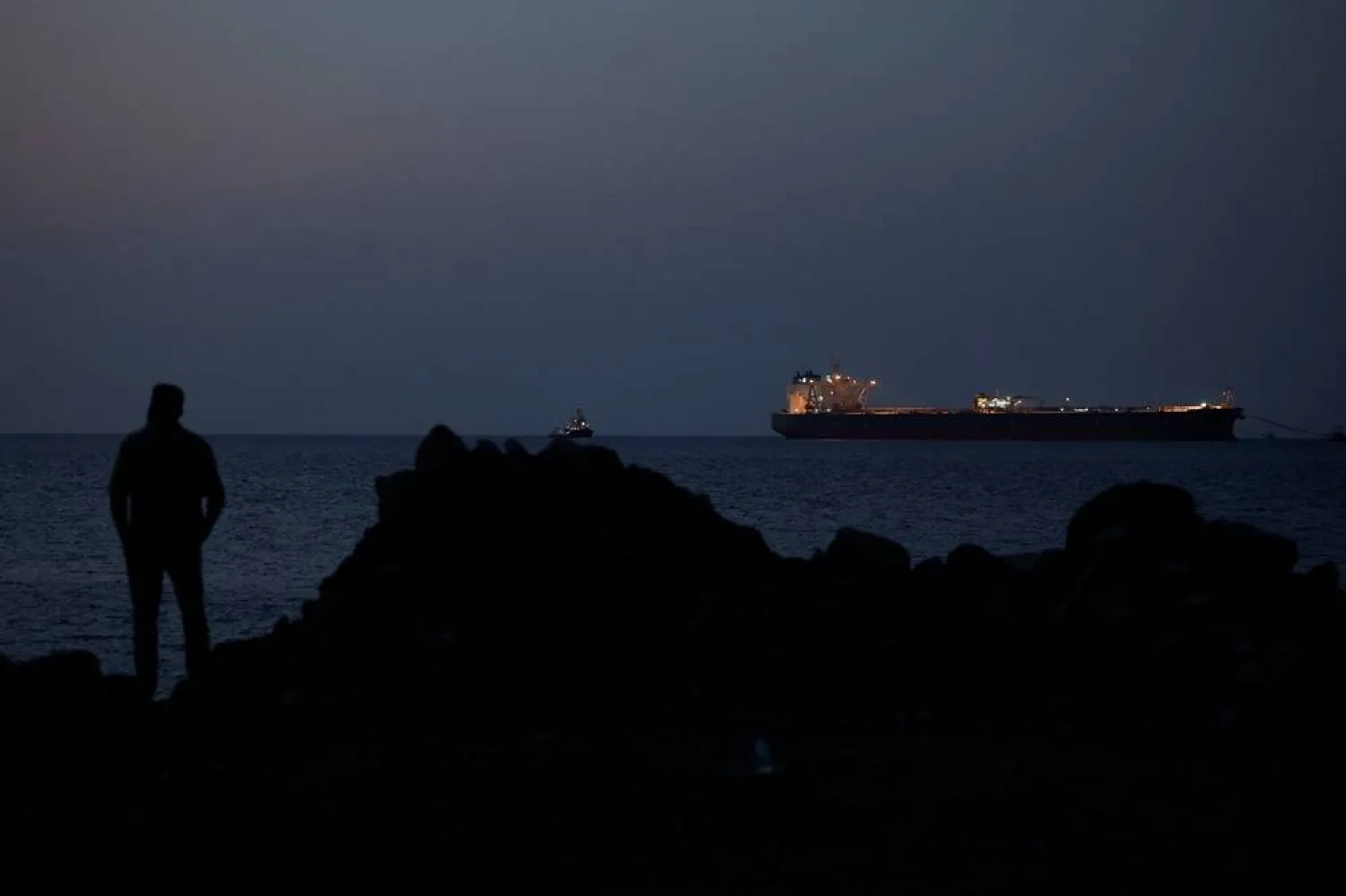
 The Parnassos crude oil tanker sits anchored as the traffic is down in the Strait of Hormuz, amid the US-Israeli conflict with Iran, in Muscat, Oman, March 10, 2026. (Reuters)
The Parnassos crude oil tanker sits anchored as the traffic is down in the Strait of Hormuz, amid the US-Israeli conflict with Iran, in Muscat, Oman, March 10, 2026. (Reuters)
TT

UN Warns Hormuz Standstill Will Hit World’s Most Vulnerable

 The Parnassos crude oil tanker sits anchored as the traffic is down in the Strait of Hormuz, amid the US-Israeli conflict with Iran, in Muscat, Oman, March 10, 2026. (Reuters)
The Parnassos crude oil tanker sits anchored as the traffic is down in the Strait of Hormuz, amid the US-Israeli conflict with Iran, in Muscat, Oman, March 10, 2026. (Reuters)

The standstill in the Strait of Hormuz caused by the Middle East war could hammer some of the world's most vulnerable people, the United Nations warned Tuesday.

The strait is the only sea passage from the Gulf towards the Indian Ocean, through which nearly a quarter of the world's seaborne oil supplies pass, as well as a significant amount of cargo.

Iran has all but blocked the waterway following the launch of the February 28 US-Israeli airstrikes on the country that triggered the war.

"The current shock comes at a time when many developing economies struggle to service their debt, face a tightening of fiscal space and limited capacity to absorb new price shocks," the UN trade and development agency UNCTAD said.

"Higher energy, fertilizer and transport costs -- including freight rates, bunker fuel prices and insurance premiums -- may increase food costs and intensify cost-of-living pressures, particularly for the most vulnerable," it said.

UNCTAD added that, in terms of seaborne trade volume, in the week before the conflict 38 percent of crude oil, 29 percent of liquified petroleum gas, 19 percent of liquified natural gas and 19 percent refined oil products went through the strait.

But while an average of 129 ships transited daily through the passage between February 1 and 27, that number dropped to just three on March 3.

UNCTAD said the disruptions underscored the vulnerability of critical maritime chokepoints and their potential for disruption to them to send shocks across supply chains and commodity markets.

"Rising energy, transport and food costs could strain public finances and increase pressure on household budgets, potentially heightening economic and social pressures... particularly in economies heavily dependent on imported energy, fertilizers and staple foods," it said.

- Food aid hit -

UN rights chief Volker Turk echoed the alarm for the effect the plunge in commercial shipping activity could have, "particularly for the world's most vulnerable".

"The impact of an oil price surge will have a knock-on effect for macro-economic and social stability in many countries, particularly those already experiencing debt distress," he said.

The UN's World Food Program said the costs and time lost to the Strait of Hormuz disruptions were already impacting its humanitarian operations.

"This is nothing less than another seminal moment in global supply chain history," Jean-Martin Bauer, the director of WFP's food and nutrition analysis service, told reporters in Geneva.

Speaking from the WFP's Rome headquarters, he said shipping lines were diverting services and adding surcharges, leading to congestion "in places that are very far from Hormuz".

"We're seeing congestion in Asia. It's quite a severe disruption that's taking place right now," Bauer said.

"We're needing to go the long way around the Cape of Good Hope to reach some of our key geographies."

WFP's biggest operation is in Sudan, but now it is facing approximately 25 days of additional shipping time.

"It's basically 50 percent more than we would usually have. So that's really extending the supply chain and adding to cost," said Bauer.



Russia Evacuates 198 Workers from Iran Nuclear Plant Amid Airstrike

Rosatom State Atomic Energy Corporation Director General Alexey Likhachev arrives to attend the talks between Russian President Vladimir Putin and Armenian Prime Minister Nikol Pashinyan at the Kremlin in Moscow, Russia, 01 April 2026. (EPA/Pavel Bednyakov/AP Pool)
TT

Russia Evacuates 198 Workers from Iran Nuclear Plant Amid Airstrike

Rosatom State Atomic Energy Corporation Director General Alexey Likhachev arrives to attend the talks between Russian President Vladimir Putin and Armenian Prime Minister Nikol Pashinyan at the Kremlin in Moscow, Russia, 01 April 2026. (EPA/Pavel Bednyakov/AP Pool)

Russia started a planned evacuation of 198 workers from Iran's Bushehr atomic plant shortly after a US-Israeli projectile hit near the facility, Russian state media said on Saturday.

This was a third evacuation from the facility in southern Iran on the Gulf coast, which was built with Moscow's help, with about 100 Russian staff remaining there by now.

The area around Bushehr has been struck four times during this war. The latest attack on Saturday saw one person -- a guard at the facility -- killed, but did not damage the plant itself, according to Iranian state media.

"As planned, we began the main phase of the evacuation today," Russia's nuclear agency Rosatom head Alexey Likhachev was quoted as saying by Russia's TASS news agency.

"About 20 minutes after that ill-fated strike, buses set off from Bushehr station towards the Iranian-Armenian border (with) 198 people, to be precise -- this is the largest evacuation," he added.

Likhachev also said that Russia informed the US and Israel about the evacuation.

"The likelihood of a risk of damage or a potential nuclear incident is, unfortunately, only increasing, as has been confirmed by this morning's events," the Rosatom CEO said.

The agency plans to keep only a skeleton staff at Bushehr amid the threat of further strikes.

The Russian foreign ministry slammed the "evil" US-Israeli attack and urged a cessation of hostilities on Iranian nuclear facilities immediately.


Erdogan Says Middle East War Has Caused ‘Geostrategic Impasse’

This handout photograph taken and released by the Turkish presidential press service on April 4, 2026, shows Türkiye's President Recep Tayyip Erdogan (R) welcoming and shaking hands Ukraine's President Volodymyr Zelensky (L) upon arrival for a bilateral meeting on security at Dolmabahce Presidential Office, in Istanbul. (Turkish Presidential Press Service / AFP)
TT

Erdogan Says Middle East War Has Caused ‘Geostrategic Impasse’

This handout photograph taken and released by the Turkish presidential press service on April 4, 2026, shows Türkiye's President Recep Tayyip Erdogan (R) welcoming and shaking hands Ukraine's President Volodymyr Zelensky (L) upon arrival for a bilateral meeting on security at Dolmabahce Presidential Office, in Istanbul. (Turkish Presidential Press Service / AFP)

Türkiye's President Recep Tayyip Erdogan said the war in the Middle East had led to a "geostrategic impasse", during a telephone conversation with NATO chief Mark Rutte, his office said Saturday.

"President Erdogan said the process started by the intervention against Iran had led to a geostrategic impasse and that the international community had to redouble its efforts to bring an end to this war," said the statement.

Türkiye has attempted to mediate an end to the hostilities, notably through negotiations conducted with Pakistan and Egypt.

Erdogan said his country was also continuing efforts "to reach a peaceful outcome" to the conflict between Russia and Ukraine.

Ukrainian President Volodymyr Zelensky arrived in Istanbul Saturday for talks with Erdogan.

A senior Ukrainian official told AFP that the talks would not only be about drone interceptors but also about security cooperation in general.

The Turkish presidency said on X that the talks would focus "efforts towards a ceasefire and a lasting solution."


Several Injured in Israel by Iran Missile Fire

A picture shows the damage at a factory that got hit by a missile in Petah Tikva, east of Tel Aviv, on April 3, 2026. (AFP)
TT

Several Injured in Israel by Iran Missile Fire

A picture shows the damage at a factory that got hit by a missile in Petah Tikva, east of Tel Aviv, on April 3, 2026. (AFP)

Israeli emergency services said its crew treated five people who were injured Saturday in Tel Aviv and surrounding areas after Iran fired several rounds of missiles toward Israel.

Since midnight, seven waves of Iranian missiles have been launched towards Israel, according to the Israeli military.

Israel's Magen David Adom emergency services said a 45-year-old man was treated for minor injuries from glass shrapnel in the central city of Bnei Brak and taken to hospital.

As the day progressed, rescue teams said they had treated three additional casualties -- two men in their 20s hit by glass fragments and one injured by blast.

A 52-year-old man "lightly injured by the blast wave" was also transferred to a hospital in Ramat Gan, in central Israel, the emergency service said.

In a residential neighborhood of Ramat Gan, AFP images showed the top floor of a house completely blown out, exposing its gutted interior, with a crushed bookcase and an exercise bike amid the debris.

Numerous impact marks were visible on the walls.

Nearby, another home was largely destroyed, stripped of its outer walls, according to AFP photographs.

"All this is from shrapnel," Joy Frankel, a social worker told AFP near one of the impacted sites.

According to several local media outlets, including The Times of Israel, a cluster munition missile fired from Iran on Saturday morning landed near the Kirya military base in Tel Aviv, not far from the defense ministry.

The military said its air defenses were working to down missiles fired from Iran, each a time it announced incoming projectiles.

Since February 28, the United States and Israel have conducted joint strikes against Iran, prompting the Tehran to retaliate with daily missile barrages targeting Israel and several neighboring countries across the region.