


Iran Tells World to Get Ready for Oil at $200 a Barrel as It Fires on Merchant Ships

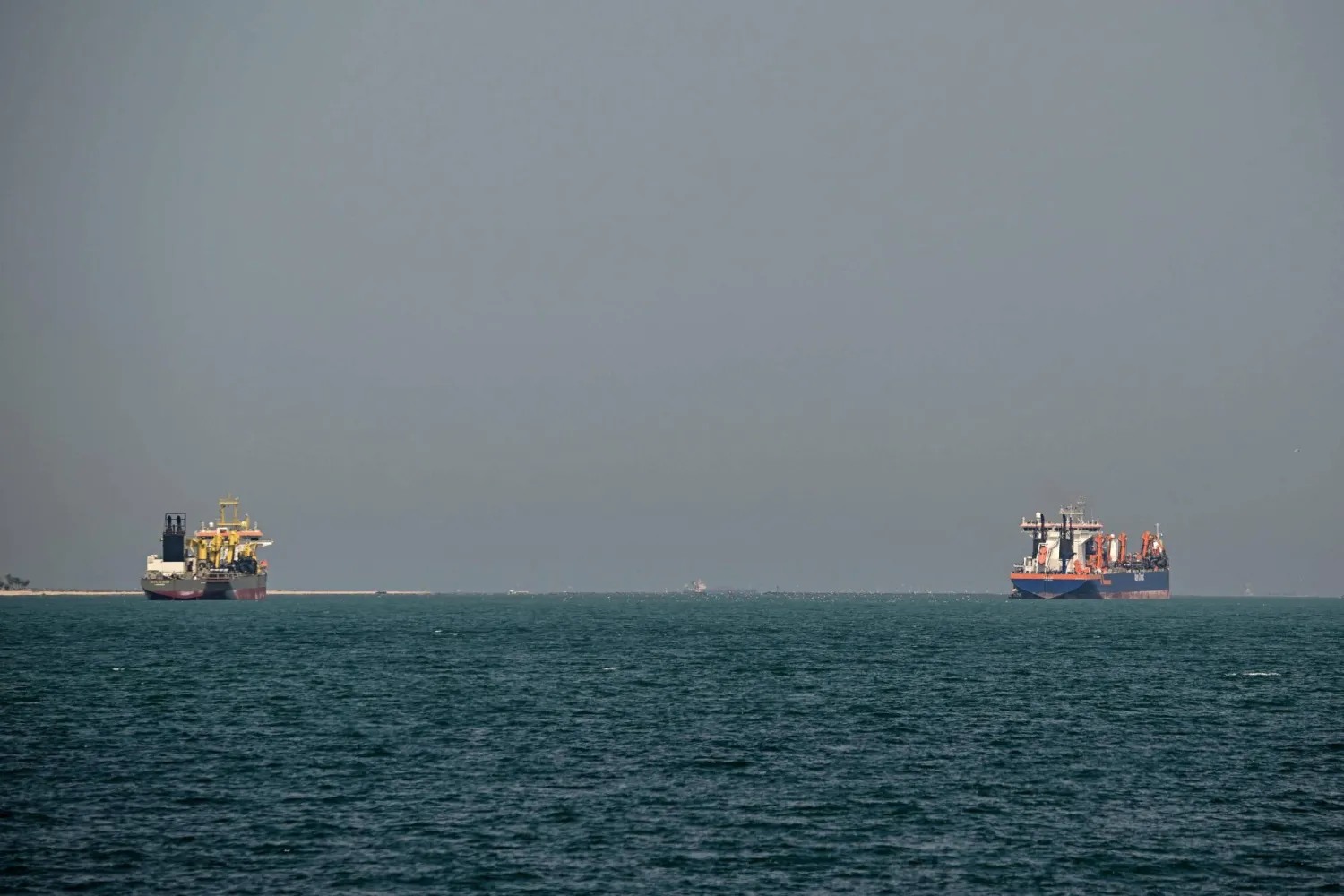
Commercial vessels are pictured offshore in Dubai on March 11, 2026. (AFP)
TT

Iran Tells World to Get Ready for Oil at $200 a Barrel as It Fires on Merchant Ships

Commercial vessels are pictured offshore in Dubai on March 11, 2026. (AFP)

Iran said the world should be ready for oil at $200 a barrel as its forces hit merchant ships on Wednesday and the International Energy Agency recommended a massive release of strategic reserves to dampen one of the worst oil shocks since the 1970s.

The war unleashed with joint US and Israeli air strikes nearly two weeks ago has so far killed around 2,000 people, mostly Iranians and Lebanese, as it has spread into Lebanon and thrown global energy markets and transport into chaos.

Despite what the Pentagon has described as the most intense airstrikes since the start of the war, Iran also fired at Israel and targets across the Middle East on Wednesday, demonstrating it can still fight back.

On Wednesday, three vessels were reported to have been hit in Gulf waters as Iran's Revolutionary Guards said their forces had fired on ships in the Gulf that had disobeyed their orders.

US President Donald Trump suggested the campaign would not last much longer, telling Axios news website there was "practically nothing left" to target in Iran.

"Any time I want it to end, it will end," he said in a telephone interview.

Oil prices, which shot up earlier in the week to nearly $120 a barrel before settling back to around $90, rose more than 4% on Wednesday amid renewed fears about supply disruption, while Wall Street's main share indexes fell in morning trade.

Previously, stock markets had rebounded as investors bet on Trump ‌finding a quick exit.

But ‌other signs pointed to a continuation of fighting which has seen ports and cities in the Gulf states as ‌well as ⁠targets in Israel hit ⁠by drone and missile barrages from Iran, adding urgency to calls from Türkiye and Europe to end the fighting.

An Israeli military official said the military still had an extensive list of targets to hit in Iran, including ballistic missile and nuclear-related sites.

'LEGITIMATE TARGETS"

So far there has been no sign that ships can safely sail through the Strait of Hormuz, the now-blockaded channel along the Iranian coast that serves as a conduit for around a fifth of the world's oil.

Trump said on Wednesday that ships "should" transit through the Strait but sources said Iran had deployed about a dozen mines in the channel, further complicating the blockade.

The US military told Iranians to stay clear of ports with Iranian navy facilities, drawing a warning from Iran's military that if the ports were threatened, economic and trade centers in the region would be "legitimate targets".

With prices at the pumps already surging in some countries and Trump's Republican Party trailing badly in the polls ahead of midterm elections, oil ⁠prices have become an increasingly urgent element in the calculations behind the war.

The International Energy Agency, made up of major oil consuming ‌nations, recommended releasing 400 million barrels from global strategic reserves to stabilize prices, the biggest such intervention in history, which ‌was swiftly endorsed by Washington.

But the rate at which countries can release strategic reserves will vary and the amount released would account for just a fraction of the supply through the Hormuz Strait.

Iranian ‌officials made clear on Wednesday they intended to impose a prolonged economic shock as the war continues.

"Get ready for oil to be $200 a barrel, because the oil price ‌depends on regional security, which you have destabilized," Ebrahim Zolfaqari, spokesperson for Iran's military command, said in comments addressed to Washington.

After offices of a bank in Tehran were hit overnight, Zolfaqari said Iran would respond with attacks on banks that do business with the US or Israel. People across the Middle East should stay 1,000 meters from banks, he added.

At sea, a Thai-flagged bulk carrier was set ablaze, forcing the evacuation of crew, with three people reported missing and believed trapped in the engine room.

Two other ships, a Japanese-flagged container ship and a Marshall Islands-flagged bulk carrier, were also reported to have sustained ‌damage from projectiles, bringing the number of merchant ships that have been hit since the war began to 14.

IRANIAN OFFICIAL SAYS MOJTABA KHAMENEI LIGHTLY WOUNDED

In Iran, huge crowds took to the streets for funerals for top commanders killed in airstrikes. They ⁠carried caskets and brandished flags and portraits of ⁠slain Supreme Leader Ali Khamenei and his son and successor, Mojtaba.

An Iranian official told Reuters that Mojtaba Khamenei had been lightly wounded early in the war, when airstrikes killed his father, mother, wife and a son. He has not appeared in public or issued any direct message since the war began.

The Iranian military said on Tuesday it had launched missiles at targets including a US base in northern Iraq and at targets in central Israel. Explosions rang out in Bahrain, while in Dubai four people were wounded by two drones that crashed near the airport.

In Tehran, residents said they were growing accustomed to nightly airstrikes that have sent hundreds of thousands of people fleeing to the countryside and contaminated the city with black rain from oil smoke.

"There were bombings last night but I did not get scared like before. Life goes on," Farshid, 52, told Reuters by phone.

'NO TIME LIMIT', SAYS ISRAEL

Despite calls from Trump for Iranians to rise up, US and Israeli hopes that Iran's system of clerical rule would be overthrown by popular protest have not been borne out.

Iran's police chief, Ahmadreza Radan, said on Wednesday anyone taking to the streets would be treated "as an enemy, not a protester. All our security forces have their fingers on the trigger".

A senior Israeli official told Reuters Israeli leaders now privately accepted that Iran's ruling system could survive the war. Two other Israeli officials said there was no sign Washington was close to ending the campaign.

US and Israeli officials say their aim is to end Iran's ability to project force beyond its borders and destroy its nuclear program.

Israel's Defense Minister Israel Katz said on Wednesday the operation "will continue without any time limit, as long as required, until we achieve all objectives and win the campaign".



Trump Says He Is Not Worried About Iran-Backed Attacks on US Soil

US President Donald Trump addresses the media before departing the White House, Washington, DC, USA, 11 March 2026. President Trump is due to deliver a speech in Kentucky later in the day. (EPA)
TT

Trump Says He Is Not Worried About Iran-Backed Attacks on US Soil

US President Donald Trump addresses the media before departing the White House, Washington, DC, USA, 11 March 2026. President Trump is due to deliver a speech in Kentucky later in the day. (EPA)

President Donald Trump said on Wednesday he was not worried about Iran-backed attacks on US soil, as the Federal Bureau of Investigation warned of Iranian drones potentially striking the US West Coast, ABC News reported.

The US and Israel carried out strikes on Iran nearly two weeks ago, launching the Gulf region into a war. Tehran has carried out retaliatory strikes in response to the US-Israeli strikes that killed top Iranian officials, including ‌the country's supreme ‌leader.

When asked on Wednesday if he ‌was ⁠worried that Iran ⁠may increase it retaliation to include strikes on US soil, Trump told reporters, "No, I'm not."

ABC News later reported that the FBI had warned police departments in California that Iran could retaliate for US attacks by launching drones at the West Coast.

"We recently acquired information that as ⁠of early February 2026, Iran allegedly aspired ‌to conduct a surprise ‌attack using unmanned aerial vehicles from an unidentified vessel off the coast ‌of the United State Homeland, specifically against unspecified targets ‌in California, in the event that the US conducted strikes against Iran,” the FBI wrote in an alert distributed at the end of February, according to ABC News.

"We have ‌no additional information on the timing, method, target, or perpetrators of this alleged attack."

Spokespeople ⁠for the ⁠FBI, Los Angeles Police Department, California governor and Los Angeles mayor did not immediately respond to requests for comments.

Reuters reported earlier this month that Iran and its proxies could target the US with attacks in response to US strikes.

A threat assessment produced by the Office of Intelligence and Analysis at the Department of Homeland Security said Iran and its proxies "probably" pose a threat of targeted attacks on the United States, although a large-scale physical attack was unlikely.


UN Urges ‘Exemptions’ to Get Aid Through Strait of Hormuz

Tom Fletcher, Under-Secretary-General for Humanitarian Affairs and Emergency Relief Coordinator, gives an update on the hyper-prioritized plan of the 2026 Global Humanitarian Overview (GHO) to media during a press conference at the European headquarters of the United Nations in Geneva, Switzerland, 11 March 2026. (EPA)
TT

UN Urges ‘Exemptions’ to Get Aid Through Strait of Hormuz

Tom Fletcher, Under-Secretary-General for Humanitarian Affairs and Emergency Relief Coordinator, gives an update on the hyper-prioritized plan of the 2026 Global Humanitarian Overview (GHO) to media during a press conference at the European headquarters of the United Nations in Geneva, Switzerland, 11 March 2026. (EPA)

The United Nations aid chief warned Wednesday that the Middle East war was impacting aid routes and called for "exemptions" so humanitarian supplies could get through.

The war in the Middle East has effectively closed the Strait of Hormuz, while fuel supply disruptions are sending freight rates soaring.

UN aid chief Tom Fletcher warned that the escalating war and its impact on the strait was having "a direct impact on our humanitarian supplies, including going to areas of key need in sub-Saharan Africa".

"I'm worried that further escalation will damage other supply routes," he told reporters in Geneva, warning that the war was pushing up prices and driving "more people into greater need".

"We're appealing to all the parties to try and secure those routes, including the Strait of Hormuz, for our humanitarian traffic... so we can reach anyone, anywhere, on the basis of greatest need."

"We're living through a moment right now of grave peril," Fletcher said.

"We're seeing these crises escalate rapidly and increasingly collide in dangerous ways," he said, calling for "calmer heads to prevail".

The last two weeks of fighting are further confirmation that "we're living in a time of brutality, impunity and indifference", he said, cautioning that "the rules-based scaffolding meant to restrain the worst excesses of war is cracking".

"Human ingenuity is being applied to find ever more sinister ways to kill at scale, while civilians are subjected to ever more abject violence."

- 'Massive gap' -

The UN aid chief warned that such violence was taking a heavy toll at a time when humanitarians were already on their knees.

"We're seeing violence reverberate across borders, displacement, economic shocks, soaring humanitarian needs -- and we're seeing the consequences spread faster than we can respond," he said.

"Humanitarian action (is) overstretched, under sustained attack and under-resourced."

When Fletcher launched the UN's annual Global Humanitarian Appeal for 2026 last December, he requested $23 billion to help 87 million of the world's most vulnerable people, with a heavy focus on dire conflict situations like those in Gaza, Ukraine, Sudan, Haiti and Myanmar.

The amount and scope were dramatically reduced compared to recent years, as the UN strives to adapt to a new reality since US President Donald Trump returned to the White House in January 2025, slashing foreign aid.

The UN has stressed that its smaller appeal did not mean humanitarian needs have shrunk.

Fletcher voiced optimism Wednesday that the 2026 target could be reached, while acknowledging that "the needs are far greater" than the people the UN can reach.

The UN has already received $5 billion towards the 2026 plan, including $2 billion from the US, with additional pledges bringing the total to $8.7 billion, he said.

"So that's over a third of what we're looking to get this year for this plan, delivered in the first quarter," he said.

But, he warned, "we still face a massive gap".

"Without additional support, millions of people will die."

The towering humanitarian needs were all the more distressing when around $1 billion is being spent every day on the Middle East war, he said.

Just a day's worth of war funding "would allow us to save millions of lives", Fletcher insisted.


Israel Urges UNSC to Designate Iran Guards 'Terrorist Organization'

A fragment of an Iranian missile is pictured on the outskirts of Israel's central city of Elad on March 10, 2026.  (Photo by Ilia YEFIMOVICH / AFP)
A fragment of an Iranian missile is pictured on the outskirts of Israel's central city of Elad on March 10, 2026. (Photo by Ilia YEFIMOVICH / AFP)
TT

Israel Urges UNSC to Designate Iran Guards 'Terrorist Organization'

A fragment of an Iranian missile is pictured on the outskirts of Israel's central city of Elad on March 10, 2026.  (Photo by Ilia YEFIMOVICH / AFP)
A fragment of an Iranian missile is pictured on the outskirts of Israel's central city of Elad on March 10, 2026. (Photo by Ilia YEFIMOVICH / AFP)

Israel's foreign minister on Wednesday urged the UN Security Council to designate Iran's powerful Revolutionary Guards a "terrorist organization", as the US-Israeli war against the Islamic republic raged for a 12th day.

"The Iranian regime's recent actions underscore that its aggression constitutes a direct threat not only to Israel, but to regional and international peace and security," Gideon Saar posted on X.

"I urge the UN Security Council to condemn Iran and immediately designate the IRGC as a terrorist organization," he added, addressing a letter to the US ambassador to the UN, Mike Waltz, who is the current president of the Security Council, AFP reported.

The IRGC was created after the 1979 revolution to protect the Islamic republic, with a stated mission to "guard the revolution and its achievements".

The influence of the IRGC extends into politics and business, where it is a major player with involvement in most sectors of Iran's sanctions-hit economy.

The IRGC answers to Iran's supreme leader and boasts its own ground, naval and air forces.

The United States and Israel launched strikes on Iran on February 28, killing its supreme leader and plunging the Middle East into a spiralling war.

The US has already designated the Iran Guards a "terrorist organization", with the European Union following suit in January over a deadly crackdown on mass protests.