



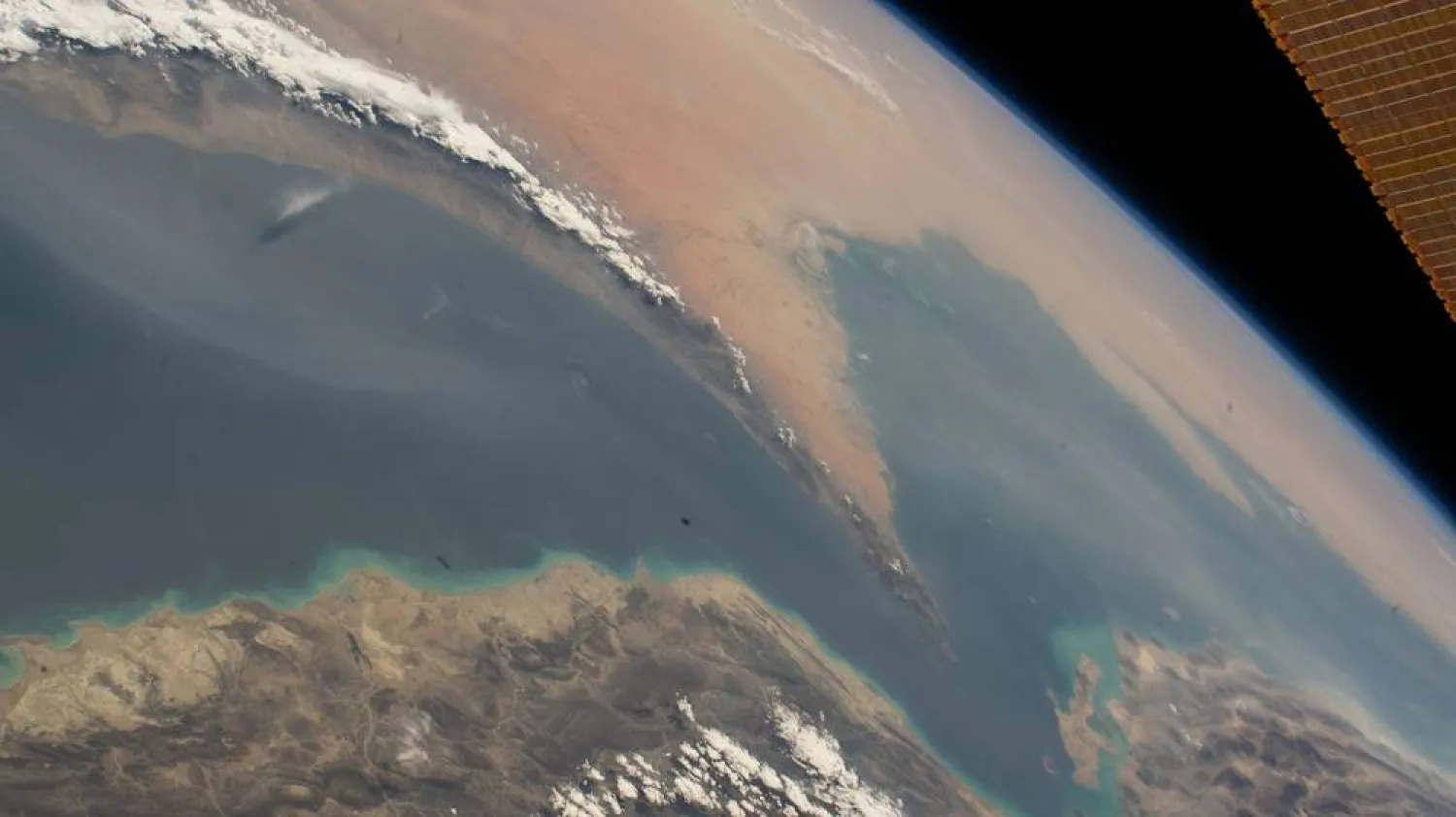

The US military declared on Saturday it had taken out an Iranian bunker housing weapons threatening oil and gas shipments in the Strait of Hormuz.
The US statement appeared designed to calm the concerns of energy markets and of Washington's skeptical international allies, more than 20 of whom issued a statement vowing to back efforts to re-open the key sea lane.
Admiral Brad Cooper, head of US Central Command, said US war planes had dropped 5,000-pound bombs on an underground facility on Iran's coast that was storing anti-ship cruise missiles, mobile launchers and other equipment.
"We not only took out the facility, but also destroyed intelligence support sites and missile radar relays that were used to monitor ship movements," Cooper said in a video statement, revealing details of a strike first announced on Tuesday.
A statement from the leaders of mainly European countries, including the UK, France, Italy and Germany, but also South Korea, Australia, the UAE and Bahrain, condemned the "de facto closure of the Strait of Hormuz by Iranian forces".
"We express our readiness to contribute to appropriate efforts to ensure safe passage through the Strait. We welcome the commitment of nations who are engaging in preliminary planning," they said.
As consumers count the cost of attacks on energy facilities in the Gulf, including the world's largest gas hub, US President Donald Trump has slammed NATO allies as "cowards" and urged them to secure the strait.
Iran has choked the channel, through which around a fifth of the world's crude oil and liquefied natural gas passes during peacetime.
Foreign Minister Abbas Araghchi said Tehran had only imposed restrictions on vessels from countries involved in attacks against Iran, and would offer assistance to others that stayed out of the conflict.
Iran also denies claims -- cited in the 20-country joint statement -- that it has deployed mines in the channel.
The standoff has sent crude oil prices soaring, with a barrel of North Sea Brent crude up more than 50 percent over the past month and now comfortably more than $105.
Meanwhile, Tehran marked the end of Ramadan as the war entered its fourth week.
Iran's supreme leader traditionally leads Eid al-Fitr prayers, but Mojtaba Khamenei, who came to power earlier this month after his father was killed in US-Israeli strikes, has remained out of the public eye.
Instead, the head of the judiciary, Gholam Hossein Mohseni Ejei, attended prayers at central Tehran's Imam Khomeini grand mosque, which was overflowing, with worshippers flooding the streets outside.
The previous evening, airstrikes had darkened the mood as the city celebrated Nowruz, the Persian New Year.
Iran's ally Russian President Vladimir Putin sent greetings to Khamenei, saying he "wished the Iranian people strength on overcoming these severe trials and emphasized that during this difficult time, Moscow remained a loyal friend".


