


Iran Fires Missiles across Middle East as Trump Threatens Oil Hub

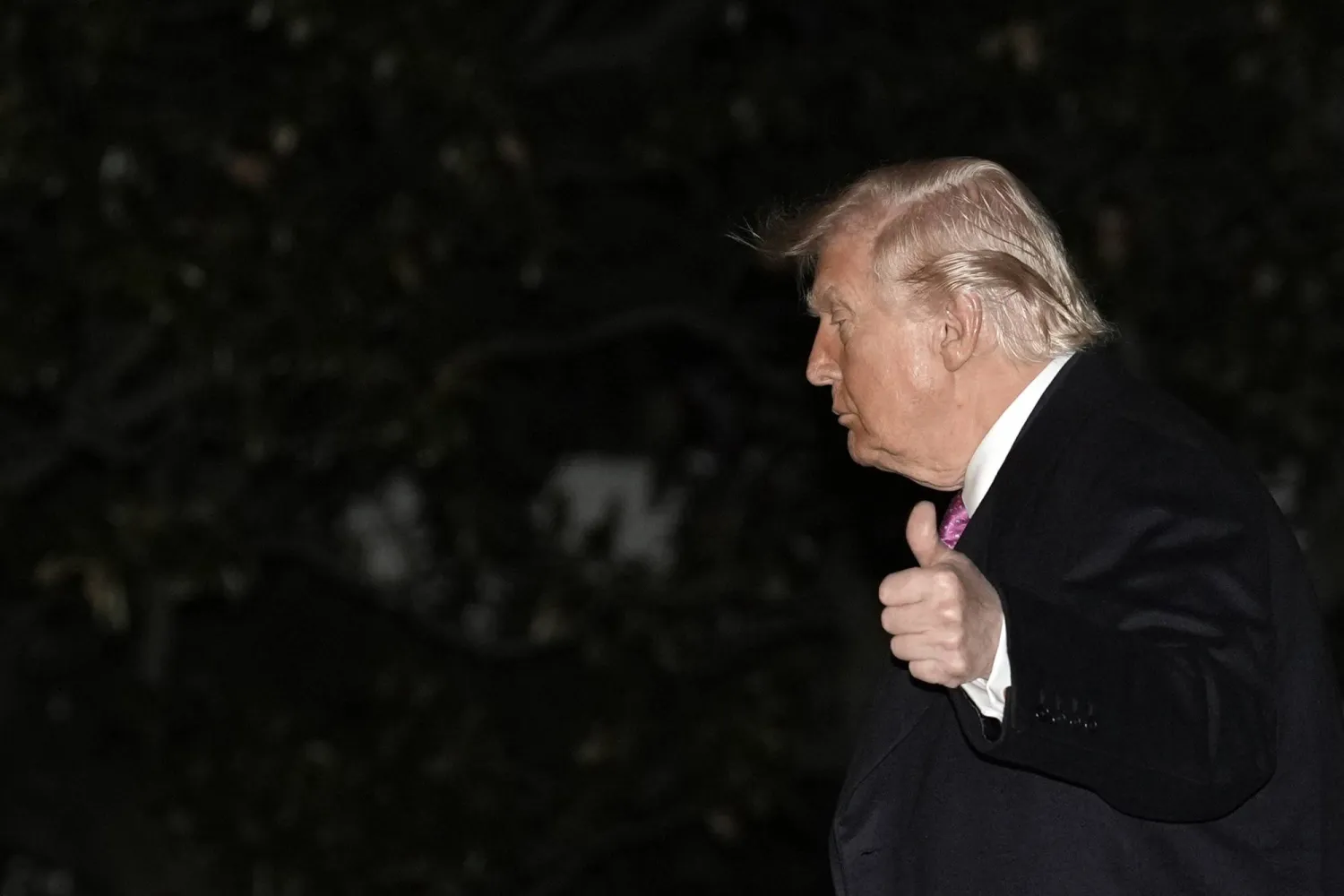
US President Donald Trump walks on the South Lawn of the White House upon his return to Washington, DC, USA, 29 March 2026.  EPA/Yuri Gripas / POOL
US President Donald Trump walks on the South Lawn of the White House upon his return to Washington, DC, USA, 29 March 2026. EPA/Yuri Gripas / POOL
TT

Iran Fires Missiles across Middle East as Trump Threatens Oil Hub

US President Donald Trump walks on the South Lawn of the White House upon his return to Washington, DC, USA, 29 March 2026.  EPA/Yuri Gripas / POOL
US President Donald Trump walks on the South Lawn of the White House upon his return to Washington, DC, USA, 29 March 2026. EPA/Yuri Gripas / POOL

Iran fired missiles across the Middle East on Tuesday as its capital was hit by fresh explosions, after US President Donald Trump threatened the country's key oil export hub, power stations and desalination plants.

Israeli Prime Minister Benjamin Netanyahu, Trump's partner in attacking Iran, said more than half of his military aims had been achieved, but both leaders refused to put a timeline on an operation that has ignited a month-long regional war and jolted global markets.

As sirens rang out in Jerusalem, Israel's military said it had responded to fresh Iranian missiles, while local Iranian media reported new explosions in Tehran that caused "power outages in parts" of the capital, said AFP.

Israel's military also reported Tuesday that four more of its soldiers had been killed in combat in southern Lebanon, where the war has spilled and where they are clashing with Iranian-backed Hezbollah.

Before the latest strikes on Tehran, Israel issued a warning on X to residents of an area in the west of the city saying it would "attack military infrastructure" there.

Iran, meanwhile, fired a new salvo of missiles at Gulf nations.

In Dubai, four people were wounded by falling debris from intercepted projectiles while an Iranian attack sparked a fire at a Kuwaiti oil tanker in the city's port, said authorities in the financial hub whose reputation for stability has been shaken by the conflict.

In Saudi Arabia, authorities said they intercepted eight ballistic missiles.

Trump warned Monday that if Iran did not strike a war-ending deal -- which included reopening the vital Strait of Hormuz shipping lane -- US forces would destroy "all of their Electric Generating Plants, Oil Wells and Kharg Island (and possibly all desalinization plants!)."

But the Wall Street Journal reported he also told aides he was willing to end the war even if the strait remains largely closed --likely strengthening Tehran's control on the waterway.

Refusing to back down, an Iranian parliamentary committee voted to impose tolls on vessels in the strait, the passageway through which one-fifth of global oil passes, and completely ban ships from the United States and Israel.

The strait had been open before the war, but Secretary of State Marco Rubio has recently spoken of building a "coalition" to oppose the Iranian tolling plan.

"It sets an incredible precedent," Rubio told Al-Jazeera of the tolls.

"So this means that nations can now take over international waterways and claim them as their own," Rubio said of the waterway the US president recently called the "Strait of Trump".

- War 'beyond halfway point' -

Trump said the United States was speaking to a "more reasonable regime" in Tehran, which has denied any talks and accused him of lying about negotiations as cover while readying a ground invasion.

For Israel's part, Netanyahu said his military had achieved key objectives including "wiping out" industrial plants in Iran and coming "close to finishing their arms industry".

"It's definitely beyond the halfway point. But I don't want to put a schedule on it," Netanyahu told US broadcaster Newsmax.

The war, and the spiraling price of oil, has been unpopular in the United States, where Rubio again said Monday that it would last "weeks" more and not months.

Egyptian President Abdel Fattah al-Sisi, whose country is feeling the economic pinch of the war, appealed directly to Trump to find an offramp.

"Please, help us to stop the war; you are capable of it," Sisi told a press conference.

Pakistani Foreign Minister Ishaq Dar, whose country is acting as an intermediary between Tehran and Washington, was set to travel to Beijing for talks Tuesday on "global issues of mutual interest" with counterpart Wang Yi.

Dar hosted foreign ministers from Saudi Arabia, Egypt and Türkiye in the Pakistani capital on Sunday, saying Islamabad was ready to host talks between the United States and Iran in the "coming days".

Trump has claimed to be in direct contact with senior Iranian figures whom he has not identified publicly.

But Iranian foreign ministry spokesman Esmaeil Baqaei again denied any negotiations, saying the United States had sent only a request to talk via intermediaries, including Pakistan.

After weeks of strikes, residents of Tehran painted a picture of a city that is still clinging to some routine despite tight security.

"When I make it to a cafe table, even for a few minutes, I can almost believe the world hasn't ended," said Fatemeh, 27, a dental assistant.

"And then I go back home, back to the reality of living through war, with all its darkness and weight."

- Lebanon pounded -

On another front, Israel has relentlessly pounded Lebanon, including central Beirut, as it seeks to deliver a heavy blow to Iranian ally Hezbollah, which fired rockets in response to the killing of Iran's supreme leader, Ali Khamenei.

The UN mission in Lebanon said that two Indonesian peacekeepers were killed when "an explosion of unknown origin destroyed their vehicle", with two other peacekeepers wounded, one seriously. Another Indonesian peacekeeper was killed on Sunday.

The Israeli military said early Tuesday that it had opened an investigation to determine if it or Hezbollah was responsible.

France, a key player in Lebanon, called for an urgent UN Security Council meeting, which was subsequently scheduled for Tuesday at 1400 GMT.

Economy ministers and central bankers from the G7 club of rich countries, meanwhile, met in Paris to discuss the war's consequences, with many countries introducing energy-saving measures.

Market experts warned that any US ground operation or wider Iranian retaliation could send oil prices to levels not seen since the 2008 commodity boom.

Adding pressure, Yemen's Iranian-backed Houthi group over the weekend fired missiles and drones at Israel, posing a threat to shipping on the Red Sea in addition to the Gulf.


Italy Reportedly Refuses US Aircraft Use of Sicily Base for Middle East Operations

In this US Air Force handout photo released by US Central Command public affairs, a US Air Force B-52H Stratofortress bomber aircraft prepares to refuel from a KC-135 Stratotanker aircraft during Operation Epic Fury over the US Central Command area of responsibility on March 20, 2026. (Photo by US Airforce / AFP)
TT

Italy Reportedly Refuses US Aircraft Use of Sicily Base for Middle East Operations

In this US Air Force handout photo released by US Central Command public affairs, a US Air Force B-52H Stratofortress bomber aircraft prepares to refuel from a KC-135 Stratotanker aircraft during Operation Epic Fury over the US Central Command area of responsibility on March 20, 2026. (Photo by US Airforce / AFP)

Italy has denied permission for US military aircraft to land at the Sigonella air base in Sicily before flying to the Middle East, a source close to the matter said on Tuesday, confirming a newspaper report.

Daily Corriere della Sera reported "some US bombers" had been due to land at the base in eastern Sicily ⁠before heading to the Middle ⁠East. It did not say when they had been due to land.

The source, who was not authorized to speak to media and declined to be ⁠identified, also did not specify how many aircraft were involved or when Rome declined to give permission.

Corriere della Sera added that permission was not granted as the US had not sought authorization and Italy's military leadership was not consulted, as required under treaties governing the use of US military ⁠installations ⁠in the country.

The Italian defense ministry had no immediate comment.

Center-left opposition parties have urged the government to block the US use of bases in Italy to avoid involvement in the conflict.

Prime Minister Giorgia Meloni's right-wing government has said it would seek parliamentary authorization should any such requests be made.

Israel’s military spokesperson says 10 soldiers have died fighting in Lebanon since the start of the Israeli invasion, including four deaths announced Tuesday.

As of Friday, the military said 261 troops had been injured, 22 seriously, in fighting since the start of the latest war.


Iran Media Says Strikes Put Desalination Plant on Gulf Island Out of Service

An aerial view of the island of Qeshm, separated from the Iranian mainland by the Clarence Strait, December 10, 2023. (Reuters file)
TT

Iran Media Says Strikes Put Desalination Plant on Gulf Island Out of Service

An aerial view of the island of Qeshm, separated from the Iranian mainland by the Clarence Strait, December 10, 2023. (Reuters file)

Iranian media said Tuesday airstrikes have put a desalination plant on Iran's Qeshm island in the strategic Strait of Hormuz out of service, though the report did not specify when the attack took place.

"One of the desalination plants on Qeshm Island was targeted... and is now completely out of service, as it is not possible to repair it in the short term," the ISNA news agency reported, quoting health ministry official Mohsen Farhadi.

Iran's Foreign Minister Abbas Araghchi had said a strike had taken place there on March 7, accusing the US of a "blatant and desperate crime".

Qeshm is the largest Iranian island in the Gulf, stretching for around one hundred kilometers across the Strait of Hormuz.

It has become a popular tourist destination in recent years for Iranians thanks to its rare UNESCO-listed rock formations and turquoise waters, but is also heavily militarized, analysts say.

There have been several attacks on desalination plants in the ongoing war, sparked by US-Israeli strikes on Iran on February 28.

Bahrain reported an Iranian strike on a facility on March 8, apparent retaliation for the US hit on Qeshm the day before.

Kuwait reported an Iranian attack on a desalination and electricity plant on Monday, which Tehran blamed on Israel.

The Middle East is among the driest regions in the world, with many countries dependent on desalination plants for domestic and industrial water supplies.

US President Donald Trump threatened on Monday to "obliterate" Iran's power infrastructure, oil wells and "possibly all desalinization plants."


France’s Macron Arrives in Japan for Talks Dominated by Mideast War

 France's President Emmanuel Macron (center-L) and his wife Brigitte arrives at Tokyo Haneda International Airport in Tokyo on march 31, 2026. (AFP)
France's President Emmanuel Macron (center-L) and his wife Brigitte arrives at Tokyo Haneda International Airport in Tokyo on march 31, 2026. (AFP)
TT

France’s Macron Arrives in Japan for Talks Dominated by Mideast War

 France's President Emmanuel Macron (center-L) and his wife Brigitte arrives at Tokyo Haneda International Airport in Tokyo on march 31, 2026. (AFP)
France's President Emmanuel Macron (center-L) and his wife Brigitte arrives at Tokyo Haneda International Airport in Tokyo on march 31, 2026. (AFP)

French President Emmanuel Macron arrived in Japan on Tuesday for a visit that initially aimed to strengthen partnerships in nuclear energy and space innovation but will now be dominated by the Middle East war.

Macron landed shortly before 5:30 pm (0830 GMT) in rainy and windy Tokyo, ahead of an expected evening meeting with several cultural figures including a renowned kimono painter.

He will then hold talks with Prime Minister Sanae Takaichi on Wednesday, and "the crisis in the Middle East will be at the heart of discussions", the Elysee said ahead of his Asia trip, which will also include a visit to South Korea.

The two leaders will discuss "how we can try to find common solutions", it added.

Japan depends on the Middle East for 95 percent of its oil imports and has had to dip into strategic stockpiles to temper the impact of rising fuel prices since the start of the war.

Iran has virtually closed the vital Strait of Hormuz -- through which a fifth of global crude and gas flows -- since the United States and Israel began striking the country on February 28.

Economy and finance ministers of G7 countries, which include France and Japan, said on Monday they stood ready to take "all necessary measures" to ensure the stability of the energy market as they tackled the economic consequences of the war.

Wednesday will be Macron's "first full-fledged meeting" with Takaichi, according to a Japanese foreign ministry official, though the two met on the sidelines of the G20 summit in November.

Among expectations for the talks was "continued communication" with a view towards the "calming down of the situation in Iran", the official said.

The two countries are also expected to discuss security and partnerships in the space sector, and intend to sign a roadmap on nuclear power in Japan, the Elysee said.

Macron's visit, his fourth to the country, comes as China-Japan ties worsen following Takaichi's suggestion in November that Tokyo might intervene militarily in any Chinese attempt to take Taiwan.

Macron visited China in December.

He and his wife Brigitte are due to have lunch with Emperor Naruhito and Empress Masako on Thursday but a hoped-for viewing of Japan's famous cherry trees in full bloom could be spoiled by rain forecast for the next three days in the Japanese capital.

He will be in Japan until April 2, and he will then visit South Korea at the invitation of President Lee Jae Myung.

"Macron will be the first European leader to make a state visit to South Korea since the launch of (our) new administration," the South Korean presidential office said earlier this month.
