


Iran’s Fractured Leadership is Struggling to Coordinate, Officials Say

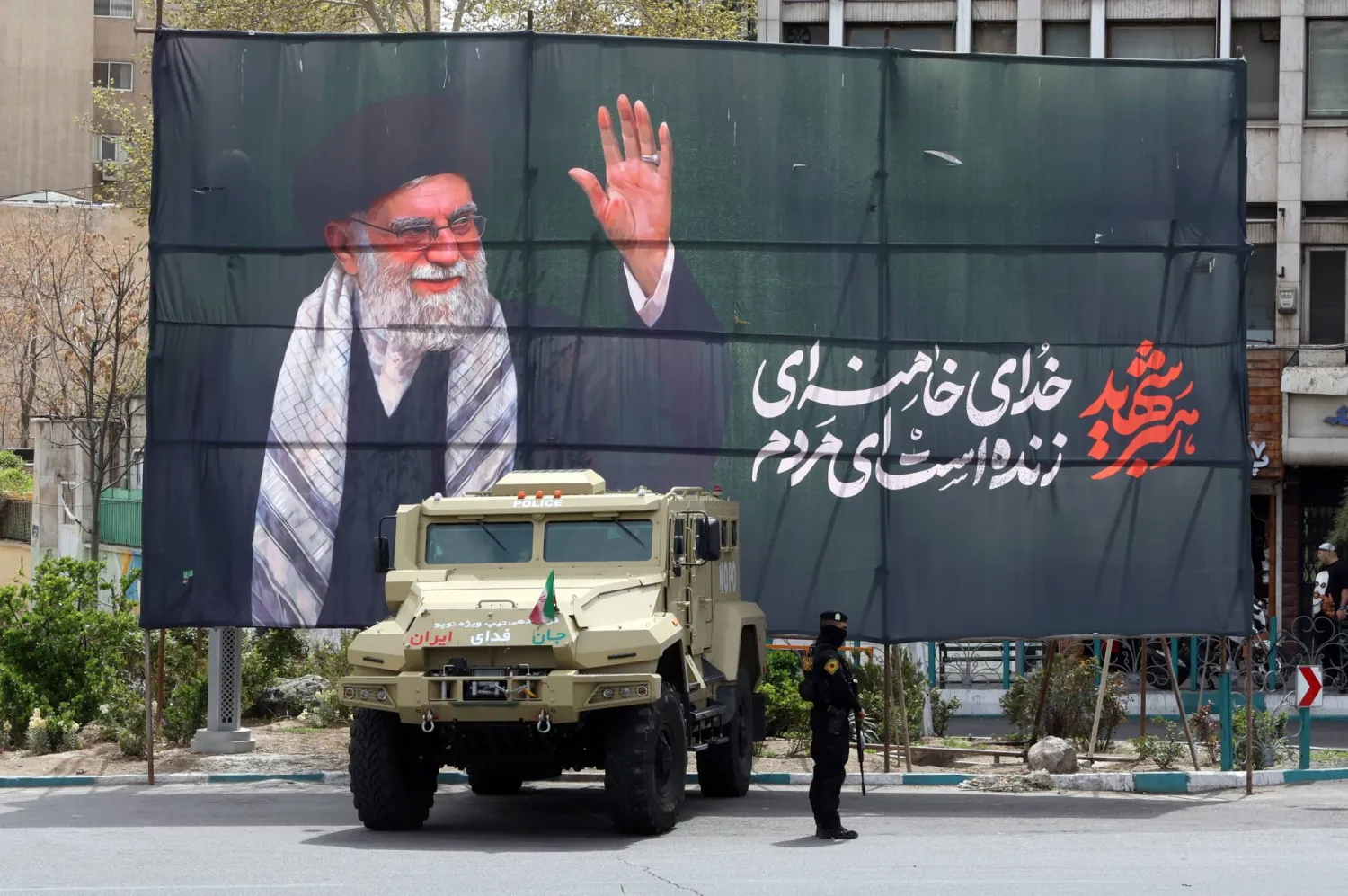
A member of the Iranian security forces stands guard next to a banner honoring former Iranian supreme leader Ali Khamenei, in Tehran, Iran, 30 March 2026. EPA/ABEDIN TAHERKENAREH
TT

Iran’s Fractured Leadership is Struggling to Coordinate, Officials Say

A member of the Iranian security forces stands guard next to a banner honoring former Iranian supreme leader Ali Khamenei, in Tehran, Iran, 30 March 2026. EPA/ABEDIN TAHERKENAREH

Washington: Ronen Bergman, Adam Goldman, Julian Barnes

The US-Israeli war against Iran has fractured the Iranian government, complicating its ability to make decisions and coordinate larger retaliatory attacks, according to officials familiar with US and Western intelligence assessments.

Several dozen Iranian leaders and their deputies have been killed since the war began four weeks ago. Those who survive have had difficulty communicating and are unable to meet in person, for fear of having their calls intercepted by the United States or Israel and being targeted in an airstrike.

While Iran’s security and military agencies continue to function, the government’s ability to plan new strategies or policies has been weakened.

The Trump administration has said a new government is in charge in Iran and has pressed it to make a quick deal. But the more degraded Iranian government decision making becomes, the more difficult it will be for it to negotiate with American envoys or make significant concessions.

With different leaders in place, Iranian negotiators may have little knowledge about what their government is willing to concede, or even whom precisely to ask.

What is more, American officials say hard-liners within the Iranian Revolutionary Guards Corps have become more influential in Iran, exerting more power than the religious leadership nominally in charge.

But whether someone emerges to make a deal, and whether that person can persuade other officials to agree to it, is far from clear.

Former American officials say Iran will make a deal when it suffers enough economic pain from the war. While the damage has been severe, Iran may not yet feel as though it is losing, according to current and former officials.

On Monday, US President Donald Trump threatened to expand the war if a deal was not quickly reached, suggesting that US forces might try to take Kharg Island, Iran’s main hub for oil exports.

Iran’s compromised communications have caused confusion and paranoia among the surviving government leaders, who fear that their calls and messages are being intercepted by Israeli intelligence, officials say.

As a result, they have been reluctant to make calls, according to officials briefed on Western intelligence assessments.

Israel began the war with a strike on the leadership compound that killed Iran’s supreme leader, Ali Khamenei, and much of the national security leadership.

A number of lower-level officials seen by the United States as more pragmatic were also killed in the strike, US officials said.

Trump himself made reference in interviews that potential candidates to lead Iran had been killed.

The attack severed many connections between security, military and civilian policymakers, according to Western officials and others briefed on government assessments.

It is unclear how much control the new supreme leader, Mojtaba Khamenei, is exerting over the government. He has not been seen in public, and US and Israeli intelligence agencies believe he was wounded during the war.

Some intelligence officials believe that Khamenei may be more of a figurehead, and that the surviving leadership of the Revolutionary Guards is making the decisions.

A senior US military official said Iranian command and control has been badly degraded by American and Israeli strikes.

Still, the official and a senior intelligence official said, before the war Iran built a decentralized control system that allows local commanders in different regions of the country to make their own strike decisions, even in the absence of direct day-to-day orders from Tehran.

The United States is targeting those local commanders, the senior military official said.

Nevertheless, Iran has proved it can still launch substantial offensive strikes.

But the retaliatory attacks have not been as large, or as effective, as they might have been because of the problems in the Iranian government. Given the decimation of its leadership, former US officials say, Iran has been unable to launch larger barrages of missiles that could more easily overwhelm defenses. Instead, regional commands have had to muster counterattacks without coordinating with one another.

Trump has expressed frustration with what he has portrayed as mixed messaging from the Iranian leadership.

“The Iranian negotiators are very different and ‘strange,’” Trump wrote on social media on Thursday. “They are ‘begging’ us to make a deal, which they should be doing since they have been militarily obliterated, with zero chance of a comeback, and yet they publicly state that they are only ‘looking at our proposal.’”

Over the weekend, Trump said the campaign of airstrikes had resulted in new leadership in Iran and again claimed progress in talks.

“It’s a whole different group of people,” Trump said on Sunday. “So I would consider that regime change, and frankly, they’ve been very reasonable.”

In a social media post on Monday, Trump offered optimistic assessments of the current government but also threatened to expand the war by targeting energy and civilian infrastructure. He said that if a deal was not reached shortly, and if the Strait of Hormuz remained closed, he would attack Iran’s electrical generation plants, oil wells and desalination plants.

People briefed on intelligence assessments said Trump’s frustration reflected the inability of the current Iranian government to coordinate a response and make a decision about the American peace proposals.

Israeli officials have said the communication problems in Iran are not dissimilar to the problems with hostage negotiations during the Gaza war. In Gaza, offers from the United States and Israel went to Hamas leaders in Qatar, and then were conveyed in written notes to leaders in Gaza, a time-consuming process that introduced confusion.

The New York Times


EU Announces a Further $2.3 Million in Humanitarian Aid for Cuba

FILE - An ice cream street vendor shows his Cuban pesos in Havana, Cuba, April 20, 2024. (AP Photo/Ariel Ley, File)
TT

EU Announces a Further $2.3 Million in Humanitarian Aid for Cuba

FILE - An ice cream street vendor shows his Cuban pesos in Havana, Cuba, April 20, 2024. (AP Photo/Ariel Ley, File)

The European Commission has released a further 2 million euros ($2.3 million) in aid for Cuba, it said on Wednesday, to tackle what it described as worsening humanitarian conditions in the country.

The US cut off Venezuelan oil exports to Cuba after toppling Venezuelan President Nicolas Maduro on January 3.

This has resulted in an energy crisis in Cuba and blackouts across ⁠the country, whose ⁠population stands at 10 million. Cuban health officials say the crisis has increased the mortality risk for Cuban cancer patients, especially children.

"The EU stands with the people of Cuba in ⁠their hour of need. After Hurricane Melissa, we were there. And today, we are stepping up again with €2 million in humanitarian aid to help deliver food and safe drinking water to those who need it most. In a country facing an energy crisis and growing shortages, this support will help keep life-saving aid flowing ⁠to ⁠up to two million people in need," Reuters quoted Hadja Lahbib, EU Commissioner for Crisis Management, as saying in a statement.

On March 31, a Russian-flagged tanker carrying some 700,000 barrels of crude docked in Cuba's Matanzas oil terminal, shipping data showed, marking the first significant oil delivery to the island since US President Donald Trump's administration cut off its fuel supply.


Pakistan Says Holding Talks with Afghan Govt in China

In this photo released by Xinhua News Agency, Chinese Foreign Minister Wang Yi, right, poses for photos with Pakistani Deputy Prime Minister and Foreign Minister Mohammad Ishaq Dar in Beijing on Tuesday, March 31, 2026. (Xinhua via AP)
TT

Pakistan Says Holding Talks with Afghan Govt in China

In this photo released by Xinhua News Agency, Chinese Foreign Minister Wang Yi, right, poses for photos with Pakistani Deputy Prime Minister and Foreign Minister Mohammad Ishaq Dar in Beijing on Tuesday, March 31, 2026. (Xinhua via AP)

Pakistan and Afghanistan are holding talks in China to end months of conflict, two officials from Islamabad told AFP on Wednesday.

The meeting in the northwestern city of Urumqi comes after Pakistan's Foreign Minister, Mohammad Ishaq Dar, travelled to Beijing on Tuesday to meet his Chinese counterpart, Wang Yi.

The pair discussed Islamabad's role in trying to get the United States and Iran to the negotiating table, and set out a joint five-point plan for an end to the conflict.

Dar had been due to return to Islamabad on Wednesday.

China has sought to mediate in the escalating conflict between Pakistan and Afghanistan.

Pakistan says it is targeting extremists who have carried out cross-border attacks, but authorities in Kabul deny harboring militants.

There was no immediate comment from Pakistan's foreign ministry and military when contacted by AFP, or from the Afghan government.

But a senior Pakistani security official said: "A delegation led by an official from Pakistan's Ministry of Foreign Affairs is in Urumqi to hold talks with the Afghan Taliban

"The meeting is taking place at the request of our Chinese friends."

A second senior government official also confirmed the talks, adding: "The meeting is to set a base for full-scale dialogue."

The first official said Pakistan's demands from Afghanistan "remain unchanged", urging Kabul to "take verifiable action" against extremists and "end any support for the group".

It also wants to "ensure that Afghan territory is not used as a base for launching attacks against Pakistan".


Trump Says US Strongly Considering NATO Exit

FILE PHOTO: US President Donald Trump signs documents at the White House in Washington, US, January 20, 2025.  REUTERS/Carlos Barria/File Photo
FILE PHOTO: US President Donald Trump signs documents at the White House in Washington, US, January 20, 2025. REUTERS/Carlos Barria/File Photo
TT

Trump Says US Strongly Considering NATO Exit

FILE PHOTO: US President Donald Trump signs documents at the White House in Washington, US, January 20, 2025.  REUTERS/Carlos Barria/File Photo
FILE PHOTO: US President Donald Trump signs documents at the White House in Washington, US, January 20, 2025. REUTERS/Carlos Barria/File Photo

President Donald Trump said he was strongly considering pulling the United States out of NATO after allies failed to back US military action against Iran, according to an interview with Britain's Daily ⁠Telegraph.

Trump described the ⁠alliance as a "paper tiger" and said removing the United States from the defense pact was ⁠now "beyond reconsideration," the newspaper reported. He said he had long held doubts about NATO's credibility.

"Oh yes, I would say [it’s] beyond reconsideration," Trump told the newspaper when asked about whether he would reconsider US ⁠membership ⁠of the alliance after the conflict.

"I was never swayed by NATO. I always knew they were a paper tiger, and (Russian President Vladimir) Putin knows that too, by the way."

US Defense Secretary Pete Hegseth said on Tuesday other countries needed to "be prepared to stand up" and help reopen the Strait of Hormuz, echoing criticism from Trump, who has singled out NATO members Britain and France.

Rubio told Fox News Washington would not overlook the lack of assistance from other NATO members. "After this conflict is concluded, we ⁠are going to have to reexamine ⁠that relationship," he said.
