North Korea Boosting Ability to Make Nuclear Arms, Says UN Watchdog

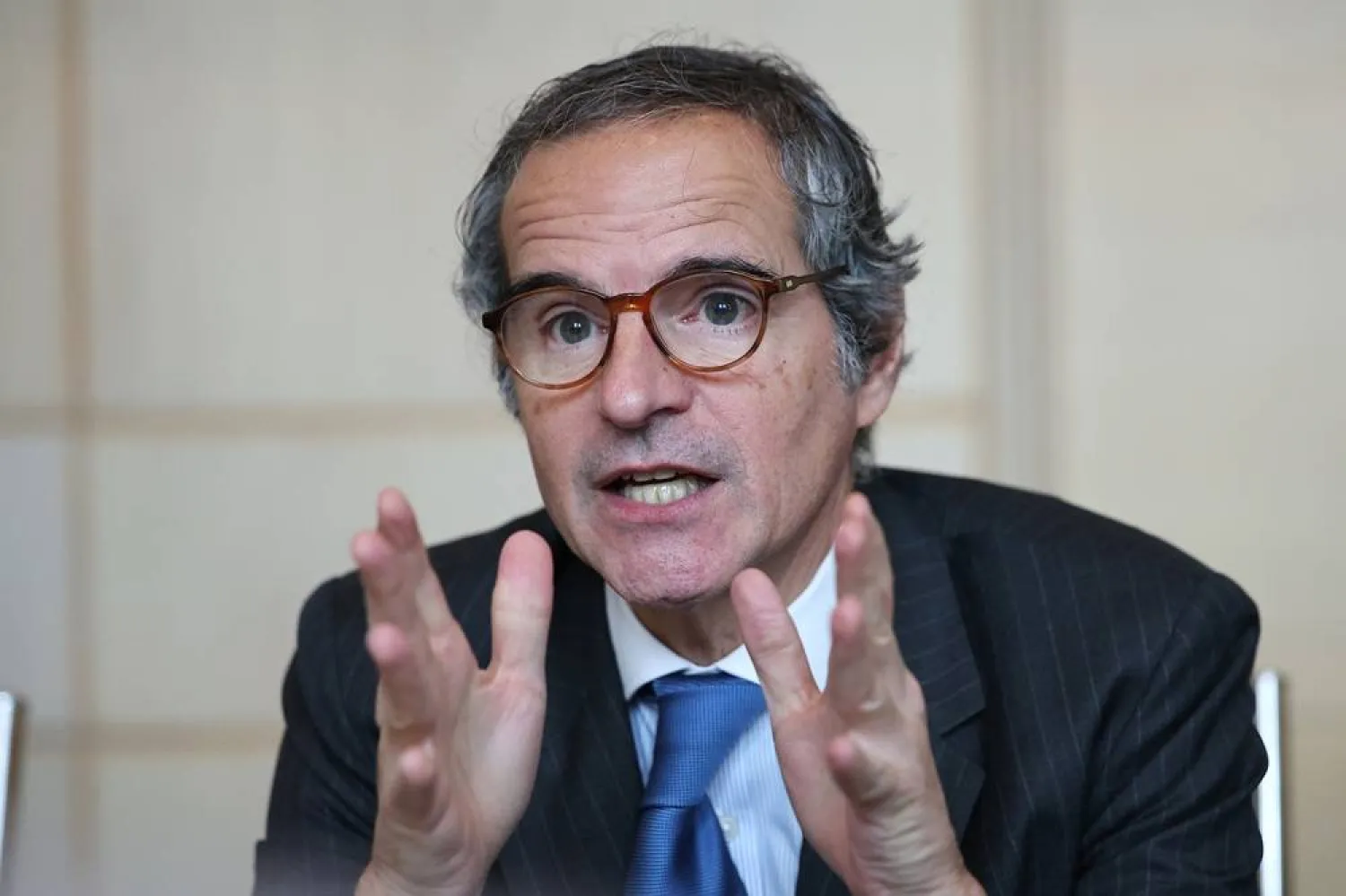
 Director General of the International Atomic Energy Agency (IAEA) Rafael Grossi speaks during a press conference in Seoul, South Korea, Wednesday, April 15, 2026. (Kim Hong-Ji/Pool Photo via AP)
Director General of the International Atomic Energy Agency (IAEA) Rafael Grossi speaks during a press conference in Seoul, South Korea, Wednesday, April 15, 2026. (Kim Hong-Ji/Pool Photo via AP)
TT

North Korea Boosting Ability to Make Nuclear Arms, Says UN Watchdog

 Director General of the International Atomic Energy Agency (IAEA) Rafael Grossi speaks during a press conference in Seoul, South Korea, Wednesday, April 15, 2026. (Kim Hong-Ji/Pool Photo via AP)
Director General of the International Atomic Energy Agency (IAEA) Rafael Grossi speaks during a press conference in Seoul, South Korea, Wednesday, April 15, 2026. (Kim Hong-Ji/Pool Photo via AP)

North Korea is showing a "very serious increase" in its ability to produce atomic weapons, the head of the UN nuclear watchdog said Wednesday on a visit to Seoul.

The diplomatically isolated north is believed to operate multiple facilities for enriching uranium, a key step in making nuclear warheads, South Korea's spy agency has said.

They include one at the Yongbyon nuclear site, which Pyongyang purportedly decommissioned after talks but later reactivated in 2021.

"In our periodic assessments, we have been able to confirm that there's a rapid increase in the operations" of the Yongbyon reactor, International Atomic Energy Agency (IAEA) chief Rafael Grossi told reporters in Seoul.

The agency also observed a rise in operations at Yongbyon's reprocessing unit and light-water reactor, as well as the activation of other facilities, Grossi said.

"All that points to a very serious increase in the capabilities of (the) DPRK in the area of nuclear weapons production, which is estimated at a few dozen warheads," he said, using North Korea's official name.

North Korea, which conducted its first nuclear test in 2006, is under rafts of UN sanctions for its banned weapons programs.

It has declared that it will never surrender its nuclear weapons, and cut off access to IAEA inspectors in 2009.

The agency has noted the construction of a "new facility similar to the enrichment facility in Yongbyon", Grossi said.

It was "not easy to calculate" any production increases without visiting the site.

However, "we consider, looking at external features of the facility, that there will be significant increase in the enrichment capacity of the DPRK", he said.

Asked whether Russia was assisting North Korea's nuclear development, Grossi said the IAEA had not seen "anything in particular in that regard".

North Korea has sent ground troops and artillery shells to support Russia's invasion of Ukraine, and observers say Pyongyang is receiving military technology assistance from Moscow in return.


Iran Can Go up to Two Months without Oil Exports Before Cutting Output, Analysts Say

A man rides past a large billboard referring to the Strait of Hormuz in Tehran's Vanak Square on April 15, 2026. (AFP)
TT

Iran Can Go up to Two Months without Oil Exports Before Cutting Output, Analysts Say

A man rides past a large billboard referring to the Strait of Hormuz in Tehran's Vanak Square on April 15, 2026. (AFP)

Iran can withstand a complete halt in oil exports of up to two months before being forced to curb production, analysts said, after the US began blocking shipping in and out of the country's ports on April 13.

The blockade could prevent roughly 2 million barrels per day (bpd) of Iranian crude from reaching its main buyer China.

Any Iranian production shutdowns would add to more than 12 million bpd of supply already disrupted by the regional war, tightening markets further and ‌lifting oil ‌prices.

With its exports blocked, Iran faces having to ‌divert ⁠crude into onshore storage ⁠tanks. Once those tanks are filled, the OPEC member would be required to curb upstream output.

Consultancy FGE NextantECA estimates Iran has about 90 million barrels of available onshore crude storage capacity, out of total capacity of roughly 122 million barrels.

"Iran can sustain current production of around 3.5 million bpd for roughly two months without exports, extendable to around three months with a modest ⁠500,000 bpd production cut," FGE NextantECA said in a ‌note.

Iranian domestic refineries process about 2 million ‌bpd of oil, they added.

The relevant Iranian authorities were not immediately available for comment.

Energy ‌Aspects assumes significantly lower available onshore storage of about 30 million barrels, ‌based on data from Kayrros.

Under that scenario, Iran could maintain current export levels for about 16 days before storage capacity runs out, based on export levels of 1.8 million bpd.

"The blockade may not have a significant impact on Iranian production in ‌April, but if it continues into May then output would need to be reduced substantially," said Richard ⁠Bronze, co-founder of Energy ⁠Aspects.

He said the consultancy assumes Iran cannot utilize its full nameplate storage capacity, adding that historic data show stocks peaked at 92 million barrels in May 2020, which likely marks a realistic ceiling.

Bronze also said Iran will likely deploy available oil tankers in ports as floating storage, delaying production cuts.

The US military said more vessels were being turned back under the blockade, including the Chinese-owned tanker Rich Starry, which is under US sanctions and which was seen heading back through the Strait of Hormuz on Wednesday.

Eight Iran-linked oil tankers have been intercepted since the blockade began on Monday, the Wall Street Journal reported. A US destroyer stopped two tankers attempting to leave Iran's Chabahar port on the Gulf of Oman on Tuesday, a US official said.


World Bank Announces Water Security Plan for One Billion People

 A girl carries jerrycans on a wheelbarrow after collecting water from a well at a mosque in Deh Mazang, Kabul, Afghanistan, Thursday, April 2, 2026. (AP)
A girl carries jerrycans on a wheelbarrow after collecting water from a well at a mosque in Deh Mazang, Kabul, Afghanistan, Thursday, April 2, 2026. (AP)
TT

World Bank Announces Water Security Plan for One Billion People

 A girl carries jerrycans on a wheelbarrow after collecting water from a well at a mosque in Deh Mazang, Kabul, Afghanistan, Thursday, April 2, 2026. (AP)
A girl carries jerrycans on a wheelbarrow after collecting water from a well at a mosque in Deh Mazang, Kabul, Afghanistan, Thursday, April 2, 2026. (AP)

The World Bank announced a plan Wednesday that aims to improve secure water access for a billion people within the next four years.

The new "Water Forward" program aims to "expand reliable water services and strengthen systems against droughts and floods."

The Bank said its own funds and technical advice would help improve water supplies to some 400 million people by 2030, with the balance coming from partners.

Regional development banks, OPEC's development fund, and the BRICS-aligned New Development Bank are among institutions that will participate, the World Bank said.

The global lender did not specify how much capital it would commit to the initiative.

Some four billion people -- half the world's population -- face water scarcity, due in part to "unclear policies, weak regulations, and financially unsustainable utilities that have slowed progress and deterred investment," the Bank said.

The global lender said that 14 countries had already voluntarily committed to reform and strengthen their water sectors under the new program.

The focus on governance issues -- not simply physical water infrastructure -- is promising, David Michel, senior associate at the Center for Strategic and International Studies, said.

"In many countries, the water sector fails to fully deploy the funds already allocated to it."

However, the Bank's initiative "faces a long and difficult road ahead," he warned.

The issue of access to safe drinking water, in particular, has been highlighted during the war in the Middle East, with desalination plants in Iran and across the region damaged in bombardments.

Beyond conflicts and immediate drinking water needs, the World Bank said that better water security was needed to grow the global economy.

"Strong water systems are foundational to healthy economies that can attract private investment and create jobs," the Bank said.


China FM Tells Iran Beijing Supports ‘Momentum of Peace Talks’

Members of the media raise hands to ask questions as Chinese Foreign Minister Wang Yi holds a press conference on the sidelines of the National People's Congress (NPC), in Beijing, China, March 8, 2026. (Reuters)
TT

China FM Tells Iran Beijing Supports ‘Momentum of Peace Talks’

Members of the media raise hands to ask questions as Chinese Foreign Minister Wang Yi holds a press conference on the sidelines of the National People's Congress (NPC), in Beijing, China, March 8, 2026. (Reuters)

China's top diplomat told his Iranian counterpart that Beijing "supports maintaining the momentum of the ceasefire and peace talks" in a phone call on Wednesday, as negotiators from Pakistan landed in Tehran to discuss a second round of US-Iran talks.

Peace talks are "in the fundamental interests of the Iranian people and are also the shared hope of regional countries and the international community," Wang Yi said, according to a Chinese foreign ministry statement.

He said China was willing to continue to play a "constructive role" towards peace in the Middle East after a first round of Iran-US talks in Islamabad at the weekend failed to reach an agreement.