


Jordan Says Southern Gaza Hospital Badly Damaged by Israeli Shelling Nearby

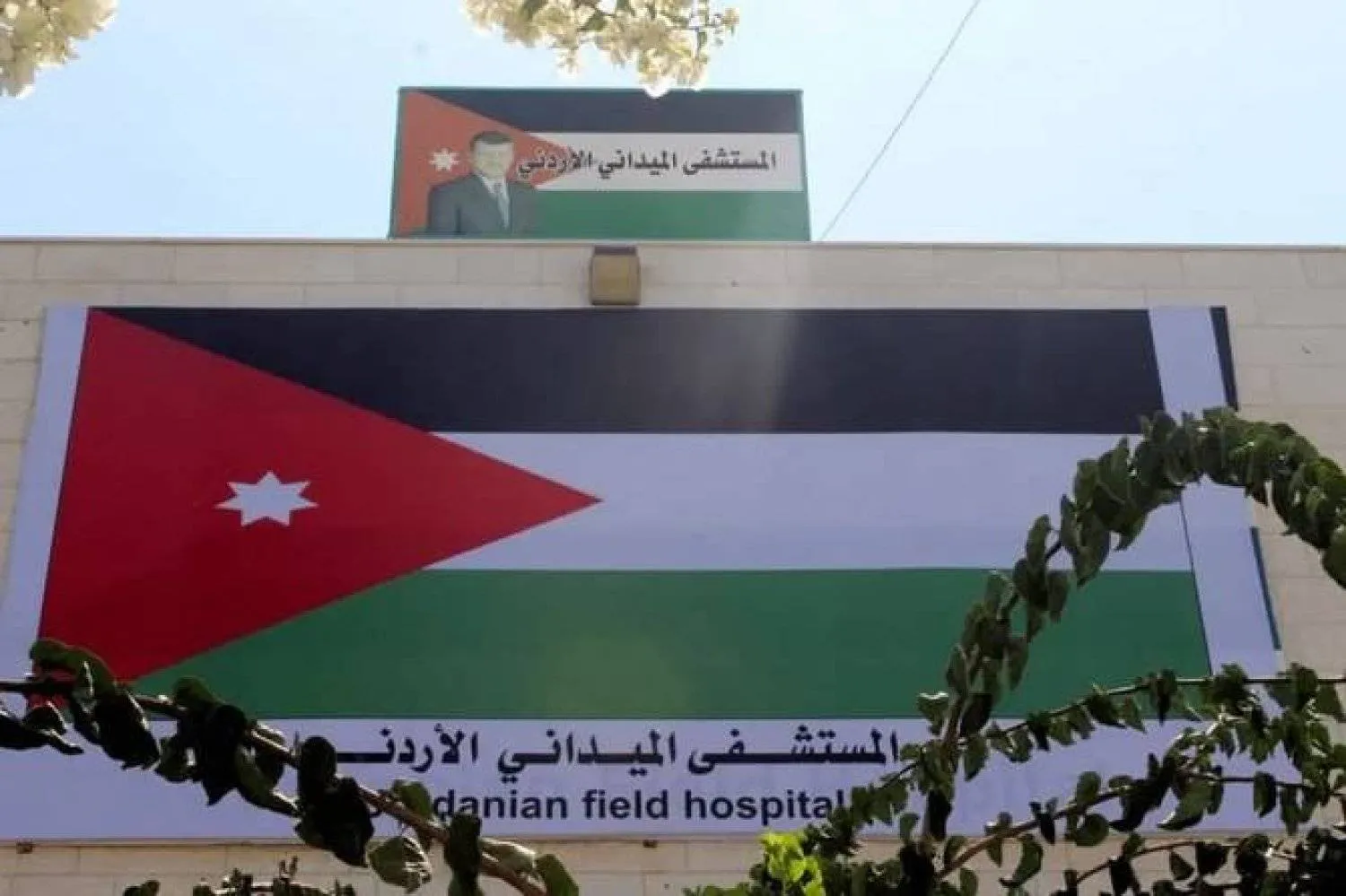
Jordan's military field hospital in the city of Khan Younis in Gaza was badly damaged as a result of Israeli shelling in the vicinity. (Petra news agency)
TT

Jordan Says Southern Gaza Hospital Badly Damaged by Israeli Shelling Nearby

Jordan's military field hospital in the city of Khan Younis in Gaza was badly damaged as a result of Israeli shelling in the vicinity. (Petra news agency)

Israel stepped up its assault on Khan Younis in southern Gaza on Wednesday, pushing tanks westwards and prompting accusations from Jordan that its field hospital in the city had been badly damaged by nearby shelling.

The Jordanian army said it held Israel responsible for a "flagrant breach of international law" in what it said was the damage to the facility as a result of Israeli shelling in the vicinity. The Israeli military had no immediate comment.

People in and around another hospital, Nasser, fled as tanks approached the district overnight following an Israeli army statement that it had come under fire from the area.

Palestinian health officials said seven people were killed by Israeli air strikes that damaged homes near the hospital, one of only a third of Gaza's hospitals still partially operational.

Israeli government spokesman Eylon Levy said extra field hospitals were expected to be up and running in the coming days.

"These have of course been necessitated by Hamas' strategic militarization of Gaza's existing hospitals," he said, adding this showed that Hamas militants were the ones breaching international law. Hamas denies using hospitals for cover.

Explosions from shelling and air strikes sounded further west in Khan Younis as the Israeli tanks moved on, with lines of thick black smoke rising from bomb sites. Witnesses said tanks and bulldozers had damaged a cemetery there before retreating to the city center again.

Israel said it had killed six Palestinian fighters, including the southern district Hamas officer in charge of interrogating suspected spies.

The military said in a statement summarizing its latest operations that the killing of counter-espionage officer Bilal Nofal "significantly impacts the terrorist organization's capacity to develop and enhance its capabilities".

'Missiles falling on us’

Further south in Rafah, where hundreds of thousands of people have moved on Israeli advice, people cried over several shrouded bodies, including of a young girl, Masa.

"We were asleep and then we found the missiles falling on us. We got up and couldn't see anything. We started checking on each other. The girl was martyred," said her aunt, Tahreer Shoman, adding that her siblings had been wounded but survived.

Fighting raged in densely populated Jabalia in northern Gaza on Wednesday, a day after Israeli tanks stormed back into parts of the north they had left last week.

Israel had announced in early January it was scaling back operations in northern Gaza as part of what it said would be a more targeted approach in its war against Hamas after operations that flattened entire residential districts.

Communications were down across Gaza on Wednesday for a sixth day, leaving its Palestinian inhabitants, most of whom have been forced to flee several times, unable to receive warnings on social media from the movement of Israeli forces.

The lack of local mobile phone signals also robs people trapped in the rubble left by Israeli air strikes of the means to call for help.

Palestinian health officials said 163 Gazans had been reported killed over the past 24 hours, taking the death toll to 24,448 in Israel's war on Gaza, now in its fourth month.

Israel reported two more soldiers killed, taking the toll since it began ground operations in Gaza to 193.

Israel says it has killed 9,000 Hamas militants and has vowed to "eliminate" the enclave's Hamas rulers after gunmen stormed into southern Israel, killing 1,200 people, according to Israeli tallies. On Wednesday, Israel adjusted the number of people it says were seized on Oct. 7 to 253 from 240.

Hostages

Around half of the hostages were released in an October truce during which some Palestinian prisoners were also freed.

Israel has said the only way to secure the release of the remaining hostages is military pressure on Hamas, which is sworn to Israel's destruction.

But White House national security spokesman John Kirby said on Tuesday "intensive discussions" took place in Qatar on a possible deal and Washington hoped they would bear fruit "soon".

Qatar and France have brokered a separate deal with Israel and Hamas to deliver urgent medication to some 45 Israeli hostages held by the group in Gaza in return for humanitarian and medical aid for the most vulnerable civilians.

The aid left Qatar for Egypt on Wednesday and was due to be taken across the Rafah border crossing later in the day.

UN Secretary-General Antonio Guterres said on Wednesday parties to the war in Gaza were "trampling" on international law and reiterated calls for an immediate humanitarian ceasefire.

"The world is standing by as civilians, mostly women and children, are killed, maimed, bombarded, forced from their homes and denied access to humanitarian aid," he said at the World Economic Forum in Davos, Switzerland.

Survival has become a full-time occupation for Gazans, with queues forming before dawn for scarce food and drinking water.

"Today the war is psychological, a war of fear, a war on food, war on clean water," said Shadi Al-Natoor, who fled his home in Gaza City in the north early in the war.

Israel has also conducted repeated raids of the occupied West Bank, where it said air strikes on cars in Nablus and Tulkarm had killed nine Palestinians it described as gunmen who had carried out or were planning imminent attacks.

The Palestinian health ministry said 360 people have been killed and thousands arrested in raids Israel says are aimed at rooting out militants there.



EU Proposes Full Resumption of Syria Cooperation Accord

Members of the Syrian security forces (AFP – file photo)
TT

EU Proposes Full Resumption of Syria Cooperation Accord

Members of the Syrian security forces (AFP – file photo)

Brussels on Monday proposed EU states fully restart the bloc's cooperation agreement with Syria, in the latest step to help bolster the country after the ouster of Bashar al-Assad.

The deal -- which abolishes customs duties on imports of most industrial products from Syria -- was partially suspended in 2011 when Assad's regime ruthlessly cracked down on protests at the start of the civil war.

The 27-nation EU has launched a new chapter with Syria since Assad's ouster from power in December 2024 after over a decade of fighting that devastated the country and sent millions of refugees abroad.

European Commission chief Ursula von der Leyen announced a 620-million-euro ($730 million) two-year financial support package during a visit to Damascus in January.

The bloc has also dropped economic sanctions as it looks to help the authorities under President Ahmed al-Sharaa to rebuild the country and reintegrate internationally.

EU diplomats said that the push to resume the cooperation deal -- which needs approval from member states -- comes ahead of the launch of a new "high-level political dialogue" with Syria next month.

The EU could also look to strike a more ambitious deal to deepen ties with Damascus, the diplomats said.

Some European countries have expressed interest in seeing refugees who came from Syria during the civil war return to their homeland.


Berri to Asharq Al-Awsat: US Working to Extend Lebanon-Israel Ceasefire

Parliament speaker meets with US ambassador to Lebanon Michel Issa (Lebanese Presidency)
TT

Berri to Asharq Al-Awsat: US Working to Extend Lebanon-Israel Ceasefire

Parliament speaker meets with US ambassador to Lebanon Michel Issa (Lebanese Presidency)

Lebanese Parliament Speaker Nabih Berri said the US is working to extend the ceasefire between Lebanon and Israel, while President Joseph Aoun confirmed that “bilateral negotiations will be handled by Lebanon through a delegation headed by Ambassador Simon Karam, and no one will take part on Lebanon’s behalf or replace it in this mission.”

US Ambassador to Lebanon Michel Issa visited Aoun and Berri after returning to Beirut for the first time since the announcement of a 10-day temporary truce, without making any media statements.

Berri told Asharq Al-Awsat that Washington is pursuing efforts to extend the ceasefire, declining to disclose his position on the direct negotiations with Israel that the president is planning.

In remarks distributed by the Lebanese presidency’s media office, Aoun said negotiations aim to halt hostilities, end the Israeli occupation of areas in the south, and deploy the army along the internationally recognized southern border.

Aoun added: “US President Donald Trump showed full understanding and responsiveness during our call regarding Lebanon’s demands, and intervened with Israel to halt hostilities and prepare to launch a negotiating track that would end the abnormal situation and restore the authority of the Lebanese state and its sovereignty over all its territory, foremost the south.”

He said contacts would continue to preserve the ceasefire and begin negotiations, which should be backed by the broadest national support so the negotiating team can achieve its objectives.

He continued: “The upcoming negotiations are separate from any other talks, because Lebanon faces two options: either the continuation of war with its humanitarian, social, economic and sovereignty-related consequences, or negotiations to put an end to this war and achieve sustainable stability. I have chosen negotiations, and I remain hopeful that we can save Lebanon.”


Lebanon President Says Israel Talks Aim to End Hostilities, Occupation

FILED - 16 February 2026, Lebanon, Beirut: Lebanese President Joseph Aoun speaks during a joint press conference with German President Steinmeier (not pictrued) at the presidential palace. Photo: Markus Lenhardt/dpa
TT

Lebanon President Says Israel Talks Aim to End Hostilities, Occupation

FILED - 16 February 2026, Lebanon, Beirut: Lebanese President Joseph Aoun speaks during a joint press conference with German President Steinmeier (not pictrued) at the presidential palace. Photo: Markus Lenhardt/dpa

Lebanese President Joseph Aoun said Monday that planned talks with Israel aim to end hostilities and the Israeli occupation in the south, as he named an ex-ambassador to the United States to lead the delegation.

"The choice to negotiate aims to stop hostilities, end the Israeli occupation of southern regions and deploy the (Lebanese) army all the way to the internationally recognized southern borders" with Israel, Aoun said in a statement.

A 10-day ceasefire pausing more than six weeks of war between Hezbollah and Israel started on Friday after being announced by US President Donald Trump.

More than 2,300 people have been killed in Israeli attacks and over a million displaced since Hezbollah dragged Lebanon into the Middle East conflict last month.

Aoun named former Lebanese ambassador to Washington Simon Karam to head the negotiations with Israel, and said "no one will share this task with Lebanon or take its place".

Iran-backed Hezbollah is not part of the talks and its supporters strongly oppose bilateral Lebanon-Israel negotiations.

Senior Hezbollah official Mahmud Qamati blasted Aoun on Saturday, saying "defeated, you go to the Israelis and Americans, let's see what you will get out of it".

The truce in Lebanon was one of Iran's conditions for resuming talks with Washington to extend their separate ceasefire and work out the terms of a lasting peace.

But Aoun said Monday that the Israel-Lebanon talks will be "separate from any other negotiations", in an implicit reference to the US-Iran diplomacy.

"Lebanon is facing two options: either the continuation of the war, with all its humanitarian, social, economic, and sovereign repercussions, or negotiations to put an end to this war and achieve lasting stability," he said.

"I have chosen negotiations, and I am full of hope that we will be able to save Lebanon."