
UN Refugee Agency Tells Cyprus to Stick to the Law in Its Efforts at Sea to Thwart Refugee Boats

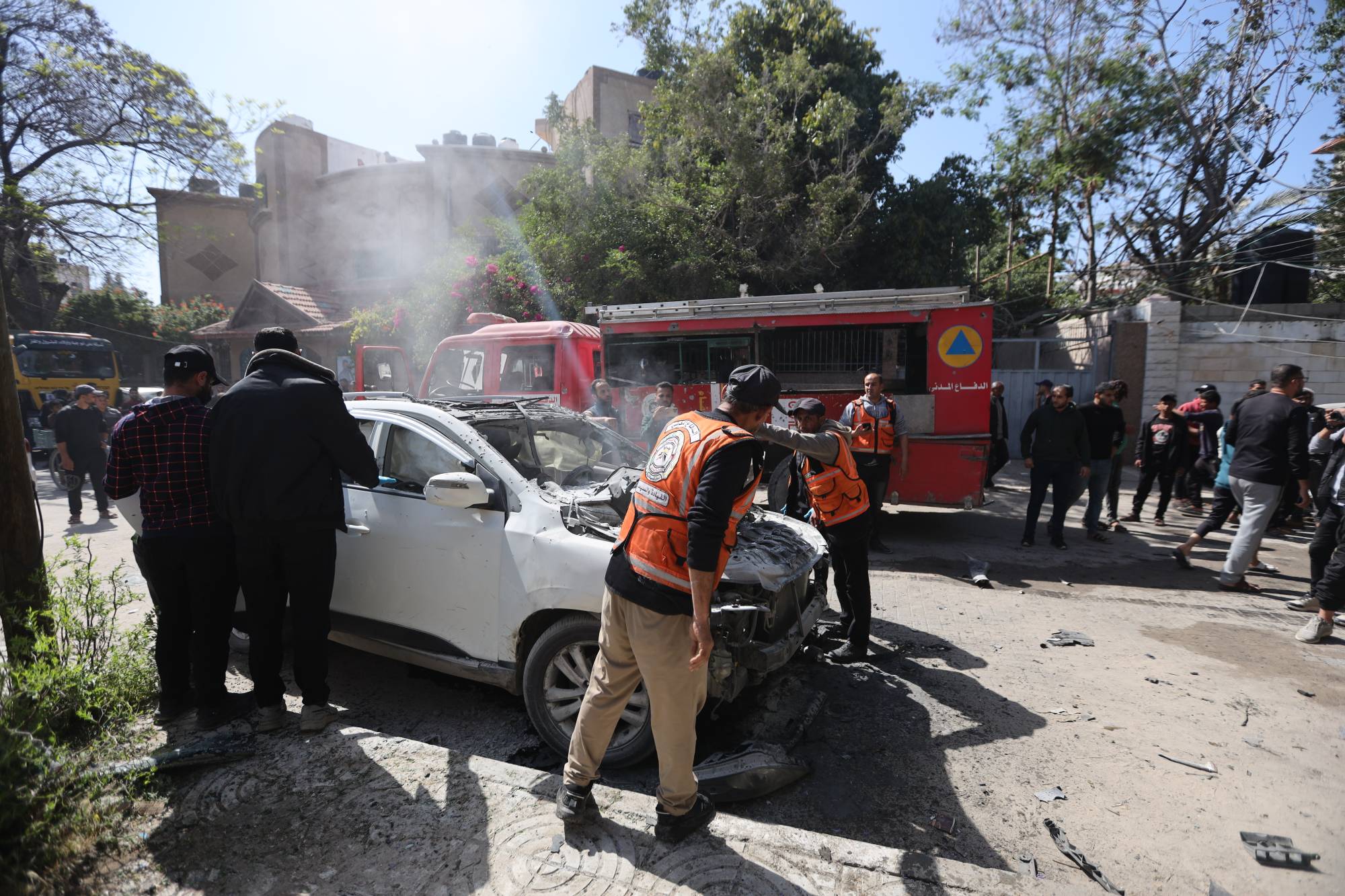
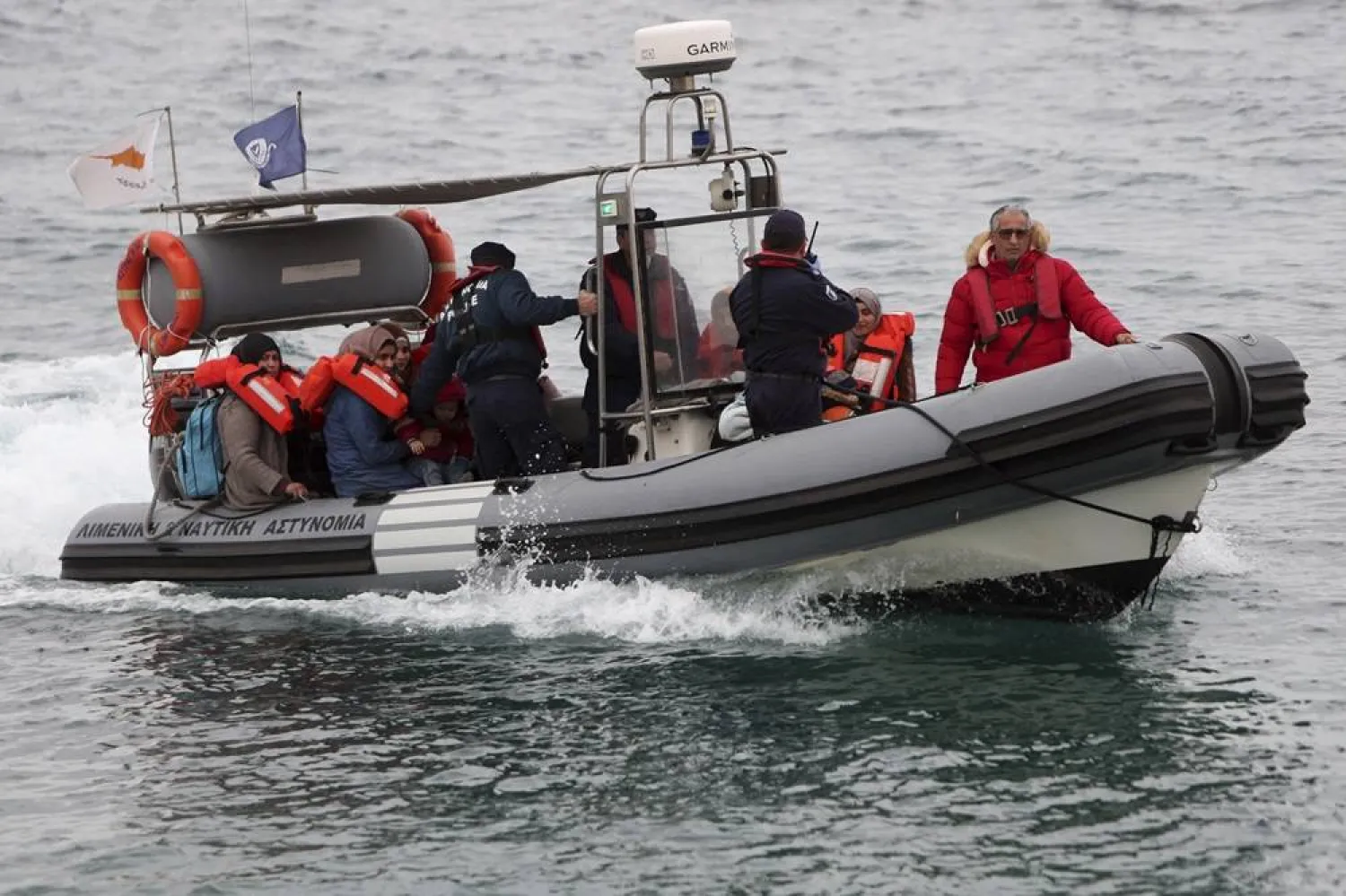
Migrants sit on a Cyprus marine police boat as they are brought to a harbor after being rescued from their own vessel off the Mediterranean island nation's southeastern coast of Protaras, Cyprus, on Jan. 14, 2020. (AP)
TT

UN Refugee Agency Tells Cyprus to Stick to the Law in Its Efforts at Sea to Thwart Refugee Boats

Migrants sit on a Cyprus marine police boat as they are brought to a harbor after being rescued from their own vessel off the Mediterranean island nation's southeastern coast of Protaras, Cyprus, on Jan. 14, 2020. (AP)

The United Nations' refugee agency said Friday that Cypriot efforts at sea to stop numerous Syrian refugee-laden boats departing Lebanon from reaching the European Union-member island nation mustn’t contravene international human rights laws or put passengers at risk.

Cypriot authorities have reportedly dispatched police patrol vessels just outside Lebanese territorial waters to thwart boat loads of Syrian refugees from reaching the island about 110 miles (180 kilometers) away.

The Cypriot government says a crumbling Lebanese economy coupled with the uncertainty brought on by the Israeli-Hamas war and the recent tit-for-tat strikes between Israel and Lebanon has resulted in a huge number of rickety boats overloaded with migrants – almost all Syrians – reaching the island.

Earlier this week, Cypriot patrol craft reportedly intercepted five boats carrying hundreds of Syrian refugees and migrants. The boats turned back and the passengers disembarked safely.

UNCHR spokesperson in Cyprus Emilia Strovolidou told The Associated Press that according to testimonies of passengers’ relatives, Cypriot authorities “forcibly pushed back” the boats using “violence” and “techniques to destabilize the boat.”

Strovolidou said the UN agency was “not in a position to confirm” those testimonies.

A Cypriot senior official strenuously denied that any coercion was used in any way to get the boats to return to Lebanon, insisting that the Cypriot government doesn’t engage in any pushbacks and acts “fully in accordance with international law.”

The official, who spoke on condition of anonymity because he cannot disclose details of ongoing operations, dismissed as “lies” allegations that Cypriot authorities resorted to using any type of force.

Strovolidou said Cyprus is also bound by international law not to return individuals to any country which could in turn deport them to their homeland where they could be at risk of harm or persecution.

The Lebanon office of UNHCR said in a statement that it was aware of more than 220 people who had disembarked from the returned boats in northern Lebanon on Wednesday. Of those, 110 were refugees registered with UNHCR and all of them were released, it said.

Saadeddine Shatila, executive director of the Cedar Center for Legal Studies, a Lebanon-based human rights organization that tracks migration issues, said his group had information that the Lebanese army had detained and possibly deported Syrians from at least one of the returning boats who weren’t registered with UNCHR.

The Lebanese army has in the past occasionally deported all Syrians aboard seized migrant boats, including registered refugees, a practice that drew an outcry from human rights organizations.

Lebanese political officials have been calling for years for the international community to either resettle the refugees in other countries or assist in returning them to Syria, and security forces have stepped up deportations of Syrians over the past year. Some of the deportees have reportedly faced detention and torture upon their return.

The Cypriot official said the Cyprus government in coordination with the European Commission is preparing an additional financial support package for Lebanon to help the country stop migrant boat departures. He said that support is conditional on Lebanon’s effectiveness in stopping migrant boat departures.

Cypriot President Nikos Christodoulides and European Commission Chief Ursula von der Leyen are due in Beirut May 2 to discuss the aid package.

The official said people smugglers are exploiting people’s fears over the ongoing conflicts in the region and are brazenly advertising in Lebanese coffee shops available seats on boats to Cyprus for $3,000 a head – a bargain compared to the $7,000 required for a trip to Italy.

Cyprus will convene a meeting of other EU countries next month to elicit additional support for its initiative for the bloc to formally redesignate some areas of Syria as safe zones. The Czech Republic and Denmark are behind the idea.

According to the Cypriot official, doing so wouldn’t mean that Syrians hailing from those safe zones are deported back to their country, but they would lose any allowances, benefits and the right to work, creating a disincentive to others to come to Cyprus.

He said Denmark is already implementing such a policy on its own and it’s a measure that the Cypriot government could consider if arrivals continue to increase.


Tunisia President Sacks Energy Minister Ahead of Renewable Energy Projects Vote

Tunisian ‌President Kais Saied. (AFP)
TT

Tunisia President Sacks Energy Minister Ahead of Renewable Energy Projects Vote

Tunisian ‌President Kais Saied. (AFP)

Tunisia’s ‌President Kais Saied dismissed Energy Minister Fatma Thabet on Tuesday, amid growing controversy over renewable energy projects set to be voted on in parliament.

Saied said he had appointed Housing and Infrastructure Minister Salah Eddine ‌Zouari to ‌temporarily oversee the ministry. ‌No ⁠detailed explanation was ⁠provided for the decision.

The move comes as Saied's government seeks to pass draft laws on renewable energy, which ⁠will be put to ‌a ‌vote in parliament later on Tuesday.

The ‌projects have a planned ‌capacity of 600 megawatts, with 500 million euros ($585 million) as total investment.

The projects are ‌part of Tunisia’s efforts to expand clean energy ⁠production. ⁠Some lawmakers and political parties oppose the projects, describing them as a form of "energy colonization."

They have criticized the exclusion of the state electricity company (STEG) from the contracts, which they say were awarded exclusively to foreign firms.


Israeli Strikes on Gaza Kill Five, Including 9-Year-Old Boy, Medics Say

 Mourners react during the funeral of Palestinian child Adel Al-Najjar, who was killed today in an Israeli strike, according to medics, at Nasser Hospital in Khan Younis, in the southern Gaza Strip, April 28, 2026. (Reuters)
Mourners react during the funeral of Palestinian child Adel Al-Najjar, who was killed today in an Israeli strike, according to medics, at Nasser Hospital in Khan Younis, in the southern Gaza Strip, April 28, 2026. (Reuters)
TT

Israeli Strikes on Gaza Kill Five, Including 9-Year-Old Boy, Medics Say

 Mourners react during the funeral of Palestinian child Adel Al-Najjar, who was killed today in an Israeli strike, according to medics, at Nasser Hospital in Khan Younis, in the southern Gaza Strip, April 28, 2026. (Reuters)
Mourners react during the funeral of Palestinian child Adel Al-Najjar, who was killed today in an Israeli strike, according to medics, at Nasser Hospital in Khan Younis, in the southern Gaza Strip, April 28, 2026. (Reuters)

Israeli strikes killed five Palestinians, including a 9-year-old boy, in the Gaza Strip on Tuesday, health officials said.

Medics said an Israeli drone killed the child, Adel Al-Najjar, in eastern Khan Younis in the south of the enclave, while an Israeli airstrike targeted a vehicle in Gaza City, killing four people.

The Israeli military did not ‌immediately comment on ‌either incident.

At Nasser Hospital’s morgue, relatives arrived ‌to ⁠bid farewell to Najjar's ⁠small, white-shrouded body.

Women cried next to the body, which lay on a medical stretcher on the floor, and men held a special prayer before carrying him to the cemetery for burial.

The boy was collecting cardboard that the family uses for cooking, relatives said. There has been no electricity in ⁠Gaza since the war began in October 2023, ‌and Palestinians have complained of Israeli ‌restrictions on the entry of cooking gas.

"We don't have gas. ‌We collect cardboard to bake, they want to eat; they ‌want to drink," said one of the boy's relatives, Sabreen Al-Najjar.

Violence in Gaza has persisted despite an October 2025 ceasefire, with Israel conducting almost daily attacks on Palestinians.

At least 800 Palestinians have been ‌killed since the ceasefire took effect, according to local medics, while Israel says gunmen attacks have ⁠killed four ⁠of its soldiers over the same period.

“Isn’t it shameful what is happening to us? Isn’t it shameful that we bury our children every day, right in front of us? Isn’t it shameful? I swear to God, our hearts are breaking for these children,” another relative, Suhaib Al-Najjar, said at the morgue.

Israel and Hamas have blamed each other for ceasefire violations.

More than 72,500 Palestinians have been killed since the Gaza war began in October 2023, according to Gaza health authorities.

Hamas’ October 7, 2023, attacks on Israel killed 1,200 people, according to Israeli tallies.


Israel Says Has ‘No Territorial Ambitions’ in Lebanon, Despite Evacuations

 Smoke rises following an explosion in southern Lebanon, near the Israel-Lebanon border, as seen from northern Israel, April 28, 2026. (Reuters)
Smoke rises following an explosion in southern Lebanon, near the Israel-Lebanon border, as seen from northern Israel, April 28, 2026. (Reuters)
TT

Israel Says Has ‘No Territorial Ambitions’ in Lebanon, Despite Evacuations

 Smoke rises following an explosion in southern Lebanon, near the Israel-Lebanon border, as seen from northern Israel, April 28, 2026. (Reuters)
Smoke rises following an explosion in southern Lebanon, near the Israel-Lebanon border, as seen from northern Israel, April 28, 2026. (Reuters)

Israel on Tuesday said it was not seeking to take territory in Lebanon, as its military issued a wave of new evacuation warnings for towns and villages in the battle-scarred south. 

"Israel has no territorial ambitions in Lebanon. Our presence... serves one purpose: protecting our citizens," Foreign Minister Gideon Saar told a news conference. 

"No country would be willing to live in such a way with a gun pointed to its head," he said as the military pressed its operations in Lebanon against Iran-backed Hezbollah. 

Shortly after a ceasefire with Hezbollah came into effect on April 17, Israel declared a so-called "Yellow Line" -- a strip of Lebanese territory around 10 kilometers (six miles) deep along the border within which Israeli troops are operating. 

"In a reality where Hezbollah and other terror organizations -- including Palestinian terror groups -- are dismantled, Israel will have no need to maintain its presence in these areas," he added. 

Despite the ceasefire, Israel and Hezbollah have both engaged in fighting, trading blame over violations of the fragile truce. 

Tuesday's evacuation warning was aimed at residents in more than a dozen villages and towns, urging them to immediately head northwards. 

"Out of concern for your safety, you are required to evacuate your homes immediately and move... towards the Sidon District," the military's Arabic-language spokesman Avichay Adraee wrote on X. 

Shortly afterwards, Lebanon's state media reported that Israel carried out airstrikes across the south, hitting targets including the named areas. 

It also said at least one Israeli demolition operation was taking place in the south. 

All the areas listed for evacuation appear to be outside or on the border of the "Yellow Line". 

In two incidents earlier on Tuesday, the military said it intercepted "a suspicious aerial target" in an area where troops were operating. 

It also said a soldier had been severely injured and another lightly hurt a day earlier "as a result of an explosive drone impact", branding it a new ceasefire violation by Hezbollah. 

Israeli Prime Minister Benjamin Netanyahu said Monday that Hezbollah's rockets and drones remained a key threat requiring ongoing military action. 

Hezbollah drew Lebanon into the Middle East war on March 2 by firing rockets towards Israel to avenge the killing of Iranian supreme leader Ali Khamenei.