Israel’s war on Lebanon has accelerated the return of Syrian refugees, but officials and aid agencies say it has not by itself resolved, or fundamentally transformed, the displacement crisis.
Nearly one million Syrians remain in Lebanon despite Israel’s wars on Lebanon when Hezbollah opened a “support front” in solidarity with Hamas in 2023. Many refugees, meanwhile, still view remaining in Lebanon as preferable to returning to a country where homes and jobs may no longer exist.
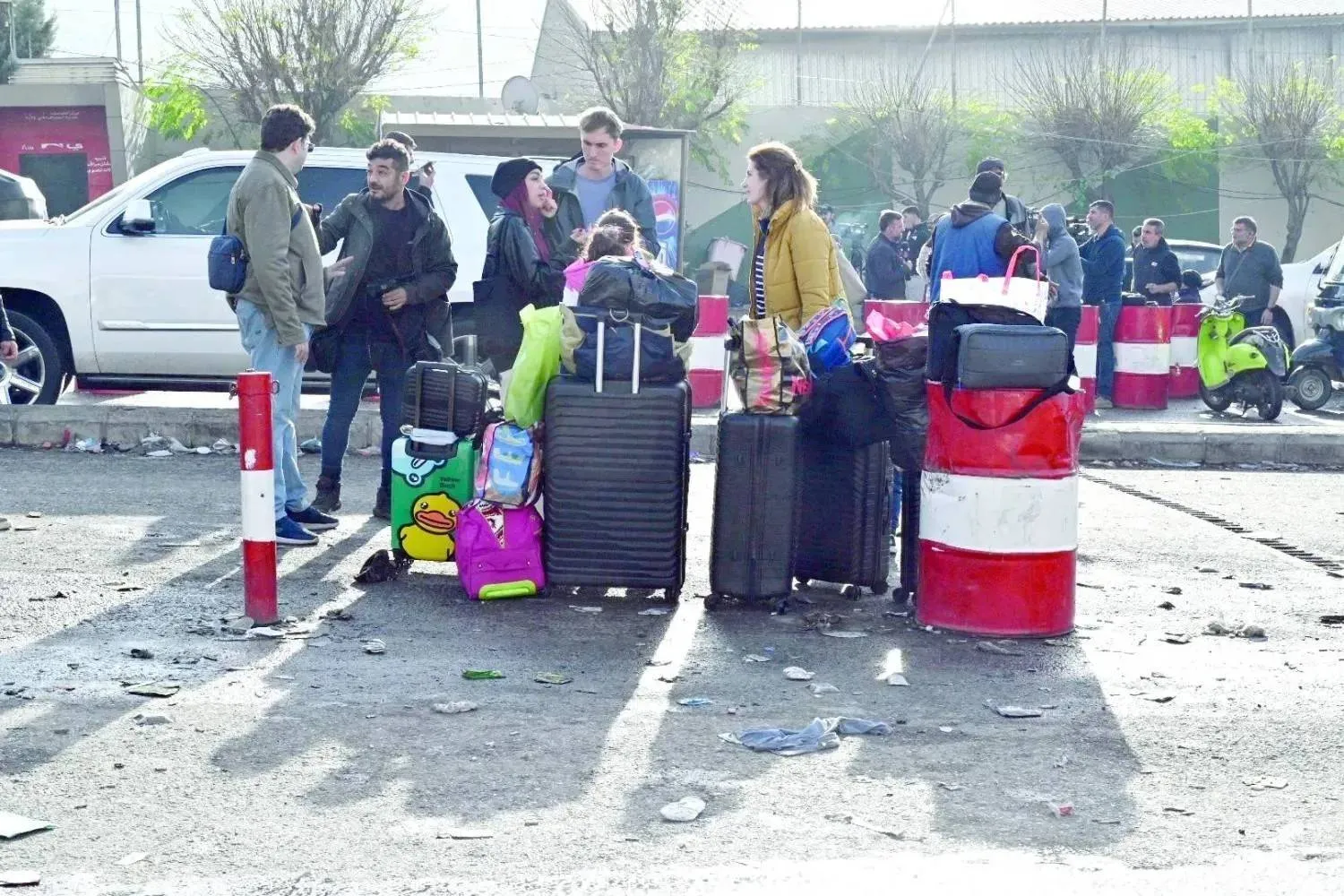
Others have left. According to the UN refugee agency (UNHCR), more than 593,000 Syrian refugees have returned from Lebanon since January 2025, while Syrian authorities estimate around 260,000 crossed back between March 2 and April 20, 2026 as hostilities intensified.
Official figures show 95 Syrians were killed and 130 wounded in the latest round of fighting between March 2 and April 17.
For some, however, war has not changed the situation.
Faisal, a 41-year-old construction worker from Deir Ezzor living in Mount Lebanon for a decade, said returning to Syria remains too uncertain.
“Going back now means returning to the unknown,” he told Asharq Al-Awsat. “Here, despite the risks, I can still support my family.”
Lebanese Social Affairs Minister Haneen Sayed argued the rise in returns cannot be attributed mainly to war.
She told Asharq Al-Awsat that a government return plan adopted in June 2025 marked the real turning point, supported by administrative facilitations, financial incentives and coordination between Lebanese General Security and the UN refugee agency.
According to Sayed, 581,107 Syrians had returned before the latest conflict erupted in early March, while another 198,404 left during the war.
“That shows return was already under way before the fighting,” she stated, noting that many refugees could have moved to safer parts of Lebanon but instead chose Syria, suggesting the government’s strategy was gaining traction.
She said Syrian authorities had also contributed through policies intended to facilitate return and reintegration. Still, she stopped short of calling it a lasting solution.
“The displacement crisis is on its way to being resolved, but it has not reached a final settlement,” she underlined, noting Lebanon was preparing a review of the return plan later this year.
At the same time, she warned the war had created a new Lebanese internal displacement crisis, adding another humanitarian burden.
Lisa Abou Khaled, spokeswoman for the UNHCR in Lebanon, said decisions to return still depend less on war than on conditions inside Syria, including shelter, healthcare, education and livelihoods.
The current hostilities may have hastened returns for some, she told Asharq Al-Awsat, but often as a forced response rather than a voluntary shift.
“When refugees feel they have no alternative but to return, our role is to reduce risks and support them through the process,” she remarked.
UNHCR provides returnees with information, transport support and a $100 grant per person to help cover immediate needs.