Barham Salih to Asharq Al-Awsat: Region Nearing Crisis…Iraq Best Witness to Violence

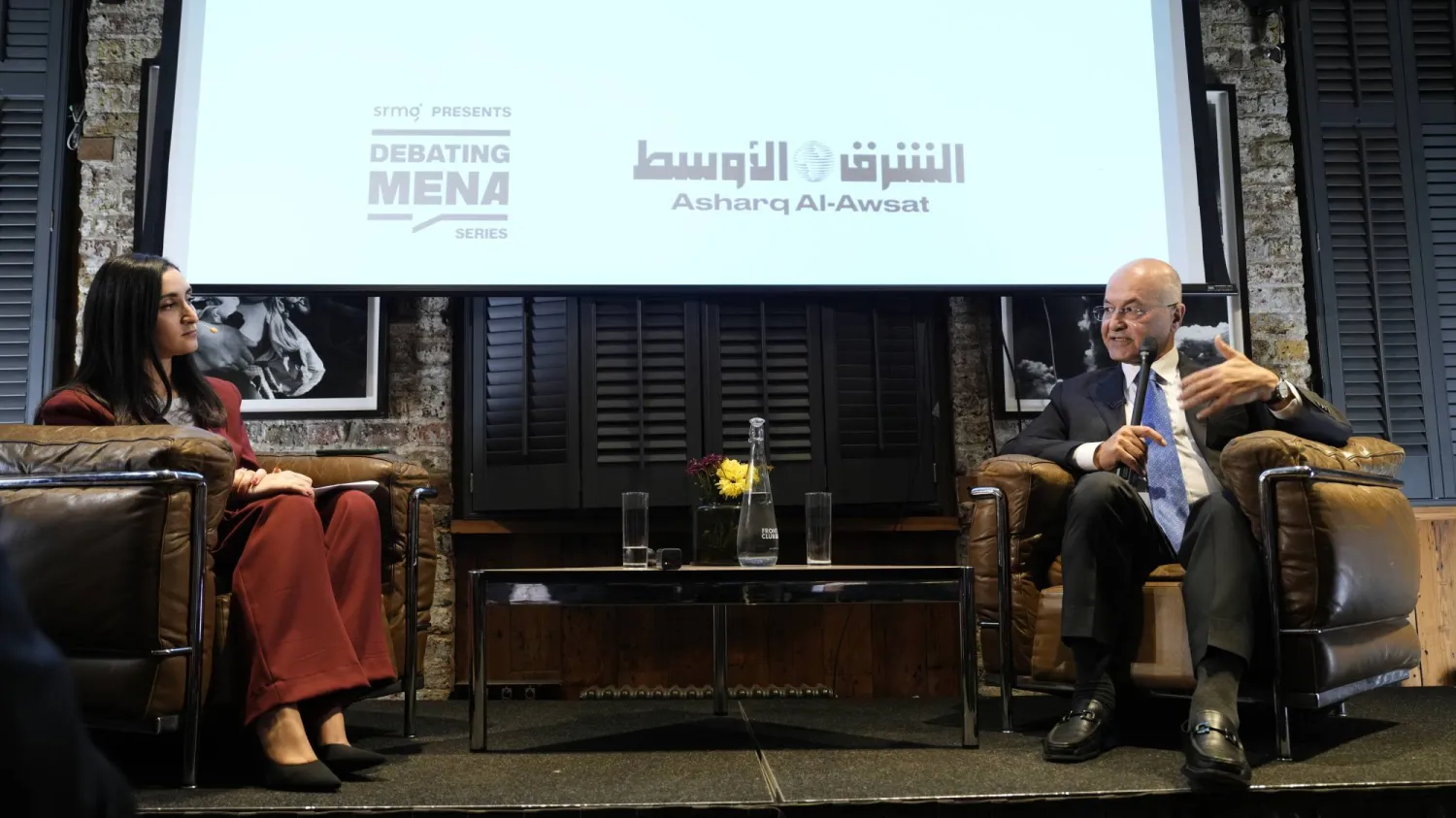
Barham Salih with Asharq Al-Awsat colleague Najlaa Habreiri (Asharq Al-Awsat)
TT

Barham Salih to Asharq Al-Awsat: Region Nearing Crisis…Iraq Best Witness to Violence

Barham Salih with Asharq Al-Awsat colleague Najlaa Habreiri (Asharq Al-Awsat)

Former Iraqi President Barham Salih warned that the Middle East is on the edge of a crisis but remains hopeful, citing growing international efforts to stop the ongoing war.
He also pointed to Iraq’s fragile situation, with local groups becoming more involved in the conflict.
Speaking at a panel in London organized by Asharq Al-Awsat and moderated by journalist Najlaa Habriri, Salih—who was president from 2018 to 2022—shared his thoughts on key political and historical events in Iraq and the region.
This event was the first in a series of talks with policymakers, business leaders, and academics hosted by Asharq Al-Awsat as part of SRMG’s initiatives.
A New Face for the Middle East
Salih believes the Middle East is entering a dangerous new phase, with the current conflict giving the region a “new face.”
“We’re witnessing a great tragedy. The destruction in Gaza is now spreading to Lebanon,” Salih said.
He expressed concern over growing anger in the Arab world due to repeated cycles of violence but stressed the need for change.
“We must move away from this crisis and find new ways to help the region grow and stabilize,” he said.
Salih called for bold action, urging leaders to cool the rising tensions and prevent further loss of innocent lives. He also shared cautious optimism after recent talks with policymakers in Baghdad and Washington, noting efforts to calm the situation.
“I hear there’s serious work underway to de-escalate, and while I can't guarantee success, I still have hope for a ceasefire,” he said.
Salih expected a temporary halt to fighting, allowing people to return home, but emphasized the need for fresh thinking to end the conflict.
“We can't go back to the old ways without addressing the root causes of violence,” he added.
Despite the challenges, Salih acknowledged ongoing global efforts, especially from Washington, to reduce the war’s catastrophic impact on the region.
Iraq at the Heart of the Storm
For the former Iraqi president, Iraq is “the best example of the consequences of violence,” and now the country faces a tough situation, caught between conflicting interests.
However, Salih is confident that “the decision to go to war in Iraq lies solely with the state,” not with the various groups pushing for escalation.
Salih noted that Iraqis don’t just offer sympathy—they provide real support, as shown with the Palestinians and now the Lebanese. He pointed to the flow of humanitarian aid from both government and civilian sources, stressing that in Iraq, there is widespread support for just causes.
Despite this, Salih warned that Iraq’s own challenges “make it clear that the country should avoid getting involved in more conflict.”
While Iraq’s stability is fragile, he believes it can be maintained if the country steers clear of the ongoing escalation.
Salih reflected on Iraq’s history of violence and conflict since 1958 but expressed optimism after meeting with Iraqi leaders.
“I was in Baghdad two months ago, and the main topic was clear: either we become a strong state, or we don’t. There’s no middle ground,” he said.
Salih insisted that “the decision for war or peace is a national one, not something that can be decided by any group or movement.”
He voiced concern that some factions are pushing Iraq into deeper involvement in the regional conflict, warning that this could lead to broader, more destructive consequences.
“We must be careful to avoid being dragged into a wider regional war. Iraq needs time to heal,” he noted.
While Iraq holds deep support for the Palestinian cause, Salih emphasized that “slogans won’t solve anything. The solution is in taking concrete steps to help Palestinians and Lebanese, both of whom are suffering from the conflict.”
“Anyone seeking a better Middle East must firmly support the Palestinians' right to a state and their rights as a people,” he affirmed.
US Withdrawal from Iraq
“Yes, there’s an agreement,” Salih said, referring to discussions between Washington and Baghdad on the future of the US-led international coalition in Iraq.
He suggested the topic was likely addressed during Prime Minister Mohammed Shia al-Sudani’s recent meeting with US Secretary of State Antony Blinken in New York.
An announcement about shifting the international coalition’s mission and gradually withdrawing US combat forces was expected, but Salih noted the recent escalation in Lebanon may have delayed it.
“Talks are ongoing, but nothing is finalized,” he added.
Salih acknowledged the key role US forces played in defeating ISIS, but emphasized that countries, including Iraq, seek full sovereignty.
While many believe Iraq’s stronger military means foreign troops are no longer needed, Salih disagrees. He argued that Iraq still requires intelligence support, especially for counterterrorism operations.
He pointed to reports of potential terrorist resurgence in the region, particularly in Syria.
“There are tens of thousands of angry individuals in the Middle East who could become a ticking time bomb, threatening Iraq and its neighbors. Just look at what’s happening in Idlib and the reappearance of Abu Mohammad al-Jolani,” said Salih.
He stressed that the risks are clear, even without specific intelligence.
“This is a global challenge, not just Iraq’s,” stressed Salih.
“I’m proud of the progress made by Iraqi forces, but there’s still a need for intelligence-sharing, especially in air operations,” he affirmed.



Lebanon's Aoun: We Won't Accept Humiliating Deal with Israel...Taking Country to War is 'Treason'

A photograph released by the Lebanese Presidency on April 17, 2026, shows Lebanon's President Joseph Aoun delivering a televised address to the Lebanese people from the Baabda Presidential Palace, east of the capital Beirut.  (Photo by Lebanese Presidency / AFP)
A photograph released by the Lebanese Presidency on April 17, 2026, shows Lebanon's President Joseph Aoun delivering a televised address to the Lebanese people from the Baabda Presidential Palace, east of the capital Beirut. (Photo by Lebanese Presidency / AFP)
TT

Lebanon's Aoun: We Won't Accept Humiliating Deal with Israel...Taking Country to War is 'Treason'

A photograph released by the Lebanese Presidency on April 17, 2026, shows Lebanon's President Joseph Aoun delivering a televised address to the Lebanese people from the Baabda Presidential Palace, east of the capital Beirut.  (Photo by Lebanese Presidency / AFP)
A photograph released by the Lebanese Presidency on April 17, 2026, shows Lebanon's President Joseph Aoun delivering a televised address to the Lebanese people from the Baabda Presidential Palace, east of the capital Beirut. (Photo by Lebanese Presidency / AFP)

Lebanese President Joseph Aoun said Monday that direct negotiations with Israel were aimed at ending the conflict with Hezbollah, while accusing those who drew Lebanon into war of "treason" in an implicit rebuke to the Iran-backed armed group.

"My goal is to reach an end to the state of war with Israel, similar to the armistice agreement" of 1949, Aoun said in a statement, adding that "I assure you that I will not accept reaching a humiliating agreement".

"Those who dragged us into war in Lebanon are now holding us accountable because we made the decision to go to negotiations... What we are doing is not treason. Rather, treason is committed by those who take their country to war to achieve foreign interests," he said.

Earlier on Monday, Hezbollah Secretary-General Naim Qassem reaffirmed his party’s rejection of direct negotiations by the Lebanese authorities with Israel, describing them as a “grave sin,” and warning that such a step would plunge the country into a “cycle of instability.”

In a statement carried by the group’s media outlets, Qassem said: “We categorically reject direct negotiations. Those in power should know that their conduct will not benefit Lebanon, nor will it benefit them.”

He added that it is the authorities’ responsibility “to roll back their grave missteps that place Lebanon in a cycle of instability. They are responsible for halting direct negotiations with the Israeli enemy and adopting indirect ones.”

Qassem added: “These direct negotiations and their outcomes are, to us, as if they do not exist, and they do not concern us in any way.” He stressed: “We will continue our defensive resistance to protect Lebanon and its people... We will respond to Israeli aggression and confront it,” underscoring that “no matter how much the enemy threatens, we will not retreat, bow, or be defeated.”

Following the outbreak of the latest war between Israel and Hezbollah, which began on March 2, the Lebanese and Israeli ambassadors in Washington held two rounds of direct talks, the first between the two countries in decades. After the first round, US President Donald Trump announced a ceasefire that took effect on April 17 for a period of 10 days, before later announcing a three-week extension after the second round of talks.

Lebanese authorities have repeatedly stated that the US-sponsored negotiations aim to end the war, secure Israel’s withdrawal from southern Lebanon, and enable displaced residents to return to their areas, after the fighting displaced more than one million people.

Despite the ceasefire, Israel continues to carry out air and artillery strikes, particularly in southern Lebanon, while its forces conduct widespread demolition and blasting operations in many border towns, where it has announced the establishment of a “yellow line” separating dozens of villages from the rest of Lebanese territory.

At least 2,509 people have been killed and 7,755 injured in Lebanon as a result of Israeli attacks since the start of the war on March 2, according to the Health Ministry.


Hezbollah Leader Rejects Lebanon-Israel Direct Talks, Vows to Confront Israel

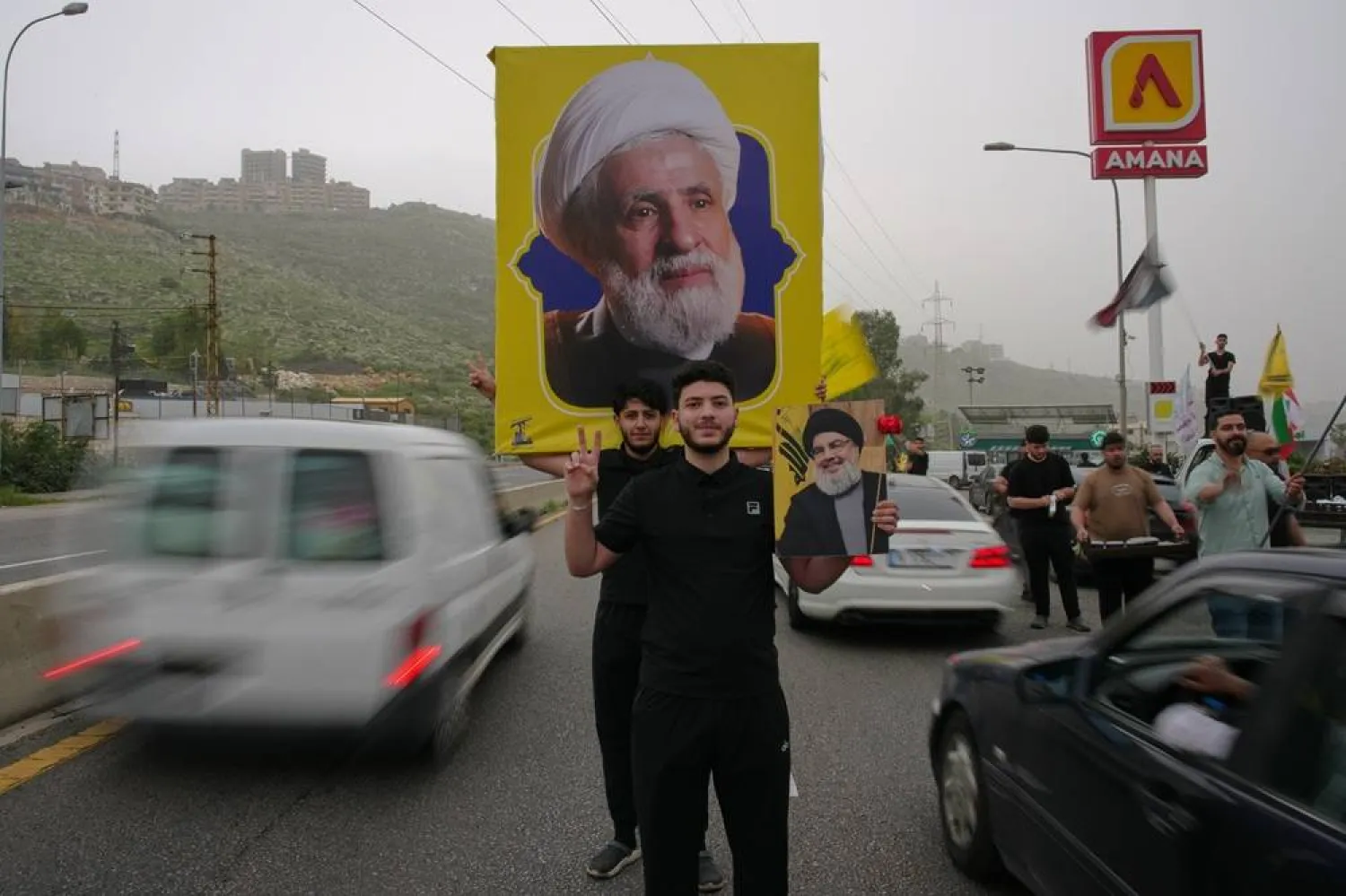
 People hold up portraits of Hezbollah leader, Naim Qassem, top, and slain Hezbollah leader Hassan Nasrallah as displaced residents drive back to their villages, in Jiyyeh, near Sidon, southern Lebanon, Friday, April 17, 2026, following a ceasefire between Israel and Hezbollah. (AP)
People hold up portraits of Hezbollah leader, Naim Qassem, top, and slain Hezbollah leader Hassan Nasrallah as displaced residents drive back to their villages, in Jiyyeh, near Sidon, southern Lebanon, Friday, April 17, 2026, following a ceasefire between Israel and Hezbollah. (AP)
TT

Hezbollah Leader Rejects Lebanon-Israel Direct Talks, Vows to Confront Israel

 People hold up portraits of Hezbollah leader, Naim Qassem, top, and slain Hezbollah leader Hassan Nasrallah as displaced residents drive back to their villages, in Jiyyeh, near Sidon, southern Lebanon, Friday, April 17, 2026, following a ceasefire between Israel and Hezbollah. (AP)
People hold up portraits of Hezbollah leader, Naim Qassem, top, and slain Hezbollah leader Hassan Nasrallah as displaced residents drive back to their villages, in Jiyyeh, near Sidon, southern Lebanon, Friday, April 17, 2026, following a ceasefire between Israel and Hezbollah. (AP)

Hezbollah leader Naim Qassem on Monday rejected Lebanon's planned direct negotiations with Israel, calling them a "grave sin" that will destabilize Lebanon. 

Lebanon and Israel's US ambassadors held two meetings in Washington over the past weeks, the first of their kind in decades. 

The first meeting led to a truce in the Israel-Hezbollah war, while Beirut has been preparing for direct negotiations with the aim of striking a peace deal with Israel. The two countries have officially been at war since 1948. 

"We categorically reject direct negotiations with Israel, and those in power should know that their actions will not benefit Lebanon or themselves," Qassem said in a statement, aired by the group's channel Al-Manar. 

He called on authorities to "back down from their grave sin that is putting Lebanon in a spiral of instability". 

He added that the Lebanese government "cannot continue while it is neglecting Lebanon's rights, giving up land, and confronting its resistant people". 

Lebanese authorities have repeatedly stated that the goal of the US-sponsored negotiations is to stop the war, secure Israel's withdrawal from southern Lebanon, and return displaced people to their homes after the fighting forced more than a million people to flee. 

"These direct negotiations and their outcomes are as if they do not exist for us, and they do not concern us in the slightest," Qassem said. 

"We will continue our defensive resistance for Lebanon and its people," he added. 

"No matter how much the enemy threatens, we will not back down, we will not bow down, and we will not be defeated. 

"We will not give up our weapons... and the Israeli enemy will not remain on a single inch of our occupied land." 

Tehran-backed Hezbollah drew Lebanon into the Middle East war on March 2 by firing rockets at Israel to avenge the death of Iran's supreme leader Ali Khamenei in US-Israeli strikes. 

Since the truce went into force on April 17, Israeli strikes have killed at least 36 people, according to an AFP tally of Lebanese health ministry figures. 

Hezbollah has meanwhile claimed several attacks on Israeli troops in southern Lebanon, as well as missile and drone launches at northern Israel, saying it is responding to Israeli "violations". 

According to details of the truce released by the US State Department, which said both Lebanon and Israel agreed to it, Israel reserves the right to continue targeting Hezbollah to prevent "planned, imminent, or ongoing attacks". 

Hezbollah strongly rejects this clause, saying the text of the agreement was not presented to the cabinet, in which the group and its allies are represented. 

"Has the government decided to work alongside the Israeli enemy against its own people?" Qassem said in his speech. 

Israeli attacks on Lebanon killed more than 2,500 people since March 2, according to Lebanese authorities. 


Did Israel’s War on Lebanon Drive Syrian Refugees Back Home?

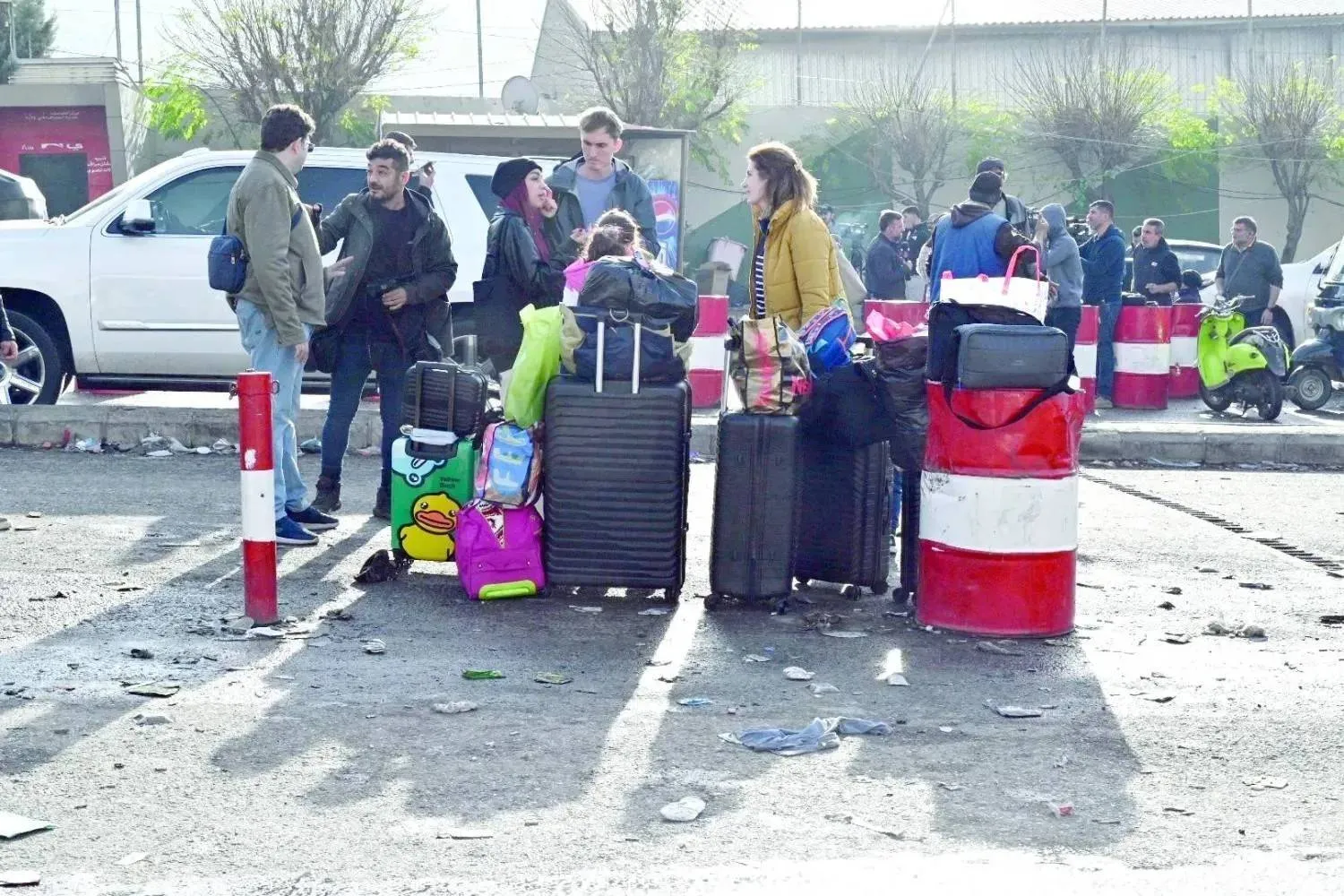
Syrian refugees in Lebanon return to their country through the Masnaa crossing after the fall of the Syrian regime in December 2024. (EPA)
TT

Did Israel’s War on Lebanon Drive Syrian Refugees Back Home?

Syrian refugees in Lebanon return to their country through the Masnaa crossing after the fall of the Syrian regime in December 2024. (EPA)

Israel’s war on Lebanon has accelerated the return of Syrian refugees, but officials and aid agencies say it has not by itself resolved, or fundamentally transformed, the displacement crisis.

Nearly one million Syrians remain in Lebanon despite Israel’s wars on Lebanon when Hezbollah opened a “support front” in solidarity with Hamas in 2023. Many refugees, meanwhile, still view remaining in Lebanon as preferable to returning to a country where homes and jobs may no longer exist.

Others have left. According to the UN refugee agency (UNHCR), more than 593,000 Syrian refugees have returned from Lebanon since January 2025, while Syrian authorities estimate around 260,000 crossed back between March 2 and April 20, 2026 as hostilities intensified.

Official figures show 95 Syrians were killed and 130 wounded in the latest round of fighting between March 2 and April 17.

For some, however, war has not changed the situation.

Faisal, a 41-year-old construction worker from Deir Ezzor living in Mount Lebanon for a decade, said returning to Syria remains too uncertain.

“Going back now means returning to the unknown,” he told Asharq Al-Awsat. “Here, despite the risks, I can still support my family.”

Lebanese Social Affairs Minister Haneen Sayed argued the rise in returns cannot be attributed mainly to war.

She told Asharq Al-Awsat that a government return plan adopted in June 2025 marked the real turning point, supported by administrative facilitations, financial incentives and coordination between Lebanese General Security and the UN refugee agency.

According to Sayed, 581,107 Syrians had returned before the latest conflict erupted in early March, while another 198,404 left during the war.

“That shows return was already under way before the fighting,” she stated, noting that many refugees could have moved to safer parts of Lebanon but instead chose Syria, suggesting the government’s strategy was gaining traction.

She said Syrian authorities had also contributed through policies intended to facilitate return and reintegration. Still, she stopped short of calling it a lasting solution.

“The displacement crisis is on its way to being resolved, but it has not reached a final settlement,” she underlined, noting Lebanon was preparing a review of the return plan later this year.

At the same time, she warned the war had created a new Lebanese internal displacement crisis, adding another humanitarian burden.

Lisa Abou Khaled, spokeswoman for the UNHCR in Lebanon, said decisions to return still depend less on war than on conditions inside Syria, including shelter, healthcare, education and livelihoods.

The current hostilities may have hastened returns for some, she told Asharq Al-Awsat, but often as a forced response rather than a voluntary shift.

“When refugees feel they have no alternative but to return, our role is to reduce risks and support them through the process,” she remarked.

UNHCR provides returnees with information, transport support and a $100 grant per person to help cover immediate needs.