



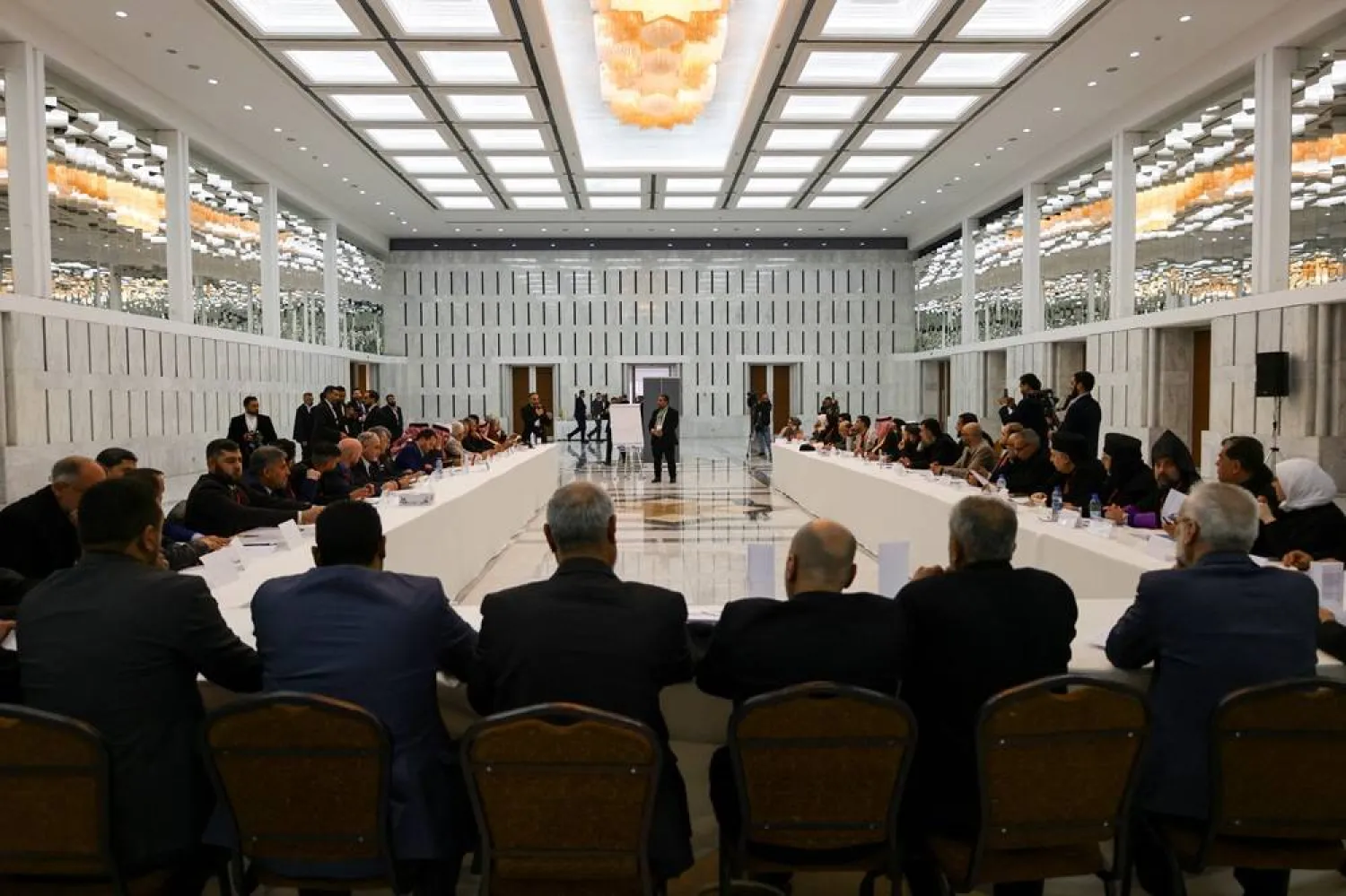

Syria condemned on Tuesday Israel's incursion into its territories and called for Israel to withdraw, according to the closing statement of a national dialogue summit organized by Syria's new rulers to outline the country's political roadmap.
Israel moved forces into a UN-monitored demilitarized zone within Syria after rebels led by Hayat Tahrir al-Sham (HTS), a former Al-Qaeda affiliate, toppled former President Bashar al-Assad in December.
Israeli Prime Minister Benjamin Netanyahu said Sunday that Israel won't allow Syria’s new army or HTS to "enter the area south of Damascus." He said that Israel aimed to "protect" Syria's Druze who live in southern Syria and in Israel’s Golan Heights.
After Assad's fall, Israeli forces moved into territory in southern Syria adjacent to the Israel-occupied Golan Heights and have made clear they plan to stay indefinitely.
Syria's new rulers haven't directly responded to Netanyahu's warning, but interim President Ahmed al-Sharaa told the Damascus conference that Syria must "firmly confront anyone who wants to tamper with our security and unity."
Interim Foreign Minister Asaad al-Shibani said that Syria's new authorities "will not accept any violation of our sovereignty or the independence of our national decisions." He also touted the government's efforts to rebuild diplomatic ties with Arab and Western countries, and push for lifting sanctions.
Also on Tuesday, hundreds of demonstrators gathered in the Druze heartland of Sweida and the southern city of Daraa to protest against Netanyahu's comments.
Nour Alameddine, a university student, displayed a sign: "Syria is not for sale, Syria is united."
"Sweida is part of Syria. We do not want it to be under Israeli occupation," she said
Constitutional declaration
The Damascus gathering was meant to come up with nonbinding recommendations on the country's interim rules before drafting a new constitution and forming a new government.
In the closing session Tuesday, conference organizing committee member Huda Attassi gave a statement announcing the recommendations reached in the discussions.
The statement called for the country’s leaders to "expedite the announcement of a temporary constitutional declaration" to address the transitional phase while a new constitution is being drafted and for "accelerating the formation of the interim legislative council" to fill the role of a parliament until new elections take place.
Al-Sharaa had previously said that it could take up to four years to hold elections.
Syria's new leaders also face the challenge of transforming former opposition factions into a single national army they say should control all of the country's territory. Some armed groups — mainly the US-backed, Kurdish-led Syrian Democratic Forces, which holds sway in northeastern Syria — have refused to disarm and dissolve their units.
SDF figures weren't invited to the conference, although the organizers said the Kurdish community would be represented.
A group of mostly Kurdish political parties said in a statement on Tuesday that the conference did "not reflect the reality of the Syrian components" and warned that it would be "meaningless, worthless and ineffective and will not contribute to finding real solutions to the crisis that the country is suffering from."


