
Official: Yemen’s Arabian Sea Ports Poised to Become Global Logistics Hubs

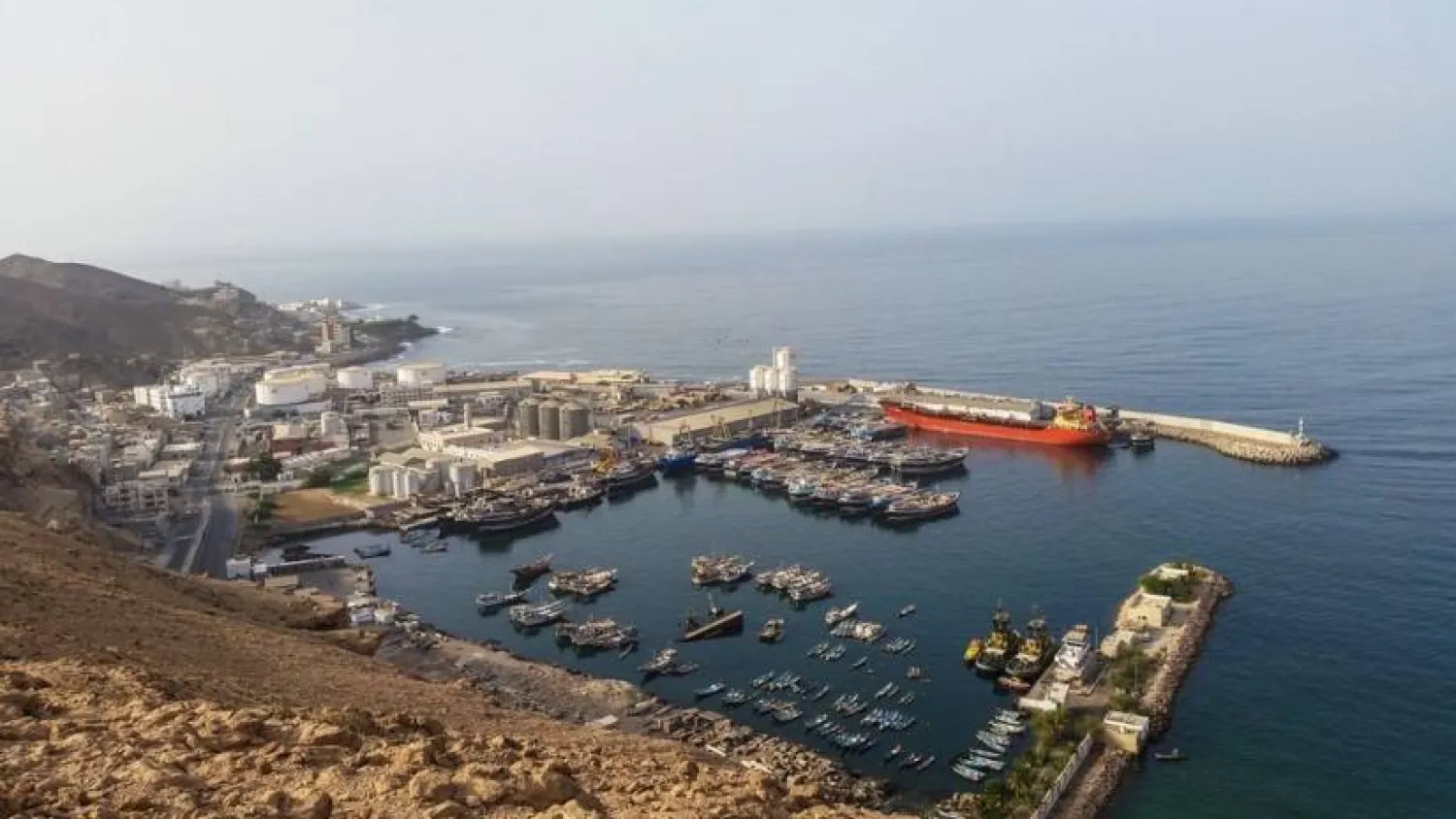
Arabian Sea ports poised to become global logistics hubs (Arabian Sea Ports Authority)
TT

Official: Yemen’s Arabian Sea Ports Poised to Become Global Logistics Hubs

Arabian Sea ports poised to become global logistics hubs (Arabian Sea Ports Authority)

A Yemeni maritime official said ports along the Arabian Sea are capable of becoming global logistics hubs, citing their competitive advantages and capacity to handle various types of commercial vessels, particularly container ships and general cargo vessels, as well as dry and liquid bulk carriers.

Dr. Nabil bin Aifan, acting director of maritime affairs in Mukalla in eastern Yemen, told Asharq Al-Awsat that the Port of Mukalla is distinguished by its ability to receive all types of vessels.

He also described Saudi Arabia’s experience in developing the maritime transport and ports sector as “successful” at both regional and global levels, expressing hope that Yemeni ports — particularly Mukalla — would benefit from this experience, as well as from Saudi support for infrastructure projects in the country.

Roadmap

Mohsen al-Amri, Yemen’s transport minister, recently announced a roadmap focused on turning technical and economic studies into tangible projects, particularly regarding the ports in Hadramout, Shabwa and the Socotra archipelago, in addition to the expansion project of the Port of Mukalla, which is considered a key pillar of Yemen’s maritime activity.

Al-Amri pledged to work towards transforming Arabian Sea ports into global logistics hubs, in a move aimed at strengthening Yemen’s position on the international trade map.

Strong potential

Bin Aifan said the Port of Qana in Shabwa governorate has significant potential to become a successful commercial port, particularly in terms of its geographic location, depth, hinterland and the capacity of its berths and yards.

He also referred to a previous study he conducted on the Port of Aden and its strategic importance, noting that the port possesses global competitive advantages and, if properly invested in, could become one of the most prominent ports in the region and among the busiest in cargo handling.

“For example, the port’s geographical location links East and West, and ships need no more than four nautical miles to change direction and reach the pilot station,” he said. “It is also naturally protected from waves and from the northeast and southwest monsoon winds, enabling it to operate year-round without interruption. It lies just 105 nautical miles from the Bab el-Mandeb Strait, through which around 21,000 ships pass annually.”

Sustaining operational capacity

According to a United Nations report cited by bin Aifan, the Port of Aden requires an investment package to maintain its current operational capacity, which has declined due to insufficient maintenance, weak infrastructure and limited institutional capacity.

The report also pointed to the absence of long-term investment plans, the lack of systematic integration of risk management into decision-making processes, as well as weak awareness of health, safety and environmental issues.

Six pillars

Bin Aifan outlined six main pillars for developing Yemeni ports, foremost among them the Port of Aden: infrastructure development, digital transformation, strengthening administrative and logistics systems, developing human capital, meeting safety requirements and protecting the environment, alongside the need for a comprehensive legal framework.

“The role of the private sector in the development process cannot be overlooked, as it is one of the key pillars of successful port operations,” he said, adding that experience has shown that assigning port operations to the private sector helps improve efficiency and enhance competitiveness.

Speaking about Saudi Arabia’s role, bin Aifan said there is a strong direction within the Kingdom to support infrastructure and economic projects in Hadramout in particular and Yemen in general.

“We hope the ports will receive a substantial share of this support, based on the Kingdom’s priorities and its successful experience in this field,” he stated.




Sudan Appoints Yassir al-Atta Armed Forces Chief of Staff

A man walks while smoke rises above buildings after aerial bombardment, during clashes between the paramilitary Rapid Support Forces and the army in Khartoum North, Sudan, May 1, 2023. REUTERS/Mohamed Nureldin Abdallah/File Photo
TT

Sudan Appoints Yassir al-Atta Armed Forces Chief of Staff

A man walks while smoke rises above buildings after aerial bombardment, during clashes between the paramilitary Rapid Support Forces and the army in Khartoum North, Sudan, May 1, 2023. REUTERS/Mohamed Nureldin Abdallah/File Photo

Sudan has appointed General Yassir al-Atta, a member of the country's Sovereign Council and assistant to the commander-in-chief Abdel Fattah al-Burhan, chief of staff of the country's Armed Forces, a military spokesman told Reuters on Thursday.

The move is the most significant personnel shift since the Sudanese army's war with the Rapid Support Forces three years ago, and could lead to shifts in strategy as a new front opens in the war in the southeastern Blue Nile state.

Al-Atta takes over the role of chief of staff from career soldier Othman al-Hussein, giving him less of a political role but tighter control of the armed forces.


A Month into War, Lebanon's Prime Minister Says No End in Sight 

Lebanese Prime Minister Nawaf Salam speaks to reporters at the Grand Serail in Beirut, December 3, 2025. (Reuters)
TT

A Month into War, Lebanon's Prime Minister Says No End in Sight 

Lebanese Prime Minister Nawaf Salam speaks to reporters at the Grand Serail in Beirut, December 3, 2025. (Reuters)

Lebanese Prime Minister Nawaf Salam said on Thursday there was no end in sight to a war that had already displaced a million people over the last month, as families fleeing Israeli strikes said they were exhausted by repeated rounds of conflict. Lebanon is entering the second month of conflict between Iran-backed armed group Hezbollah and Israel, which has pledged to occupy swathes of southern Lebanon as part of a "security zone" to protect its own northern residents.

"Lebanon has become a victim of a war - one whose outcomes and end date no one can predict," Salam told reporters on Thursday after a meeting of his cabinet, Reuters reported.
"The positions of Israeli officials, and the practices of their army, reveal far-reaching goals, including a significant expansion in the occupation of Lebanese territories, dangerous talk about establishing buffer zones or security belts, and the displacement of more than one million Lebanese," Salam said.

Israel's assertion that its military will retain control of southern Lebanon has fuelled fears of a long-term occupation, after a two-decade Israeli presence ended in 2000.

Salam said his government would redouble diplomatic and political efforts to end the war. A call by Lebanese President Joseph Aoun for direct talks with Israel has so far received no response.

SALAM SALUTES LEBANESE STILL IN SOUTH

Israel has continued to carry out strikes on Lebanon after a 2024 ceasefire ended its last war with Hezbollah, while keeping troops stationed on five hilltop positions in southern Lebanon.

Israel launched a full-scale air and ground campaign after Hezbollah fired into Israel on March 2 in solidarity with Iran after the US and Israel began their war on Tehran.

Salam, without naming Hezbollah, condemned coordinated attacks carried out with Iran's Revolutionary Guards. More than 1,300 people have been killed in Israeli strikes and about a fifth of Lebanon's population has been displaced. Israel has issued evacuation orders covering around 15% of Lebanese territory.

"I want to direct the biggest salute to our people who are staying in their hometowns and villages in the south, and want to reiterate that we stand by them," Salam said.

Tens of thousands of Lebanese have remained in their homes in southern Lebanon, even as Lebanese troops withdraw from the area to avoid confronting Israeli troops. They include around 9,000 Lebanese Christians living in a cluster of border towns, who told Reuters they were determined to stay despite the advancing military operations.

LEBANESE WANT WARS TO STOP

Salam also stressed the need to preserve internal stability as the war strains Lebanon's sectarian political faultlines. Some communities have been reluctant to host displaced families. As the war drags on, Lebanon is examining ways to house those families in the long-run. Mohammad al-Badran, a Syrian who had lived for years in Beirut's southern suburbs, said he and his family were turned away when they sought refuge in a mountainous area outside the capital.

Badran, his wife and their four children - the youngest of whom was born barely two weeks before the war started - are now sleeping in a makeshift tent area in the capital.

His 10-year-old daughter, Nour, can hear the sound of Israeli strikes on the nearby southern suburbs. "The sound is loud, the children are crying, and I feel like the missiles are flying above us," she said.

Ali al-Aziz, who also fled the southern suburbs, told Reuters that Israel should withdraw from Lebanon so that the conflict could end and he could go back home.

"We want the war to end once and for all. Not for a war to happen every year or every ten years," he said.


Iraqi Oil Ministry Says It Began Exporting Fuel Oil Via Syria

A worker performs checks at Türkiye's Mediterranean port of Ceyhan, February 19, 2014. REUTERS/Umit Bektas
TT

Iraqi Oil Ministry Says It Began Exporting Fuel Oil Via Syria

A worker performs checks at Türkiye's Mediterranean port of Ceyhan, February 19, 2014. REUTERS/Umit Bektas

Iraq's oil ministry said on Thursday it began exporting fuel oil via Syria after ‌disruptions ‌to the Strait ‌of ⁠Hormuz caused by the ⁠Iran war.

The oil will be trucked overland ⁠and export ‌operations ‌would gradually increase ‌to ‌boost the Iraqi economy, the ministry added.

Reuters reported ‌in an exclusive on Tuesday ⁠that ⁠the land route, which Iraq has not used for decades, became its best option.