


Yemen’s Humanitarian Lifeline on the Brink, IRC Warns

Aid agencies face increasing requests for assistance in the camps of displaced Yemenis (UN)
TT

Yemen’s Humanitarian Lifeline on the Brink, IRC Warns

Aid agencies face increasing requests for assistance in the camps of displaced Yemenis (UN)

As Yemen marks ten years of conflict and crisis ignited by the Houthis, the International Rescue Committee (IRC) warned that the country will face unprecedented challenges this year with expected reductions in US contributions, which accounted for more than half of total humanitarian funding to Yemen in 2024.

The Committee said the 2025 Humanitarian Needs and Response Plan (HNRP) seeks $2.47 billion to reach 10.5 million people—but as of March 2025, it is just 5% funded.

In 2024, the response received just over half of what was required, forcing aid agencies to scale back essential support such as food distributions and limit access to clean water and other services.

Therefore, IRC warned that expected reductions in US contributions, which accounted for more than half of total humanitarian funding to Yemen in 2024, threaten to widen this gap even further, placing millions at greater risk of hunger, disease, and further displacement.

The Committee also cautioned that a widening chasm between rising humanitarian needs and the funding required to alleviate them, risks leaving millions of Yemenis without access to food, healthcare and protection services.

In 2025, it said, an estimated 19.5 million people will need humanitarian assistance and protection—an increase of nearly 7% compared to 2024. Across the country, more than 83% of the population now lives in poverty.

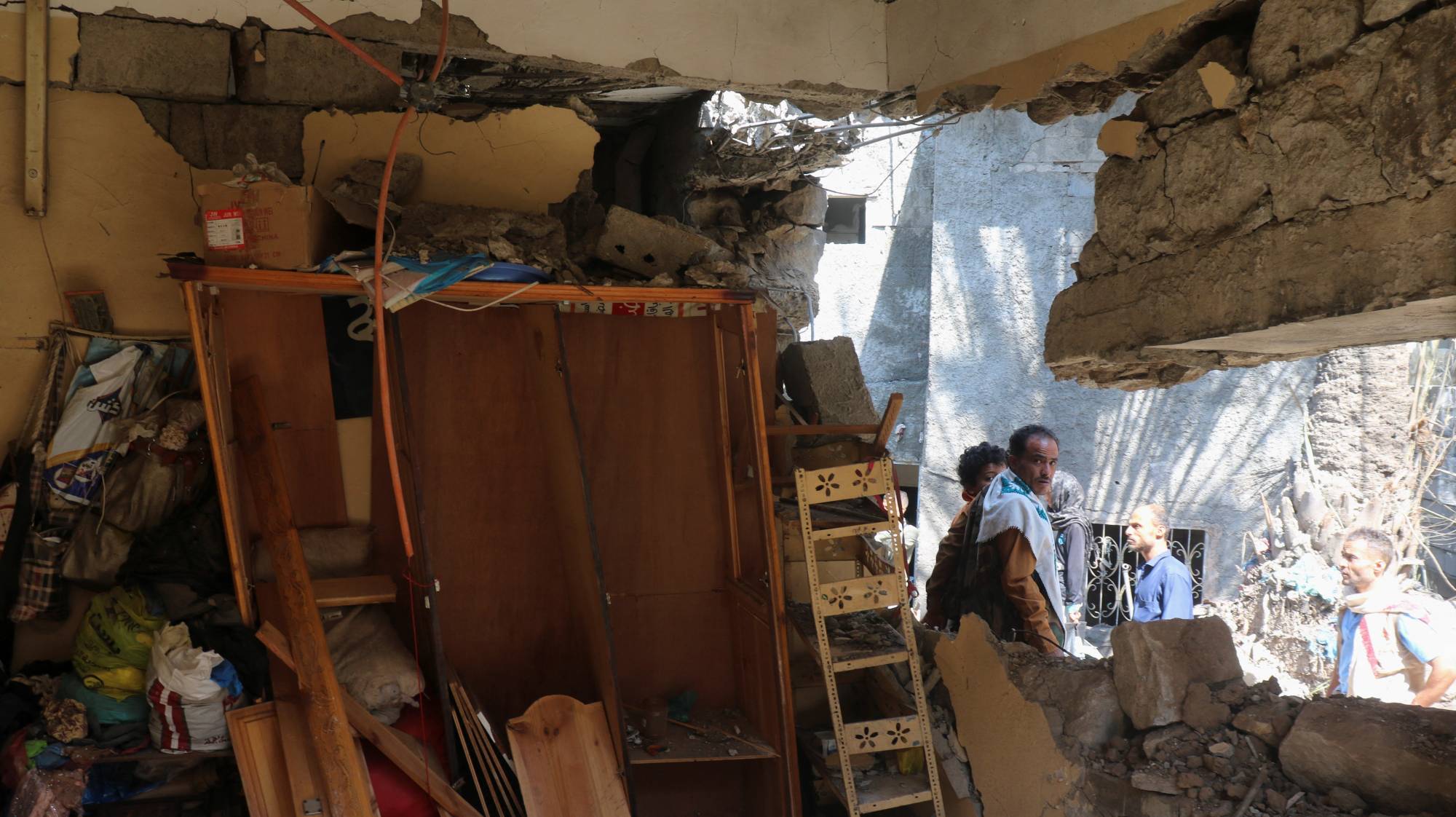
More than 4.5 million people are now internally displaced with most displaced multiple times over the past decade. IRC teams said they are witnessing rising demand in displacement sites, where families face limited access to food, healthcare and clean water.

“These figures reflect the compounding toll of a crisis that has deepened year after year, leaving families with fewer resources, fewer services and no safe alternatives,” the Committee warned.

For families who have endured years of displacement and insecurity, humanitarian aid has been critical to survival.

“I remember the first time I heard the sounds of war. I felt a fear I had never known before. We lost our home, our livelihood, and most importantly, our sense of security. Living in this camp is a daily struggle with no privacy or safety,” said Abdulnasser Abdullah, a displaced father living in Al Qataysh camp.

He added: “But the healthcare assistance we have received has made a real difference—especially since we can’t afford basic medication or even a simple meal.”

Caroline Sekyewa, IRC’s Country Director in Yemen, said that for ten years, Yemenis have endured relentless conflict, economic collapse, and limited access to lifesaving health and nutrition services.

“Humanitarian aid has been their lifeline-preventing disease outbreaks, delivering healthcare, responding to natural disasters, and helping families to survive,” she said.

For donor governments to consider reducing or removing that support is not just short-sighted, it puts millions of lives at risk, the aid director affirmed.

“Yemen now stands on a precipice and without urgent support, we risk reversing years of hard-fought gains. Ultimately, humanitarian aid on its own cannot end the suffering being felt by millions in Yemen,” she said.

Sekyewa then revealed that last year, humanitarian organizations, in spite of a huge funding shortfall, reached more than 8 million people in need across the country.

“2025 must be a turning point in this crisis. With needs steadily increasing, we call upon all donors to step up and ensure that this year’s humanitarian needs and response plan is fully funded,” she affirmed.


Syria to Start Currency Swap on January 1st, Central Bank Governor Says

Syrian pounds are pictured inside an exchange currency shop in Azaz, Syria February 3, 2020. Picture taken February 3, 2020. REUTERS/Khalil Ashawi/File Photo
TT

Syria to Start Currency Swap on January 1st, Central Bank Governor Says

Syrian pounds are pictured inside an exchange currency shop in Azaz, Syria February 3, 2020. Picture taken February 3, 2020. REUTERS/Khalil Ashawi/File Photo

Syria will start swapping old banknotes for new ones under a ​plan to replace Assad-era notes starting from January 1, 2026, Central Bank Governor Abdelkader Husrieh said on Thursday.

Husrieh announced the introduction of the new Syrian currency, saying the decree "sets January ‌1, 2026, ‌as the start date ‌for ⁠the ​exchange ‌process". Sources familiar with the matter told Reuters in August that the country will issue new banknotes, removing two zeros from its currency in an attempt to restore ⁠public confidence in the severely devalued pound.

The ‌step is intended ‍to strengthen ‍the Syrian pound after its purchasing ‍power collapsed to record lows following a 14-year conflict that ended with President Bashar al-Assad's ouster in December.

Husrieh ​said the operation will take place through a smooth and orderly ⁠swap - a move bankers hope will ease fears that the new currency could fuel inflation and further erode the purchasing power of Syrians already reeling from high prices.

He added that a press conference will soon outline the exact regulations and mechanisms.


Türkiye Begins Black Box Analysis of Jet Crash That Killed Libyan Military Chief and 7 Others

Libyan national flags fly at half-mast in Tripoli on December 24, 2025, after the head of Libya's armed forces and his four aides died in a plane crash in Türkiye. (AFP)
TT

Türkiye Begins Black Box Analysis of Jet Crash That Killed Libyan Military Chief and 7 Others

Libyan national flags fly at half-mast in Tripoli on December 24, 2025, after the head of Libya's armed forces and his four aides died in a plane crash in Türkiye. (AFP)

The technical analysis of the recovered black boxes from a jet crash that killed eight people, including western Libya’s military chief, began as the investigation proceeded in cooperation with Libyan authorities, the Turkish Ministry of Defense said Thursday.

The private jet with Gen. Muhammad Ali Ahmad al-Haddad, four other military officials and three crew members crashed on Tuesday after taking off from Türkiye’s capital, Ankara, killing everyone on board. Libyan officials said the cause of the crash was a technical malfunction on the plane.

The high-level Libyan delegation was on its way back to Tripoli after holding defense talks in Ankara aimed at boosting military cooperation between the two countries.

The wreckage was scattered across an area covering 3 square kilometers (more than a square mile), complicating recovery efforts, according to the Turkish Interior Minister Ali Yerlikaya.

A 22-person delegation, including five family members, arrived from Libya early on Wednesday to assist in the investigation.


Lebanese President: We are Determined to Hold Parliamentary Elections on Time

President Joseph Aoun between Prime Minister Nawaf Salam and Speaker Nabih Berri (Lebanese Presidency file photo)
TT

Lebanese President: We are Determined to Hold Parliamentary Elections on Time

President Joseph Aoun between Prime Minister Nawaf Salam and Speaker Nabih Berri (Lebanese Presidency file photo)

Lebanese President Joseph Aoun reiterated on Thursday that the country’s parliamentary elections are a constitutional obligation that must be carried out on time.

Lebanon’s state-run National News Agency quoted Aoun as saying that he, alongside Prime Minister Nawaf Salam and Parliament Speaker Nabih Berri, is determined to hold the elections on schedule.

Aoun also emphasized that diplomatic efforts have continued unabated to keep the specter of war at bay, noting that "things are heading in a positive direction".

The agency also cited Berri reaffirming that the elections will take place as planned, with "no delays, no extensions".

The Lebanese parliamentary elections are scheduled for May next year.
