


Israel Strikes Hezbollah's 'Radwan Force' Deep Inside Lebanon’s Bekaa Valley

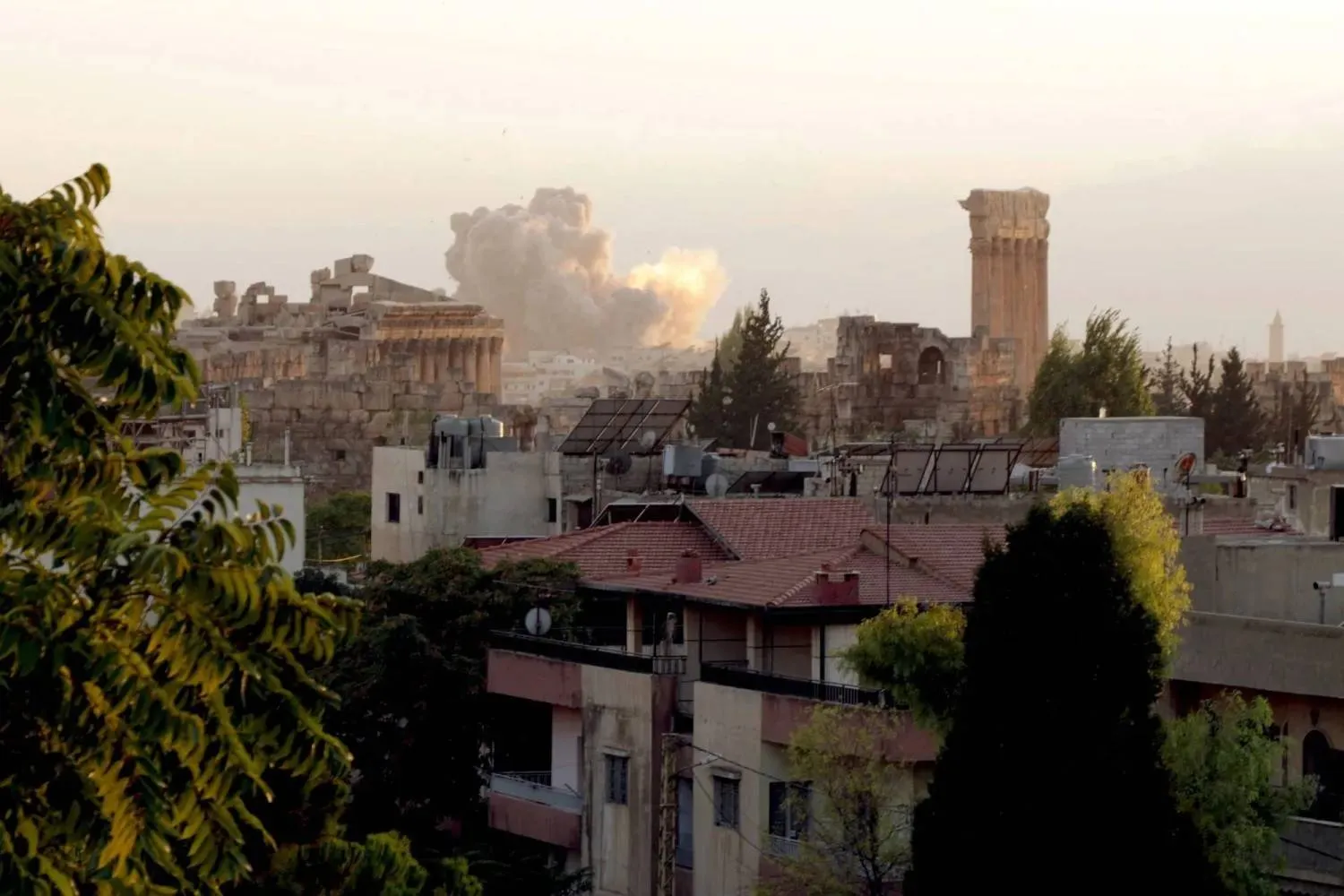
Smoke rises over Baalbek, Hezbollah stronghold near Syria border – AFP
TT

Israel Strikes Hezbollah's 'Radwan Force' Deep Inside Lebanon’s Bekaa Valley

Smoke rises over Baalbek, Hezbollah stronghold near Syria border – AFP

Israel carried out a wave of airstrikes on eastern Lebanon’s Bekaa Valley on Tuesday, targeting Hezbollah’s elite Radwan force in what Israeli officials described as an effort to disrupt the group’s attempts to rebuild its military capabilities.

The strikes, which followed more than 48 hours of relative calm along the Lebanese-Israeli border, marked a sharp escalation as US-brokered negotiations continue between Washington and Beirut over proposals to curb Hezbollah’s armed presence.

Military analysts said the Israeli escalation appeared aimed at sending a forceful message as US envoy Tom Barrack pushes Lebanese authorities to accept a timeline for the group's disarmament under a potential ceasefire framework.

Israeli warplanes struck targets in both the eastern and western mountain ranges of the Bekaa Valley, according to Lebanon’s state-run National News Agency (NNA).

Two initial raids hit areas west of Baalbek- Shmistar and Wadi Umm Ali - followed by more strikes southeast of the city.

NNA reported that 12 people were killed in the bombardment, while Reuters confirmed that five of the dead were Hezbollah members. Local media said Syrian nationals were among those killed in strikes near Hermel.

Footage shared online showed plumes of smoke rising from bombed-out sites across the Bekaa. Shrapnel shattered windows at a public high school in Shmistar where students were sitting for state exams, and a revered religious shrine - Maqam al-Nabi Ismail in Brital - was reportedly damaged. Two civilians were wounded.

In its first official response, Hezbollah condemned the airstrikes as a “major escalation” in Israel’s months-long military campaign against Lebanon. The Iran-backed group urged the Lebanese state to “break its futile silence” and called for immediate international intervention, particularly from the United States, to uphold existing ceasefire guarantees.

Israeli Defense Minister Yoav Gallant said the strikes were intended as a “clear message” to Hezbollah, accusing the group of attempting to restore its operational capabilities along the border.

In a statement posted on X, Israeli military spokesperson Avichay Adraee said the air raids targeted Hezbollah’s Radwan force in the Bekaa, including training camps and weapons depots.

He added that militants had been conducting live-fire exercises and tactical drills at the sites, which he called a “flagrant violation” of the understandings between Israel and Lebanon.

According to Adraee, the Radwan unit - tasked in the past with a plan to seize territory in northern Israel - has been attempting to regroup since several of its senior commanders were killed in Israeli strikes in Beirut and southern Lebanon in September 2024.

In contrast to the Bekaa, the situation along southern Lebanon remained relatively stable on Tuesday, though NNA reported that Israeli troops fired machine guns toward the outskirts of Aita al-Shaab and shot at the newly established Blat Hill position overlooking the village of Rmaich.

Retired Lebanese Brig. Gen. Hassan Jouni said the Bekaa raids were part of a “calibrated pressure campaign” tied to the ongoing negotiations.

“The timing of these airstrikes is clearly linked to the back-and-forth between Lebanon and Washington. Israel wants to remind everyone of the current balance of power and signal that military pressure will continue until Hezbollah gives up its weapons,” Jouni told Asharq al-Awsat newspaper.

He said Hezbollah’s efforts to rebuild its capabilities had been publicly acknowledged by the group’s deputy leader, Sheikh Naim Qassem, placing the Lebanese government in a difficult position between appeasing US demands and avoiding internal strife.

Another retired officer, Brigadier General George Nader, warned that Israel’s message was clear: failure to cooperate with US proposals could lead to intensified strikes.

“While some speculate about a ground invasion, I find it unlikely,” Nader told Asharq al-Awsat. “Why would Israel risk soldiers’ lives when it can strike targets from the air with precision drones and jets?”

He cautioned that unless Lebanese officials take a decisive stance, the country could face a more aggressive Israeli air campaign in the coming weeks.


Report: Colombian Mercenaries in Sudan ‘Recruited by UK-registered Firms’

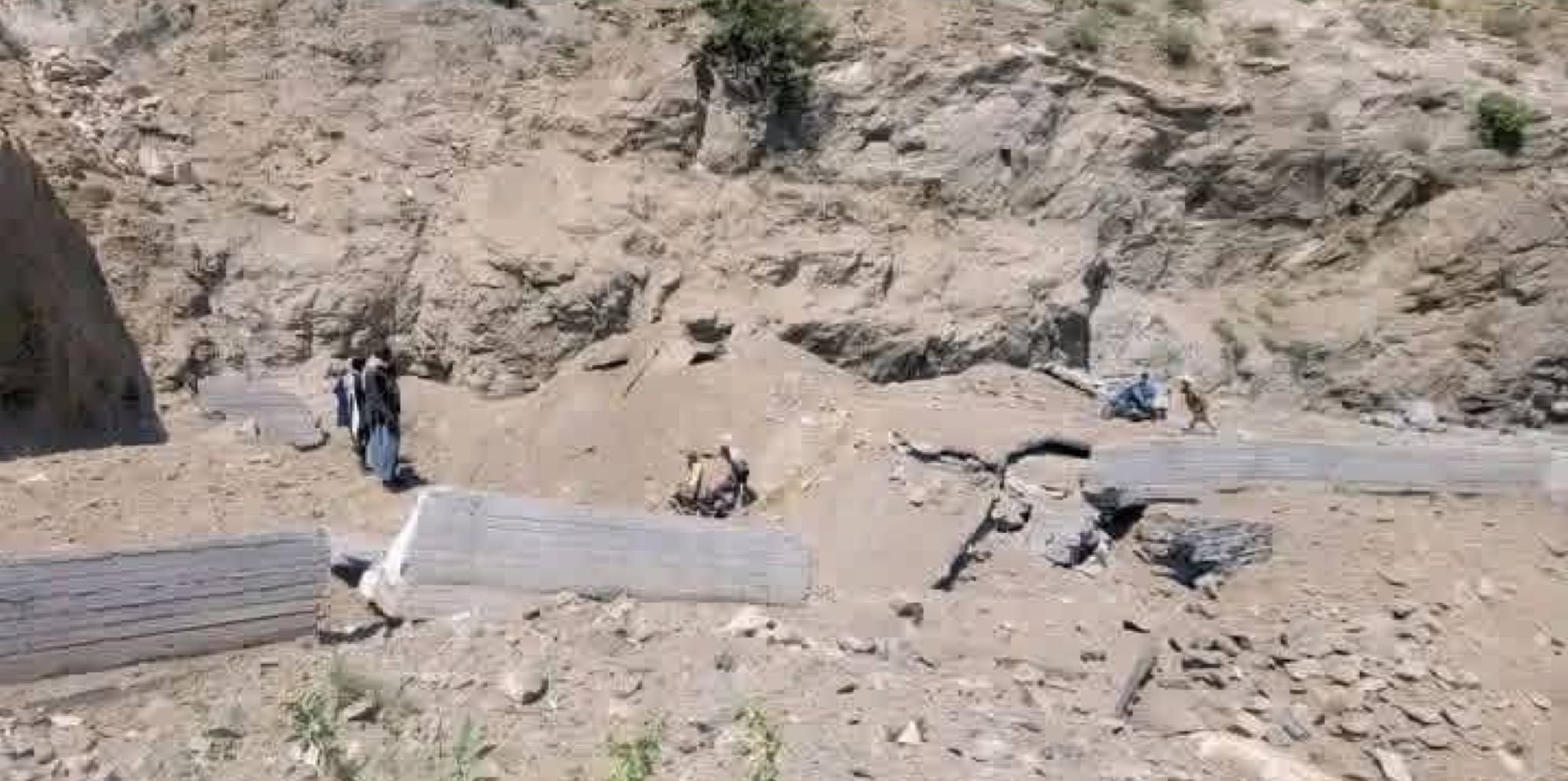
(COMBO) This combination of satellite images released by Planet Labs PBC on December 19, 2025, shows from top left to bottom right:- the graves near the United Nations Children's Fund (UNICEF) headquarters in El-Fasher, taken on the following dates: on October 8, 2025, on October 27, 2025, on January 15, 2025, and on December 14, 2025. (Photo by Handout / Planet Labs / AFP)
TT

Report: Colombian Mercenaries in Sudan ‘Recruited by UK-registered Firms’

(COMBO) This combination of satellite images released by Planet Labs PBC on December 19, 2025, shows from top left to bottom right:- the graves near the United Nations Children's Fund (UNICEF) headquarters in El-Fasher, taken on the following dates: on October 8, 2025, on October 27, 2025, on January 15, 2025, and on December 14, 2025. (Photo by Handout / Planet Labs / AFP)

An exclusive investigation by UK’s The Guardian has found companies hiring hundreds of Colombian fighters for Sudan’s Rapid Support Forces.

A one-bedroom flat off north London’s Creighton Road in Tottenham is, according to UK government records, tied to a transnational network of companies involved in the mass recruitment of mercenaries to fight in Sudan alongside the RSF, said the report.

Colombian mercenaries were directly involved in the RSF’s seizure of the southwestern Sudanese city of El Fasher in late October, which prompted a killing frenzy that analysts say has cost at least 60,000 lives.

“The flat in Tottenham is registered to a company called Zeuz Global, set up by two individuals named and sanctioned last week by the US treasury for hiring Colombian mercenaries to fight for the RSF,” said The Guardian.

“Both figures – Colombian nationals in their 50s – are described in documents at Companies House, the government register of firms operating in the UK, as living in Britain,” it said.

“The day after the US treasury announced sanctions on those behind the Colombian mercenary operation –December 9 – Zeuz Global abruptly moved its operation to the very heart of London. On 10 December the firm shared “new address details” Its new postcode matches One Aldwych, a five-star hotel in Covent Garden,” the report added.

Yet the first line of Zeuz Global’s new address is, confusingly, “4dd Aldwych,” which corresponds to the Waldorf Hilton hotel 100 meters away, according to The Guardian.

Both hotels said they had no link to Zeuz Global and had no idea why the firm had used their postcodes.

“It is of major concern that the key individuals the US government claims are directing this mercenary supply have been able to set up a UK company operating from a flat in north London, and even to claim that they’re resident in the UK,” said Mike Lewis, a researcher and former member of the UN panel of experts on Sudan.

When Companies House was asked if it had any knowledge of what Zeuz Global actually did, or is doing, it did not respond. The government agency would also not confirm whether the sanctioned individuals were, in fact, resident in the UK.

Contacting Zeuz proved fruitless; its website, set up in May, was labelled as “under construction” with no contact details provided.


Egyptian President Urges UN Security Council Reforms for Africa's Larger Role

In this photo, provided by Egypt's presidency media office, Egyptian President Abdel-Fattah el-Sisi, front right, greets Russian Foreign Minister Sergei Lavrov, left, before their meeting at the Presidential Palace in Cairo, Egypt, Saturday, Dec. 20, 2025. (Egyptian Presidency Media Office via AP)
TT

Egyptian President Urges UN Security Council Reforms for Africa's Larger Role

In this photo, provided by Egypt's presidency media office, Egyptian President Abdel-Fattah el-Sisi, front right, greets Russian Foreign Minister Sergei Lavrov, left, before their meeting at the Presidential Palace in Cairo, Egypt, Saturday, Dec. 20, 2025. (Egyptian Presidency Media Office via AP)

Egypt’s President Abdel-Fattah el-Sisi on Saturday reiterated calls for structural changes in the UN Security Council to grant Africa a larger role in shaping global decisions.

El-Sisi made the plea for a “more pluralistic” world order at a conference of the Russia-Africa partnership held in Cairo, which was attended by Russian Foreign Minister Sergei Lavrov and ministers from more than 50 African countries along with representatives from several African and regional organizations.

“The voice of Africa should be present and influential in making global decisions given the continent’s human, economic, political and demographic weight,” el-Sisi said in a statement read out by his foreign minister at the plenary session of the conference.

According to The Associated Press, he added that international financial institutions need to undergo similar reforms to ensure Africa an equitable representation.

Since 2005, the African Union has been demanding that Africa be granted two permanent seats with veto powers in the Security Council, arguing that such reforms would contribute to achieving peace and stability on the continent, which has been struggling with wars for decades.

The Security Council, which is charged with maintaining international peace and security, has not changed from its 1945 configuration: 10 non-permanent members from all regions of the world elected for two-year terms without veto power, and five countries that were dominant powers at the end of World War II are permanent members with veto power: The United States, Russia, China, Britain and France.

In his statement, el-Sisi said that the Russia-Africa ministerial conference will develop a plan to consolidate the partnership ahead of next year’s summit of heads of state.

“We remain a reliable partner for African states in strengthening their national sovereignty, both politically and in matters of security, as well as in other dimensions,” Lavrov said at the plenary session. “We’re committed to further unlocking the existing enormous potential of our practical cooperation.”


Türkiye, Hamas Discuss Reaching 2nd Phase of Gaza Peace Plan

Destroyed buildings, amid a ceasefire between Israel and Hamas, in Khan Younis in the southern Gaza Strip November 18, 2025. (Reuters)
TT

Türkiye, Hamas Discuss Reaching 2nd Phase of Gaza Peace Plan

Destroyed buildings, amid a ceasefire between Israel and Hamas, in Khan Younis in the southern Gaza Strip November 18, 2025. (Reuters)

Türkiye's MIT intelligence agency chief met Hamas' ​negotiating team head Khalil Al-Hayya on Saturday and discussed necessary measures to be taken for proceeding to the ‌second phase ‌of the ‌Gaza ⁠peace ​plan, ‌Turkish security sources said.

The sources, speaking on condition of anonymity, said MIT chief Ibrahim Kalin met the ⁠Hamas delegation in Istanbul ‌within the scope ‍of the ‍Gaza ceasefire agreement, ‍and they discussed steps to be taken to prevent what they ​said were Israel's ceasefire violations.

They also discussed ⁠measures to be taken to resolve existing issues for proceeding to the second phase of the plan, the sources also told Reuters, without giving details.

Israel retained control of 53% of Gaza under the first phase of US President Donald Trump's plan, which involved the release of hostages held by militants in Gaza and of Palestinians detained by Israel.

The final hostage remains to be handed over are those of an Israeli police officer killed on October 7, 2023 fighting Gazan militants who had invaded Israel.

According to the plan, Israel is to pull back further in the second phase as a transitional authority is established in Gaza and a multinational security force is deployed, Hamas is disarmed, and reconstruction begins.
