

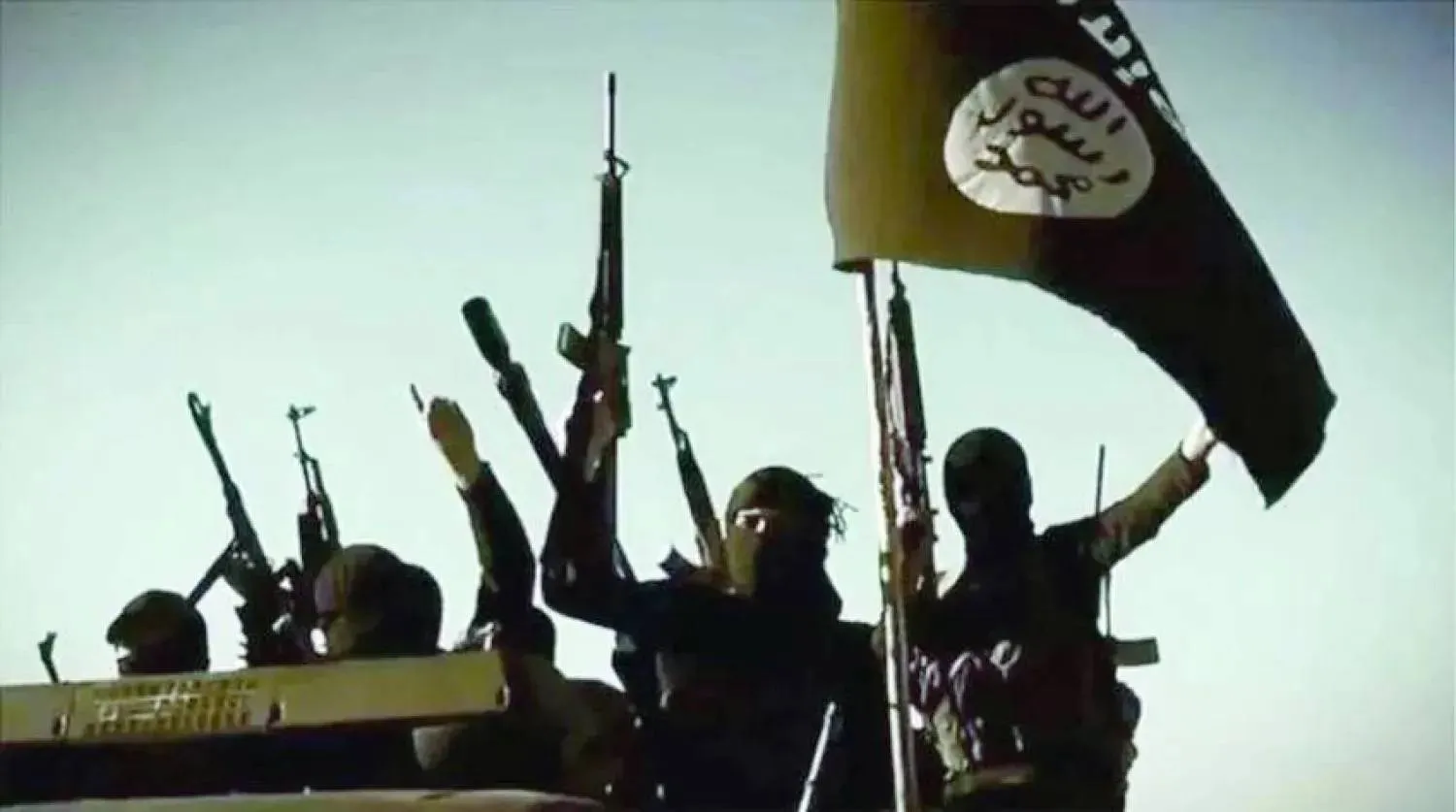

UN Experts: ISIS and al-Qaida Threat is Intense in Africa, with Growing Risks in Syria

ISIS fighters/file photo (AFP)
TT

UN Experts: ISIS and al-Qaida Threat is Intense in Africa, with Growing Risks in Syria

ISIS fighters/file photo (AFP)

The threat from ISIS and al-Qaida extremists and their affiliates is most intense in parts of Africa, and risks are growing in Syria, which both groups view as a “a strategic base for external operations,” UN experts said in a new report.

Their report to the UN Security Council circulated Wednesday said West Africa's al-Qaida-linked Jama’at Nasr al-Islam wal-Muslimin group, known as JNIM, and East Africa's al-Qaida-linked al-Shabab have continued to increase the territory under their control.

The experts monitoring sanctions against the two groups said “the organization’s pivot towards parts of Africa continued" partly because of ISIS losses in the Middle East due to counterterrorism pressures. There are also “increasing concerns about foreign terrorist fighters returning to Central Asia and Afghanistan, aiming to undermine regional security,” they said.

The ISIS group also continues to represent “the most significant threat” to Europe and the Americas, the experts said, often by individuals radicalized via social media and encrypted messaging platforms by its Afghanistan-based Khorasan group.

In the United States, the experts said several alleged terrorist attack plots were “largely motivated by the Gaza and Israel conflict,” or by individuals radicalized by ISIS.

They pointed to an American who pledged support to ISIS and drove into a crowd in New Orleans on Jan. 1, killing 14 people in the deadliest attack by al-Qaida or the ISIS in the US since 2016. In addition, they said, “Authorities disrupted attacks, including an ISIS-inspired plot to conduct a mass shooting at a military base in Michigan,” and the ISIS Khorasan affiliate issued warnings of plots targeting Americans.

In Africa’s Sahel region, the experts said, JNIM expanded its area of operations, operating “with relative freedom” in northern Mali and most of Burkina Faso. There was also a resurgence of activity by ISIS in the Greater Sahara, “particularly along the Niger and Nigeria border, where the group was seeking to entrench itself.”

“JNIM reached a new level of operational capability to conduct complex attacks with drones, improvised explosive devices and large numbers of fighters against well-defended barracks,” the experts said.

In East Africa, they said, “al-Shabab maintained its resilience, intensifying operations in southern and central Somalia” and continuing its ties with Yemen’s Houthi rebels. The two groups have reportedly exchanged weapons and the Houthis have trained al-Shabab fighters, they said.

Syria, the experts said, remains “in a volatile and precarious phase,” six months after the ouster of President Bashar Assad, with unnamed countries warning of growing risks posed by both ISIS and al-Qaida.

“Member states estimated that more than 5,000 foreign terrorist fighters were involved in the military operation in which Damascus was taken on Dec. 8,” the experts’ 27-page report said.

Syria’s new interim President Ahmad Al-Sharaa has promised that the country will transition to a system that includes Syria’s mosaic of religious and ethnic groups under fair elections.

As for financing, the experts said the Hayat Tahrir al-Sham group takeover in Syria was considered to pose financial problems for ISIS and likely to lead to a decline in its revenues.

Salaries for ISIS fighters were reduced to $50-$70 per month and $35 per family, “lower than ever, and not paid regularly, suggesting financial difficulties,” said the experts, who did not give previous salaries or family payments.

They said both al-Qaida and ISIS vary methods to obtain money according to locations and their ability to exploit resources, tax local communities, kidnap for ransom and exploit businesses.

While the extremist groups predominantly move money through cash transfers and informal money transfer systems known as hawalas, the experts said ISIS has increasingly used female couriers and hawala systems where data is stored in the cloud to avoid detection, and “safe drop boxes” where money is deposited at exchange offices and can only be retrieved with a password or code.




At Least 28 Civilians Killed in Sudan Drone Strikes

Displaced Sudanese families from Kurdufan at a football stadium in the town of Kadugli, south of the region (AP)
TT

At Least 28 Civilians Killed in Sudan Drone Strikes

Displaced Sudanese families from Kurdufan at a football stadium in the town of Kadugli, south of the region (AP)

Two drone strikes in Sudan, one at a market in Darfur and the other along a road in Kordofan, killed at least 28 civilians, health workers told AFP Thursday.

The three-year war between Sudan's army and the Rapid Support Forces (RSF) has seen a recent uptick in near-daily drone strikes that kill dozens at a time.

On Wednesday, a strike hit a market in North Darfur state's Saraf Omra town, killing "22 people, including an infant, and injuring 17 more", one health worker at the local clinic told AFP.

"The drone hit a parked oil truck, which caught fire along with part of the market," said Hamid Suleiman, a vendor at the market, which serves Saraf Omra and the surrounding towns in the remote Darfur area.

Some 800 kilometers (500 miles) east of the RSF's strongholds in Darfur, another drone strike set fire to a truck travelling on a North Kordofan road in army territory.

"Six bodies arrived at the hospital yesterday, three of them charred, in addition to 10 wounded," a medical source at the local hospital in El-Rahad told AFP, blaming the RSF for the attack.

The civilians were travelling between the army-controlled towns of El-Rahad and Um Rawaba.

Drones from both sides have repeatedly attacked Sudan's central east-west highway, which runs through North Kordofan state capital El-Obeid and connects Darfur to the army-controlled east.

Sudan's war has killed tens of thousands and left some 11 million displaced, in the world's largest hunger and displacement crisis.


Guterres Names Envoy for Middle East… Warns of a Wider War

FILED - 14 May 2025, Berlin: United Nations Secretary-General Antonio Guterres holds a press conference at the Federal Chancellery. Photo: Kay Nietfeld/dpa
TT

Guterres Names Envoy for Middle East… Warns of a Wider War

FILED - 14 May 2025, Berlin: United Nations Secretary-General Antonio Guterres holds a press conference at the Federal Chancellery. Photo: Kay Nietfeld/dpa

UN Secretary-General Antonio Guterres on Wednesday named veteran French diplomat Jean Arnault as his personal envoy to support efforts to end the Middle East conflict, saying the “world is staring down the barrel of a wider war.”

Guterres told reporters that he had been in close contact with many in the region and around the world and that a number of initiatives ⁠for dialogue and peace were underway.

“It is time to stop climbing the escalation ladder – and start climbing the diplomatic ladder,” he said in New York.

The UN chief also warned that prolonged closure of the Strait of Hormuz was choking movement of oil, gas, and fertilizer at a critical moment in the global food planting season.

Guterres said ⁠Gulf countries are important suppliers of raw materials for nitrogen fertilizers crucial for developing countries.

“Without fertilizers today, we might have hunger tomorrow,” he noted.

Guterres said UN mediators have offered their services and Arnault would do “everything possible” to support peace efforts.

The UN says Arnault has more than ⁠30 years' experience in international diplomacy focusing on peace settlements and mediation, with a background in UN missions in Africa, Asia, Europe and Latin America.

His most recent assignment was in 2021 as Guterres' personal envoy on Afghanistan and regional issues.

Disrupted fertilizer shipments and soaring energy ⁠prices are threatening to unleash a fresh food-price surge across vulnerable nations, risking a years-long setback just as many were recovering from successive global shocks, UN and other experts warn.

An analysis released by ⁠the UN World Food Programme last week warned that tens of millions more people will face acute hunger if the Iran war continues through to June.


Israel Steps up Assassinations in Gaza

Smoke rises from a displacement camp in Deir al-Balah in central Gaza after an Israeli strike on Wednesday (AFP)
TT

Israel Steps up Assassinations in Gaza

Smoke rises from a displacement camp in Deir al-Balah in central Gaza after an Israeli strike on Wednesday (AFP)

A relative lull hangs over efforts to shape Gaza’s future, as global and regional attention shifts to the US-Israeli war against Iran.

Still, Israel has continued targeting commanders from Hamas’ armed wing, the Al-Qassam Brigades, using intelligence from collaborators and surveillance devices. One such device was recently uncovered in a displacement camp in central Gaza and self-destructed during inspection.

Israel killed Ahmed Darwish, an elite commander in the Central Brigade of the Qassam Brigades, along with his aide Nader al-Nabahin, while a third man was critically wounded. An Israeli drone struck them shortly before midnight on Tuesday into Wednesday near a football field south of the Nuseirat refugee camp in central Gaza.

Field sources told Asharq Al-Awsat that Darwish had survived several assassination attempts during the war. One source said he led an elite unit in the Oct. 7, 2023, attack and captured several Israelis.

Sources said Darwish had recently emerged as a key figure in the Central Brigade after senior commanders were killed, and had been working with others to rebuild the Qassam Brigades.

The Israeli military said it struck Hamas elite operatives during what it described as military training in central Gaza, calling them a threat. Hamas field sources denied this, saying they were gathered normally when they were hit.

Mysterious blast of a surveillance device

A blast struck near a displacement camp in Deir al-Balah in central Gaza before noon on Wednesday, causing no injuries and initially thought to be a drone strike.

Field sources said fighters had found an Israeli surveillance device and tried to dismantle it to access images and recordings. It then self-destructed, possibly due to a malfunction or remote detonation by an Israeli drone.

Hours later, a warplane hit the same site, killing one person and wounding six others, one critically.

Sources said armed factions in Gaza have found several such devices before and during the war, used to transmit live images to drones and Israeli operations rooms.

Israel has stepped up intelligence and operational activity in central Gaza, areas less damaged during the war and hit by fewer ground and air attacks than elsewhere. Hebrew media say the Qassam Brigades have largely retained their strength there.

Repeated strikes on police vehicles

On Sunday evening, the third day of Eid al-Fitr, a drone struck a Hamas-run police vehicle, killing three and wounding others. Field sources said one of the dead was Ahmed Hamdan, an elite field commander in the Nuseirat Battalion of the Qassam Brigades.

The Israeli military did not comment. The strike followed a similar attack days earlier on a Hamas police vehicle that killed at least four people, including prominent Qassam operatives, in central Gaza.

Asharq Al-Awsat monitoring shows that at least 10 field commanders, including company leaders, elite unit commanders, and deputy battalion commanders, have been killed by Israel in the past three weeks in a series of strikes.

Gaza’s Health Ministry says at least 690 Palestinians have been killed since a ceasefire took effect on Oct. 10, 2025, bringing the total death toll since the war began to more than 72,265.

The killings have come alongside continued airstrikes, artillery fire, and demolitions along both sides of the so-called “yellow line,” and bulldozing of remaining homes along the main Salah al-Din road, particularly near Khan Younis and in areas such as Shuja’iyya and Jabalia.

Foiled assassination attempt

Military activity has coincided with operations by armed gangs in areas under Israeli control.

Hamas’ Radea (Deterrence) force said it foiled an attempt to assassinate a resistance commander, arresting two suspects and seizing their weapons and equipment, while two others fled.

It said interrogations revealed details about coordination between armed gangs and Israeli intelligence, which could help dismantle the groups.

Field sources said the target was a senior faction leader. They added that tighter security measures helped thwart the plot. Silenced pistols, cameras, and communication devices with Israeli SIM cards were seized.

Armed gangs have stepped up attacks on faction leaders and senior Hamas government officials. Some attempts have been foiled, while others have succeeded in recent months.