UN 'Gravely Alarmed' by Military Mobilization in Libya's Capital 

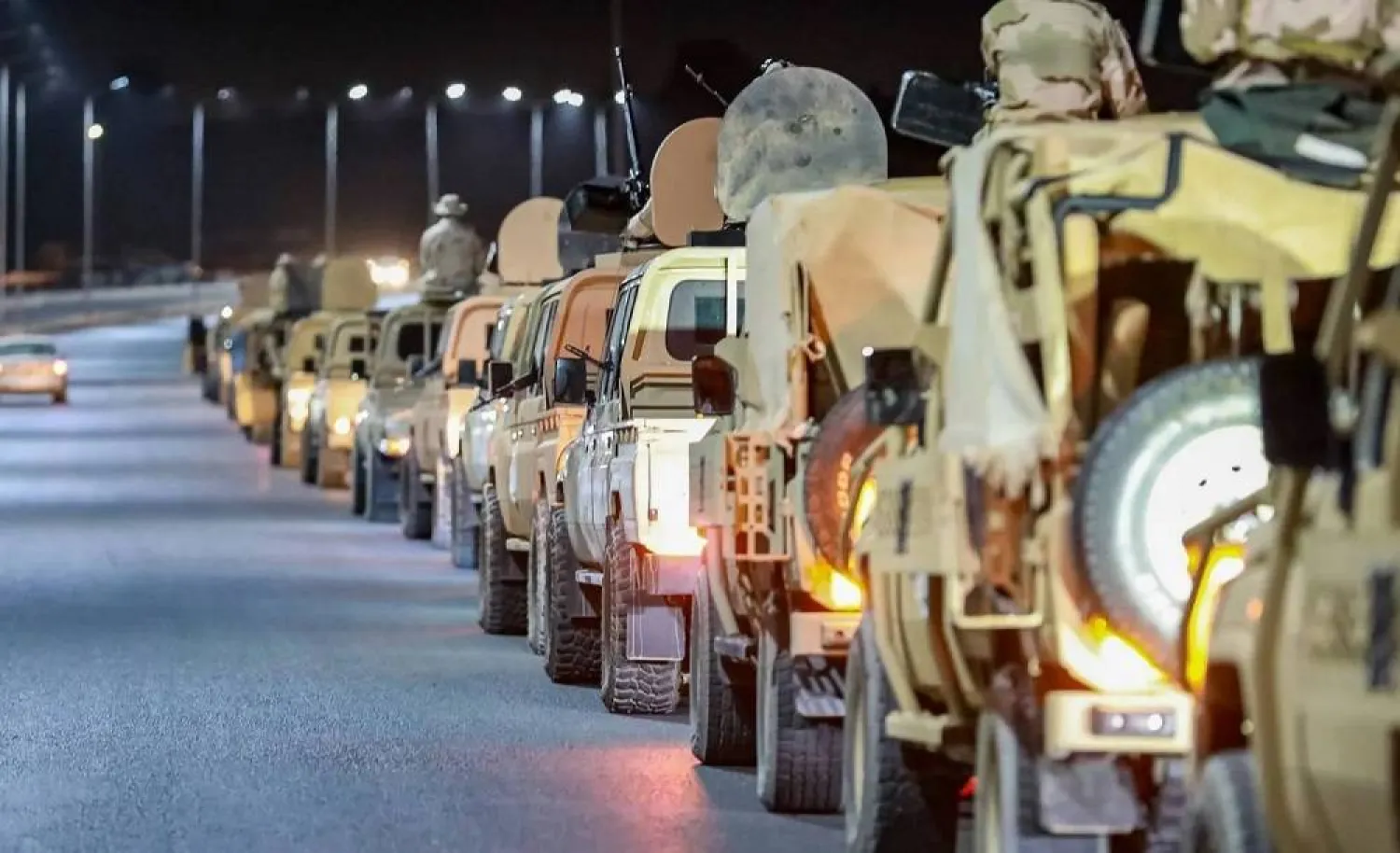
Libyan National Army (LNA) forces in the southern city of Sabha. (LNA)
TT

UN 'Gravely Alarmed' by Military Mobilization in Libya's Capital 

Libyan National Army (LNA) forces in the southern city of Sabha. (LNA)

The UN Support Mission in Libya said Tuesday that it was "gravely alarmed" over new military mobilizations by rival groups in the Libyan capital.

In recent days, armed vehicles have reportedly moved into Tripoli from Misrata, around 200 kilometers (125 miles) away, and on Monday night gunfire was heard in the capital, according to witnesses and videos circulated online.

UNSMIL said the recent "rapidly escalating tensions and military mobilization" in Tripoli "could lead to armed confrontation".

Sabiha Mohamad, a resident in western Tripoli, told AFP she had heard the gunshots but said "there was more fear than harm".

There were no official reports of casualties, and it remained unclear who fired the shots.

"We stay cautious when going out, because anything could break out at any moment," Mohamad said.

Libya is split between the Tripoli-based Government of National Unity (GNU), led by Prime Minister Abdulhamid Dbeibah, and a rival administration in the east led by Osama Hammad.

The North African country has remained divided since a NATO-backed revolt toppled and killed longtime leader Moammar Gaddafi in 2011.

UNSMIL urged "all actors to cease any preparations for violence", warning they could spiral into a "'lose-lose' war".

In May, Tripoli was rocked by days of deadly fighting between rival armed groups that left at least eight people dead, according to the UN.

The fighting came after Dbeibah announced a string of executive orders seeking to dismantle armed groups that he said had "become stronger than the state".

Tensions have been flaring between government-aligned groups and Radaa, a powerful rival faction that controls Mitiga airport and other parts of eastern Tripoli.

Last month, UNSMIL chief Hanna Tetteh proposed a roadmap for "general elections and the unification of institutions" in the divided country.

The plan looks to implement a "politically viable electoral framework" and "a new unified government", the UN said.


Arab League Chief Condemns Israeli Attacks on South Lebanon, Urges Action

Arab League Secretary-General Nabil Fahmy listens to a Lebanese Army officer pointing out areas occupied by Israeli forces in Zawtar al-Gharbiyeh, South Lebanon, alongside Social Affairs Minister Haneen Sayed (AP). 
TT

Arab League Chief Condemns Israeli Attacks on South Lebanon, Urges Action

Arab League Secretary-General Nabil Fahmy listens to a Lebanese Army officer pointing out areas occupied by Israeli forces in Zawtar al-Gharbiyeh, South Lebanon, alongside Social Affairs Minister Haneen Sayed (AP). 

Arab League Secretary-General Nabil Fahmy condemned Israeli attacks on South Lebanon as “unacceptable,” calling for concrete Arab action to support the country, strengthen its army and help displaced residents return home.

Fahmy made the remarks during a visit to the southern city of Tyre, where he met senior Lebanese Army officers at the Benoit Barakat barracks, accompanied by Social Affairs Minister Haneen Sayed.

Fahmy said he had chosen Lebanon as one of his first foreign destinations since taking office to see firsthand the challenges facing its people.

His visit to the south, he explained, was meant to reassure residents that the Arab world and the international community recognized their suffering and were prepared to provide tangible support.

He pointed to a September resolution by the Arab League’s ministerial council that addressed Lebanon’s crisis and its underlying causes, particularly repeated Israeli attacks on civilians and infrastructure.

After touring the town of Zawtar and the city of Nabatieh, Fahmy described the destruction he witnessed as “distressing.”

He accused Israel of systematically demolishing residential areas, seizing land and seeking to displace civilians, potentially paving the way for further occupation.

Despite the devastation, he expressed confidence that Lebanese residents would remain attached to their land.

The Arab League was working with the Lebanese government to explore reconstruction efforts and ways to restore stability, he added.

While rebuilding would require action across several sectors, Fahmy stressed that Arab solidarity could not be limited to statements of condemnation.

“This is the beginning of a sustained process, not the end of the road,” he said, reaffirming the League’s commitment to Lebanon.

Army seeks support, post-UNIFIL arrangements

Brig. Gen. Nicolas Tabet, commander of the Lebanese Army’s South Litani Sector, welcomed the visit as a sign of Arab solidarity at a time of mounting security and humanitarian challenges.

He said Israeli attacks had left widespread destruction and displaced thousands of Lebanese, while continued occupation and security threats prevented families from returning safely to their villages.

The situation was also hampering the army’s deployment to the internationally recognized border.

Tabet called for Arab and international pressure to halt Israeli attacks, secure a full withdrawal from Lebanese territory and uphold the country’s sovereignty.

Despite difficult conditions and limited resources, the army remained committed to its duties, he said, urging the Arab League to mobilize diplomatic support, strengthen the military and help rebuild the south.

He also called for lasting security arrangements after the mandate of the United Nations Interim Force in Lebanon (UNIFIL) ends.

Such arrangements, developed with the UN and international partners, would be essential to preventing a security vacuum and implementing Security Council Resolution 1701.

Describing Fahmy’s visit as a rare and welcome gesture, Tabet said it offered reassurance that Lebanon had not been left to face its challenges alone.


End of UNIFIL Mission Impacts Hundreds of Jobs in South Lebanon

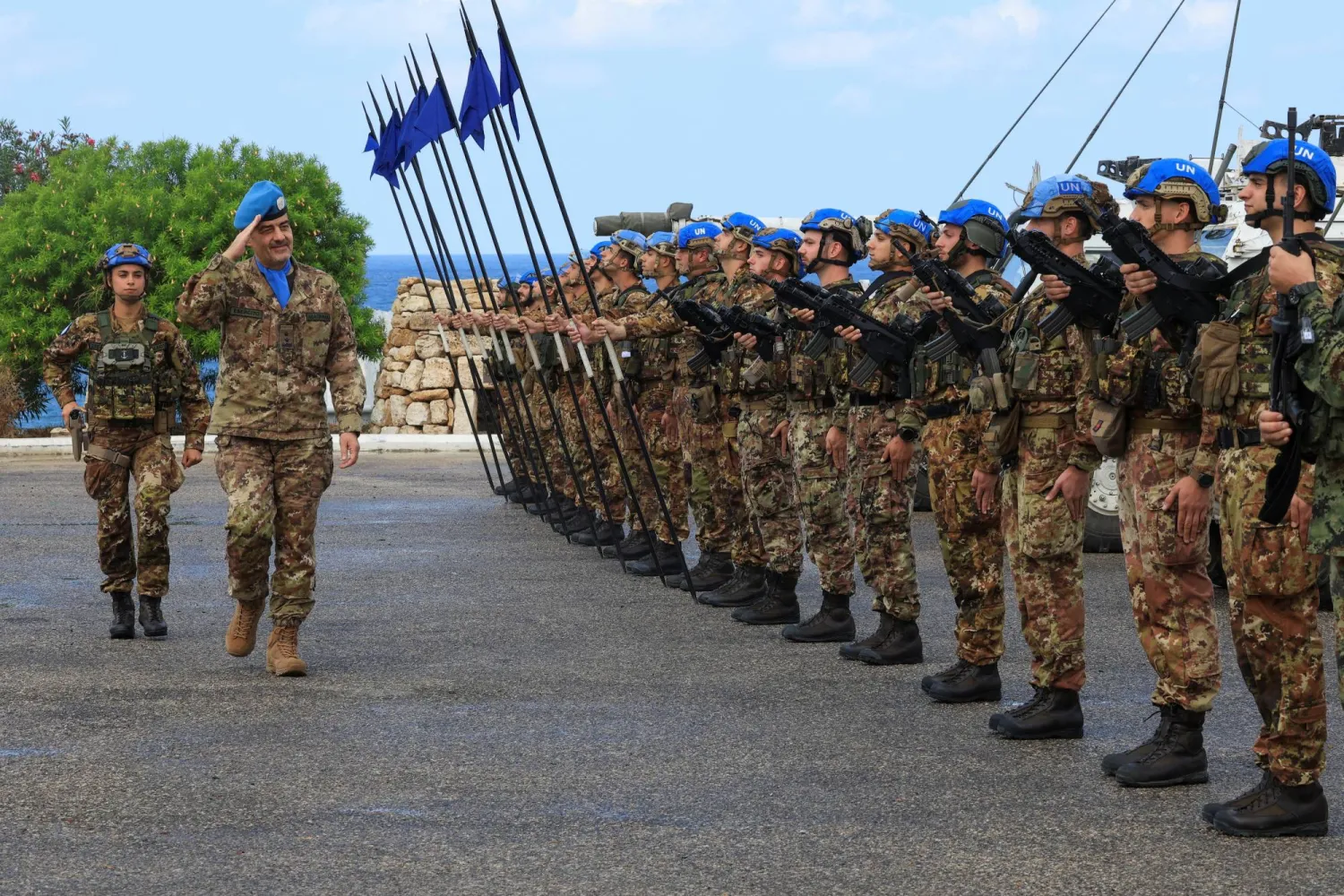
Head of Mission and Force Commander of the United Nations Interim Force in Lebanon (UNIFIL) Major General Diodato Abagnara of the Italian Army reviews the troops at the UNIFIL base, near Mansouri, Southern Lebanon, September 19, 2026. REUTERS/Mohamed Azakir
TT

End of UNIFIL Mission Impacts Hundreds of Jobs in South Lebanon

Head of Mission and Force Commander of the United Nations Interim Force in Lebanon (UNIFIL) Major General Diodato Abagnara of the Italian Army reviews the troops at the UNIFIL base, near Mansouri, Southern Lebanon, September 19, 2026. REUTERS/Mohamed Azakir

As UNIFIL’s mandate in Lebanon draws to a close, the implications of its withdrawal extend beyond military and security operations to the labor market in southern Lebanon, where the mission’s decades-long presence has sustained hundreds of jobs and supported local businesses that depend on its demand for goods and services.

As job cuts begin ahead of the withdrawal process, which is set to gather pace at the end of this year, concerns are mounting over the economic and social impact on employees and their families, as well as on small and medium-sized businesses that depend on spending generated by the international force’s presence.

400 Local Employees Work for UNIFIL

According to UNIFIL spokesperson Candice Ardell, the mission currently employs around 400 local staff, most of whom are based in southern Lebanon, while some positions are based in Beirut.

In comments to Asharq Al-Awsat, Ardell said local employees perform a wide range of duties, from the technical work required to support the mission to security, translation, media, political and civil affairs, among other functions.

Most of these positions are based in the south. Many employees live in the area, while others commute to work from elsewhere, she added.

Ardell denied that job cuts had begun as part of UNIFIL’s force reduction and withdrawal process, explaining that the process was expected to start after Dec. 31, 2026.

Families Depend on UNIFIL Salaries

In the border town of Rmeish, 85 families still have members employed directly by UNIFIL on a permanent basis, earning monthly salaries on which they and their families depend for their livelihoods.

Milad Alam, a former Rmeish mayor, told Asharq Al-Awsat in an earlier interview that around 250 other families also have members working for companies contracted by UNIFIL, adding that they, too, stand to lose their monthly sources of income.

Researcher Mohammad Shamseddine said the number of people employed by or contracted to UNIFIL had fallen significantly, noting that the current workforce was well below the roughly 1,200 employees it had previously numbered.

Annual Losses Estimated at $45 Million to $55 Million

Economist Jassem Ajaka warned that UNIFIL’s withdrawal from southern Lebanon would have economic and financial repercussions extending well beyond the south, affecting the Lebanese economy as a whole. The fallout would include reduced foreign currency inflows, job losses and weaker trade and investment, while placing additional pressure on the state treasury.

In comments to Asharq Al-Awsat, Ajaka said UNIFIL’s annual budget stood at about $553 million, estimating that the withdrawal would result in a direct loss of $45 million to $55 million a year in foreign currency inflows, as international forces cease spending locally on contracts with domestic suppliers, restaurants, shops and supply chains.

Ajaka estimated that UNIFIL’s withdrawal would eliminate $15 million to $22 million in annual wages for Lebanese staff, whose average net annual compensation ranges from $15,000 to $25,000.

He estimated that UNIFIL’s withdrawal would add $25 million to $40 million in annual costs for the Lebanese treasury, as the Lebanese army takes over expenses previously covered through cooperation with the international force, putting further pressure on public finances and potentially widening the primary budget deficit.

The economist concluded saying that the real estate sector would be among the hardest hit, particularly in Naqoura, Tyre, Marjayoun and Bint Jbeil. The termination of hundreds of rental contracts held by UNIFIL’s civilian and military personnel could result in annual losses of $10 million to $18 million. He also warned that commercial and residential property values in affected areas could fall by 25% to 45%.


Libya Approves Contentious Türkiye Deal Over Mediterranean Waters

The Libyan parliament meets on Tuesday. (Parliamentary spokesman Abdullah Bliheg)
TT

Libya Approves Contentious Türkiye Deal Over Mediterranean Waters

The Libyan parliament meets on Tuesday. (Parliamentary spokesman Abdullah Bliheg)

Libya’s east-based parliament unanimously approved a contested eastern Mediterranean maritime agreement with Türkiye on Tuesday as Turkish chief of intelligence Ibrahim Kalin visited the capital Tripoli.

The House of Representatives voted to adopt the memorandum of understanding signed in 2019 by Türkiye and Libya’s then-government in Tripoli, the Government of National Accord, which was rejected by Egypt, Greece and Cyprus.

Greece’s Foreign Ministry rejected the vote, saying in a statement that it “does not alter the illegal, invalid and groundless nature of the memorandum.”

The ministry said Türkiye and Libya do not have opposite or adjacent coasts that could provide a legal basis for delimiting maritime zones. It said the agreement disregards the rights of Greek islands, which lie between the Turkish and Libyan coasts.

“Geography and the international Law of the Sea cannot be changed by unilateral, legally unfounded parliamentary decisions,” the ministry said. It added that Greece had informed its partners and allies and “will take all appropriate measures to safeguard its sovereign rights.”

Cyprus also condemned the vote, calling the memorandum “illegal, null, and void.”

The Libyan-Türkiye agreement defines maritime jurisdiction areas between the two countries in the Mediterranean, where major natural gas discoveries in recent years have fueled competing claims to offshore waters.

Lawmakers also repealed two resolutions passed in 2020, parliamentary spokesman Abdullah Bliheg said. One rejected agreements with Türkiye, while the other cut political ties with Ankara. Parliament had opposed the accords at a time when Türkiye was backing the Tripoli government against Libyan National Army Khalifa Haftar’s forces.

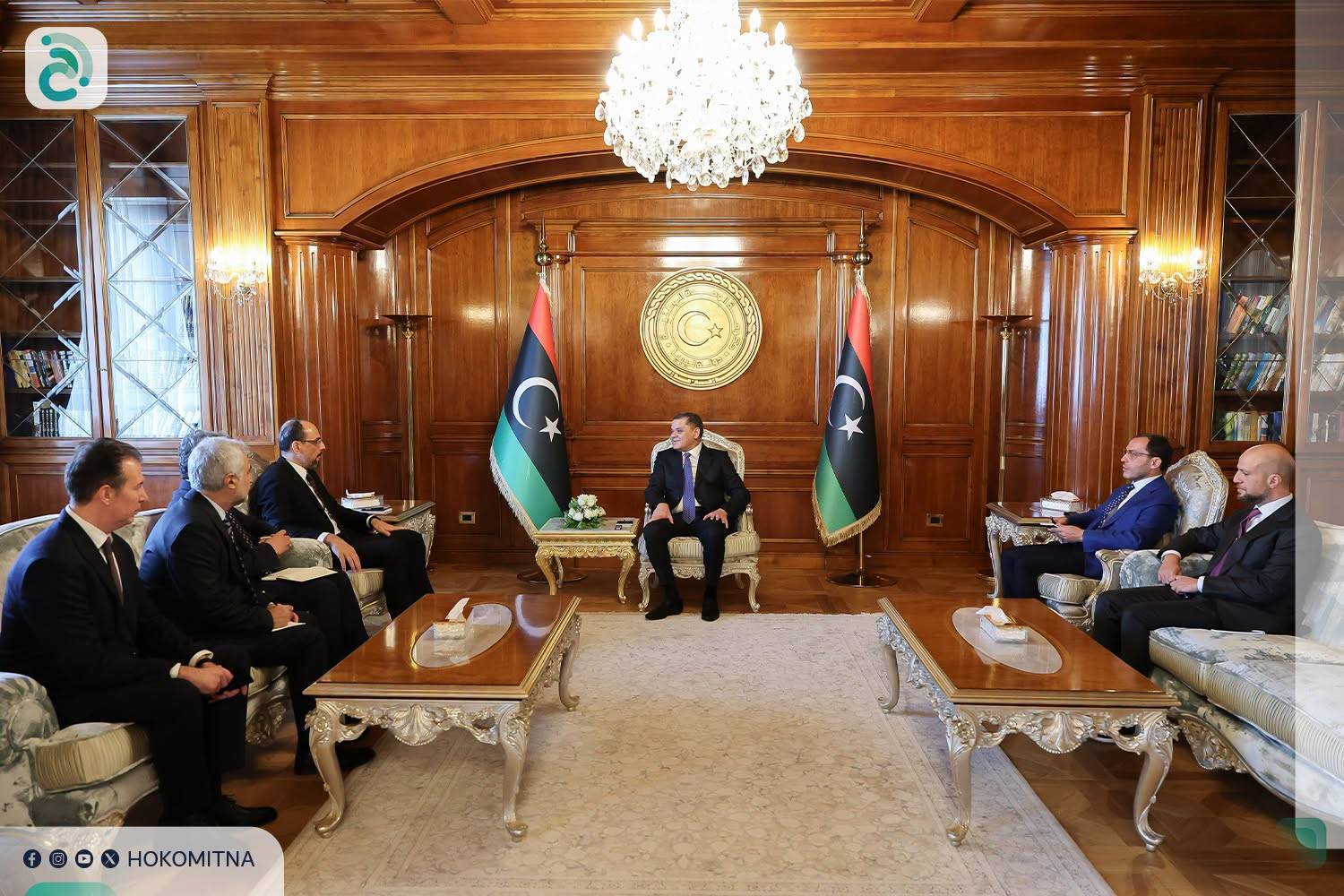
Head of the Government of National Unity Abdul Hamid al-Dbeibah meets with Turkish chief of intelligence Ibrahim Kalin in Tripoli. (HOKOMITNA platform)

Officials in both camps welcomed Tuesday’s vote. Saddam Haftar, Khalifa Haftar’s son, said in a statement that the decisions reflected “a move toward overcoming disputes of the past.”

He called the maritime agreement a tool to protect Libya’s economic interests in the Mediterranean and described Türkiye as “a significant regional power.”

The Foreign Ministry of the Tripoli-based Government of National Unity, led by Abdul Hamid al-Dbeibah, called the vote “a positive development” for relations with Türkiye.

It said cooperation would proceed “in accordance with the relevant rules and principles of international law.”

Dbeibah also met Tuesday in Tripoli with Kalin. A government statement said they discussed security, regional developments, and migration.

The European Union has said the agreement violates the rights of third countries. Türkiye is not a party to the UN Convention on the Law of the Sea.

Egypt also rejected the accord. In August 2020, Cairo and Athens signed their own maritime agreement in response. Greek officials have said it effectively nullifies the Turkish-Libyan deal.

Egyptian Foreign Minister Badr Abdelatty said he discussed the situation in Libya and the eastern Mediterranean in a phone call with his Greek counterpart on Tuesday, without directly mentioning the vote.