


Despite Threats, Israel Negotiates with France and Britain to Prevent Full Diplomatic Recognition of Palestine

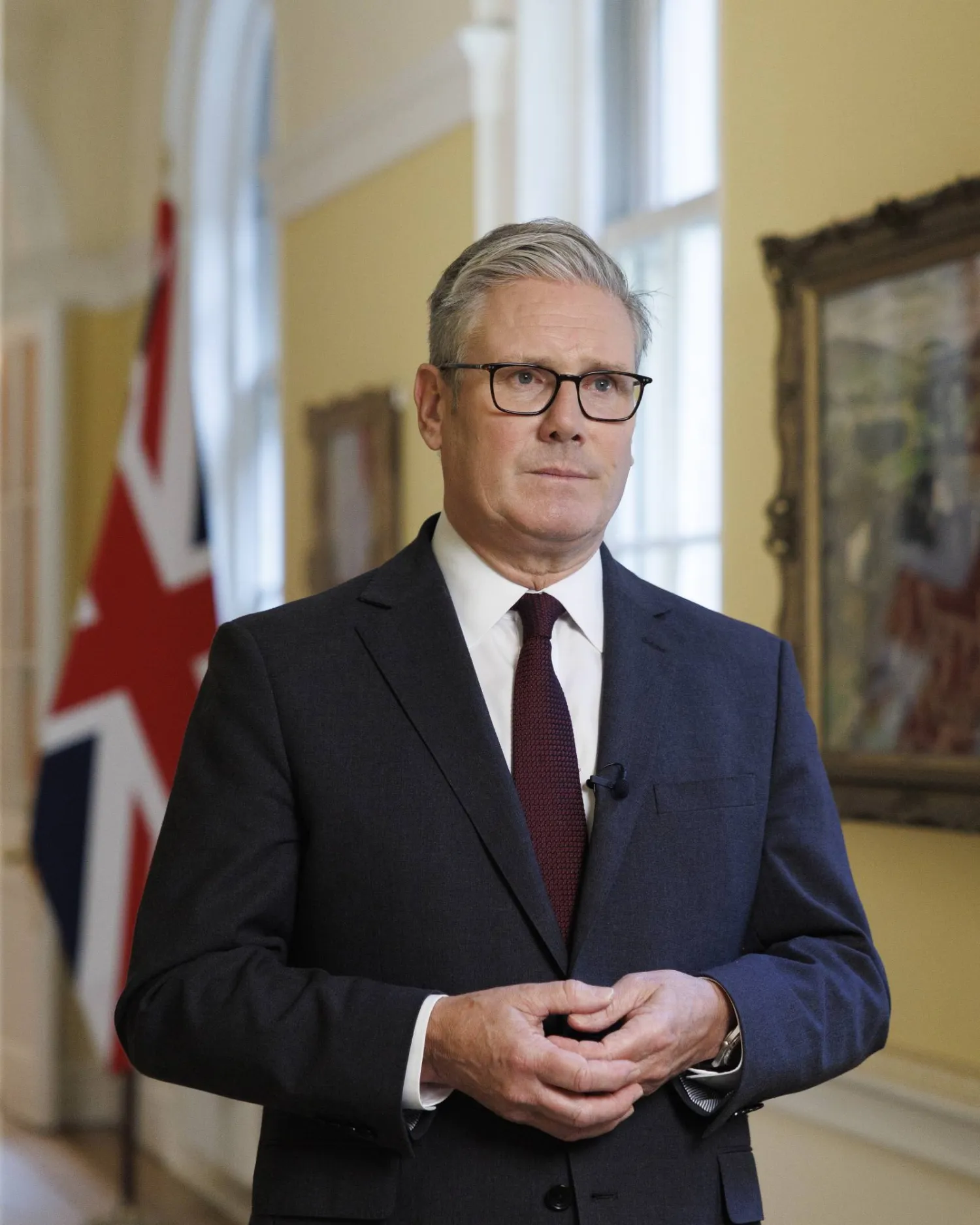
UK Prime Minister Keir Starmer announcing his government’s recognition of Palestine on Sunday in London (UK Prime Minister’s Office)
TT

Despite Threats, Israel Negotiates with France and Britain to Prevent Full Diplomatic Recognition of Palestine

UK Prime Minister Keir Starmer announcing his government’s recognition of Palestine on Sunday in London (UK Prime Minister’s Office)

Even as Israeli Prime Minister Benjamin Netanyahu threatened “punitive measures” in response to a wave of international recognitions of a Palestinian state, political sources in Tel Aviv revealed that he was quietly negotiating with France, Britain, and others to prevent such recognition from advancing to the level of full diplomatic relations and ambassadorial exchanges.

According to reports aired by Israel’s Channel 12 on Monday, Netanyahu’s close associates issued warnings of retaliation, such as expelling diplomats or barring their access to Ramallah. However, sources described these statements as “domestic rhetoric” meant to appease his far-right allies, saying that the Israeli premier knew the limits of what he could do when dealing with major world powers.

On Sunday, Netanyahu announced that his government’s formal response to the sweeping recognition of Palestine would be issued only after his return from New York, where he was scheduled to meet US President Donald Trump on the sidelines of the United Nations General Assembly.

Israeli analysts interpreted the delay as a signal that he sought measures “directly approved by Washington, and by Trump personally.”

During a closed meeting with his war cabinet on Monday, Netanyahu stressed that “coordination with Washington is an absolute priority in order to counter the international political tsunami.”

According to political sources close to the prime minister, Trump was well aware of Netanyahu’s agenda for the meeting and had begun preparing a position that would keep the Israeli leader’s steps “balanced.”

Netanyahu, they noted, was caught between demands from his far-right coalition - including not only Bezalel Smotrich and Itamar Ben-Gvir but also members of Likud - to annex the entire West Bank, and Arab warnings that any annexation, however small or symbolic, would trigger sharp retaliation and undermine the Abraham Accords.

Channel 12 reported that following the United Arab Emirates’ strong opposition to annexation, Israel received further messages from Arab capitals warning that “annexation steps would have serious repercussions at all levels.”

Western countries also cautioned Israel that they would respond harshly if it took action against states recognizing Palestine.

Leaks from political sources suggested that Netanyahu was considering measures designed to placate his far-right coalition, such as shifting West Bank “Area B” to the same status as “Area C,” which is already under full Israeli military and civil control, effectively stripping the Palestinian Authority of its administrative powers there.

The sources also claimed that Israel was weighing “a series of sanctions” against countries recognizing a Palestinian state. These could include revoking diplomats’ permits to enter Ramallah and possibly closing their consulates.

According to the report, France’s consulate was a primary target, as Paris had spearheaded, in coordination with Saudi Arabia, efforts to rally collective European recognition of Palestine. Israel reportedly signaled to European governments that it would obstruct any attempt to establish embassies in Ramallah.

Israel was also said to be leveraging the ongoing Gaza war in its talks, while threatening to deploy “two additional divisions in the West Bank, raising the total to 22 divisions, to reinforce security control and prevent operations against Israel.”

Meanwhile, Netanyahu dispatched Defense Minister Israel Katz to the Kiryat Arba settlement to reassure settler leaders. Katz told them that the prime minister supported annexation but wanted to proceed “through a wise diplomatic strategy” that would secure international legitimacy.

According to Hebrew media reports, settler leaders responded that while they “highly valued the government’s intentions,” they fundamentally disagreed with its assessment. “This is the time to annex the entire West Bank to Israel in response to the decisions recognizing the Palestinian state,” they argued.

They further warned that it would be “a mistake to corner Trump or over-consult him on the matter. Israel should take the decision to annex, and it will find that Trump will not stand in its way.”



Iraq Announces Complete Withdrawal of US-Led Coalition from Federal Territory

 US forces at the Taji camp, north of Baghdad. (AFP file)
US forces at the Taji camp, north of Baghdad. (AFP file)
TT

Iraq Announces Complete Withdrawal of US-Led Coalition from Federal Territory

 US forces at the Taji camp, north of Baghdad. (AFP file)
US forces at the Taji camp, north of Baghdad. (AFP file)

Iraq said on Sunday US-led coalition forces had finished withdrawing from bases within the country's federal territory, which excludes the autonomous northern Kurdistan region.

"We announce today... the completion of the evacuation of all military bases and leadership headquarters in the official federal areas of Iraq of advisers" of the US-led coalition, the military committee tasked with overseeing the end of the coalition's mission said.

With the withdrawal, "these sites come under the full control of Iraqi security forces", it said in the statement, adding that they would transition to "the stage of bilateral security relations with the United States".

The vast majority of coalition forces had withdrawn from Iraqi bases under a 2024 deal between Baghdad and Washington outlining the end of the mission in Iraq by the end of 2025 and by September 2026 in the Kurdistan region.

US and allied troops had been deployed to Iraq and Syria since 2014 to fight the ISIS group, which had seized large swathes of both countries.

The group was territorially defeated in Iraq in 2017 and in Syria in 2019, but continues to operate sleeper cells.

The vast majority of coalition troops withdrew from Iraq over previous stages, with only advisers remaining in the country.

The military committee on Sunday said Iraqi forces were now "fully capable of preventing the reappearance of ISIS in Iraq and its infiltration across borders".

"Coordination with the international coalition will continue with regards to completely eliminating ISIS's presence in Syria," it added.

It pointed to "the coalition's role in Iraq offering cross-border logistical support for operations in Syria, through their presence at an airbase in Erbil", the capital of Iraq's Kurdistan region.

In December, two US soldiers and a civilian interpreter were killed in Syria in an attack blamed on ISIS, sparking fears of a resurgence in the country.

The statement added that anti-ISIS operations would be coordinated with the coalition through the Ain al-Assad base in Anbar province in western Iraq.

ISIS attacks in Iraq have massively declined in recent years, but the group maintains a presence in the country's mountainous areas.

A UN Security Council report in August said: "In Iraq, the group has focused on rebuilding networks along the Syrian border and restoring capacity in the Badia region."


Jordan Says King Abdullah Received Invitation to Join Gaza Peace Board

Palestinian girls walk past the rubble of residential buildings destroyed during the war, in Gaza City, January 16, 2026. REUTERS/Dawoud Abu Alkas
TT

Jordan Says King Abdullah Received Invitation to Join Gaza Peace Board

Palestinian girls walk past the rubble of residential buildings destroyed during the war, in Gaza City, January 16, 2026. REUTERS/Dawoud Abu Alkas

Jordan's foreign ministry said on Sunday that King Abdullah received an invitation from ‌US President ‌Donald ‌Trump ⁠to join ‌the so-called "Board of Peace" for Gaza.

The foreign ministry said it was ⁠currently reviewing ‌related documents ‍within ‍the country's ‍internal legal procedures.

The board is set to supervise the temporary governance of Gaza, ⁠which has been under a shaky ceasefire since October.

On Friday, the White House announced some members of a so-called "Board of Peace" that is to supervise the temporary governance of Gaza, which has been under a fragile ceasefire since October.

The names include US Secretary of State Marco Rubio, President Donald Trump's special envoy Steve Witkoff, former British Prime Minister Tony Blair and Trump's son-in-law, Jared Kushner. Trump is the chair of the board, according to a plan his White House unveiled in October.

The White House did not detail the responsibilities of each member of the "founding Executive board." The names do not include any Palestinians. The White House said ⁠more members will be announced over the coming weeks.

The board will also include private equity executive and billionaire ‌Marc Rowan, World Bank President Ajay Banga and Robert Gabriel, ‍a Trump adviser, the White House ‍said, adding that Nickolay Mladenov, a former UN Middle East envoy, will be the ‍high representative for Gaza.

Army Major General Jasper Jeffers, a US special operations commander, was appointed commander of the International Stabilization Force, the White House said. A UN Security Council resolution, adopted in mid-November, authorized the board and countries working with it to establish that force in Gaza.

The White House also named an 11-member "Gaza Executive Board" that will include Turkish Foreign Minister Hakan Fidan, the UN special coordinator for the Middle East ⁠peace process, Sigrid Kaag, the United Arab Emirates minister for international cooperation, Reem Al-Hashimy, and Israeli-Cypriot billionaire Yakir Gabay, along with some members of the executive board.

This additional board will support Mladenov's office and the Palestinian technocratic body, whose details were announced this week, the White House said.


Türkiye’s Kurdish Leader Calls Syria Clashes 'Sabotage'

American soldiers from the U.S.-led coalition against the ISIS organization stand on alert during a meeting with the Syrian Democratic Forces in Deir Hafir, Syria, the day before yesterday (AP).
TT

Türkiye’s Kurdish Leader Calls Syria Clashes 'Sabotage'

American soldiers from the U.S.-led coalition against the ISIS organization stand on alert during a meeting with the Syrian Democratic Forces in Deir Hafir, Syria, the day before yesterday (AP).

Recent deadly clashes in Syria between government forces and Kurdish fighters seek to "sabotage" the peace process between Türkiye and the Kurdistan Workers' Party (PKK), the jailed leader of the Kurdish militant group said.

Abdullah Ocalan, who has led the unfolding Turkish peace process from prison, "sees this situation (in Syria) as an attempt to sabotage the peace process" in Türkiye, a delegation from the pro-Kurdish DEM party said after visiting him in jail on Saturday.

The PKK leader last year called for the group to lay down its weapons and disband, after more than four decades of conflict that claimed at least 50,000 lives.

The delegation that visited him at Imrali prison island near Istanbul, where he has been held in solitary confinement since 1999, said he had "reaffirmed his commitment to the process of peace and democratic society" and called to "take the necessary steps to move forward".

The PKK made a similar warning earlier this month, saying the Syria clashes "call into question the ceasefire between our movement and Türkiye ".

The clashes in Syria erupted after negotiations stalled on integrating the Kurds' de facto autonomous administration and forces into the country's new government, which took over after the fall of longtime ruler Bashar al-Assad in 2024.

The Syrian army has seized swathes of the country's north, dislodging Kurdish forces from territory where they had held effective autonomy for more than a decade.

Türkiye, which views Kurdish fighters in Syria as a terror group affiliated with the PKK, has praised Syria's operation as fighting "terrorist organizations".