


Lebanon Reopens Probes in Decades-old Political Assassinations, Hopes for Syria’s Cooperation

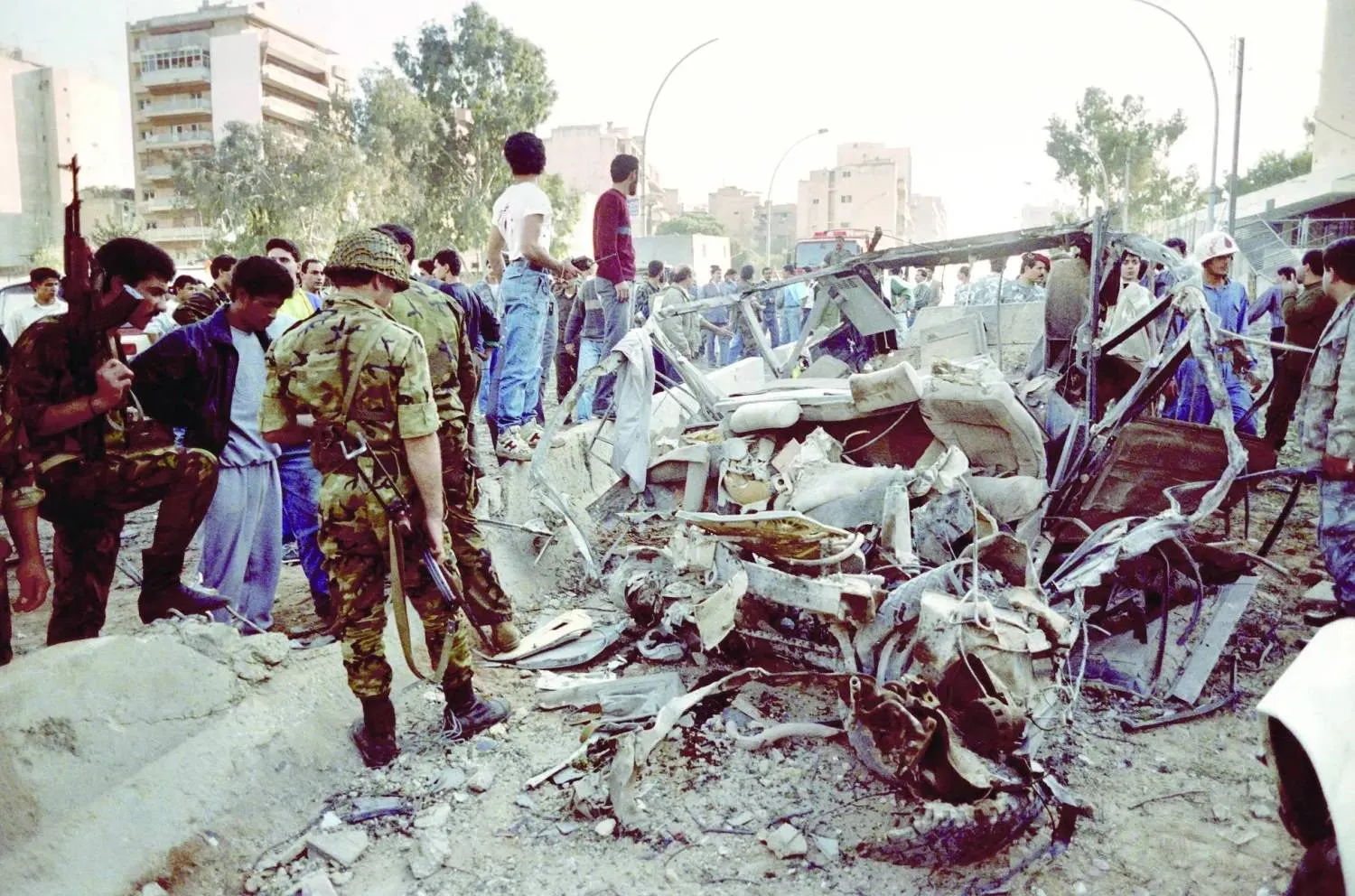
The scene of the bombing that claimed the life of President Rene Moawad in Beirut in 1989. (Getty Images)
TT

Lebanon Reopens Probes in Decades-old Political Assassinations, Hopes for Syria’s Cooperation

The scene of the bombing that claimed the life of President Rene Moawad in Beirut in 1989. (Getty Images)

Lebanon’s Justice Minister Adel Nasser has appointed a number of judicial investigators to probe political assassinations that have taken place in the country over the decades.

Justice in the cases had not taken its course due to political and security obstacles, as well as the former Syrian regime’s hegemony over Lebanon.

With the ouster of the regime in December and the ensuing changes that have taken place in Lebanon, the judiciary has been “liberated” from political meddling that had impeded efforts to uncover the perpetrators, who had taken the decision to carry out these crimes, who planned them, carried them out and concealed evidence.

Ultimately, there are hopes that uncovering the truth in these crimes would end the state of impunity that has prevailed in Lebanon for decades.

Nassar ordered the appointment of judicial investigators in the assassinations of Sheikh Ahmed Assaf in 1982, former minister Elie Hobeika in 2002, MP Antoine Ghanem in 2007, journalist Samir Kassir in 2005, MP and journalist Gebran Tueni in 2005 and the murder of Sheikh Saleh al-Aridi in Baysour in 2008.

He also appointed judicial investigators in the attempted assassination of former President Camille Chamoun, the attempted assassination of former MP Mustafa Maarouf Saad, the attack on the town of Ehden in 1978 that led to the murder MP Tony Franjieh and his family and the clashes in the area of Bourday in Baalbek.

A judicial source told Asharq Al-Awsat that the appointment of the investigators took place after consultations between Nassar and the Higher Judicial Council.

More investigators will be appointed in other assassination cases, including that of Grand Mufti Sheikh Hassan Khaled in 1989, President Rene Moawad in 1989, MP Walid Eido in 2007 and Mohammed Chatah in 2013.

The source stressed the importance of the investigations resulting in judicial decisions no matter how long the investigations take because justice needs to prevail.

A source following up on the issue revealed that the appointments also took place after Nassar met with a Syrian judicial committee that had recently visited Beirut. The minister had requested that Syria provide Lebanese authorities with information about the political assassinations.

The source told Asharq Al-Awsat that the Syrian officials were receptive of the request, pledging to provide any information, evidence and documents they may find in the presidential palaces and security headquarters that were used by the ousted regime.

The Lebanese officials at the talks had provided the Syrian committee with documented information about the involvement of Syrians in the assassinations and bombings that had taken place in Lebanon, notably the bombings of the al-Salam and Taqwa mosques in the northern city of Tripoli in 2013.

The bombings were planned by Syrian intelligence officers in cooperation with members of the Arab Democratic Party, led by Rifaar Eid, who had fled to Syria after the attack.

The officials also brought up the case of the failed bombings in Lebanon that were planned by Ali Mamlouk, former head of Syria's National Security Bureau and close associate of ousted President Bashar al-Assad. He had plotted the attack with Lebanese former minister Michel Samaha, who had smuggled 25 explosives from Damascus to Lebanon in 2012. They planned to detonate them during iftar dinners and to target MPs and religious figures in Tripoli and the northern Akkar region.

Moreover, the Lebanese officials had requested from Syria help in the arrest of Lebanese Habib al-Shartouni who assassinated President Bachir Gemayel in 1982 and who is in Syria.



Israeli Soldiers Kill Palestinian Teen in West Bank

Israeli Soldiers Kill Palestinian Teen in West Bank
TT

Israeli Soldiers Kill Palestinian Teen in West Bank

Israeli Soldiers Kill Palestinian Teen in West Bank

Israeli soldiers shot dead a Palestinian hurling a rock at them in the occupied West Bank, the military said on Friday, and the Palestinian health ministry said the person killed was a 14-year-old boy.

There was no further comment from Palestinian officials about the fatal incident in the village of ⁠Al-Mughayyir. Official Palestinian news agency WAFA said the teen was killed during an Israeli military raid that led to confrontations, Reuters reported.

The Israeli military said its forces were called to the area after ⁠receiving reports that Palestinians were throwing stones at Israelis and blocking a road with burning tires.

The soldiers fired warning shots in an attempt to repel a person who was running at them with a rock, the military said, and then shot and killed him to eliminate the ⁠danger.

Violence has surged over the past year in the West Bank. Attacks by Israeli settlers on Palestinians have risen sharply, while the military has tightened movement restrictions and carried out sweeping raids in several cities.

Palestinians have also carried out attacks on Israeli soldiers and civilians, some of them deadly.


Israeli Strikes in South Lebanon Kill Two

Smoke rises from the site of an Israeli airstrike that targeted the village of Sohmor, in southern Lebanon on January 15, 2026. (Photo by Rabih DAHER / AFP)
TT

Israeli Strikes in South Lebanon Kill Two

Smoke rises from the site of an Israeli airstrike that targeted the village of Sohmor, in southern Lebanon on January 15, 2026. (Photo by Rabih DAHER / AFP)

An Israeli strike on south Lebanon killed one person on Friday, the health ministry in Beirut said a day after raids that Israel said had targeted Hezbollah.

Israel has kept up regular strikes in Lebanon despite a November 2024 ceasefire that sought to end more than a year of hostilities with Hezbollah, usually saying it is targeting members of the group or its infrastructure.

In a statement, the health ministry said an "Israeli enemy strike" on a vehicle in Mansuri in south Lebanon killed one person.

According to AFP, it also said that a strike on Mayfadun in south Lebanon the previous night killed one person.

Israel said Thursday's attack killed a Hezbollah member it alleged "took part in attempts to reestablish Hezbollah's infrastructure in the Zawtar al-Sharqiyah area.”

The attacks come a week after Lebanon's military said it had completed disarming Hezbollah south of the Litani River, the first phase of a nationwide plan, although Israel has called those efforts insufficient.

On Thursday, Israel carried out several strikes against eastern Lebanon's Bekaa region, north of the Litani, after issuing warnings to evacuate.

United Nations peacekeepers, deployed in the south to separate Lebanon from Israel, said on Friday that an Israeli drone "dropped a grenade" on its troops.

On Monday, the peacekeeping force said an Israeli tank fired near its troops, and warned that such incidents were becoming "disturbingly common".


Syria's Leader Sharaa in Berlin on Tuesday, Says German Presidency

Syria's President Ahmed al-Sharaa.
TT

Syria's Leader Sharaa in Berlin on Tuesday, Says German Presidency

Syria's President Ahmed al-Sharaa.

Syria's President Ahmed al-Sharaa will be visiting Berlin next Tuesday and meet his German counterpart Frank-Walter Steinmeier, the German presidency said.

The office of Chancellor Friedrich Merz has yet to announce whether they would also hold talks during the visit, which comes at a time when the German government is seeking to step up repatriations of Syrians to their homeland.