


Berri Reveals to Asharq Al-Awsat Details of How Suggestion to Negotiate with Israel Was Dropped

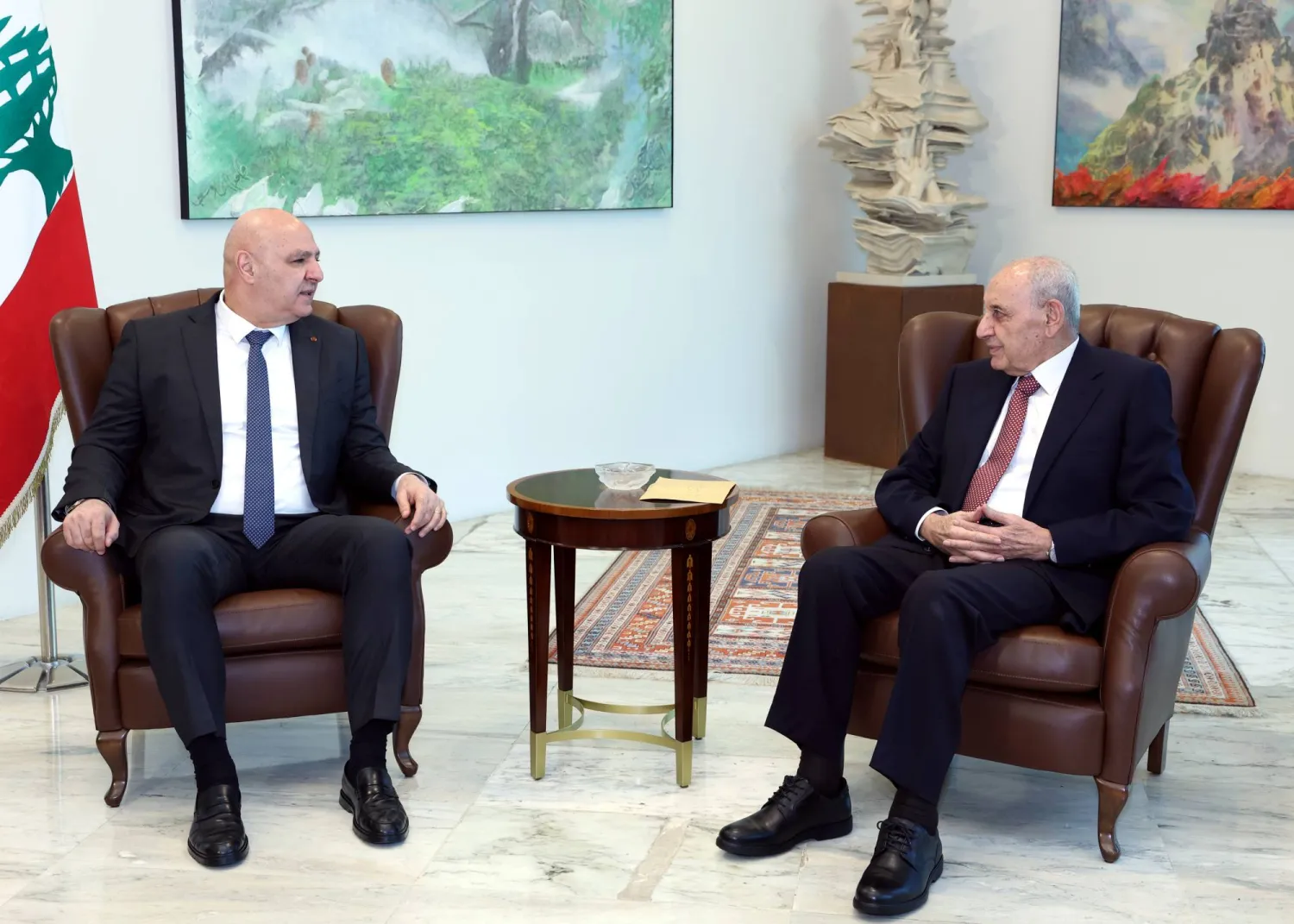
President Joseph Aoun and parliament Speaker Nabih Berri meet at the Baabda palace on Monday. (Lebanese presidency)
TT

Berri Reveals to Asharq Al-Awsat Details of How Suggestion to Negotiate with Israel Was Dropped

President Joseph Aoun and parliament Speaker Nabih Berri meet at the Baabda palace on Monday. (Lebanese presidency)

Lebanese parliament Speaker Nabih Berri said on Monday that the proposal to hold negotiations between Lebanon and Israel was dropped because Tel Aviv was not receptive to Washington’s suggestion over the matter.

Berri told Asharq Al-Awsat that the current path is the one through the mechanism that includes representatives of the countries sponsoring the November 2024 ceasefire that ended the war between Israel and Hezbollah.

The speaker met on Monday with President Joseph Aoun at the Baabda palace for talks on the security situation in the South and negotiations with Israel.

In a brief statement after the meeting, Berri said: “Talks with the president are always excellent.”

The presidency said they tackled the general situation in the country, especially the South amid the ongoing Israeli violations. They also covered the developments in the region in wake of the Sharm El-Sheikh summit and ceasefire in Gaza.

Berri met with Aoun three days after the president held talks with Prime Minister Nawaf Salam and hours after US envoy Tom Barrack issued a stark warning that “Israel may act unilaterally” if the Lebanese government continues to hesitate in its decision to impose state monopoly over arms.

Backing down from negotiations with Israel

Berri revealed that Barrack had informed Lebanon of Israel’s rejection of an American proposal that calls for launching negotiation and for Israel to simultaneously stop its military operations for two months. The period would end with Israel’s withdrawal from occupied Lebanese territories and the launch of the border demarcation process and military arrangements.

“There has been a backing down from the path of negotiations with Israel, so what remains is the mechanism through the committee that is overseeing the ceasefire,” Berri explained.

Barrack had relayed the proposal to Lebanese officials last week. It also calls on the president, PM and speaker to hold talks with him over the Israeli withdrawal during a two-month period and a halt to the violations. Lebanon was receptive of the initiative.

However, Barrack informed Lebanon officially of Israel’s rejection of the proposal, said Berri, so the only remaining diplomatic path is the committee overseeing the ceasefire.

The committee will notably now meet once every two weeks, when it previously used to meet sporadically, he revealed.

The speaker reiterated Lebanon’s commitment to the ceasefire, refusing to say whether he was optimistic or pessimistic, adding that it was a mixture of both.

Barrack warns Lebanon of grave consequences

Earlier on Monday, Barrack posted an opinion piece on his account on the X platform, titled: “A Personal Perspective – Syria and Lebanon Are the Next Pieces for Levant Peace.”

“October 13, 2025, will be remembered as a defining moment in modern Middle Eastern diplomacy,” he wrote, referring to the Sharm El-Sheikh summit.

“Should Beirut continue to hesitate (over disarming Hezbollah), Israel may act unilaterally – and the consequences would be grave.”

He warned that Hezbollah may seek to postpone the 2026 parliamentary elections, under the pretext of war with Israel. “This would ignite major chaos within Lebanon, fracturing an already fragile political system and reigniting sectarian distrust,” cautioned Barrack.

“The perception that one militia can suspend democracy could potentially erode public confidence in the state, invite regional interference, and risk pushing Lebanon from crisis into outright institutional breakdown.”

“Meanwhile, the Lebanese government’s principle of ‘One Country, One Military’ remains more aspiration than reality, constrained by Hezbollah's political dominance and the fear of civil unrest,” added Barrack.

“Early this year, the United States offered the ‘One More Try’ plan, a framework for phased disarmament, verified compliance, and economic incentives under US and France supervision. Lebanon declined to adopt it due to Hezbollah representation and influence in the Lebanese cabinet.”

“Syria’s courageous moves toward a border agreement and hopefully future cooperation mark the first steps toward securing Israel’s northern frontier. Hezbollah’s disarmament must be the second. Lebanon now faces a defining choice: to seize the path of national renewal or remain mired in paralysis and decline.”

“If Beirut fails to act, Hezbollah’s military arm will inevitably face major confrontation with Israel at a moment of Israel’s strength and Iran-backed Hezbollah’s weakest point. Correspondingly, its political wing will undoubtedly be confronted with potential isolation as it approaches the May 2026 elections,” the envoy said.

Türkiye Begins Black Box Analysis of Jet Crash That Killed Libyan Military Chief and 7 Others

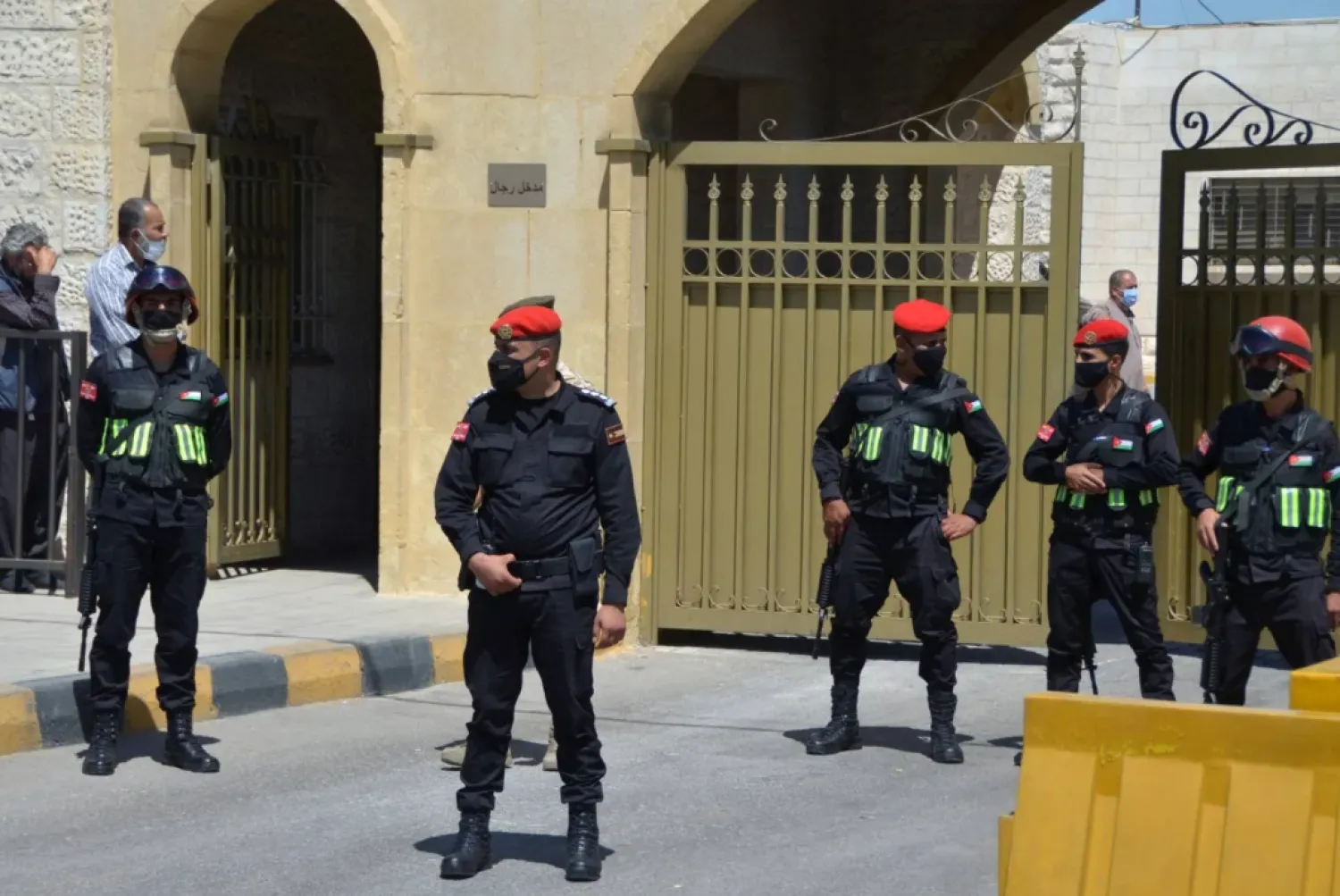
Libyan national flags fly at half-mast in Tripoli on December 24, 2025, after the head of Libya's armed forces and his four aides died in a plane crash in Türkiye. (AFP)
TT

Türkiye Begins Black Box Analysis of Jet Crash That Killed Libyan Military Chief and 7 Others

Libyan national flags fly at half-mast in Tripoli on December 24, 2025, after the head of Libya's armed forces and his four aides died in a plane crash in Türkiye. (AFP)

The technical analysis of the recovered black boxes from a jet crash that killed eight people, including western Libya’s military chief, began as the investigation proceeded in cooperation with Libyan authorities, the Turkish Ministry of Defense said Thursday.

The private jet with Gen. Muhammad Ali Ahmad al-Haddad, four other military officials and three crew members crashed on Tuesday after taking off from Türkiye’s capital, Ankara, killing everyone on board. Libyan officials said the cause of the crash was a technical malfunction on the plane.

The high-level Libyan delegation was on its way back to Tripoli after holding defense talks in Ankara aimed at boosting military cooperation between the two countries.

The wreckage was scattered across an area covering 3 square kilometers (more than a square mile), complicating recovery efforts, according to the Turkish Interior Minister Ali Yerlikaya.

A 22-person delegation, including five family members, arrived from Libya early on Wednesday to assist in the investigation.


Lebanese President: We are Determined to Hold Parliamentary Elections on Time

President Joseph Aoun between Prime Minister Nawaf Salam and Speaker Nabih Berri (Lebanese Presidency file photo)
TT

Lebanese President: We are Determined to Hold Parliamentary Elections on Time

President Joseph Aoun between Prime Minister Nawaf Salam and Speaker Nabih Berri (Lebanese Presidency file photo)

Lebanese President Joseph Aoun reiterated on Thursday that the country’s parliamentary elections are a constitutional obligation that must be carried out on time.

Lebanon’s state-run National News Agency quoted Aoun as saying that he, alongside Prime Minister Nawaf Salam and Parliament Speaker Nabih Berri, is determined to hold the elections on schedule.

Aoun also emphasized that diplomatic efforts have continued unabated to keep the specter of war at bay, noting that "things are heading in a positive direction".

The agency also cited Berri reaffirming that the elections will take place as planned, with "no delays, no extensions".

The Lebanese parliamentary elections are scheduled for May next year.


Israel Calls Countries Condemning New West Bank Settlements ‘Morally Wrong’

Newly constructed buildings are pictured in the Israeli settlement of Givat Zeev near the Palestinian city of Ramallah in the occupied West Bank on October 24, 2025. (AFP)
TT

Israel Calls Countries Condemning New West Bank Settlements ‘Morally Wrong’

Newly constructed buildings are pictured in the Israeli settlement of Givat Zeev near the Palestinian city of Ramallah in the occupied West Bank on October 24, 2025. (AFP)

Israel reacted furiously on Thursday to a condemnation by 14 countries including France and Britain of its approval of new settlements in the occupied West Bank, calling the criticism discriminatory against Jews.

"Foreign governments will not restrict the right of Jews to live in the Land of Israel, and any such call is morally wrong and discriminatory against Jews," Foreign Minister Gideon Saar said.

"The cabinet decision to establish 11 new settlements and to formalize eight additional settlements is intended, among other things, to help address the security threats Israel is facing."

On Sunday, Israel's far-right Finance Minister Bezalel Smotrich announced that authorities had greenlit the settlements, saying the move was aimed at preventing the establishment of a Palestinian state.

Fourteen countries, including Britain, France, Germany, Spain and Canada, then issued a statement urging Israel to reverse its decision, "as well as the expansion of settlements".

Such unilateral actions, they said, "violate international law", and risk undermining a fragile ceasefire in Gaza in force since October 10.

They also reaffirmed their "unwavering commitment to a comprehensive, just and lasting peace based on the two-state solution... where two democratic states, Israel and Palestine, live side-by-side in peace and security".

Israel has occupied the West Bank following the 1967 Arab-Israeli war.

Excluding east Jerusalem, which was occupied and annexed by Israel in 1967, more than 500,000 Israelis live in the West Bank, along with about three million Palestinian residents.

Earlier this month, the United Nations said the expansion of Israeli settlements in the West Bank, all of which are illegal under international law, had reached its highest level since at least 2017.
