Fadel Shaker Appears in Court in Lebanon After 12 Years on the Run 

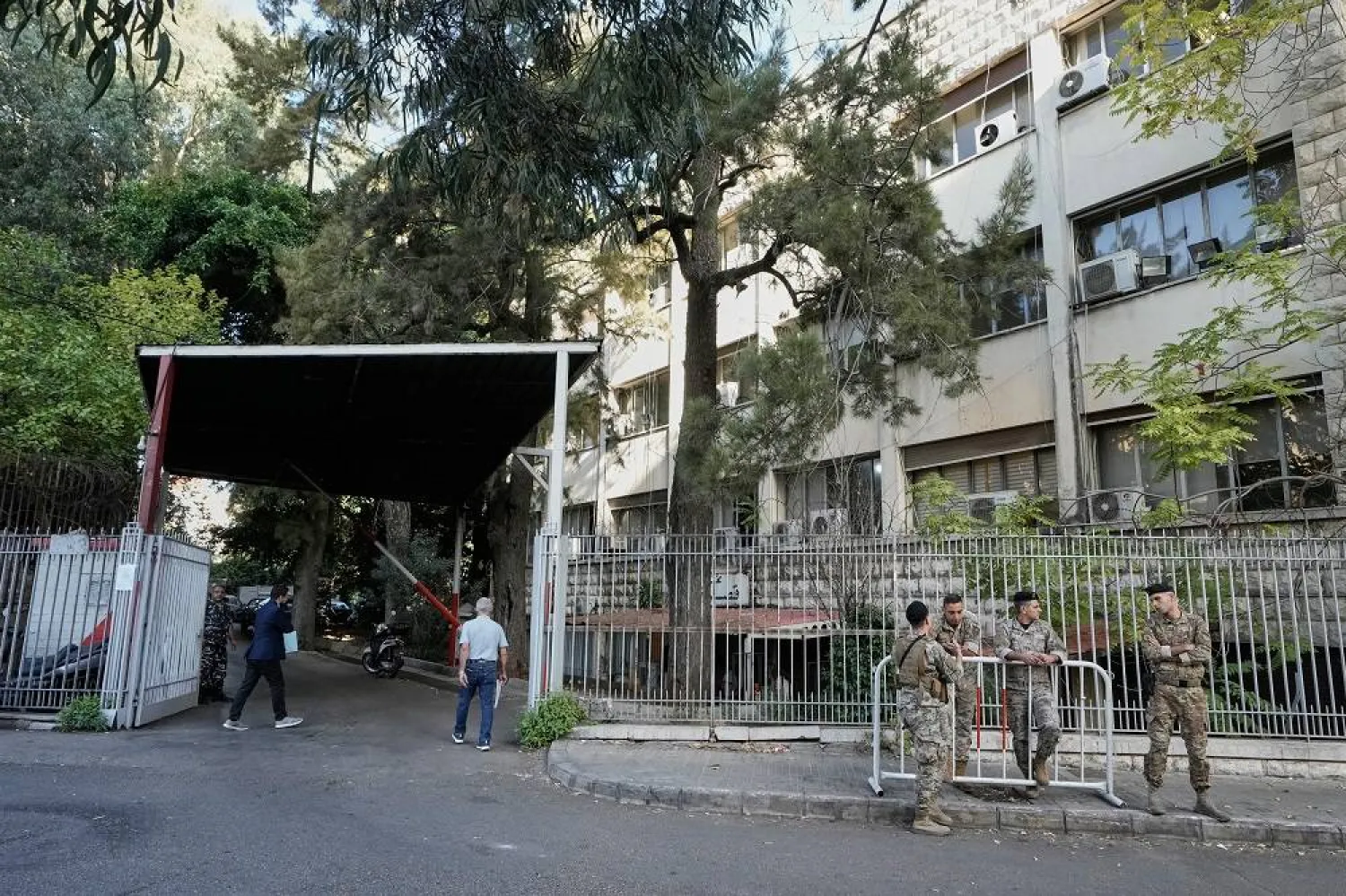
Lebanese soldiers stand guard outside the Justice Palace where Fadel Shaker appeared in court after 12 years on the run, in Beirut, Lebanon, Wednesday, Oct. 22, 2025. (AP)
TT

Fadel Shaker Appears in Court in Lebanon After 12 Years on the Run 

Lebanese soldiers stand guard outside the Justice Palace where Fadel Shaker appeared in court after 12 years on the run, in Beirut, Lebanon, Wednesday, Oct. 22, 2025. (AP)

A Lebanese pop star turned militant who surrendered this month after 12 years on the run appeared in Beirut court Tuesday for the first time.

Fadel Shaker had been hiding out in the Palestinian refugee camp of Ein el-Hilweh since bloody street clashes erupted between militants and the Lebanese army in June 2013 in the coastal city of Sidon.

He was tried in absentia and sentenced to 22 years in prison in 2020 for providing support to a “terrorist group.”

As part of the deal that persuaded Shaker to turn himself in, the sentences he received while on the run would be dropped and he would be questioned in preparation to stand trial on new charges of committing crimes against the military. Tuesday’s court appearance was a preliminary questioning session.

During the 2013 shootout between followers of hard-line cleric Sheikh Ahmed al-Assir and the Lebanese army, which killed at least 18 soldiers, Shaker appeared in a video uploaded to YouTube in which he called his enemies pigs and dogs, and taunted the military.

Shaker became a pop star throughout the Arab world with a smash hit in 2002. Almost 10 years later, he fell under the influence of al-Assir and shocked fans by turning up next to the cleric at rallies and later saying that he was giving up singing.

In recent years, he had returned to periodically releasing music, including several singles this year. In July, Shaker and his son Mohammed released a new song that has garnered over 127 million views on YouTube.


Burhan on Independence Anniversary: Victory Is Coming

Al-Burhan in a still from a video recorded outside the Republican Palace in the capital, Khartoum (Sudan News Agency). 
TT

Burhan on Independence Anniversary: Victory Is Coming

Al-Burhan in a still from a video recorded outside the Republican Palace in the capital, Khartoum (Sudan News Agency). 

The head of Sudan’s Transitional Sovereignty Council and commander-in-chief of the armed forces, Abdel-Fattah al-Burhan, said on Thursday that “victory is coming” and will be “on the side of the Sudanese people.”

Al-Burhan’s address came as fierce fighting continues between the army and allied forces on one side and the Rapid Support Forces (RSF) and their allies on the other, particularly in South Kordofan state.

In a recorded message delivered from outside the Republican Palace in the capital, Khartoum, al-Burhan congratulated the Sudanese on the 70th anniversary of independence, marked annually on January 1.

“This is an existential battle of dignity that we are all fighting,” he stated, adding: “We reassure our citizens everywhere, in Darfur and Kordofan, that victory is coming, and that Sudanese forces are coming to you. We will surely gather here again as Sudanese to celebrate the expulsion of the rebellion, traitors and defeatists from our country.”

Al-Burhan continued that those who “betrayed their country and sold it” would not prevail, dismissing what he described as “mirages of states that speak of illusions that will never be realized on this land.” He stressed that the Sudanese people are determined to win.

He also stressed that the door remains open to national reconciliation. “We welcome everyone who wishes to join the voice of the nation and of truth,” he said, pledging to work toward building “a state of citizenship, peace and justice.”

In a contrasting message, the prime minister of the rival, RSF-aligned parallel administration, Mohamed Hassan al-Taaishi, argued that political independence was a great national achievement but remained incomplete because it failed to become an inclusive national project addressing imbalances in power and wealth.

Speaking on the eve of Independence Day, Al-Taaishi said the so-called “Government of Peace” had presented a declared national project for a comprehensive re-foundation of the Sudanese state on new principles.

He added that the war would not end through partial solutions or narrow security approaches, calling instead for a decentralized system of governance that redistributes power and wealth fairly through a new social contract and a secular, democratic civilian constitution.


Arab Parliament Affirms Support for Stability in Yemen, Unity Efforts in Sudan

Arab Parliament Affirms Support for Stability in Yemen, Unity Efforts in Sudan
TT

Arab Parliament Affirms Support for Stability in Yemen, Unity Efforts in Sudan

Arab Parliament Affirms Support for Stability in Yemen, Unity Efforts in Sudan

The Arab Parliament reiterated its strong and unwavering support for the security and stability of Yemen. It emphasized that prioritizing dialogue, understanding, and wisdom is essential to serve the best interests of the Yemeni people.

In a statement issued on Friday, the parliament highlighted the importance of making every effort to de-escalate the situation, address the crisis, and achieve a sustainable political solution that respects Yemen's sovereignty and the will of the Yemeni people, the Saudi Press Agency said.

The parliament expressed its full commitment to supporting all initiatives that enhance security, stability, and development in Yemen, as well as to fulfilling the legitimate aspirations of the Yemeni people for progress, stability, and prosperity.

The Arab Parliament also reiterated its strong and unwavering support for all initiatives aimed at resolving the Sudanese crisis and ensuring the security, stability, and unity of Sudan.

In a statement, the Arab Parliament congratulated the Sudanese people on the anniversary of Independence Day. It expressed hope that the next Independence Day will be celebrated with the crisis fully resolved, fulfilling the aspirations of the Sudanese people for security, stability and development.


Lebanon PM Pledges State Authority, Vows to End Israeli Attacks

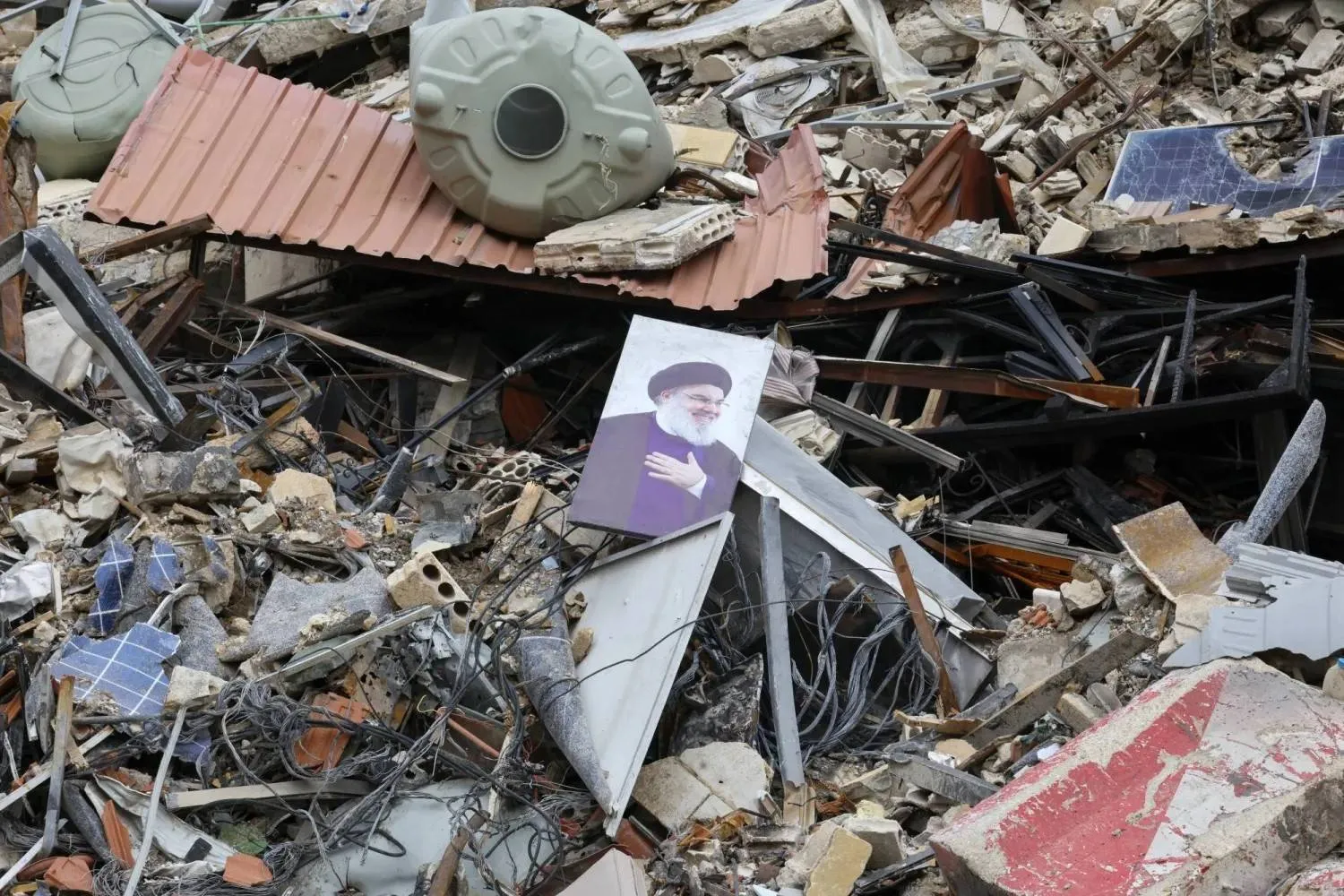
An Israeli officer displays weapons seized by the army in Gaza, Lebanon and Syria during a media tour (AFP). 
TT

Lebanon PM Pledges State Authority, Vows to End Israeli Attacks

An Israeli officer displays weapons seized by the army in Gaza, Lebanon and Syria during a media tour (AFP). 

Lebanon’s Prime Minister Nawaf Salam has pledged to press ahead with reforms, extend the authority of the state, and work to end Israeli attacks and remove the occupation, even as Israel signals preparations for a “measured” military action against Hezbollah.

In a New Year message posted on X, Salam wished Lebanese a year marked by hope, continued state recovery, and restored public trust.

“We promise to continue together the path of reform and the extension of state authority,” he wrote. He added a renewed pledge “to keep working to end Israeli attacks, remove the occupation, and secure the return of our detainees,” saluting the Lebanese army and security forces deployed nationwide to safeguard public safety.

Lebanon has maintained diplomatic contacts with the sponsors of the ceasefire with Israel, which took effect in November 2024 and ended 66 days of fighting between Hezbollah and the Israeli army.

Beirut says diplomacy and steps by the Lebanese army have prevented a renewed war. Israel, however, still occupies five border points inside Lebanese territory, holds around 20 detainees, including civilians, and continues to violate the agreement through intermittent strikes and targeted killings inside Lebanon.

In parallel, Israeli media report heightened security readiness for possible action against Hezbollah, citing Israeli assessments that recent Lebanese measures fall short of ceasefire terms.

The daily Maariv said security chiefs are preparing to brief Prime Minister Benjamin Netanyahu on readiness levels, pointing to what Israel describes as Lebanon’s failure to dismantle Hezbollah’s military infrastructure south and north of the Litani River.

According to the report, Lebanon may soon declare the end of army operations to disarm Hezbollah south of the Litani without extending them northward, an outcome Israel deems a breach. Israeli assessments suggest this could prompt unilateral action if Lebanon is seen as unable or unwilling to comply.

Israel accuses Hezbollah of rebuilding capabilities, including precision missiles, and says recent airstrikes targeted training sites linked to the Radwan Forces. Israeli officials argue Hezbollah is currently in a weakened operational state, enabling “calibrated” options aimed at pressuring the group while preserving the ceasefire framework.