

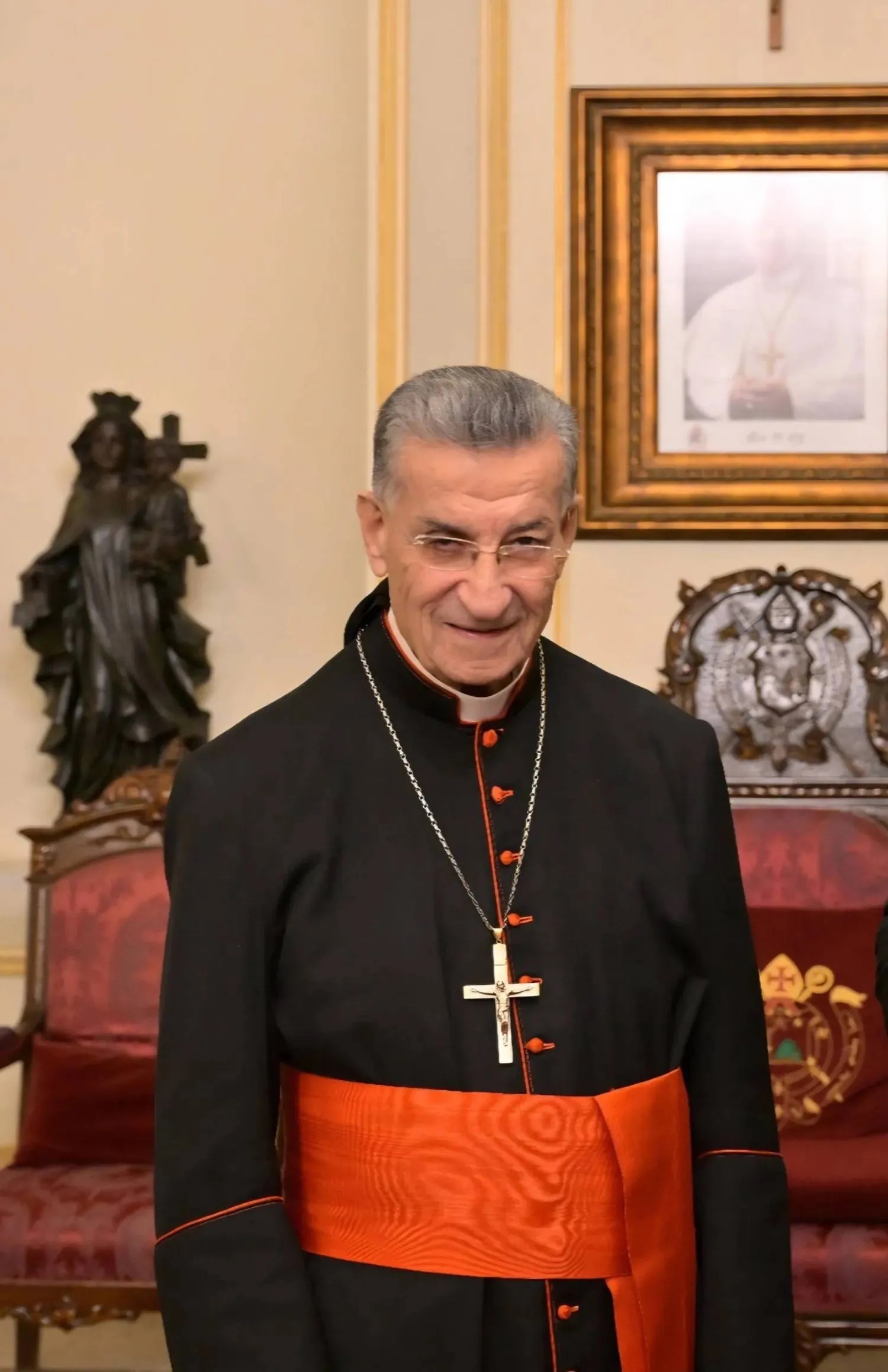

Lebanon: Patriarch al-Rahi Urges Hezbollah to Hand Over Weapons, ‘Free Itself from Iran’

Maronite Patriarch of Antioch and All the East Beshara al-Rahi (Asharq Al-Awsat) 
TT

Lebanon: Patriarch al-Rahi Urges Hezbollah to Hand Over Weapons, ‘Free Itself from Iran’

Maronite Patriarch of Antioch and All the East Beshara al-Rahi (Asharq Al-Awsat) 

Maronite Patriarch of Antioch and All the East Beshara al-Rahi has called on the United States to pressure Israel to “end its violations of Lebanon,” expressing hope that Pope Leo XIV’s upcoming visit will serve as a “message of peace” addressed to both Lebanese and Israelis and a reminder to avoid war.

In parallel, al-Rahi urged Hezbollah to “free itself from Iran,” hand over its weapons to the Lebanese Army, and commit fully to political work. He dismissed as “unfounded” any claims that these demands target the Shiite community, stressing: “We share one homeland that belongs to all of us.”

In an interview with Asharq Al-Awsat, the patriarch said the pope’s visit on Sunday reflects “his affection for Lebanon” and signals to the world that the country “has been reborn,” given the extensive international media presence expected during the two-day trip. “The pope understands Lebanon’s value and its unique cultural and civilizational role in the Middle East,” he stated.

The visit, he added, sends a clear message to the Lebanese: “I am with you. Take heart and preserve your land. Lebanon is a land of peace, not war.”

A message of peace

Al-Rahi described the visit as one of peace. He noted that the pope insisted on traveling to Lebanon “despite Israeli threats.” “The Holy Father is a man of prayer,” he said. “He knows the worth of Lebanon and understands the looming danger of war. When asked about the security risks, he reaffirmed his determination to come.”

The patriarch insisted that the pope is, in effect, visiting “the entire Arab world,” carrying with him a message rooted in faith and directed also to political leaders: “Enough wars, killing, and destruction.”

“For fifty years, Lebanon has lived through conflict,” al-Rahi said. “It is time for that to end. War brings only devastation and death. This includes the latest fighting between Hezbollah and Israel. Human lives are being taken. Who has the right to decide the fate of another person?”

He emphasized that such acts are “unacceptable to the Church”.

“No Path but Diplomacy”

Commenting on Israeli threats and regional tensions, al-Rahi said: “There is no room for war and killing. The only path is diplomacy, long and difficult as it may be.” He voiced support for President Joseph Aoun’s efforts to pursue political and diplomatic solutions.

“The Americans must influence Israel, and Iran must influence Hezbollah,” he underlined. Hezbollah, he noted, “knows that a final decision has been made regarding exclusive state control of arms,” and must therefore surrender its weapons to the Lebanese Army and function as a political party like all others.

Israel, meanwhile, “has not respected Resolution 1701 or the ceasefire,” he said. “It continues daily strikes, treating Lebanon as a subordinate province. Lebanon risks becoming a pile of stones.”

Al-Rahi continued that he expects the pope to issue a strong appeal for peace: “Those who bear arms are responsible for achieving peace. Manhood is not measured by firing weapons, but by building peace. It is time for both Israel and Hezbollah to understand this.”

He reiterated that Hezbollah must disarm, Israel must withdraw from the south and all occupied points, and the Lebanese Army must be allowed to extend state authority across the country according to its existing plan.

While uncertain whether the pope will address these issues directly, al-Rahi said the Vatican Secretariat of State “agrees with this assessment,” adding that the pope chose to visit because “Lebanon is under real threat of war.”

Shared Responsibility Among Political Forces

Al-Rahi stressed that resolving Lebanon’s crises does not fall solely on the president or prime minister. “We must all stop fanning the flames. All political parties and leaders must commit to achieving peace. Lebanon is a democracy, but democracy does not mean enmity,” he told Asharq Al-Awsat.

He argued that future generations have a right to live in peace, which requires parties to reform their political practices and ways of thinking.

“Shiites Are Not Being Targeted”

The patriarch expressed surprise that the call for exclusive state control of weapons is portrayed as an attack on Shiites. “Why do they feel targeted?” he asked. “They are present throughout ministries and public institutions. Is asking for disarmament targeting them? No other Lebanese community carries arms. I do not see how they are being singled out.”

According to al-Rahi, Lebanon’s confessional diversity forms its “mosaic” and essential balance. “Shiites are our brothers, and we are theirs. Lebanon belongs to all of us. No one is targeting anyone. This is our shared home.”

Responding to an Iranian official who claimed Hezbollah’s weapons are a Lebanese necessity, al-Rahi said: “Weapons do not ensure security. The Lebanese Army ensures security for everyone.” He warned that “self-security creates mini-states,” which cannot coexist within a sovereign state.

He said: “We want one state, one army, protecting all,” rejecting claims that disarmament would lead to isolation. “We are equals in dignity, rights, and duties. But today Hezbollah must free itself from Iran. No foreign state may dictate to Lebanese citizens.”

After a war that “destroyed everything,” he added, the country must rethink its path. “Peace cannot be achieved through war or through weapons that must ultimately be placed exclusively in the hands of the Lebanese Army.”

If needed the state can declare a general mobilization and call on all citizens for support, the patriarch remarked.

Calls to Restore Mandatory Military Service

Al-Rahi acknowledged that Lebanon is suffering from a severe political crisis that has triggered economic and social collapse. “We need political stability for the country to rise again,” he said, adding that loyalty must be directed to Lebanon alone.

Lebanon’s problem, he argued, dates back a century: “Loyalty to the nation did not grow at the same pace as belonging to it. The two must be equal if stability is to be achieved.”

He believes part of the solution lies in education, starting in schools, families, universities, and society. He further pointed that Lebanon should restore mandatory military service, saying: “Abolishing conscription was a mistake. Military service teaches citizens that the nation they serve is their honor. Without it, how can loyalty grow?”

Al-Rahi concluded: “The most important form of education is that which instills a sense of belonging through national service.”
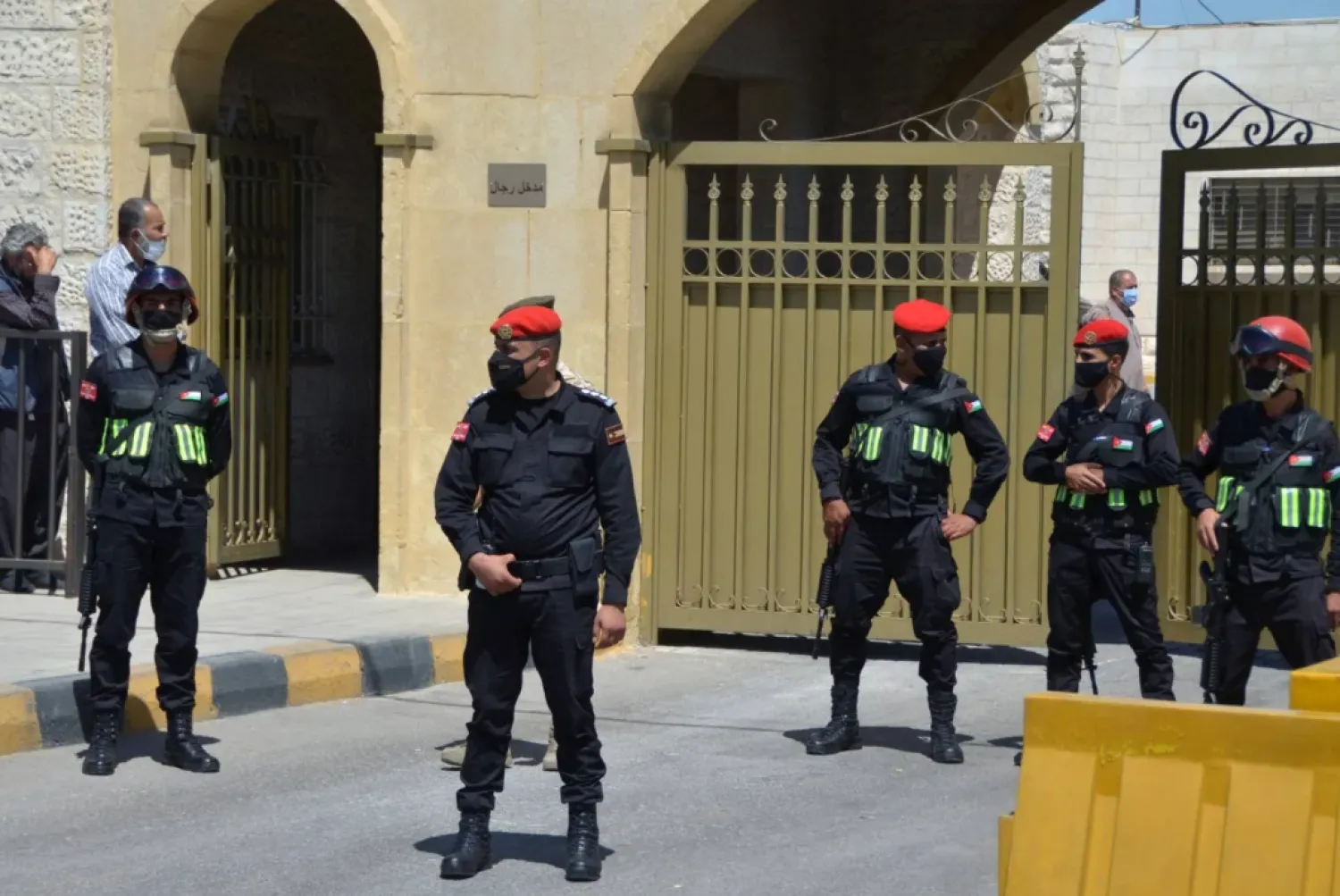


Israel Says Man's Capture Sabotaged Secret Hezbollah Naval Unit

Amhaz's ID card at the Maritime Sciences and Technology Institute. (Telegram)
TT

Israel Says Man's Capture Sabotaged Secret Hezbollah Naval Unit

Amhaz's ID card at the Maritime Sciences and Technology Institute. (Telegram)

Israel's military said Friday a man seized last year in Lebanon was a Hezbollah operative who played a key role in planning a covert maritime force for the militant group.

The military said special unit troops apprehended Imad Amhaz in November 2024 from the north Lebanese city of Batroun, and transferred him to Israel, reported AFP.

"During his questioning, Amhaz stated that he held a central role in the 'covert maritime portfolio'," which the military called "one of Hezbollah's most classified and sensitive projects".

It said the portfolio's "core objective is the establishment of organized maritime terrorist infrastructure, under civilian cover, in the maritime domain against Israeli and international targets".

The military added that it had disrupted the portfolio's advancement by dismantling its chain of command and through its questioning of Amhaz.

In November 2024, a Lebanese judicial official told AFP that a preliminary probe found that Israeli commandos used a speedboat equipped with radar-jamming devices to abduct Amhaz.

The official called his capture "a war crime that violated national sovereignty" because it involved the kidnapping of a Lebanese citizen in an area far from the fighting.

Amhaz was studying to become a sea captain at the Maritime Sciences and Technology Institute (MARSATI) in Batroun, Lebanon's primary training college for the shipping industry.

Israel says Amhaz was an "invisible" Hezbollah operative who joined the Lebanese armed group in 2004 and was trained in Iran in 2007.

Hezbollah has not claimed Amhaz as a member of the group.

Despite a November 2024 ceasefire supposed to end more than a year of hostilities between Israel and Hezbollah, Israel has kept up strikes on Lebanon and has also maintained troops in five areas of south Lebanon it deems strategic.

Israel says the strikes target Hezbollah members and infrastructure, and aim to stop the group from rearming.


Hamas Official Says Miami Talks Must End Israel's Gaza Truce 'Violations'

12 February 2025, Palestinian Territories, Khan Younis: Palestinians shop in a market in the middle of the destruction in Khan Younis, after the Israeli Forces withdrew as part of the ceasefire agreement with Hamas. Photo: Abed Rahim Khatib/dpa
TT

Hamas Official Says Miami Talks Must End Israel's Gaza Truce 'Violations'

12 February 2025, Palestinian Territories, Khan Younis: Palestinians shop in a market in the middle of the destruction in Khan Younis, after the Israeli Forces withdrew as part of the ceasefire agreement with Hamas. Photo: Abed Rahim Khatib/dpa

A top Hamas official said that talks in Miami on Friday to advance the next phase of the Gaza ceasefire must aim to end Israeli truce "violations" in the Palestinian territory.

"Our people expect these talks to result in an agreement to put an end to ongoing Israeli lawlessness, halt all violations and compel the occupation to abide by the Sharm el-Sheikh agreement," Hamas political bureau member, Bassem Naim, told AFP.

The United States is hosting the discussions, with President Donald Trump's special envoy, Steve Witkoff, expected to meet senior officials from mediator countries Qatar, Egypt and Türkiye in Florida to push for the second stage of the ceasefire deal.


Egypt Signals Possible Activation of Joint Defense Pact to Safeguard Sudan’s Unity

Abdel Fattah el-Sisi during the reception of Abdel Fattah al-Burhan in Cairo on Thursday (Egyptian Presidency)
TT

Egypt Signals Possible Activation of Joint Defense Pact to Safeguard Sudan’s Unity

Abdel Fattah el-Sisi during the reception of Abdel Fattah al-Burhan in Cairo on Thursday (Egyptian Presidency)

Egypt has drawn explicit “red lines” regarding the conflict in Sudan, warning that any attempt to cross them would directly threaten Egyptian national security.

Cairo signaled it is prepared to take all measures permitted under the Joint Defense Agreement between the two countries, a position analysts describe as Cairo’s most forceful since the outbreak of war in Sudan in 2023.

The statement coincided with President Abdel Fattah el-Sisi receiving on Thursday Lt. Gen. Abdel Fattah al-Burhan, Chairman of Sudan’s Transitional Sovereignty Council.

El-Sisi reaffirmed Egypt’s “full support for the Sudanese people in overcoming the current critical phase,” stressing Cairo’s unwavering commitment to Sudan’s unity, sovereignty, security, and stability, according to presidential spokesman Mohamed El-Shennawy.

During the visit, Egypt also renewed its support for US President Donald Trump’s vision for achieving peace and stability in Sudan, aligning with Washington’s broader approach to de-escalation and conflict resolution.

For the first time since the conflict began, Cairo publicly articulated non-negotiable red lines, stressing that Sudan’s unity and territorial integrity are inseparable from Egypt’s own national security. These red lines include preventing the partition of Sudan, protecting the country’s resources, and preserving its state institutions.

The Egyptian presidency underscored that safeguarding Sudan’s institutions is highly important and affirmed Egypt’s “full right to take all necessary measures under international law,” including the possible activation of the Joint Defense Agreement to prevent any violations.

Egypt and Sudan signed a military cooperation agreement in March 2021 covering training, border security, and countering shared threats, building on a Joint Defense Agreement concluded in 1976 to confront external dangers.

Maj. Gen. Yahya Kadwani, a member of Egypt’s parliamentary Committee on Defense and National Security, warned that efforts to divide Sudan necessitate firm red lines to protect Sudanese state assets and Egypt’s own security.

He told Asharq Al-Awsat that invoking the joint defense pact signals strong coordination within international legitimacy and existing bilateral agreements.

The presidency said Egypt is deeply concerned by ongoing escalation in Sudan and the resulting “horrific massacres and flagrant violations of basic human rights,” particularly in El Fasher.

Cairo categorically rejected the creation or recognition of any parallel political or military entities, warning that such moves would undermine Sudan’s unity and territorial integrity.

Ambassador Salah Halima, a member of the Egyptian Council for Foreign Affairs, said Egyptian-Sudanese coordination aims to protect Egyptian, Sudanese, and Arab national security, noting that both countries are members of the Council of Red Sea Coastal States, which plays a strategic role in defense and development.

He added that Egypt’s stance aligns with the International Quartet initiative and a proposal advanced by Saudi Crown Prince and Prime Minister Mohammed bin Salman during his visit to the United States.

The roadmap calls for a three-month humanitarian truce, integration of the Rapid Support Forces into the Sudanese Armed Forces, and preservation of military cohesion.

The Quartet, which includes Saudi Arabia, Egypt, the United Arab Emirates, and the United States, proposed last August a plan for a three-month humanitarian ceasefire, followed by a permanent cessation of hostilities and a political process leading to an independent civilian government within nine months.

Al-Burhan’s visit to Cairo followed talks in Saudi Arabia, where he affirmed Sudan’s readiness to work with Trump, US Secretary of State Marco Rubio, and US envoy Massad Boulos to end the war.

Amani Al-Tawil, Director of the Africa Program at the Al-Ahram Center for Political and Strategic Studies, said Egypt’s position represents its strongest stance yet and aligns with Saudi and US calls to preserve Sudan’s unity, halt the war, reject parallel entities, and protect state institutions.
