Israel's Netanyahu Says Syria Deal is Possible, Expects Buffer Zone
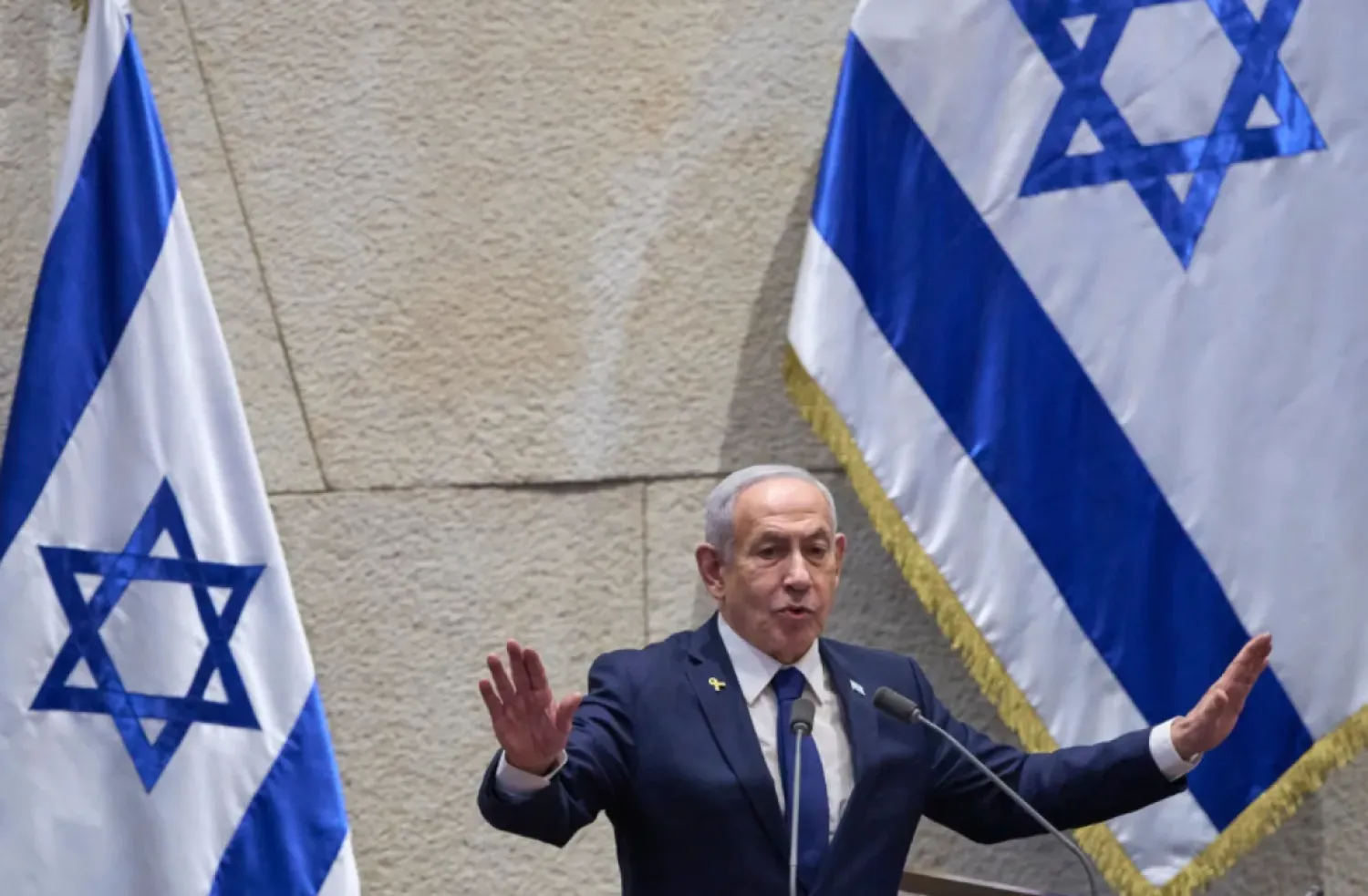
Israel’s Prime Minister Benjamin Netanyahu addresses lawmakers in the Knesset, Israel’s parliament, in Jerusalem, Monday, Nov. 10 2025. (AP Photo/Ohad Zwigenberg)
Israel's Netanyahu Says Syria Deal is Possible, Expects Buffer Zone
Israel’s Prime Minister Benjamin Netanyahu addresses lawmakers in the Knesset, Israel’s parliament, in Jerusalem, Monday, Nov. 10 2025. (AP Photo/Ohad Zwigenberg)
Israeli Prime Minister Benjamin Netanyahu said on Tuesday a deal with Syria is possible and he expects Syrian authorities to establish a demilitarized buffer zone from Damascus to Mount Hermon and other areas.
Netanyahu spoke a day after US President Donald Trump, whose administration has been trying to broker a non-aggression pact between the two countries, said it was very important that Israel maintained a "strong and true dialogue" with Damascus.
Syria does not formally recognize Israel, which has occupied more Syrian territory since December 2024. It captured the Syrian Golan Heights in a 1967 war and later annexed it, a move recognised by the United States but not by most other countries, according to Reuters.
"What we expect Syria to do is, of course, to establish a demilitarized buffer zone from Damascus to the buffer area, including the approaches to Mount Hermon and the Hermon peak," Netanyahu said while visiting wounded soldiers in central Israel. "We hold these areas in order to ensure the security of Israel’s citizens, and that is what obligates us."
He added: "With goodwill and an understanding of these principles, it is possible to reach an agreement with the Syrians, but we will stand by our principles in any case."
Israeli raid in southern Syria on Friday killed 13 Syrians, Syrian state media reported. The Israeli military said it had targeted a Lebanese militant group there. Netanyahu on Tuesday was visiting soldiers wounded in the clash.
Hezbollah’s Support Base Dismayed Over Limited Compensationhttps://english.aawsat.com/arab-world/5330248-hezbollah%E2%80%99s-support-base-dismayed-over-limited-compensation
Hezbollah’s Support Base Dismayed Over Limited Compensation
A Lebanese soldier inspects destruction in the city of Nabatieh caused by Israeli airstrikes in southern Lebanon on June 21, 2026 (Reuters)
The financial assistance Hezbollah said it would provide to people displaced from southern Lebanon and Beirut’s southern suburbs because of the war with Israel has sparked dismay within its southern support base, with some describing the sums as “meager” and saying they “do not even cover six months’ rent.”
Others have criticized the payments as “unfair” and said they reinforce disparities between residents of the southern suburbs and those of southern Lebanon.
Ali Damoush, head of Hezbollah’s Executive Council, announced on Tuesday a housing assistance program for displaced people and for those whose homes have been destroyed or severely damaged by Israel and are no longer habitable. He set the maximum assistance at $14,000 for housing units in Beirut and its southern suburbs, and $12,000 for homes outside those areas.
Damoush said the money would be paid in four installments, with each payment amounting to $3,500 for displaced residents in Beirut and the southern suburbs and $3,000 for those in other areas.
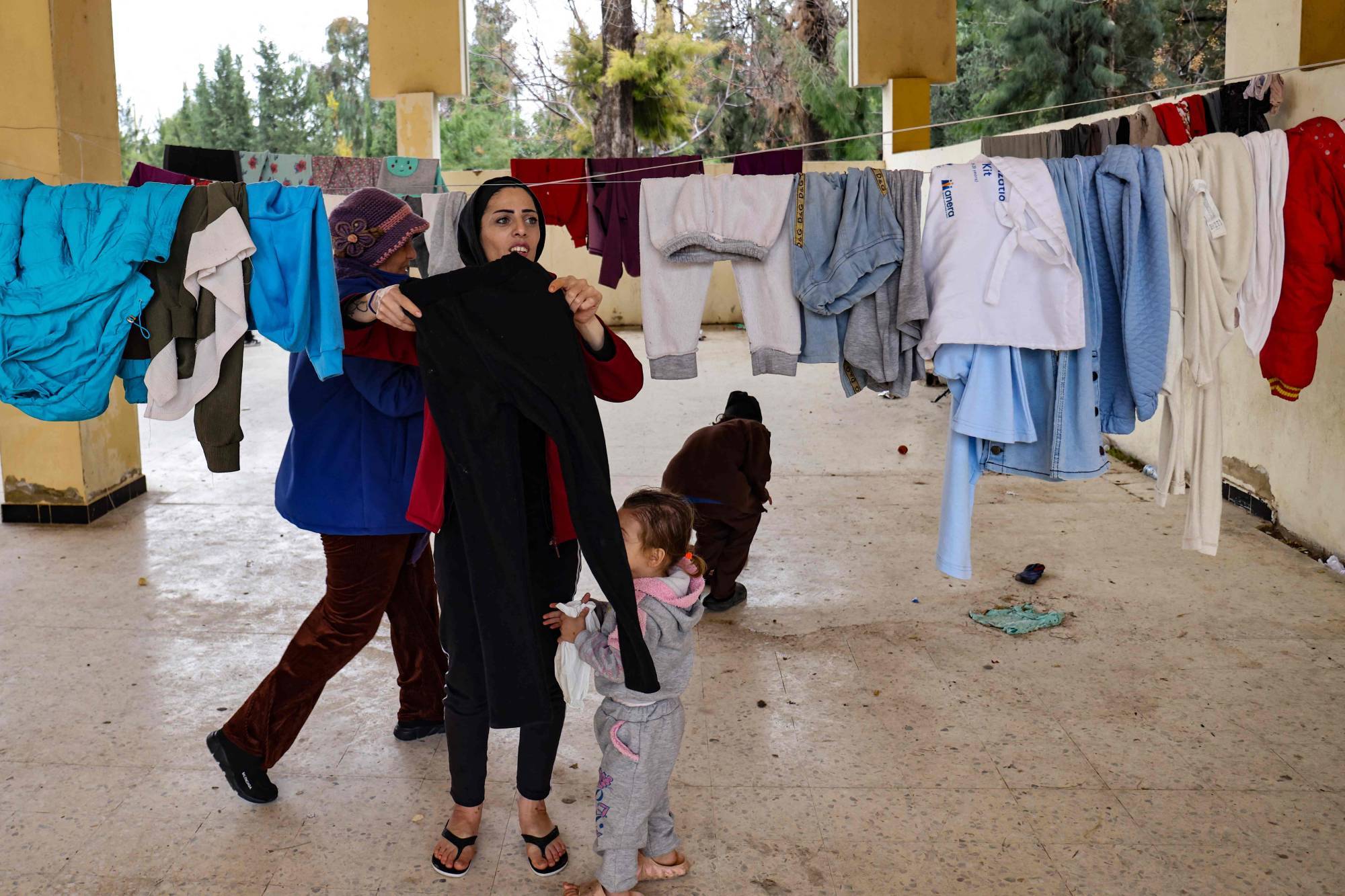
A girl displaced from southern Lebanon at a school in the city of Tyre that was converted into a shelter for displaced people (File photo - AFP)
Rent Payments Fall Short
No sooner had Damoush announced the payments than discontent spread among residents of southern Lebanon, who described the amounts as “unfair.”
A local source in Nabatieh told Asharq Al-Awsat that the money would “barely cover six months of monthly rent.”
“At the very lowest estimate, rent for a house outside the city is $500 a month, while anyone wishing to rent in the city will have to pay $800,” the source said. “Is this amount enough to cover rent?”
“We waited six months. The state paid nothing and paid no attention to us, while Hezbollah has now announced meager payments that would not even be enough to buy a bed or a refrigerator,” the source added, describing the announced assistance as essentially pointless.
The United Nations Development Programme estimates that around 17,900 housing units have been completely destroyed in southern Lebanon, while approximately 5,200 buildings have been damaged by the war.
Heavy Losses
The same source in Nabatieh said war-related losses were “extremely heavy,” ranging from destroyed buildings and rental costs to businesses and livelihoods brought to a halt. This comes on top of six months during which residents have had to pay rent out of their own pockets without receiving assistance.
“The initiative undertaken by Hezbollah cannot be relied upon because the amount is extremely small and does not take into account people’s suffering and needs,” said the source, who requested anonymity.
The frustration extends to residents currently living in the city of Tyre after being displaced from occupied and destroyed border villages, particularly Naqoura, Aita al-Shaab, Marwahin, Umm al-Tout and Tayr Harfa.
One displaced resident living in Tyre told Asharq Al-Awsat that they have been paying rent for nearly three years, “and now we will receive a payment that does not even cover three months’ rent in the city,” where average residential rents stand at around $700.
“Hezbollah is applying double standards to displaced people,” he said. “We live in a city, and residents of the southern suburbs live in a city too. Why are they receiving $3,500 while people from the south are receiving $3,000?”
He described the proposed payments as “meager,” saying they appeared to represent “an attempt to shirk responsibility while promoting assistance that falls short of people’s growing needs.”
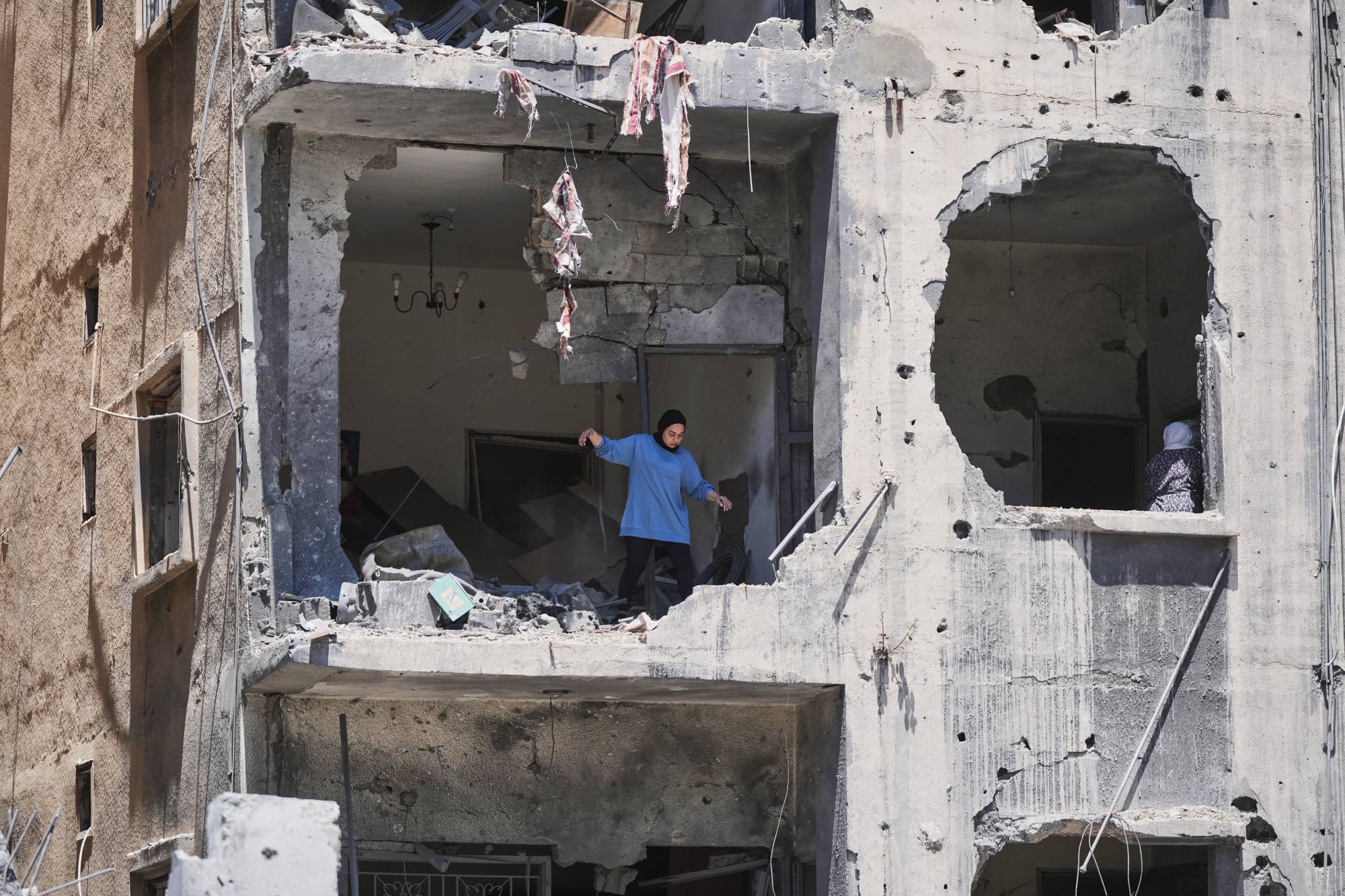
A woman walks through her apartment, which was damaged by Israeli airstrikes in the southern Lebanese city of Tyre on June 17, 2026 (AP)
No Compensation for Repairs
Hezbollah is facing financial difficulties as a result of restrictions imposed on the flow of funds from Iran. Its supporters, however, say the group “is doing what it can under the current circumstances,” noting that the money to be distributed now is only a first payment and that additional payments will follow.
That has done little to dispel the frustration repeatedly expressed by displaced southerners.
Their dissatisfaction is not limited to the modest sums involved or what they describe as “discrimination between the south and the southern suburbs.” It also extends to thousands of people whose homes were damaged in the war but who will receive no money from Hezbollah to repair them.
A resident of a village in the Tyre area told Asharq Al-Awsat: “For four months, I kept plastic sheeting over the windows, hoping Hezbollah would provide repair assistance so I could install glass windows, but that did not happen. With winter approaching, I will have to borrow $1,000 to install glass windows to replace those shattered during the war.”
“It seems Hezbollah has its priorities, and those of us whose homes were damaged by the war are at the bottom of its list,” the source added. “If money is being provided to people displaced from their homes, why is there no money for those whose homes have been damaged?”
Discontent in Beirut’s Southern Suburbs as Well
Despite the frustration in southern Lebanon, residents of Beirut’s southern suburbs also appear dissatisfied. A significant number of buildings surrounding those that were destroyed have themselves sustained heavy damage, yet Hezbollah will not provide any financial assistance to their residents, unlike what happened following the 2024 war.
Residents of the southern suburbs say Hezbollah has not provided any payments, preventing hundreds of families from returning to their damaged homes. Other families have been forced to pay for repairs out of their own pockets, while some have opted to cover shattered windows with plastic sheeting and carry out only “the bare minimum of repairs needed to allow us to return home.”
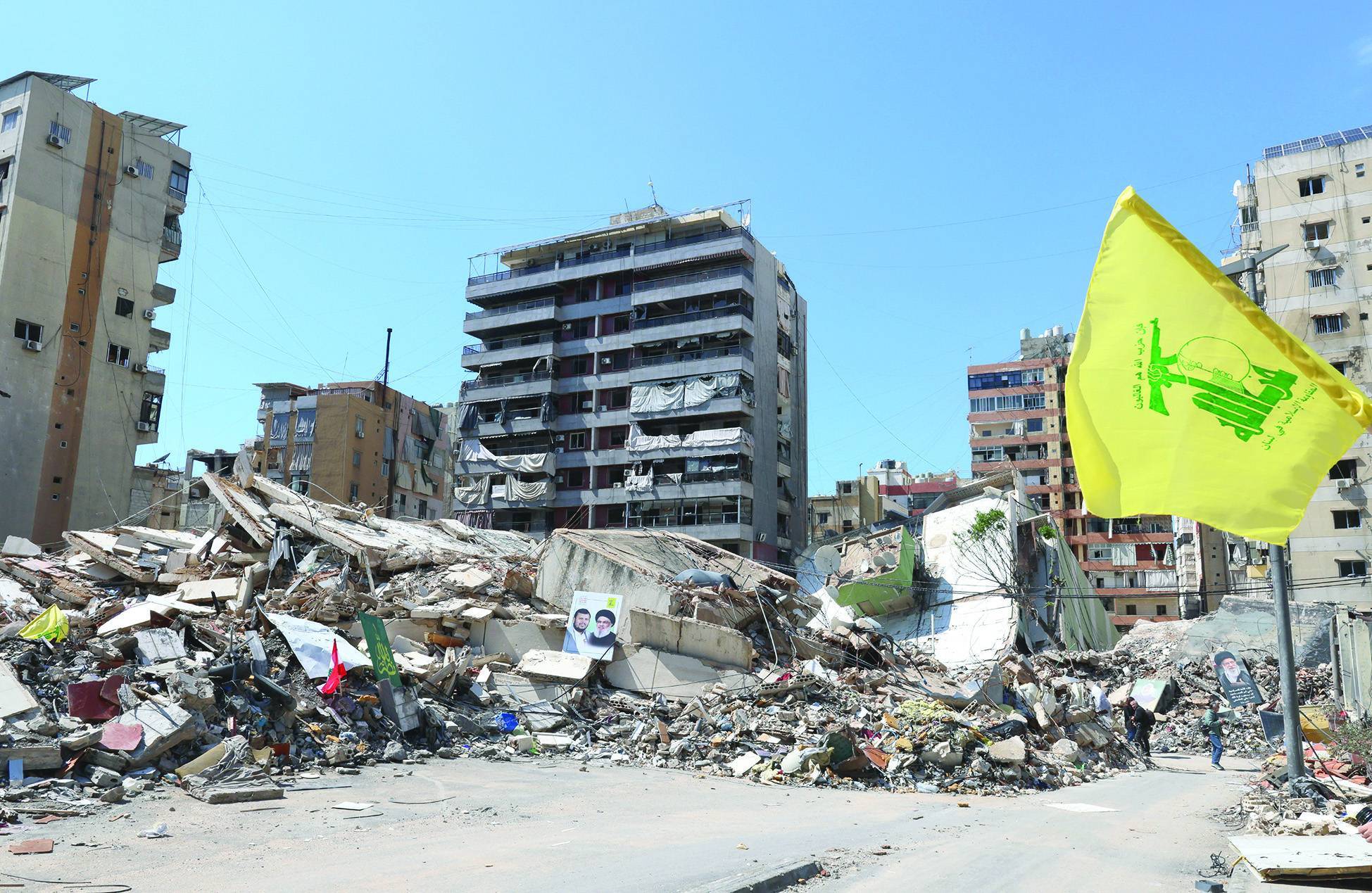
Buildings destroyed by Israeli bombardment in Beirut’s southern suburbs, where a Hezbollah flag flies, on May 6, 2026 (EPA)
A study conducted by the United Nations Development Programme in coordination with Lebanon’s National Council for Scientific Research, and in cooperation with the Lebanese Army and the United Nations Department of Safety and Security, found that 146 buildings were completely destroyed in the Beirut and Mount Lebanon governorates, while 264 buildings were partially damaged.
At the housing-unit level, the study recorded the complete destruction of 3,168 residential units, while another 4,437 units sustained partial damage.
Israeli Settlers Attack Palestinians During Olive Harvesthttps://english.aawsat.com/arab-world/5330246-israeli-settlers-attack-palestinians-during-olive-harvest
Firefighters douse a burnt car with water after Israeli militant settlers attacked a group of Palestinians harvesting olives near Turmus Ayya in the Israeli-occupied West Bank, October 16, 2026. REUTERS/Ammar Awad
Israeli Settlers Attack Palestinians During Olive Harvest
Firefighters douse a burnt car with water after Israeli militant settlers attacked a group of Palestinians harvesting olives near Turmus Ayya in the Israeli-occupied West Bank, October 16, 2026. REUTERS/Ammar Awad
Israeli settlers attacked Palestinians in multiple villages across the occupied West Bank on Friday and trees and cars were set on fire, according to local officials and emergency responders with the Palestinian Red Crescent Society.
The Palestinian Red Crescent Society said six people were injured in two attacks it responded to in the town of Abu Falah outside Ramallah. A 63-year-old woman and a 40-year-old man were taken to a hospital after being beaten by settlers, The Associated Press quoted the Red Crescent as saying.
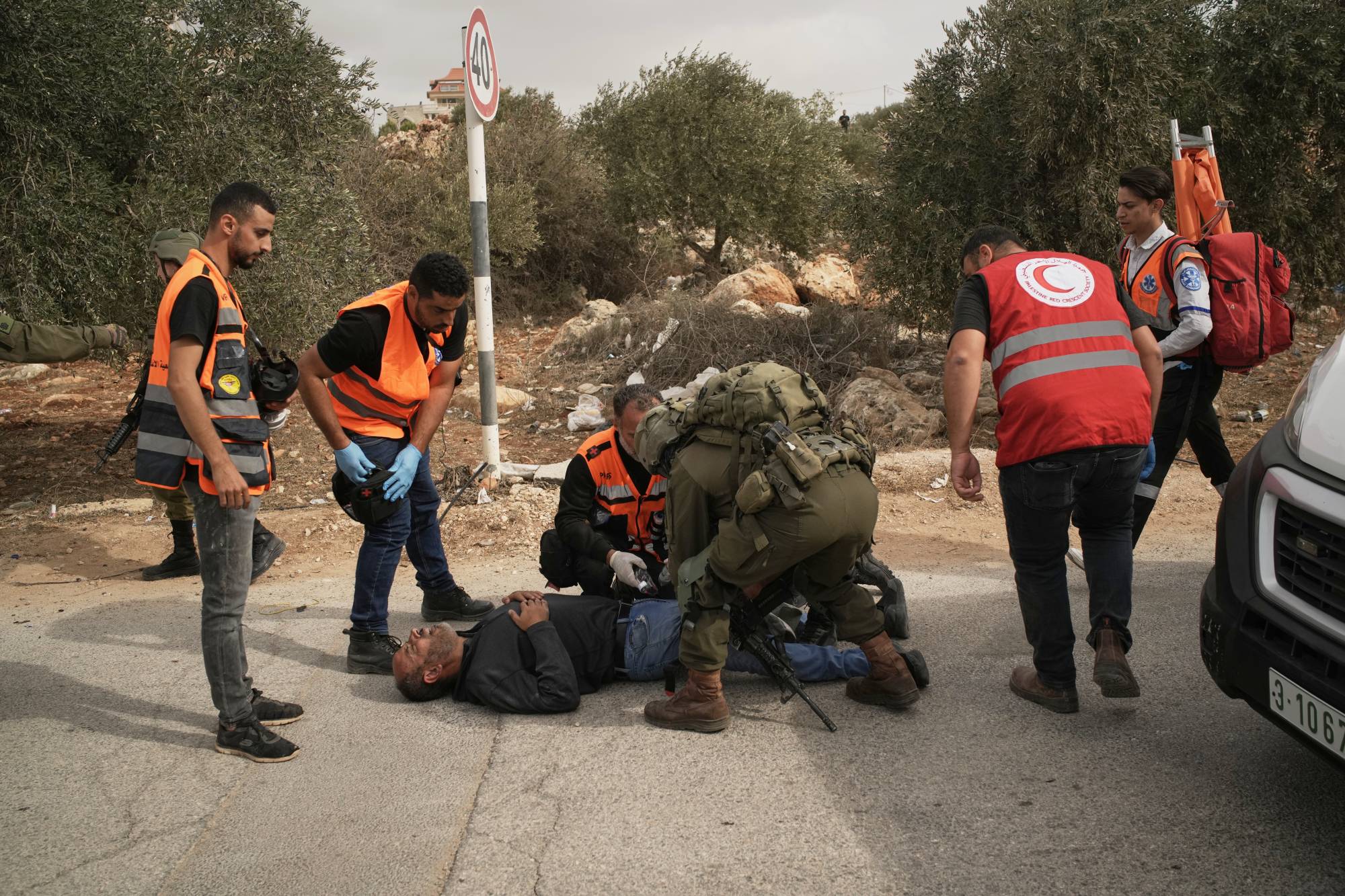
Palestinian medics and an Israeli soldier attend to a Palestinian man shot by Israeli soldiers following a settler attack on Palestinians harvesting olives in the West Bank village of Abu Falah, Friday, Oct. 16, 2026. (AP Photo/Leo Correa)
"The settlers want to attack us and force us from our homes," said Moutaz Abdelhadi, 42, a farmer who witnessed the attack in Abu Falah.
Partway through the attack, at least two Israeli military jeeps sped through the area, kicking up dust as villagers ran out of their way.
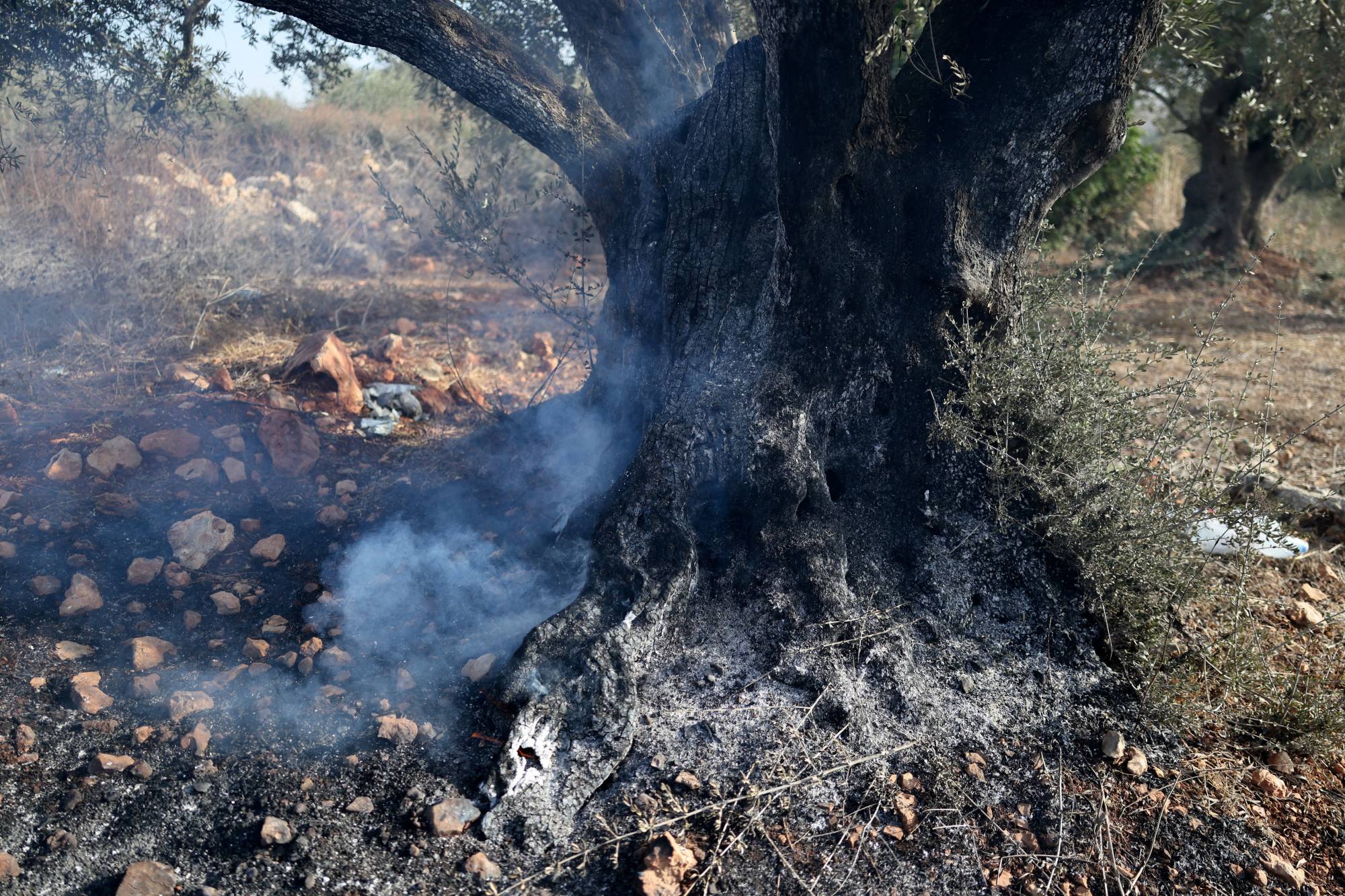
A burnt olive tree after Israeli militant settlers attacked a group of Palestinians while they were harvesting olives near Turmus Ayya in the Israeli-occupied West Bank, October 16, 2026. REUTERS/Ammar Awad
The attack continued after the military's arrival, with Israeli soldiers firing tear gas in the direction of the Palestinians who had dodged the jeeps. The sound of live gunfire could be heard in the area, and a Reuters photographer saw at least one armed settler fire a gun.
Among the injured was Heidi Levine, a photojournalist with the Washington Post. The newspaper did not immediately respond to a request for comment.
Israel has imposed new rules on the olive harvest this year, prohibiting Palestinians from working in what’s known as Area C, which is under Israeli security control and encompasses the majority of the territory’s agricultural land.
At least four Palestinians have been killed and more than 100 injured since the harvest season began earlier this month, according to Palestinian officials.
They say thousands of trees have been damaged, costing farmers hundreds of thousands of dollars.
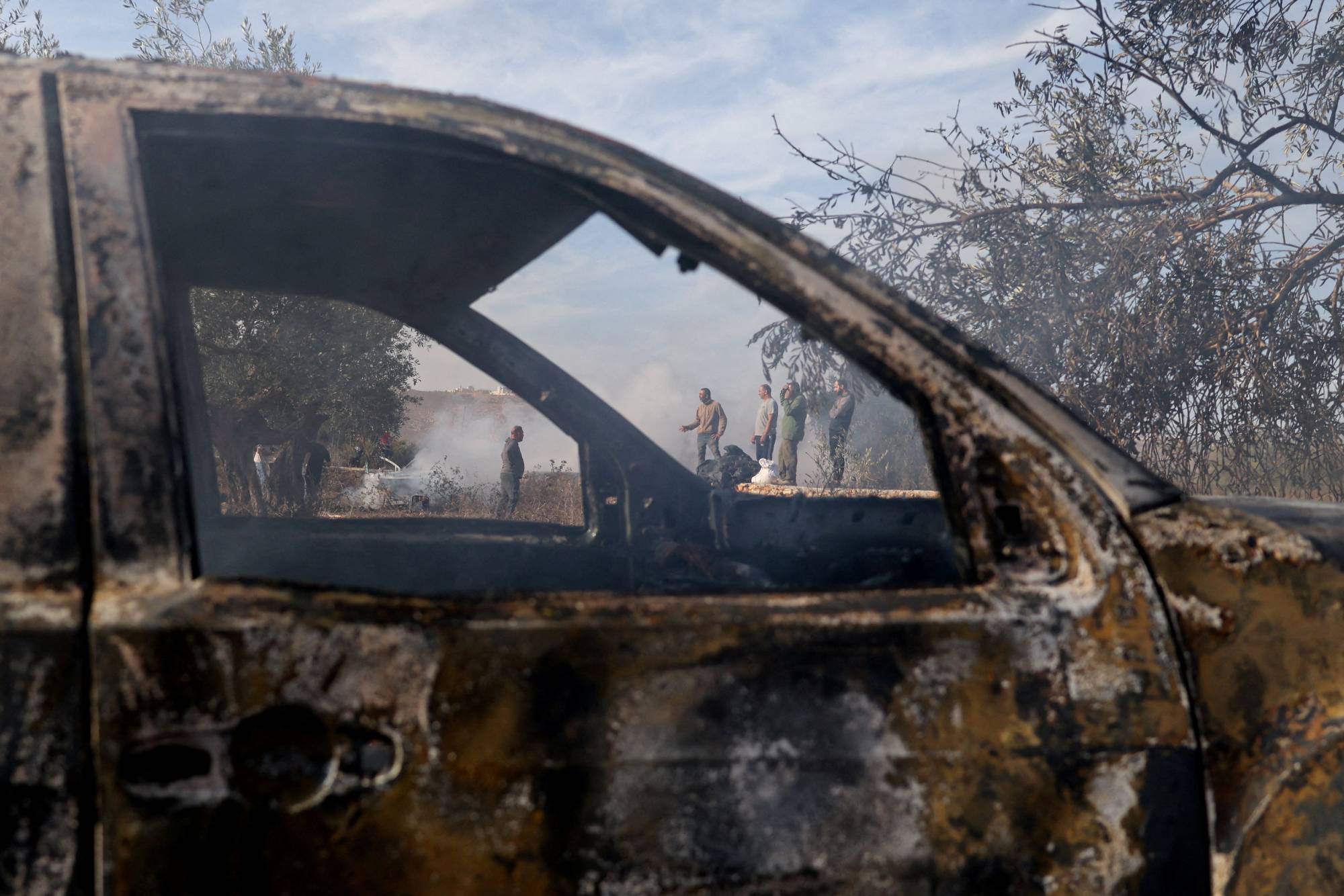
Palestinians stand near a burnt-out car after Israeli militant settlers attacked a group of Palestinians while they were harvesting olives near Turmus Ayya in the Israeli-occupied West Bank, October 16, 2026. REUTERS/Ammar Awad
Israel’s police and army did not immediately respond to questions about the attacks.
The Abu Falah attack followed a similar attack on Friday morning in the area of Turmus Ayya village, where settlers burned three cars after attacking a group of farmers harvesting olives.
Salah Abu Niswa, who witnessed the attack in Turmus Ayya, said the settlers "snuck up like thieves, they caught someone by himself and began to beat him."
US Bill Proposes Agricultural and Mining Partnership with Sudanhttps://english.aawsat.com/arab-world/5330217-us-bill-proposes-agricultural-and-mining-partnership-sudan
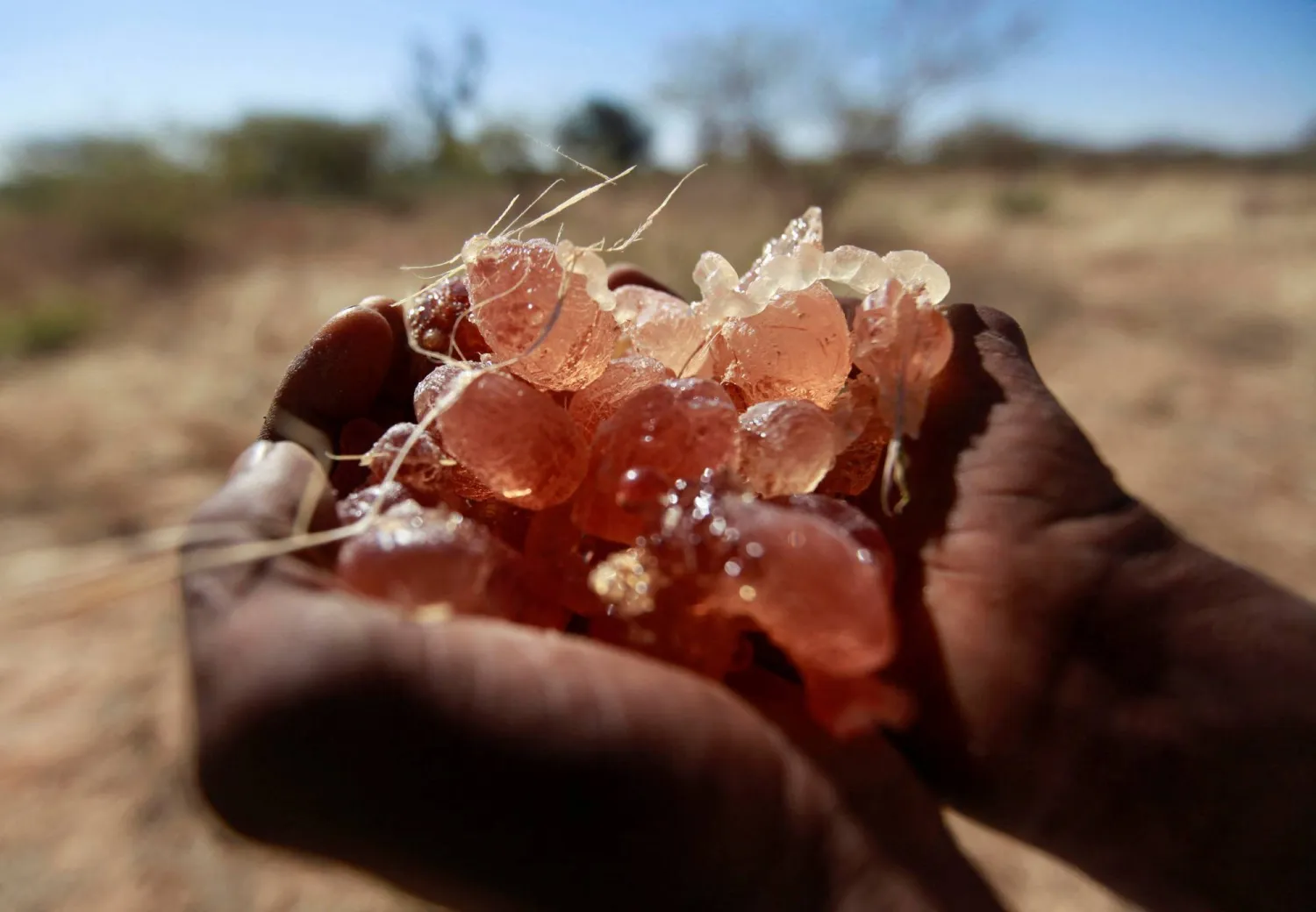
A Sudanese farmer collects gum arabic in the western city of Al-Nuhud. The commodity is among the resources covered by the proposed US legislation (Reuters).
US Bill Proposes Agricultural and Mining Partnership with Sudan
A Sudanese farmer collects gum arabic in the western city of Al-Nuhud. The commodity is among the resources covered by the proposed US legislation (Reuters).
A Republican member of the US House of Representatives has introduced legislation proposing an economic partnership with Sudan that would exchange Sudanese mineral and natural resources for American technology, equipment and expertise in agriculture and mining.
The initiative ties future economic cooperation to tangible progress in protecting civilians, establishing political stability and securing legitimate civilian-led governance in Sudan.
Introduced on October 13 by Rep. Jim Baird of Indiana, the proposal highlights US interest in Sudan’s natural wealth, particularly minerals used in modern industries. However, it sets political and security conditions for turning that interest into a partnership in a country devastated by war between the army and the Rapid Support Forces (RSF) since April 2023.
The legislation is titled the Sudan Investing in Minerals, Partnership, Agriculture, Commerce, and Trade Act, or Sudan IMPACT Act. It has been referred to the House Foreign Affairs Committee for consideration.
Minerals in exchange for technology
The bill proposes establishing a United States-Sudan Agriculture and Minerals Partnership under which Washington would provide modern agricultural machinery, precision farming and irrigation technologies, and agricultural processing equipment.
It also envisages cooperation in mining technology, geological surveying, mine safety improvements and environmental remediation.
In return, under arrangements to be negotiated, the United States would gain access to Sudanese resources specified in the legislation, including gold, uranium, copper, chromium, iron, manganese, zinc, nickel and silver, as well as crude oil and gum arabic.
The range of resources underscores that the initiative extends beyond gold, one of Sudan’s main sources of foreign currency, to materials used in manufacturing, technology and supply chains, alongside commercially important agricultural products.
In a statement issued by his office, Baird noted that Sudan’s mineral resources could help expand supplies of materials used in everyday American technologies, including phones and cars, while creating economic opportunities for Sudanese citizens.
He also warned that the war was devastating lives and undermining Sudan’s future, stressing that civilian protection must come before expanded economic cooperation.
Civilian rule as a prerequisite
The legislation contains political conditions that go beyond the congressman’s brief announcement.
Section 2 outlines a proposed partnership with Sudan under a legitimate civilian-led governing authority that has made substantial progress in reducing violence against civilians.
Section 3 goes further, barring the establishment of the partnership until the US secretary of state determines that Sudan’s civilian-led authorities have taken sufficient steps to achieve measurable improvements in three areas: civilian protection, political stability and responsible governance of natural resources.
The bill also requires the agreement of the relevant Sudanese authorities in a civilian-led government before cooperation arrangements can proceed.
Its introduction therefore creates no automatic obligations for Khartoum and grants Washington no immediate rights to exploit Sudanese resources.
The conditions give the initiative a clear political dimension, making a transition to legitimate civilian rule and improved civilian protection potential gateways to broader economic relations with the United States.
However, the proposal does not outline a detailed model for political transition or establish a timetable for forming a civilian government. Nor does it constitute an agreement with Sudanese authorities at this stage.
Gold at the center of economic calculations
The initiative comes as gold assumes growing importance in Sudan’s economy, following a war that has disrupted major productive sectors, weakened public revenues and deepened the country’s foreign currency crisis.
According to figures cited by Business Insider Africa from London-based Metals Focus and the World Gold Council, Sudan produced approximately 74.6 metric tons of gold in 2025, ranking fifth in Africa.
Yet the metal’s significance extends beyond production volumes. The conflict has raised mounting questions about gold smuggling networks, export routes and how much of the revenue reaches the state, amid competing control over mining and trading areas.
Against this backdrop, the bill’s requirement for responsible resource governance carries particular significance.
It links potential US cooperation not only to continued production but also to who manages the resources, how revenues are controlled and whether accountable institutions can be established.
A long legislative process
Despite its political and economic implications, the proposal remains at an early legislative stage, having been referred to the House Foreign Affairs Committee.
For the bill to become law, it must complete the congressional process, including approval by both the House of Representatives and the Senate, before being signed by the US president.
لم تشترك بعد
انشئ حساباً خاصاً بك لتحصل على أخبار مخصصة لك ولتتمتع بخاصية حفظ المقالات وتتلقى نشراتنا البريدية المتنوعة