Former Syrian Officer Killed in Mysterious Circumstances in Lebanon

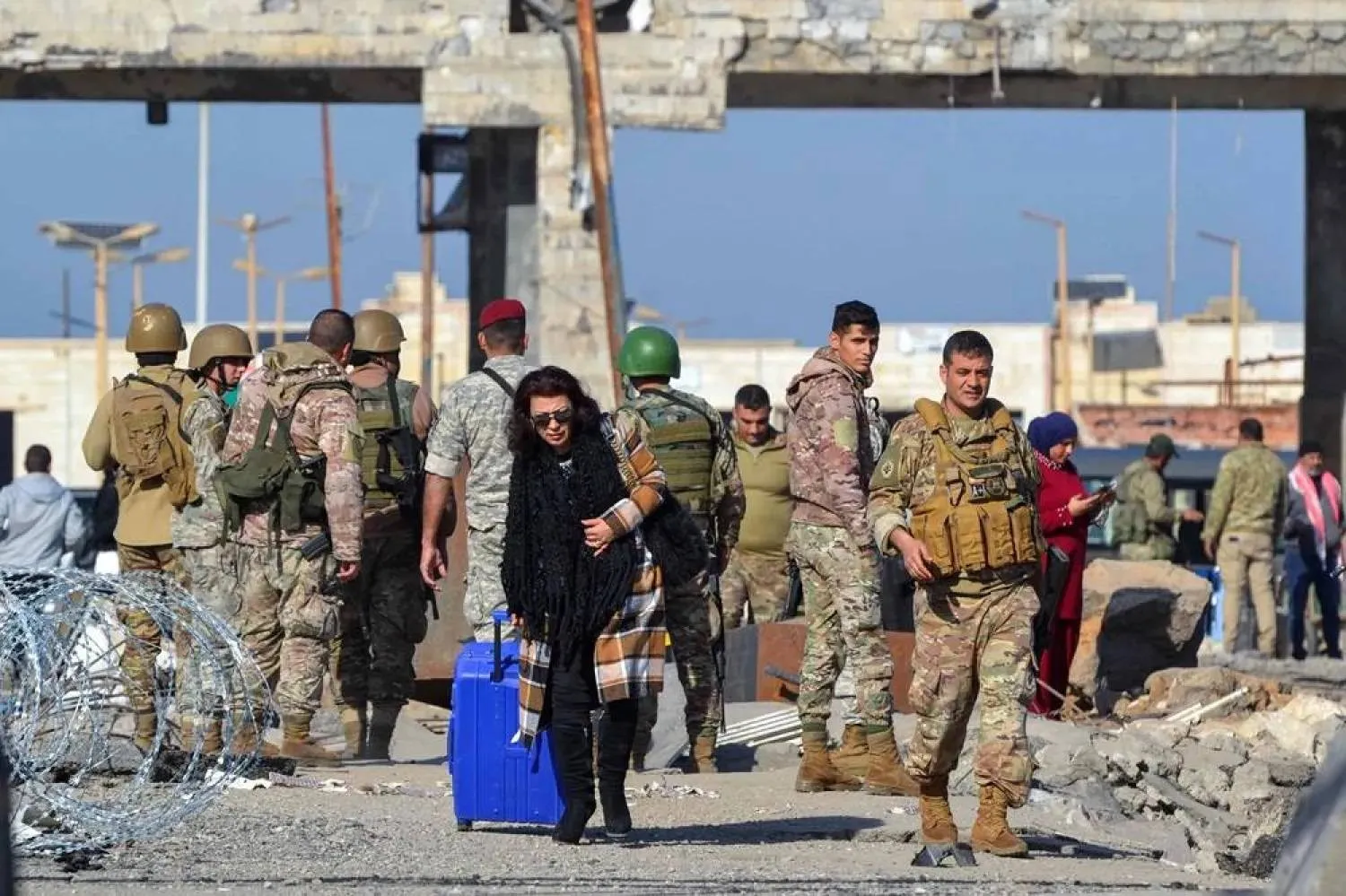
A woman arriving from Syria walks with her luggage into Lebanon through the northern crossing of Al-Arida on December 10, 2024. (AFP)
TT

Former Syrian Officer Killed in Mysterious Circumstances in Lebanon

A woman arriving from Syria walks with her luggage into Lebanon through the northern crossing of Al-Arida on December 10, 2024. (AFP)

Lebanese security agencies discovered the body of former Syrian officer Ghassan Naasan al-Sakhni in the Keserwan region.

Authorities are investigating whether his killing was purely criminal or had a political angle.

The Lebanese army said the killer, a Syrian, has been arrested.

In a statement, it said that the perpetrator had lured Sakhni to the outskirts of the town of Kfar Yassine in Keserwan on December 22. He shot him dead over a financial dispute and fled the scene. He was arrested in the border town of Tal Bire in the northern Akkar region.

Investigations are underway.

Information has so far revealed that Sakhani was an officer in Syrian intelligence agency under the ousted regime of Bashar al-Assad.

He enjoyed close ties with Suheil al-Hassan, also known as the “Tiger”, and who was one of the most prominent members of Syria’s air intelligence. He was involved in bloody clashes during Syria’s civil war, most notably in eastern Ghouta.

Information obtained by Asharq Al-Awsat revealed that Sakhni and dozens of regime members had fled Syria to Lebanon after Assad’s ouster in December 2024.

The probe has so far found that Sakhni had resided in a chalet in the Tabarja region before moving to an apartment in the same area.

While serving in Syria, he headed a military group that was active in the Hama countryside.

The murder has deepened concerns in Lebanon that the country will turn into an arena for settling scores with former regime members, especially since several regime officers and officials had sought shelter in the country after Assad’s ouster.

A judicial source told Asharq Al-Awsat that Keserwan was an unusual place for Sakhni to have sought refuge given that it lies outside Hezbollah’s areas of influence, such as the Bekaa and Beirut’s southern suburbs. Hezbollah was a main ally of the regime.

The new authorities in Syria have reportedly filed requests to Lebanon to turn over some 200 former regime security and military officials.

The judicial source denied the reports.

The only requests tied to former regime officials have been received from the United States, calling for the arrest of former air intelligence chief Jamil al-Hassan and former national security chief Ali Mamlouk, and from France, calling for the probes into Hassan, Mamlouk and Abdul Salam Mahmoud over suspicions they were involved in the killing of French nationals.


UNICEF Stresses Need to Allow Humanitarian Aid into Gaza to Save Children

A Palestinian evacuates with their belongings from the remains of their homes, where they had been living near the Yellow Line, east of the Zeitoun neighborhood in eastern Gaza City, 14 November 2026.EPA/MOHAMMED SABER
TT

UNICEF Stresses Need to Allow Humanitarian Aid into Gaza to Save Children

A Palestinian evacuates with their belongings from the remains of their homes, where they had been living near the Yellow Line, east of the Zeitoun neighborhood in eastern Gaza City, 14 November 2026.EPA/MOHAMMED SABER

The United Nations Children’s Fund (UNICEF) Middle East and North Africa Regional Office said the international community must exert pressure on the Israeli occupation to allow more humanitarian aid into the Gaza Strip and ensure access to children throughout the territory. It stressed that children in Gaza are deprived of the most basic necessities of life.

The office said that despite a year having passed since the announcement of the ceasefire, children in the Gaza Strip continue to suffer, SPA reported.

It noted that 360 children had been killed and more than 1,700 seriously injured since the ceasefire was announced, describing this as a flagrant violation of the ceasefire.

It added that conditions in the Gaza Strip are tragic, particularly with the onset of winter and heavy rainfall. The office also indicated that UNICEF had expanded its humanitarian response since the ceasefire and was working to provide healthcare and safe water to more than one million people. However, humanitarian needs in the Gaza Strip remain far greater than the assistance being provided.

The office stressed that the Israeli occupation continues to tighten restrictions and prevent the entry of some essential supplies, including spare parts for water and sewage systems and shelter materials.


Lebanese, Syrian Interior Ministers Hold 'Special' Meeting in Damascus

Syrian Interior Minister Anas Khattab welcomes Lebanese Interior Minister Ahmad al-Hajjar (Lebanese Interior Ministry)
TT

Lebanese, Syrian Interior Ministers Hold 'Special' Meeting in Damascus

Syrian Interior Minister Anas Khattab welcomes Lebanese Interior Minister Ahmad al-Hajjar (Lebanese Interior Ministry)

Lebanese and Syrian officials continued efforts to strengthen communication and coordination on Sunday as Lebanon's Interior and Municipalities Minister Ahmad al-Hajjar visited Damascus and met his Syrian counterpart, Anas Khattab.

The visit marked another step toward reorganizing relations between the two countries, particularly on security and border issues, amid shared challenges and a growing need for cooperation between their respective agencies.

Al-Hajjar met Khattab at the Syrian Interior Ministry headquarters in the first official meeting between the two ministers. Their talks focused on priorities for bilateral cooperation and mechanisms to improve coordination between the relevant authorities.

Syria's Interior Ministry said Minister Anas Khattab had received his Lebanese counterpart and that the meeting reviewed bilateral relations and explored ways to strengthen security cooperation and coordination between the two ministries, serving the interests of both countries and their peoples while reinforcing regional security and stability.

Al-Hajjar arrived at the Syrian Interior Ministry headquarters on Sunday morning, where Khattab welcomed him at an official reception ceremony.

The Lebanese minister was accompanied by Brig. Gen. Sami Nassif, secretary of the Central Internal Security Council, and a delegation from the Ministry of Interior and Municipalities.

Khattab: Committed to Strengthening Relations

Syrian Interior Minister Anas Khattab described the meeting as special, saying the discussions addressed ways to enhance cooperation and coordination on issues of mutual interest.

According to the Syrian Arab News Agency (SANA), Khattab wrote on X that the two sides had reaffirmed the depth of Syrian-Lebanese relations and their shared commitment to developing ties across all fields in ways that would serve the security and stability of both countries and their peoples.

Sources at Lebanon's Interior Ministry said the meeting lasted more than an hour and a half and covered a range of shared issues, particularly security matters.

These included border control, official and unofficial crossings, measures being implemented along the border and the issue of detainees.

Lebanese Interior Minister Ahmad al-Hajjar also wrote on X that he had been honored to accept an invitation from his Syrian counterpart, Anas Khattab, to visit historic Damascus.

He described stops at the Interior Ministry, the streets of Old Damascus, Bab Touma, the Umayyad Mosque and Mount Qasioun as giving the visit a special character.

Al-Hajjar said the trip had provided an opportunity to discuss cooperation and coordination on several issues, particularly security matters.

He reaffirmed that Lebanon and Syria were brotherly countries and expressed his determination to strengthen cooperation in ways that would serve their shared interests.

The visit follows a series of Lebanese-Syrian contacts and meetings in recent months aimed at developing practical mechanisms to address outstanding bilateral issues.

In August, a joint delegation from Syria's Interior and Foreign Ministries met Al-Hajjar and several senior Lebanese officers in Beirut to discuss major issues of mutual concern and ways to strengthen security cooperation between the two countries.

On the eve of his visit to Damascus, Al-Hajjar stressed the importance of improving relations and coordination between Lebanon and Syria, noting that security cooperation had produced positive results in combating drug trafficking and terrorism.

His visit also followed a Lebanese ministerial delegation's trip to Damascus on November 2, led by Deputy Prime Minister Tarek Mitri.

The delegation included Labor Minister Mohammad Haidar, Education and Higher Education Minister Rima Karami, and Social Affairs Minister Hanine El Sayed, along with a technical delegation from the Interior Ministry.

The Lebanese officials discussed several shared issues with their Syrian counterparts, notably Syrian displacement and the return of refugees, regulating the presence of Syrian nationals in Lebanon, and border control, alongside educational, social and labor matters.

Al-Hajjar had initially been scheduled to join the November 2 visit but postponed his trip to Damascus after an emergency prevented his planned meeting with the Syrian interior minister from taking place.


Yemeni Presidency: Redeployment of Forces Near Bab Al-Mandab a 'Calculated Military Move'

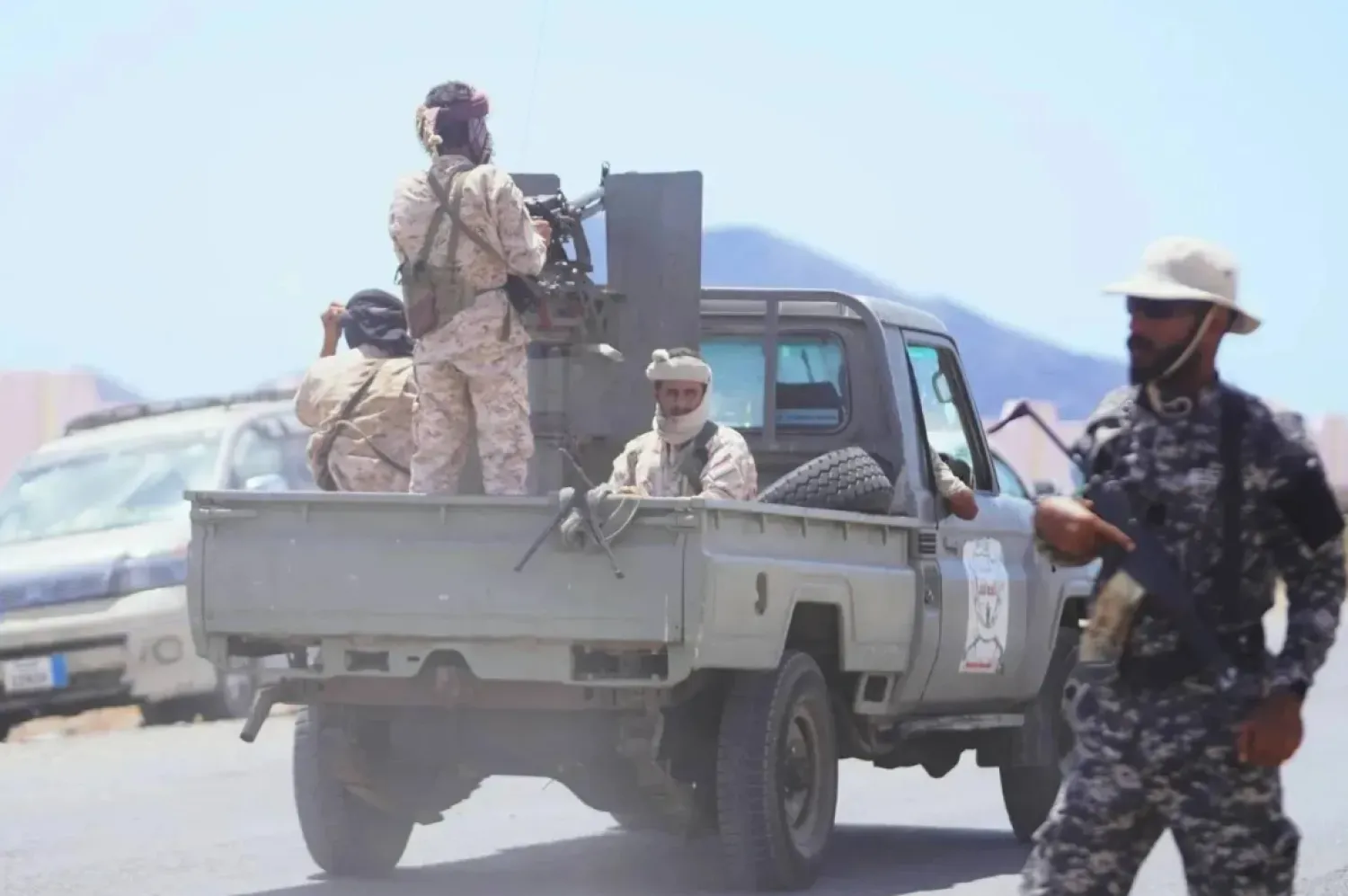
Members of Yemen's Southern Giants Brigades near the Bab Al-Mandab Strait (AP)
TT

Yemeni Presidency: Redeployment of Forces Near Bab Al-Mandab a 'Calculated Military Move'

Members of Yemen's Southern Giants Brigades near the Bab Al-Mandab Strait (AP)

A source in the Yemeni presidency told Asharq Al-Awsat that the Southern Armed Forces' redeployment around Bab Al-Mandab and Dhubab was a calculated military move aimed at achieving three main objectives: protecting Aden, reinforcing the fronts in Lahj and creating the conditions to break the siege of Taiz and liberate the province.

Jaber Mohammed, a media adviser to the Yemeni presidency and former director of the office of Abu Zara'a Al-Muharrami, explained that the redeployment from the vicinity of Bab Al-Mandab and Dhubab should not be interpreted as a withdrawal in the military sense, but rather as a move to redistribute troops and reinforce positions with greater influence over the course of the fighting.

He described the redeployment as a calculated military move intended to protect Aden, strengthen the fronts in Lahj and create the conditions for lifting the siege of Taiz.

Yemeni Armed Forces spokesman Col. Majed Abdullah Al-Nazili said the Southern Forces' commitment to breaking the siege of Taiz represented a national stance at a particularly sensitive stage, stressing that protecting the capital, Aden, and lifting the siege of Taiz were national and moral responsibilities aimed at confronting the threat posed by Houthi militia violations.

According to observers, Aden and its neighboring provinces constitute a strategic hinterland and a major political, economic and population center. Reinforcing defensive lines around the city is therefore closely linked to protecting state institutions and preventing the fighting from spreading toward the capital.

Jaber noted that deploying troops along the exposed coastal strip made them more vulnerable to attack, while the greatest danger lay in the mountainous heights overlooking Bab Al-Mandab, Dhubab and Mayyun Island.

Control of those heights, he explained, would allow the occupying force to threaten the coastline and outflank troops stationed along it.

He added that the Southern Forces had repositioned themselves in the Al-Suqyah area, approximately six to eight kilometers from Bab Al-Mandab, keeping them within the operational area of the front.

A Southern military commander warned that losing the heights overlooking the coast could open the way for an advance toward Lahj and Aden, particularly given the proximity of Ras Al-Arah and Al-Mudaribah to the Al-Buraiqah district of Aden.

He said securing the elevated positions would help protect the coastal strip and allow troops to operate in more militarily advantageous terrain, reducing the strain of maintaining exposed positions.

In a statement, the Southern Armed Forces said the redeployment was a response to changing battlefield priorities and did not represent an abandonment of the fight against the Houthis or efforts to lift the siege of Taiz.

The statement emphasized that protecting Aden, its institutions and its residents remained a priority, alongside reinforcing the front lines and confronting existing threats.

The forces reaffirmed their commitment to continuing operations with the support of the Saudi-led Coalition to Support Legitimacy in Yemen until state institutions were restored and enabled to carry out their responsibilities.

The presidential media adviser said that since the launch of Operation Fajr Yemen on October 5, Southern Forces had advanced toward Dhubab Airport and parts of Bab Al-Mandab and Kahbub.

He noted that Al-Wazi'iyah and the highlands overlooking the coast remained strategically important, adding that, in his assessment, the Kahbub mountains were still under the control of forces affiliated with the Yemeni government.

Jaber Mohammed said assessing the terrain, troop positions, the enemy's weapons and methods of attack was essential to operational planning.

He added that expanding the fighting across multiple fronts could disperse Houthi forces and ease pressure on individual battlefronts.

Meanwhile, Yemeni military sources stressed that Aden's security was nonnegotiable and that any threat to the temporary capital would be met with a firm response.

They said the developments involved more than the redeployment of military units, describing them as part of efforts to prevent new realities from being imposed by force and to safeguard state institutions and national resources.

Yemeni Armed Forces spokesman Al-Nazili had previously emphasized that liberating Bab Al-Mandab and the western coast was an inherent right of the armed forces.

He called on the international community to fulfill its responsibilities by contributing to the liberation efforts, given the strait's vital importance to maritime security and international trade.

Al-Nazili said the armed forces remained united in carrying out their duties to protect the Yemeni people and their resources and confront threats from the Houthi militia.

He reaffirmed that Operation Fajr Yemen would continue pursuing its stated objectives until the threat posed by the Houthis was eliminated.