Egypt's Sisi, King of Jordan Stress Need for Full Implementation of Gaza Ceasefire

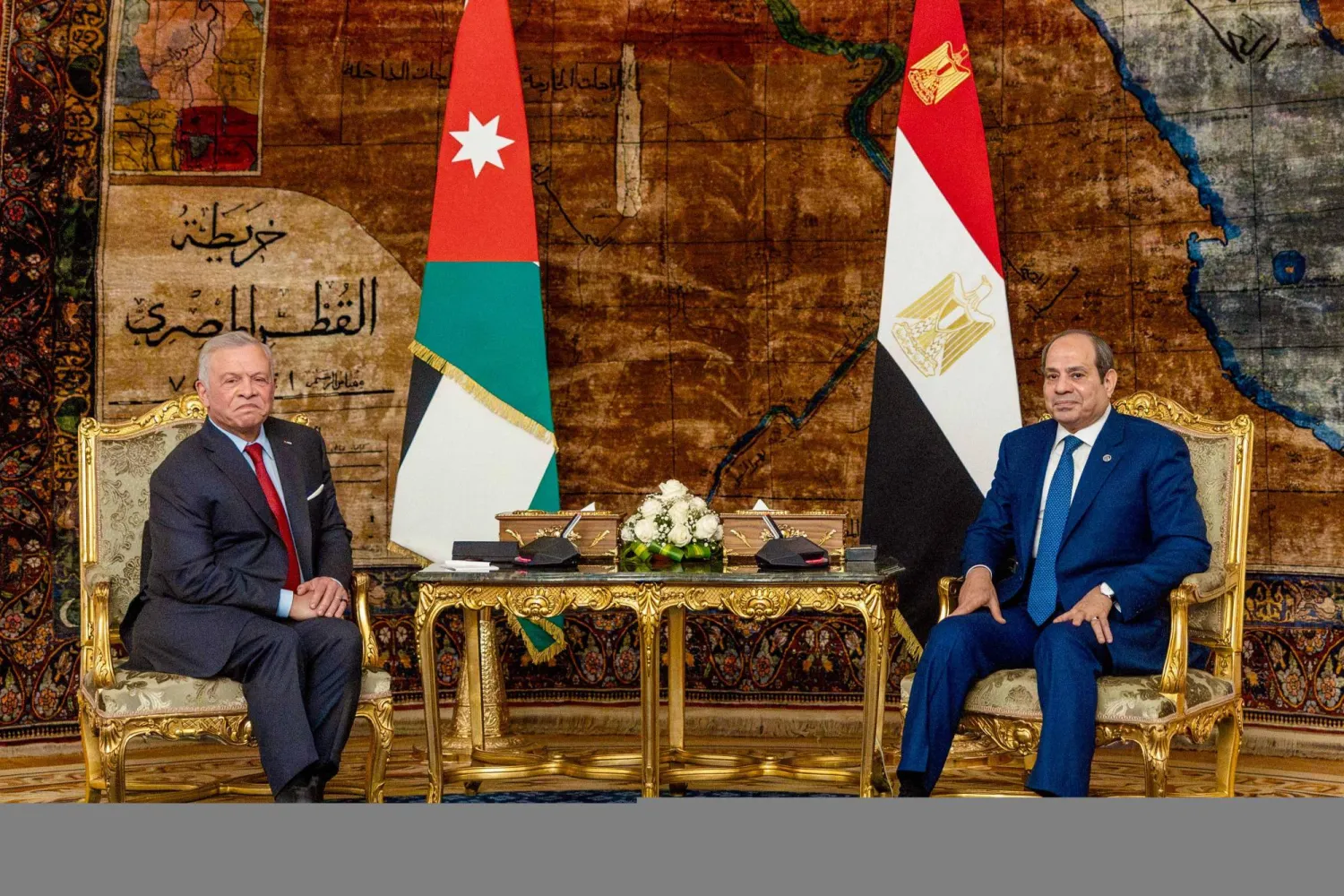
A handout picture released by Jordanian Royal Palace on February 1, 2026, shows Jordan's King Abdullah II meeting with Egypt's President Abdel Fattah al-Sisi (R) at the al-Ittihadiya Presidential Palace in Cairo. (Handout / Jordanian Royal Palace / AFP)
TT

Egypt's Sisi, King of Jordan Stress Need for Full Implementation of Gaza Ceasefire

A handout picture released by Jordanian Royal Palace on February 1, 2026, shows Jordan's King Abdullah II meeting with Egypt's President Abdel Fattah al-Sisi (R) at the al-Ittihadiya Presidential Palace in Cairo. (Handout / Jordanian Royal Palace / AFP)

Egyptian President Abdel Fattah al-Sisi and Jordan's King Abdullah II stressed on Sunday the need for the full implementation of the Gaza ceasefire and US President Donald Trump's peace plan.

The leaders met in Cairo for talks on the developments in Gaza, said the Egyptian Presidency.

They reiterated Egypt and Jordan's firm rejection of any attempts to displace the Palestinian people and Israel's "violations and arbitrary practices" against Palestinians in the occupied West Bank, said a presidency spokesman.

They underlined the need to establish an independent Palestinian state with East Jerusalem as its capital, saying it is the only way to achieve peace and stability in the Middle East.

Sisi and King Abdullah also discussed regional developments, urging the need for de-escalation and to resolve disputes through peaceful means, added the spokesman.


Israel Fears SDF-Like Agreement in South Syria

A resident greets Syrian government forces south of Hasakah, in northeastern Syria, on Jan. 20, 2026. (Credit: Omar Haj Kadour/AFP) 
TT

Israel Fears SDF-Like Agreement in South Syria

A resident greets Syrian government forces south of Hasakah, in northeastern Syria, on Jan. 20, 2026. (Credit: Omar Haj Kadour/AFP) 

As the United States seeks to activate the joint Syrian-Israeli Mechanism Committee and invite it to meet again within the next two weeks, political sources in Tel Aviv revealed that the government of Benjamin Netanyahu is further disputing with Washington over Damascus.

The government considers the US policy in Syria as “silly and not compatible with the nature of the broiling Middle East,” the sources said.

According to far-right newspaper Makor Rishon, “Israel expressed frustration with the US administration's policy in Syria, including Washington’s support and confidence in the rule of Syrian President Ahmad al-Sharaa, who has not yet proven he cleared his past associated to the Hay’at Tahrir al-Sham.”

Misgav Institute Fellow, Dr. Elie Klutstein, wrote that Washington is looking out for its own interests in Syria while placing Israel's security interests on the sidelines.

Klutstein said the Israeli government should confront Washington to insist on its interests at any cost.

Israel fears the new regime in Syria succeeds at consolidating itself. Tel Aviv bets on an ethnically and sectarian fragmented country and could not support the idea of a “united Syria.”

Israel is particularly angered by an agreement between the Syrian Democratic Forces (SDF) and the Syrian government in the north, that would guarantee the unity of the Syrian territory.

Today, Israel also fears al-Sharaa government will reach a similar agreement with the Druze in the province of Sweida, south of the country.

The majority of Druze leaders in the south are concerned with the unity of Syria, and are ready to ink an agreement with the government in return of guarantees that attacks by its forces will not be repeated.

The leaders also argue that only a small Druze community opposes al-Sharaa regime and therefore, will eventually succumb to an agreement if the government is serious in granting them minority rights.

Last week, Hebrew media outlets said the comprehensive agreement between Kurdish-led Syrian SDF factions and the Syrian government to integrate with the Syrian army is not an arrangement between two equal parties.

“This is a Kurdish submission to Ahmed al-Sharaa that happened after government supporters dismantled the SDF from the inside, and brough several factions closer to the regime,” the Hebrew media wrote.

Earlier, US sources said Türkiye informed the US administration it supports a centralized Syrian state and rejects any Kurdish canton in the northeast.

In return, Israel’s government conveyed to Washington its opposition to a centralized Syria, preferring a federal model.

Sources said Netanyahu is angered by the outcome in northeastern Syria and considers US Special Envoy to Syria tom Barrack biased toward Ankara.

The Israeli circles see Türkiye as the 'biggest winner' from the collapse of the SDF.

Therefore, the Israeli government reiterated that it will not accept Turkish troop presence in Syria and insists on protecting Druze communities in southern Syria.

Tel Aviv’s response to the agreement between SDF forces and al-Sharaa’s government was translated on Friday, when Israeli forces entered two locations in southern Syria: the Saida al-Hanout village in the southern Quneitra countryside and the village of Samdaniya al-Sharqiya in the northern Quneitra countryside.

An Israeli patrol, consisting of seven military vehicles, erected a barrier west the village of Saida in Hanout, before withdrawing from the area.

This development came while the US plans to invite the joint Syrian-Israeli Mechanism Committee to again meet in Amman within the next two weeks and resume direct official talks between the two countries.

The joint fusion mechanism -- a dedicated communication cell -- aims to facilitate immediate and ongoing coordination on the two countries’ intelligence sharing, military de-escalation and diplomatic engagement under the supervision of the United States.


Hezbollah Slams the 'Mechanism' Committee and Lebanese President's Envoy

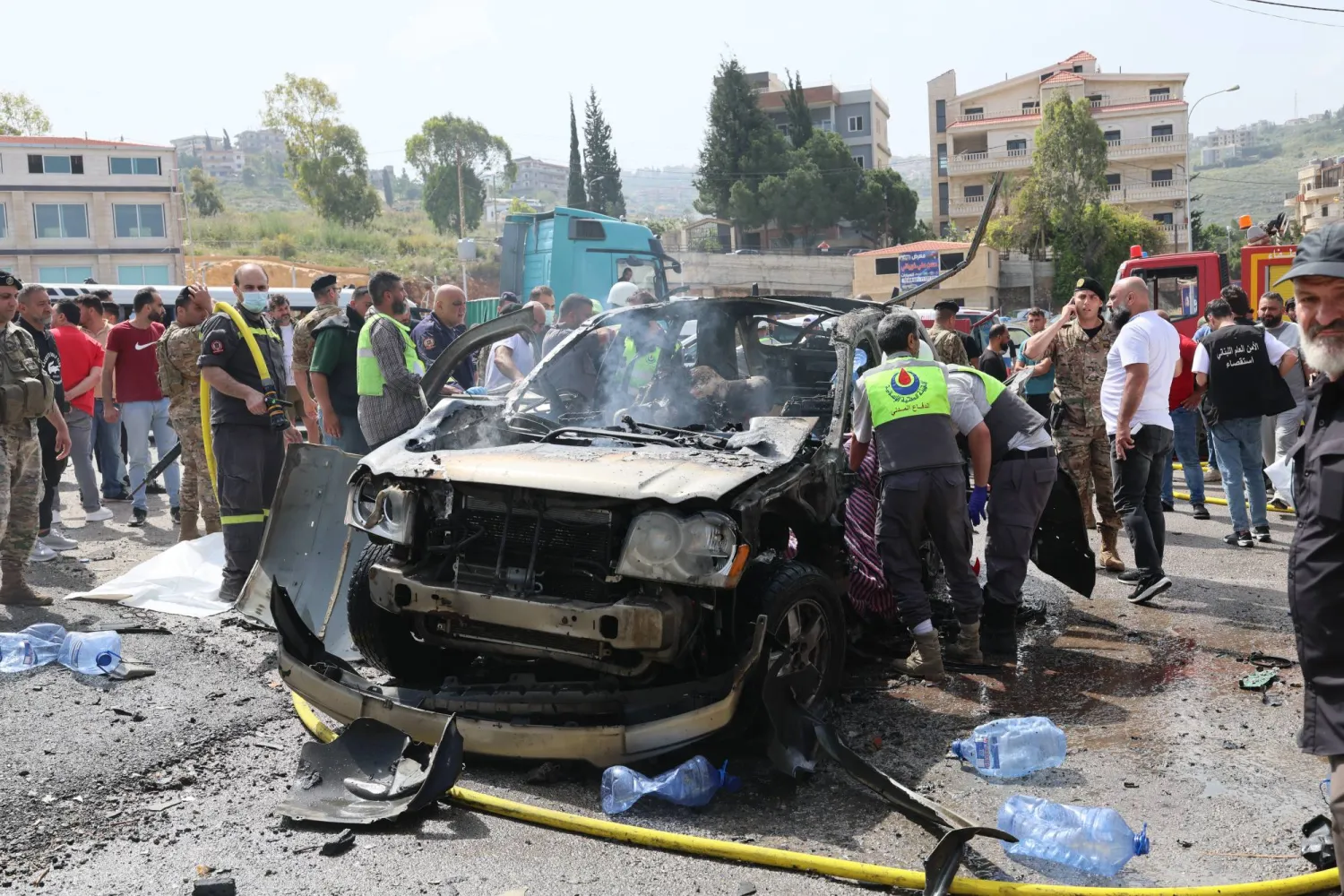
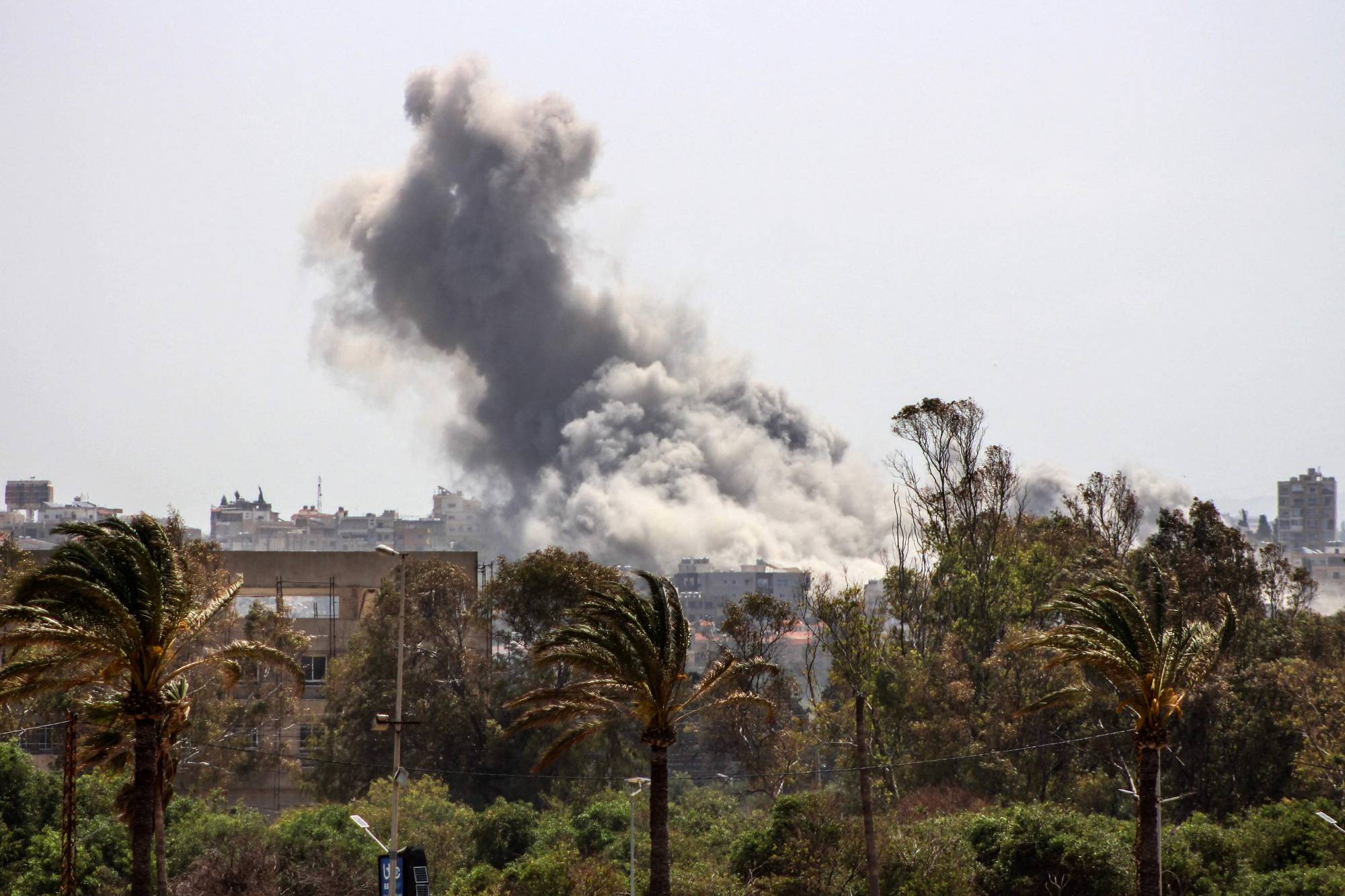
A view of the damage on the site a day after a series of Israeli airstrikes struck a large piece of industrial machinery in the southern Lebanese village of Al-Marwanieh, Lebanon, on 31 January 2026. (EPA)
TT

Hezbollah Slams the 'Mechanism' Committee and Lebanese President's Envoy

A view of the damage on the site a day after a series of Israeli airstrikes struck a large piece of industrial machinery in the southern Lebanese village of Al-Marwanieh, Lebanon, on 31 January 2026. (EPA)

Hezbollah slammed the "mechanism" committee and head of Lebanon's delegation Ambassador Simon Karam, deeming his recent statements a violation of the committee's duties and a precursor to Israel intervening in Lebanon beyond the November 2024 ceasefire agreement.

Hezbollah accused Karam of violating the "technical role" of the committee and of making political statements that "undermine Lebanon's sovereignty and the rights of the Lebanese people and resistors."

The accusations are the latest in a campaign the Iran-backed party has been waging since the beginning the year over efforts to hand over its weapons north of the Litani River. The disarmament is part of a government decision to impose state monopoly over weapons across the country.

The first phase of the plan covered regions south of the Litani and focus has now shifted to areas north of it.

Hezbollah has refused to lay down its weapons in defiance of the state, notably President Joseph Aoun whose recent statements confirming that authorities are forging ahead with the plan have put him at odds with the party and made him a target of its attacks.

A Hezbollah statement on Sunday said the "mechanism" has a purely technical role that is limited to south of the Litani.

"Any improvised proposals only allow the Israeli enemy to meddle in issues not covered in the ceasefire," it added.

The party said appointing a diplomat - Karam - as head of the Lebanese delegation in the mechanism was "a second sin no less significant than the sin of" imposing state monopoly over arms, "especially amid the Zionist occupation of Lebanese territories and continued daily violations against the people and nation."

Hezbollah expressed its "categorical rejection" of attempts to expand the authority of the committee under various diplomatic or political excuses.

The statement also slammed remarks by Karam who cast doubt over Hezbollah's cooperation with the army's disarmament efforts south of the Litani.

Karam's remarks contradict Aoun and other official statements that asserted that the party had indeed cooperated with the military in line with the ceasefire, added Hezbollah.

Ministerial sources told Asharq Al-Awsat, however, that the party was not cooperative with the army, but chose to simply not stand in its way as it implemented the disarmament plan.

The army itself was discovering Hezbollah tunnels and weapons caches, while the party never offered to give it the locations of these sites, they stressed.

Residents of the South were actually notably cooperative with the army, who often pointed them in the direction of caches, they revealed.

The sources rejected Hezbollah's accusations against Karam, dismissing them as an attempt to rally support among its own supporters.

Moreover, they stressed that the authorities will continue with the disarmament plan north of the Litani, noting however the delicate task demands a balanced political and security approach, which officials, led by the president, are working on.


Syria Kurds Impose Curfew in Northeast Cities before Govt Deal Begins

TOPSHOT - Members of Kurdish-led Syrian Democratic Forces (SDF) arrive at the Kurdish-held city of Ain al-Arab, also known as Kobane on January 23, 2026, after they withdrew from the Al-Aqtan prison in the Raqa province of Syria. (Photo by AFP)
TT

Syria Kurds Impose Curfew in Northeast Cities before Govt Deal Begins

TOPSHOT - Members of Kurdish-led Syrian Democratic Forces (SDF) arrive at the Kurdish-held city of Ain al-Arab, also known as Kobane on January 23, 2026, after they withdrew from the Al-Aqtan prison in the Raqa province of Syria. (Photo by AFP)

Syrian Kurdish security forces on Sunday announced a curfew early next week in two cities in the country's northeast, ahead of the implementation of a recent deal struck with the government in Damascus.

Damascus and Kurdish forces reached a comprehensive agreement on Friday to gradually integrate the Kurds' military and civilian institutions into the state, after the Kurds ceded territory to advancing government forces in recent weeks.

Mazloum Abdi, head of the Kurdish-led Syrian Democratic Forces, has said the deal would be implemented on the ground from Monday, with both sides to pull forces back from frontline positions in parts of the northeast, and from the town of Kobane in the north, said AFP.

He said a "limited internal security force" would enter parts of Hasakeh and Qamishli but that "no military forces will enter any Kurdish city or town".

Kurdish security forces announced a curfew in the northeastern city of Hasakeh from 6:00 am (0300 GMT) to 6:00 pm on Monday, and in the northeast's main Kurdish city of Qamishli on Tuesday, during the same hours.

It said the move was "to maintain security, stability and the safety of residents".

A source from the Kurds' security forces said a government security delegation visited its headquarters in Qamishli on Sunday.

The text of Friday's deal maintains an ongoing ceasefire and introduces a "gradual integration" of the Kurdish forces and administrative institutions.

It appeared to include some of the Kurds' demands, such as establishing brigades of fighters from the Kurdish-led Syrian Democratic Forces (SDF) in Kurdish-majority areas.

The government's push to extend its authority across the country was a blow to the Kurds.

They had sought to preserve the de facto autonomy they exercised after seizing swathes of north and northeast Syria in battles against the ISIS extremist group during Syria's civil war, backed by a US-led coalition.

- 'Protects us' -

In Qamishli on Sunday, thousands of Kurdish men, women and children filled the streets in a show of solidarity, waving Kurdish flags and holding up pictures of fighters who were killed, an AFP correspondent said.

Student Barine Hamza, 18, said "we have come out for Kurdish unity".

"We are afraid of being betrayed because we do not trust this government," she said.

Housewife Nourshana Mohammed, 40, said that "the presence of the SDF is important for us. It protects us Kurds and saved us" from ISIS.

Information Minister Hamza Mustafa told state media on Friday that the agreement included the handover of some oil fields, the Qamishli airport and border crossings to the government within 10 days.

He said SDF fighters would be integrated on an individual basis into several brigades being formed under the army's command.

The United States, which has drawn close to Syria's new authorities, recently said the purpose of its alliance with the Kurdish forces was largely over.

Also on Sunday, the head of internal security in Aleppo province, Mohammed Abdul Ghani, told reporters he met with Kurdish forces in Kobane to discuss security matters there "and begin the deployment of interior ministry forces", without announcing a timeframe.

He said technical details still needed to be settled, but that the response from the Kurdish side was "positive".

Located in Aleppo province more than 200 kilometers (125 miles) from other Kurdish-held areas in Syria's northeast, Kobane is hemmed in by the Turkish border to the north and Syrian government forces on other sides.

Kurdish forces liberated Kobane from a lengthy siege by ISIS in 2015 and it took on symbolic value as their first major victory against the extremists.

On Saturday, NGOs and a Turkish MP said Turkish authorities had blocked a convoy carrying aid to Kobane from across the border.