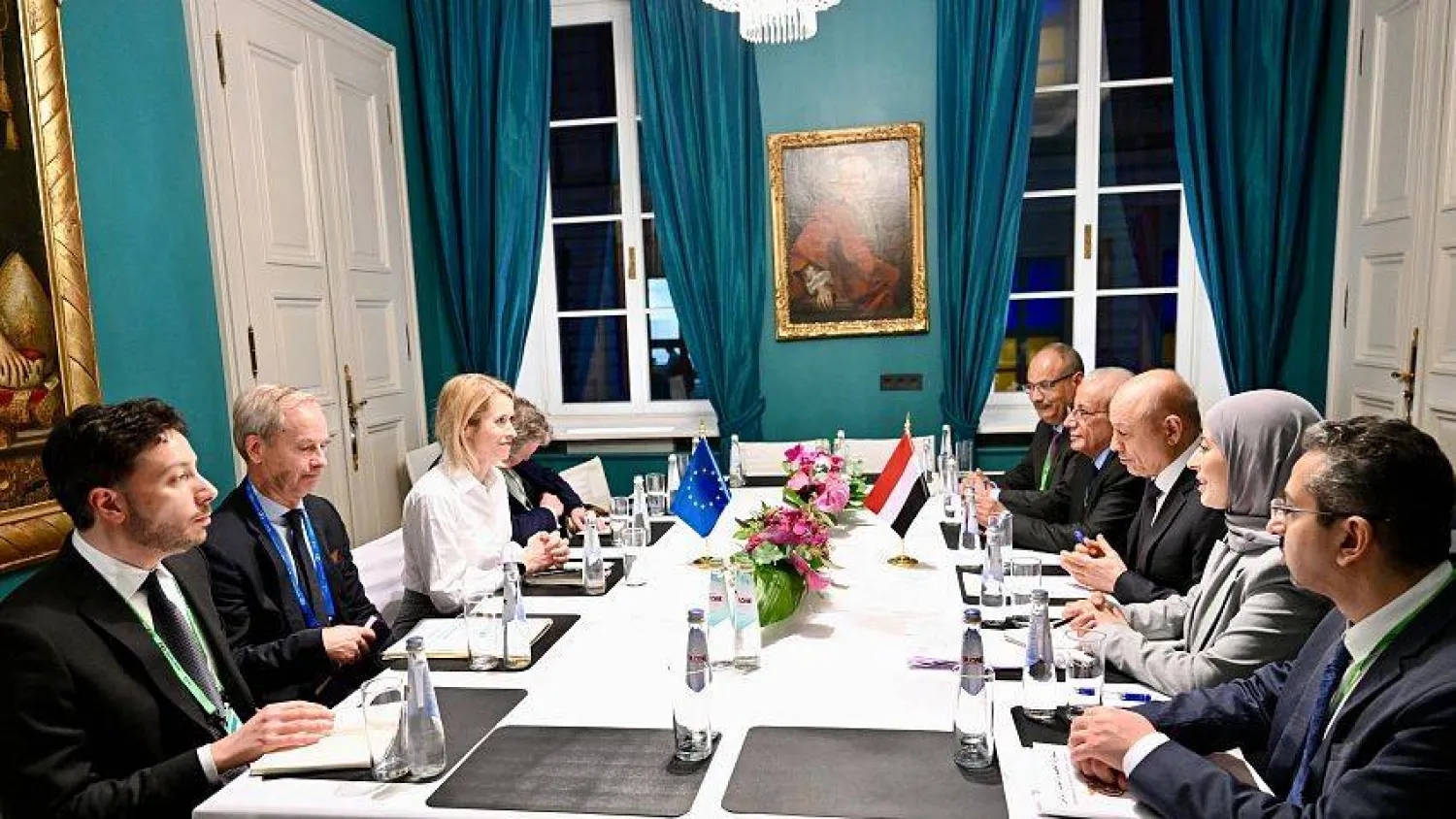

Chairman of Yemen’s Presidential Leadership Council Dr. Rashad al-Alimi sought at the Munich Security Conference to frame his country’s crisis as an international security issue.
He met several American and European officials and global leaders to underscore to them that the conflict in Yemen is not simply an internal affair, rather it is directly tied to the security of international marine navigation, energy stability and counterterrorism efforts.
He stressed that supporting the Yemeni state is not just a political choice, but a strategic need to protect regional and international stability.
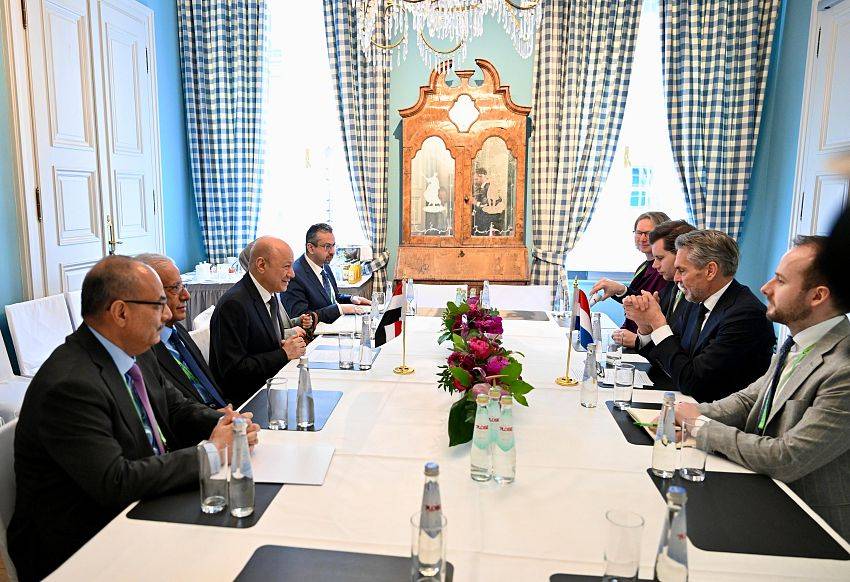
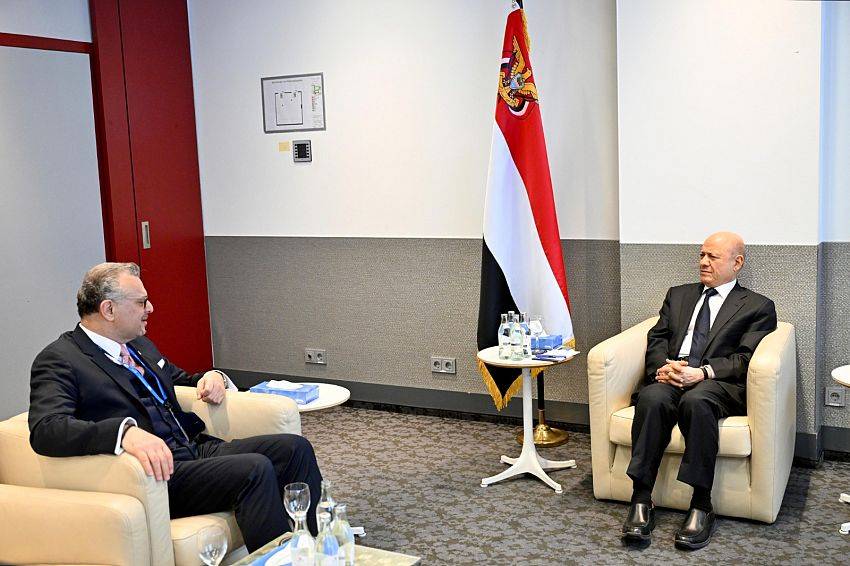
Al-Alimi held a series of meetings with Finnish President Alexander Stubb, Dutch Prime Minister Dick Schoof, European Union foreign policy chief Kaja Kallas and US Senior Advisor for Arab and African Affairs Massad Boulos.
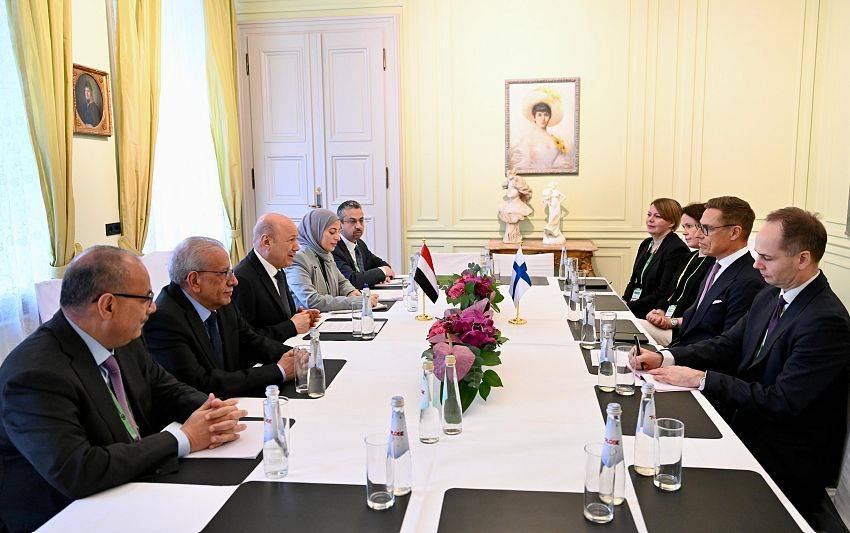
Throughout the meetings, al-Alimi urged the international community to change its approach to Yemen, to shift from crisis management to resolving it.
He warned that maintaining the situation will allow the Iran-backed Houthi militias to renew their threats to international shipping in the Red Sea, which they have been using for political and security extortion.
A lax approach towards the Houthis may lead to them expand their threats to the Arabian Sea and other vital waterways, he went on to say, while praising Europe’s role in protecting marine navigation.
Moreover, al-Alimi said Yemen’s stability is tied to reducing Iran’s influence in the region.
Tehran’s armed proxies in the region are the main threat to security, he stressed. The region is going through a major change given the international pressure on Iran. Weakening its proxies will create a historic opportunity to end its influence in Yemen.
Al-Alimi called on Europe to adopt a firmer approach towards Iran’s Revolutionary Guards Corps and to designate it as terrorist.
He also said the Houthi militias are among Iran’s most dangerous regional proxies and adopting a lax approach towards them will only prolong the war in Yemen.
Confronting the challenge posed by Iran demands support to the Yemeni state, he added.
Ensuring the success of the state is the best long-term investment in Gulf and Red Sea security and global peace, he said.
Al-Alimi also noted the recent internal changes in Yemen, hailing Saudi Arabia’s support in that regard. The changes included unifying the security and military commands, the formation of a new government, launching a reform program, and improving services.