Sentences of Up to 15 Years for Tunisian Synagogue Attack

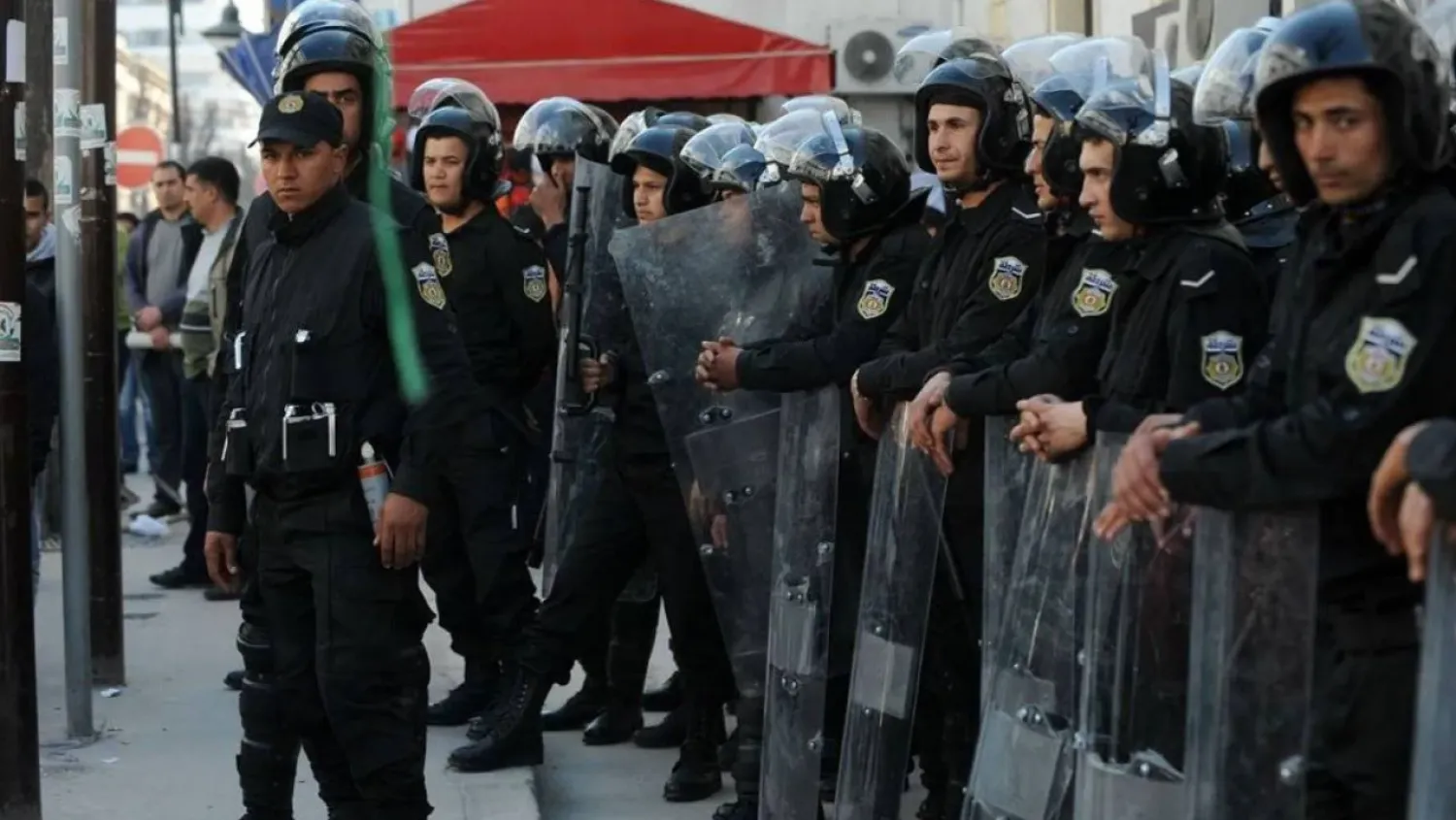
Tunisian police - File Photo/AFP
TT

Sentences of Up to 15 Years for Tunisian Synagogue Attack

Tunisian police - File Photo/AFP

Tunisian courts handed down prison sentences of up to 15 years to five defendants tied to a deadly May 2023 attack on a synagogue on the island of Djerba, one of their lawyers told AFP Monday.

The attack on the Ghriba synagogue left five people dead, not including the assailant, a National Guard officer, who was killed during the attack.

A student and the attacker's fiancee, who were prosecuted for "complicity in homicide" and "membership in a terrorist group," were sentenced to three and eight years in prison respectively, said Nizar Ayed, lawyer for several victims of the attack.

According to Ayed, the assailant acted "as a lone wolf".

Two other defendants, whose exact roles were not disclosed, were sentenced to seven and 15 years' imprisonment, with the heavier penalty given out because the defendant had fled justice, according to the lawyer.

The assailant's sister, currently out on bail, was sentenced to one year in prison.

The defense for the accused will appeal, Mustapha Mlaouah, the fiancee's lawyer, said.

On May 9, 2023, the attacker killed three of his colleagues as well as two Jewish worshippers, Aviel Haddad, a 30-year-old Tunisian, and his cousin Benjamin, a 42-year-old French national.

He shot dead one colleague while working at the island's port and then drove to the synagogue, about 20 kilometres away, where hundreds of people were taking part in the third day of an annual Jewish pilgrimage.

There he killed the two Jewish men and wounded several officers providing security, two of whom died later from their wounds.

The student's mother told AFP during a hearing that her family merely rented a studio to the assailant.

"I sometimes cooked for him and asked my son to take him food -- our generosity backfired on us," said Latifa Jlidi.


Al-Hamidawi: Iran’s Elusive Man in Iraq

A photo believed to be al-Hamidawi wearing a mask, sunglasses and a head covering during his only public appearance on Nov. 6, 2021.
TT

Al-Hamidawi: Iran’s Elusive Man in Iraq

A photo believed to be al-Hamidawi wearing a mask, sunglasses and a head covering during his only public appearance on Nov. 6, 2021.

Conflicting reports have emerged about the fate of Kataib Hezbollah leader Abu Hussein al-Hamidawi after a strike early Saturday targeted a house linked to the group in Baghdad’s Karrada district.

Some reports said al-Hamidawi was killed in the attack, while others suggested he survived. A video circulated online later appeared to show a man believed to be al-Hamidawi with a head injury.

The incident has again drawn attention to the figure often described as “Iran’s mysterious man in Iraq.”

Despite the influence of Kataib Hezbollah — founded by Abu Mahdi al-Muhandis, the former deputy head of Iraq’s Popular Mobilization Forces (PMF) who was killed in a US strike near Baghdad International Airport in January 2020 — the group’s leadership has long remained shrouded in secrecy.

Although the faction plays a key military role within the PMF and has been linked to attacks targeting US interests in Iraq, its senior figures rarely appear in public and operate under strict security protocols that limit information about them.

Shadowy figure

The name Ahmad Mohsen Faraj al-Hamidawi, better known by the nom de guerre Abu Hussein al-Hamidawi, has been associated with several major developments in Iraq in recent years. Yet reliable details about him remain scarce. Apart from widely circulated images of his father, Mohsen al-Hamidawi, the commander himself has largely remained absent from public view.

Available information indicates al-Hamidawi was born in Baghdad in 1971. His family is believed to originate from the southern province of Maysan, likely moving to the capital in the 1950s or 1960s.

Some reports suggest he comes from a family with influence inside Kataib Hezbollah.

His son, Zaid al-Hamidawi, is widely believed to run the “Abu Ali al-Askari” account on X, which releases statements attributed to the group. His brothers are also said to hold senior roles within the faction.

Sources close to PMF factions say al-Hamidawi maintains strict security measures. He rarely uses mobile phones or electronic devices directly and communicates through trusted aides, with knowledge of his movements restricted to a very small circle.

Despite the secrecy surrounding him, al-Hamidawi has long been described as a key Iranian-aligned figure in Iraq. His role in Kataib Hezbollah has also placed him under US sanctions.

In February 2020, the US State Department designated him a Specially Designated Global Terrorist (SDGT) for leading the group, which Washington classified as a terrorist organization in 2009.

Kataib Hezbollah

Kataib Hezbollah and its leader have been accused by activists from Iraq’s 2019 protest movement of involvement in killings and assassinations of demonstrators.

The group is also widely believed to be responsible for multiple attacks targeting the US Embassy in Baghdad and locations hosting American forces across the country.

Some Shiite political circles regard it as the most powerful Iran-aligned armed faction in Iraq, closely linked to Iran’s Revolutionary Guard Corps.

In November 2023, the US Treasury imposed additional sanctions on leaders of Iraqi armed factions and reaffirmed restrictions on al-Hamidawi as the head of Kataib Hezbollah.

Further sanctions followed in January 2024 targeting members of the group, including his brother Awqad al-Hamidawi, on accusations of providing logistical support and facilitating the group’s financial and operational activities.


Iraq Warns of Strikes Near Prison Housing ISIS Detainees

 An Iraqi army armored humvee vehicle is deployed near the banks of the Tigris River to protect the US Embassy fortified "Green Zone" in Baghdad, Saturday, March 14, 2026. (AP)
An Iraqi army armored humvee vehicle is deployed near the banks of the Tigris River to protect the US Embassy fortified "Green Zone" in Baghdad, Saturday, March 14, 2026. (AP)
TT

Iraq Warns of Strikes Near Prison Housing ISIS Detainees

 An Iraqi army armored humvee vehicle is deployed near the banks of the Tigris River to protect the US Embassy fortified "Green Zone" in Baghdad, Saturday, March 14, 2026. (AP)
An Iraqi army armored humvee vehicle is deployed near the banks of the Tigris River to protect the US Embassy fortified "Green Zone" in Baghdad, Saturday, March 14, 2026. (AP)

Iraq warned on Sunday that drone attacks near Baghdad airport threatened the security of the nearby prison housing ISIS group suspects recently brought from Syria.

In February, the United States completed the transfer of 5,700 ISIS detainees from Syria to Iraq.

They have been held since in Baghdad's al-Karkh prison, once a US Army detention center known as Camp Cropper, which is part of Baghdad airport's complex.

Justice ministry spokesperson Ahmed Laibi said in a statement that "the areas surrounding Baghdad International Airport and the airport prison (Al-Karkh Central) have been subjected to repeated strikes".

Some strikes hit "near the facility, raising concerns regarding the impact on the security of a prison that houses high-risk terrorist inmates", Laibi added.

The most intense strikes took place Saturday, hitting "in very close proximity to the prison," he said.

Since the start of the Middle East war, Tehran-backed armed groups have been claiming daily drone and rocket attacks against US bases in Iraq.

Baghdad airport houses a US diplomatic facility and until recently also hosted troops from the US-led international coalition against exremists.

Laibi said while security measures were in place to "ensure stability", "the frequency of these attacks and the proximity of falling projectiles remain a cause for concern".

ISIS swept across Syria and Iraq in 2014, committing massacres. Backed by US-led forces, Iraq proclaimed the defeat of ISIS in the country in 2017, and the Kurdish-led Syrian forces ultimately beat back the group in Syria two years later.


Hospital Officials Say an Israeli Strike Killed 4 in Gaza, Including a Child and His Pregnant Mother

 Palestinians walk amid a sandstorm in a tent camp sheltering Palestinians displaced during the two-year Israeli offensive, in Khan Younis in the southern Gaza Strip, March 14, 2026. (Reuters)
Palestinians walk amid a sandstorm in a tent camp sheltering Palestinians displaced during the two-year Israeli offensive, in Khan Younis in the southern Gaza Strip, March 14, 2026. (Reuters)
TT

Hospital Officials Say an Israeli Strike Killed 4 in Gaza, Including a Child and His Pregnant Mother

 Palestinians walk amid a sandstorm in a tent camp sheltering Palestinians displaced during the two-year Israeli offensive, in Khan Younis in the southern Gaza Strip, March 14, 2026. (Reuters)
Palestinians walk amid a sandstorm in a tent camp sheltering Palestinians displaced during the two-year Israeli offensive, in Khan Younis in the southern Gaza Strip, March 14, 2026. (Reuters)

At least four Palestinians, including a boy and his pregnant mother, were killed Sunday by an Israeli airstrike in the war-torn Gaza Strip, hospital authorities said.

The strike hit a house in Nuseirat, an urban refugee camp in central Gaza, killing a couple and their young son, according to the nearby Al-Aqsa Martyrs Hospital. The fourth fatality was taken to the Awda hospital in Nuseirat.

There was no immediate comment from the Israeli military.

The deaths were the latest fatalities among Palestinians in the coastal enclave since an October ceasefire deal attempted to halt a more than two-year war between Israel and Hamas in Gaza.

While the heaviest fighting has subsided, the ceasefire has still seen almost daily Israeli fire. Israeli forces have carried out repeated airstrikes and frequently fire on Palestinians near military-held zones, killing more than 650 Palestinians, according to Gaza health officials.

Israel says it has responded to violations of the ceasefire or targeted wanted fighters. But about half of those killed have been women and children, according to the Gaza Health Ministry.

They were among more than 72,200 Palestinians killed in the war which was triggered when Hamas-led gunmen attacked southern Israel on Oct. 7, 2023. The militant attack killed over 1,200 people and took over 250 others hostage.

The health ministry, which is part of the Hamas-led government, maintains detailed casualty records that are seen as generally reliable by UN agencies and independent experts. But it does not give a breakdown of civilians and fighters.

Fighters have carried out shooting attacks on troops, and Israel says its strikes are in response to that and other violations. Four Israeli soldiers have been killed since the ceasefire.