
Syria’s efforts to remain largely outside the direct line of fire in the war between the United States and Israel on one side and Iran on the other have not spared it the consequences rippling across the region.
Missile debris has fallen on scattered parts of the country, gas and electricity shortages have resurfaced, border crossings with Lebanon have become crowded with Syrians returning home, and cargo shipments have been disrupted.
Long electricity outages, shortages of household cooking gas and rising prices have again cast a heavy shadow over daily life, only months after a period of relative improvement.
The Syrian Ministry of Energy said Monday that the reduction in electricity supply hours was due to a decline in natural gas volumes arriving through Jordan and allocated to operate power-generation stations. The ministry said the shortfall was tied to the current regional escalation, which has temporarily made it impossible to maintain gas flows under previous agreements.
In a statement published on its official channels, the ministry said technical teams are continuing to manage the electricity system using available domestic gas production. It added that rationing is being set according to available capacity to ensure grid stability and continued operation, while efforts continue to boost local gas output to support the power system and improve supply in the next phase.
Jordan Temporarily Halts Gas Deliveries
In what was described as an early direct reflection of the regional escalation, Jordan has temporarily halted gas deliveries to Syria, according to a report published Monday by the energy platform Al-Taqa.
Citing unnamed sources, the report said Israel’s cutoff of gas supplies to Jordan pushed Amman to prioritize domestic demand.
Syria relies in part on gas coming from Jordan to support electricity generation, amid weak local production and infrastructure worn down over recent years.
The Syrian government began receiving natural gas through Jordan on Jan. 8 at a rate of 4 million cubic meters per day under an agreement linked to the Arab Gas Pipeline. Damascus also signed an agreement with Jordan to supply Syria with about 140 million cubic feet per day in an effort to ease the country’s electricity crisis.
Missile Debris and Growing Caution
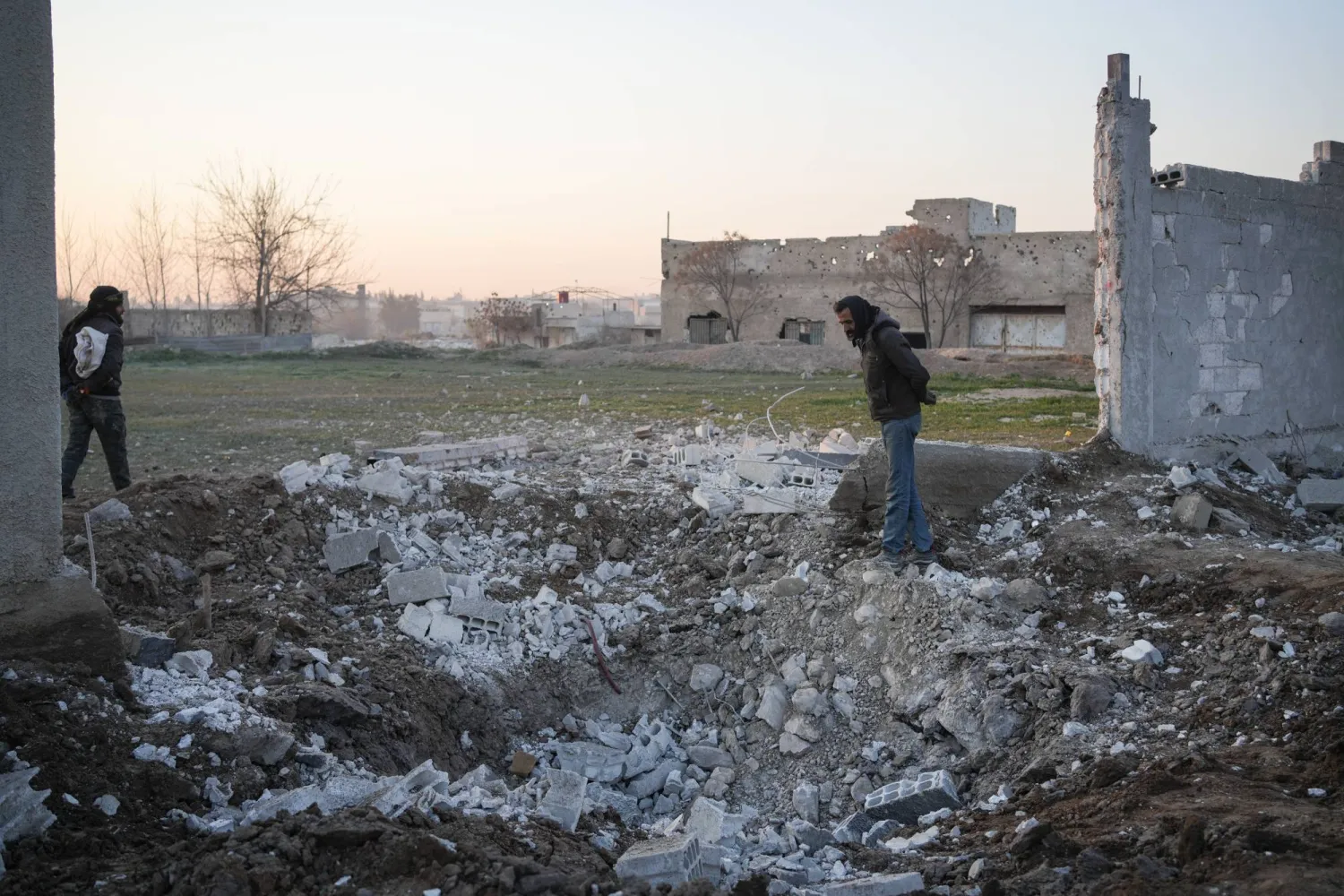
On Monday, authorities in Damascus said a transformer at the Al-Otaybah industrial substation in the Damascus countryside was knocked out of service after it was hit by falling missile debris resulting from the exchange of strikes between Israel and Iran.
Caution has spread across parts of rural Damascus and southern Syria after missile remnants fell over the past two days, injuring civilians. Local sources in Daraa province said schools were closed and residents were urged to limit movement and gatherings and to avoid unfamiliar objects.
Syrian Civil Defense teams responded Monday to an incident involving the fall of military objects in the village of Al-Futaih, in the Ain Al-Sharqiyah area of the Jableh countryside on Syria’s coast. The Ministry of Emergency Situations said the incident was linked to the ongoing regional developments and urged citizens to follow safety guidance.
Israeli Arrest and Crowded Border Crossings
Amid heightened tensions, Israel has continued violations inside Syrian territory, according to the report. Israeli forces detained a shepherd on Monday west of the village of Kudna in the southern Quneitra countryside.
The Syrian Arab News Agency, SANA, said “occupation forces escorted the young man into the occupied territories,” with no further information available on his fate.
As the escalation widens and Hezbollah in Lebanon comes under attack, Syrian-Lebanese border crossings have seen heavy movement, with large numbers of Syrians leaving Lebanon and returning to Syria.