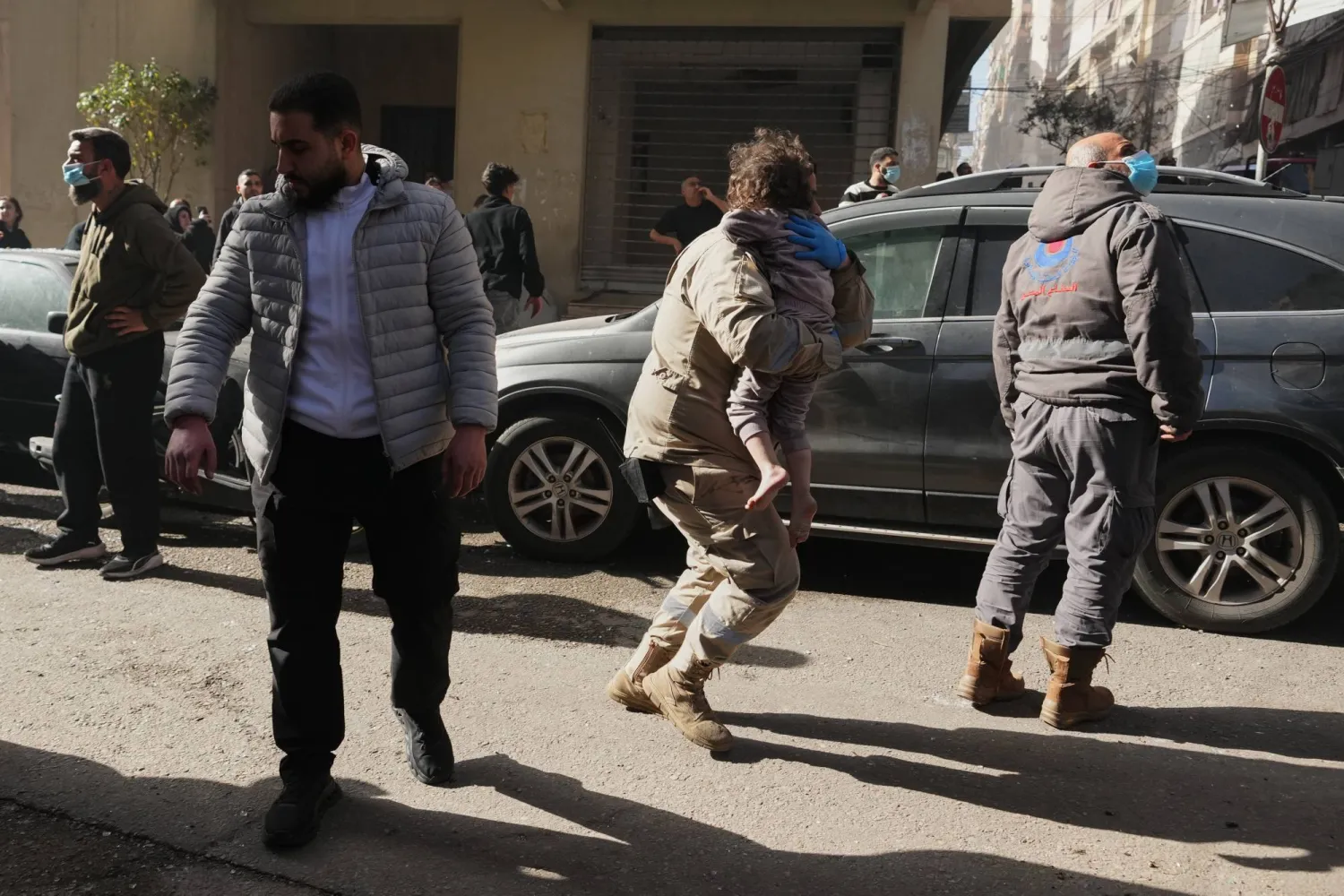

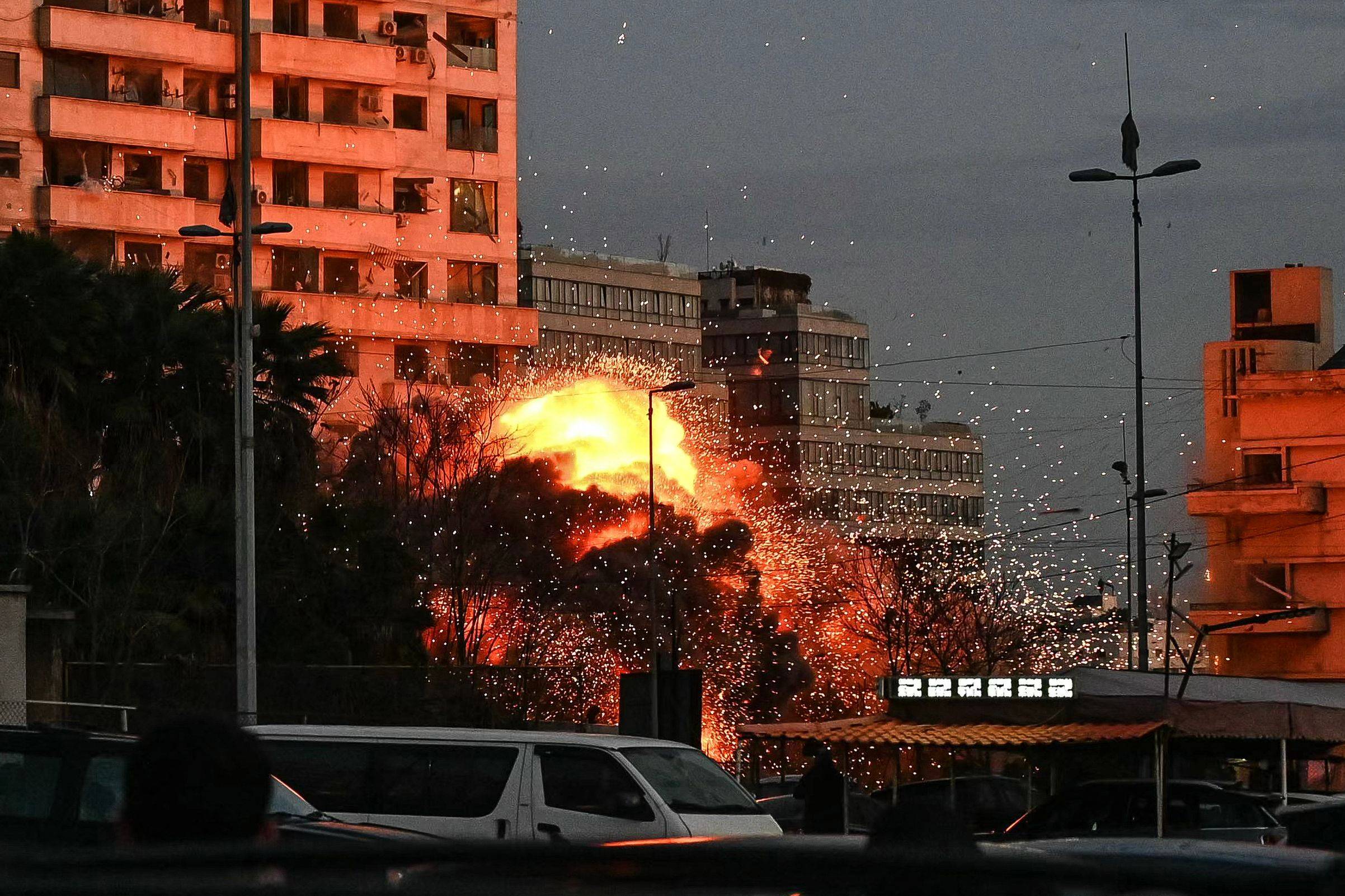
Israel has widened its campaign in Lebanon to include central Beirut, launching a series of pre-dawn airstrikes on Wednesday, followed hours later by a strike on a residential apartment in the Zoqaq al-Blat district.
The attacks mark a clear expansion of targets within the capital.
Lebanon’s Ministry of Public Health said strikes on the Basta and Zoqaq al-Blat neighborhoods killed 10 people and wounded 27 others. Four areas were hit, including Bashoura, Basta and Zoqaq al-Blat.
Several buildings that had been targeted in recent days were struck again, in what appears to be a deliberate escalation strategy aimed at repeatedly hitting the same sites until they are fully disabled.
The latest strikes signal the effective end of what had been known as the “Beirut exception,” with the capital directly drawn into the confrontation.
MP Mohammad Khawaja told Asharq Al-Awsat that Israel does not distinguish between areas within Lebanon.
“This strategy aims to create internal tensions, particularly in mixed areas, thereby increasing social pressure,” he stated.
He added that targeting civilians or civilian areas “has occurred in Beirut before, and may well be repeated.”
Khawaja said the attacks “directly target Lebanon’s social fabric by deepening divisions and creating tensions among the Lebanese,” adding that the most effective response is “to uphold national principles and strengthen internal unity.”
For his part, MP Ibrahim Mneimneh said Israel is seeking to exert all-out pressure on Hezbollah, including by leveraging Lebanon’s internal situation as a tool of social pressure.
“Targeting Beirut is not limited to pursuing specific individuals,” he said. “It is also part of an attempt to create internal fractures and push Lebanese against one another, increasing pressure on Hezbollah’s support base.”
Beirut, he added, is bearing a double burden as a capital hosting displaced people while also facing mounting security pressure and direct targeting.
Mneimneh warned that Beirut is no longer exempt from escalation and that this pattern is likely to continue in the coming period. He stressed the need to control any elements that could be used as a pretext for further strikes, in order to protect civilians and reduce exposure to risk.
The deputy added that the confrontation appears open-ended, with both Israel and Hezbollah holding to their positions, placing Lebanon and its people among the primary victims.
Retired Brig. Gen. Bassam Yassin said Israeli strikes on Beirut “are not governed by geographic considerations or red lines.”
He described a policy of “open pressure,” with Israel striking “wherever it chooses, without distinction.”