

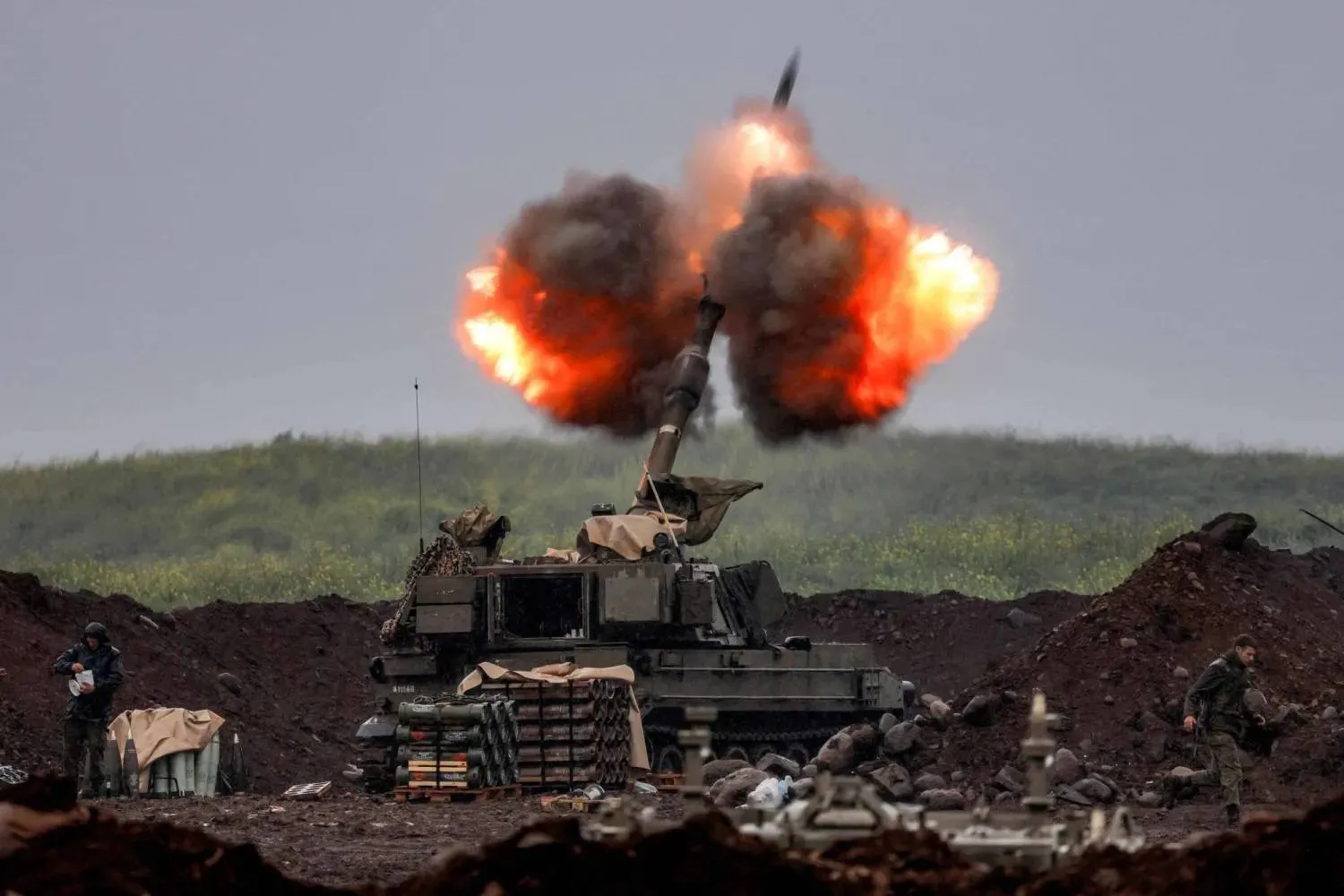

Israeli Army Advances into Lebanon on Four Axes

Israeli artillery fires toward Lebanese territory as forces attempt deeper incursions (AFP)
TT

Israeli Army Advances into Lebanon on Four Axes

Israeli artillery fires toward Lebanese territory as forces attempt deeper incursions (AFP)

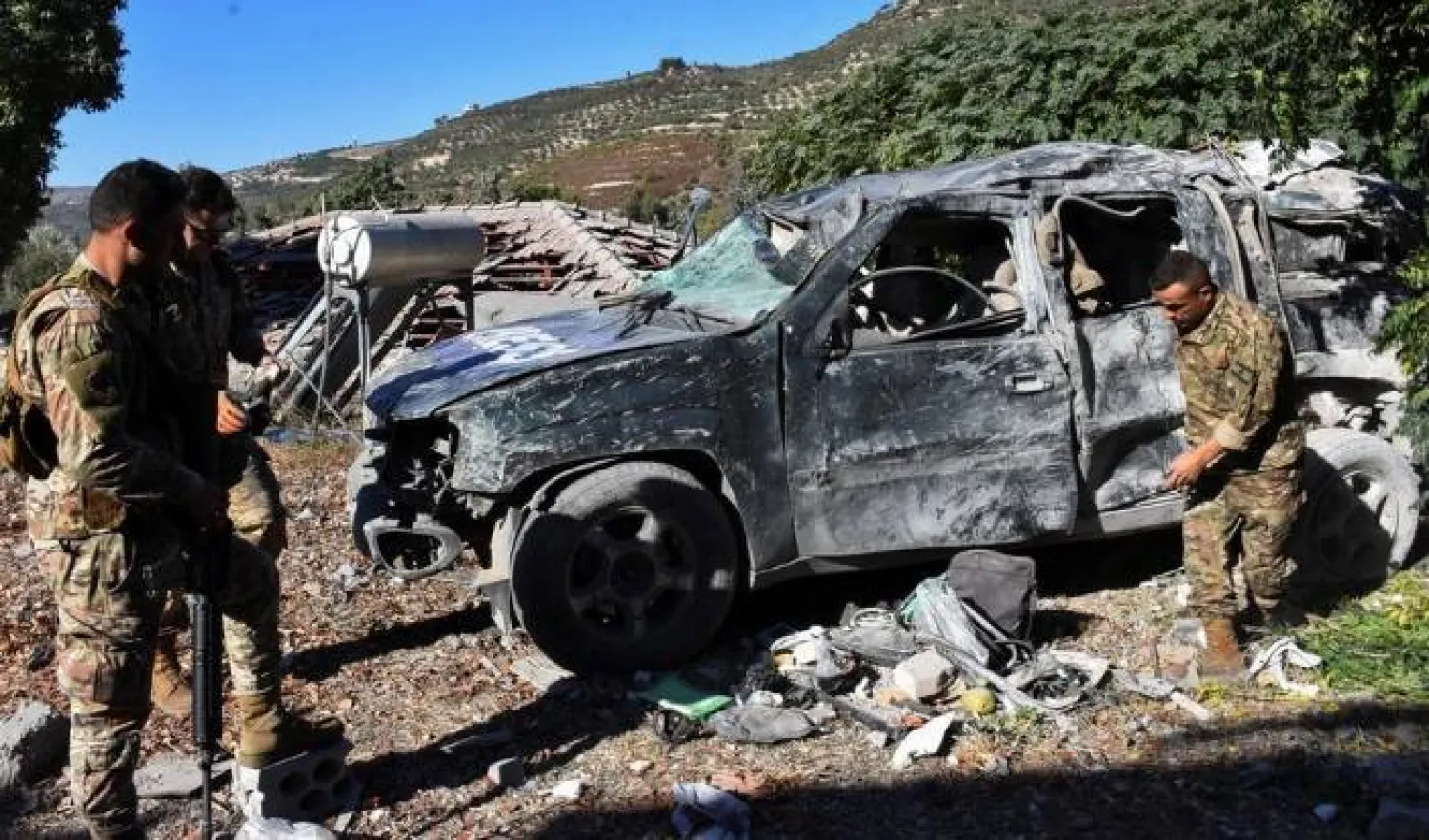
Israeli troops advanced from four directions on Friday into Lebanese territory, as attacks resumed along the Khiam and Taybeh axes, operations restarted on the Maroun al-Ras front, and a new axis was opened in the western sector toward the town of Naqoura.

The push appears aimed at dispersing defending forces confronting the incursions by widening the scope of the assault and diversifying its axes. The move follows a two-day lull in the offensive on Khiam and a lack of progress on the Taybeh front on Thursday, when tanks came under anti-tank missile fire.

Sources in southern Lebanon told Asharq Al-Awsat that heavy strikes on the towns of Yohmor, Arnoun and Zawtar, elevated areas on the western bank of the Litani River overlooking Taybeh, suggest Israeli forces are seeking to neutralize fire directed from those heights at tanks advancing in Taybeh.

They said the Israeli army is trying to reach the Litani bank and Wadi al-Hujair, in a bid to isolate the area from its southern extensions, making it easier to advance into the Hujair and Saluki valleys from the south and southwest, from the outskirts of Mays al-Jabal and Houla.

Hezbollah said in a series of statements that it fired artillery at Israeli troop concentrations in Taybeh and the Taybeh project area, and detonated explosive devices targeting troop gatherings and a bulldozer, indicating its fighters remain present in the town.

On the Khiam front, local sources in Marjayoun said Israeli forces renewed their attacks on the town, where Hezbollah fighters are still holding pockets in its center and north. They said Israeli ground units pushed toward central Khiam in an attempt to tighten control, alongside artillery shelling and airstrikes focused on its northern areas.

The sources said the attack on Khiam unfolded along three axes, from the south toward the north, from the west toward the edge of the plain, and from the east and northeast along the administrative border of Ibl al-Saqi, adding that the attempted advances were accompanied by heavy firepower.

In the central sector, Israeli forces resumed attacks toward Maroun al-Ras and Aita al-Shaab, alongside airstrikes targeting the city of Bint Jbeil and artillery shelling of Maroun al-Ras. This indicates the incursion aims to reach Bint Jbeil from the east and north, a front where Israeli forces had halted their advance last week.

Hezbollah said it detonated explosive devices in Aitaroun and targeted Israeli troop concentrations in Maroun al-Ras and its public garden.

For the first time since the war began, the Israeli army opened an incursion axis in Naqoura, days after expanding operations in the Labbouneh area east of the coastal border town.

The advance was accompanied by intense airstrikes on towns deeper inside Lebanon in the Tyre district, between 15 and 25 km away, in an apparent attempt to prevent supporting fire for defending forces and to stop attacks on advancing troop concentrations.

Since the morning, Israeli warplanes have carried out a series of airstrikes and artillery bombardments targeting at least 12 towns in the Tyre district, and around 25 towns across the Nabatieh, Marjayoun and Bint Jbeil districts.

The Israeli military said on Friday it had struck 2,000 targets in Lebanon since the war with Hezbollah began on March 2. In a statement, it said Israeli forces continue “limited, targeted ground operations” in southern Lebanon as part of what it described as advanced defensive efforts against Hezbollah.

It said that more than 2,000 targets had been hit so far, including 120 command centers, more than 110 weapons depots and more than 130 rocket launchers.

The military added that more than 570 Hezbollah fighters had been killed, including 220 from the Radwan Force, around 150 operators of surface-to-surface missiles, and more than 30 commanders of various ranks.

Trump’s Peace Board Hands Hamas Disarmament Proposal, Sources Say

Displaced Palestinians attend Eid al-Fitr prayers amid the rubble of destroyed buildings in Khan Younis in the southern Gaza Strip, 20 March 2026. (EPA)
TT

Trump’s Peace Board Hands Hamas Disarmament Proposal, Sources Say

Displaced Palestinians attend Eid al-Fitr prayers amid the rubble of destroyed buildings in Khan Younis in the southern Gaza Strip, 20 March 2026. (EPA)

Donald Trump's Board of Peace has presented Hamas with a written proposal on how it could lay down its weapons, two sources said, a step the Palestinian movement has thus far refused to take as the US president pushes on with his plan for Gaza's future.

The proposal, first reported by NPR, was submitted to Hamas during meetings in Cairo over the past week, one of the sources said.

The talks were attended by Nickolay Mladenov and Aryeh Lightstone, the two sources familiar with the matter said.

Mladenov is the Trump-appointed Board of Peace envoy to Gaza. Lightstone is a US aide to Trump's special envoy Steve Witkoff.

Trump's Gaza plan, to which ‌Israel and ‌Hamas agreed in October, sees Israeli troops withdrawing from Gaza and reconstruction starting ‌as ⁠Hamas lays down ⁠its weapons.

Mladenov on Thursday said that serious efforts were underway to bring relief to war-torn Gaza, with a framework agreed by the mediators that could advance reconstruction in the enclave, much of which lies in ruins.

"It is now on the table. It requires one clear choice: full decommissioning by Hamas and every armed group, with no exceptions and no carve-outs. In this season of hope, may those responsible make the right choice for the Palestinian people," Mladenov said on X in a ⁠post for the Muslim holiday Eid al-Fitr.

Representatives of Hamas were not immediately ‌available for comment on Saturday, the second day of ‌the holiday. Talks on disarmament had been placed on hold at the start of the US-Israeli war on ‌Iran which began on February 28.

AMNESTY OFFER MAY BE ON THE TABLE

US officials have ‌said that Iran-backed Hamas could be offered amnesty in any deal under which they agree to lay down any heavy weaponry and light arms including rifles.

Sources close to Hamas say the group would likely refuse to give up their rifles for fear of attacks by rival militias in Gaza, some of which have ‌backing from Israel. Hamas and its rivals have staged deadly attacks on one another since the October ceasefire.

One of the sources said much ⁠would depend on ⁠what is acceptable to Israel, which demands the group’s complete disarmament.

Some of Hamas' prominent officials have outright rejected any disarmament over the past few months.

Israel has shown no sign of withdrawing its troops who are in control of around half of Gaza's territory, with Hamas keeping a firm grip on the other half of the enclave and its two million population, most of which has been rendered homeless by two years of devastating war.

The source said that amnesty and targeted investments in Gaza were being offered as incentives for Hamas, but said that it was unclear whether the Board of Peace would have funds to pay for it.


Drone Attack Against Iraqi Intelligence Services in Baghdad

 Security personnel stand guard during a funeral procession for members of Iraq's PMF, who were killed in an attack in al-Qaim province near the Syria border the previous evening, in Baghdad on March 17, 2026. (AFP)
Security personnel stand guard during a funeral procession for members of Iraq's PMF, who were killed in an attack in al-Qaim province near the Syria border the previous evening, in Baghdad on March 17, 2026. (AFP)
TT

Drone Attack Against Iraqi Intelligence Services in Baghdad

 Security personnel stand guard during a funeral procession for members of Iraq's PMF, who were killed in an attack in al-Qaim province near the Syria border the previous evening, in Baghdad on March 17, 2026. (AFP)
Security personnel stand guard during a funeral procession for members of Iraq's PMF, who were killed in an attack in al-Qaim province near the Syria border the previous evening, in Baghdad on March 17, 2026. (AFP)

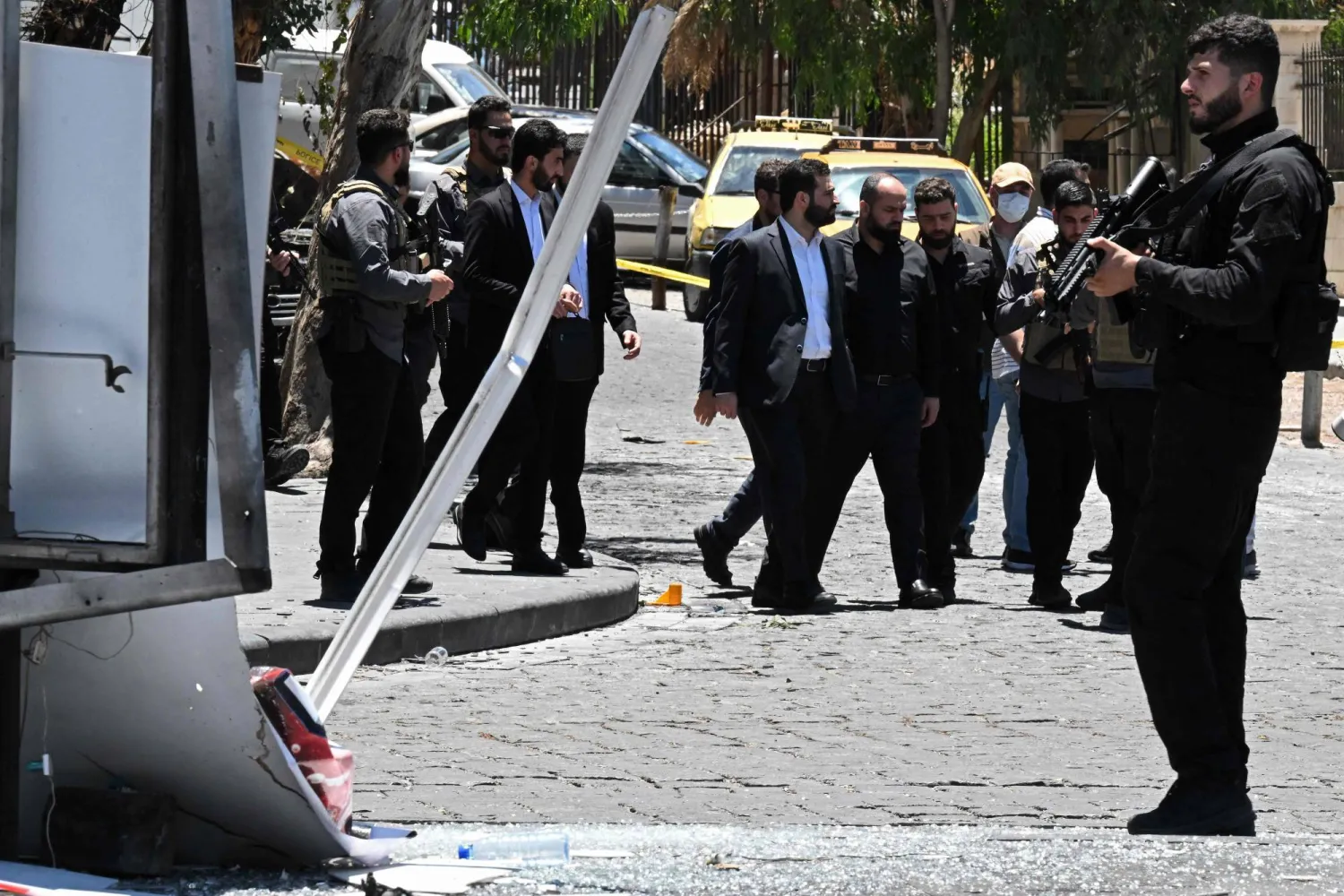
A drone attack targeted Iraqi intelligence services in an upscale residential neighborhood in central Baghdad on Saturday morning, a senior security official said.

"A drone targeted the headquarters of the Iraqi National Intelligence Service in the Mansour district" at around 10:00 am local time (0700 GMT), General Saad Maan, head of the Iraqi government's security media unit, said in a brief statement.

An Iraqi security official, speaking on condition of anonymity, said earlier the attack targeted a "telecommunications building" with the National Intelligence Service, which cooperates with US advisors in Iraq as part of an international anti-jihadist coalition.

Another drone, filming the operation, crashed into a private members sports club popular with Iraqi elite and foreign diplomats, according to the same source.

Iraq has been unwillingly drawn into the regional conflict triggered by the US-Israel attack on its neighbor Iran on February 28.

Strikes have targeted Iran-backed groups, which in turn have claimed near-daily attacks on US interests, mostly in Iraq but also across the wider region.

A fighter from the Popular Mobilization Forces (PMF) was killed late Friday in a strike on a military airfield in northern Iraq. The group blamed the attack on the US and Israel.

On Thursday, the Pentagon acknowledged for the first time that combat helicopters had carried out strikes against pro-Iran armed groups in Iraq during the latest conflict.

Overnight from Friday to Saturday, at least three drone attacks targeted a US diplomatic and logistics hub that houses US military personnel at Baghdad International Airport, according to two security officials.

One of the officials said that a fire broke out near the base following the third attack.


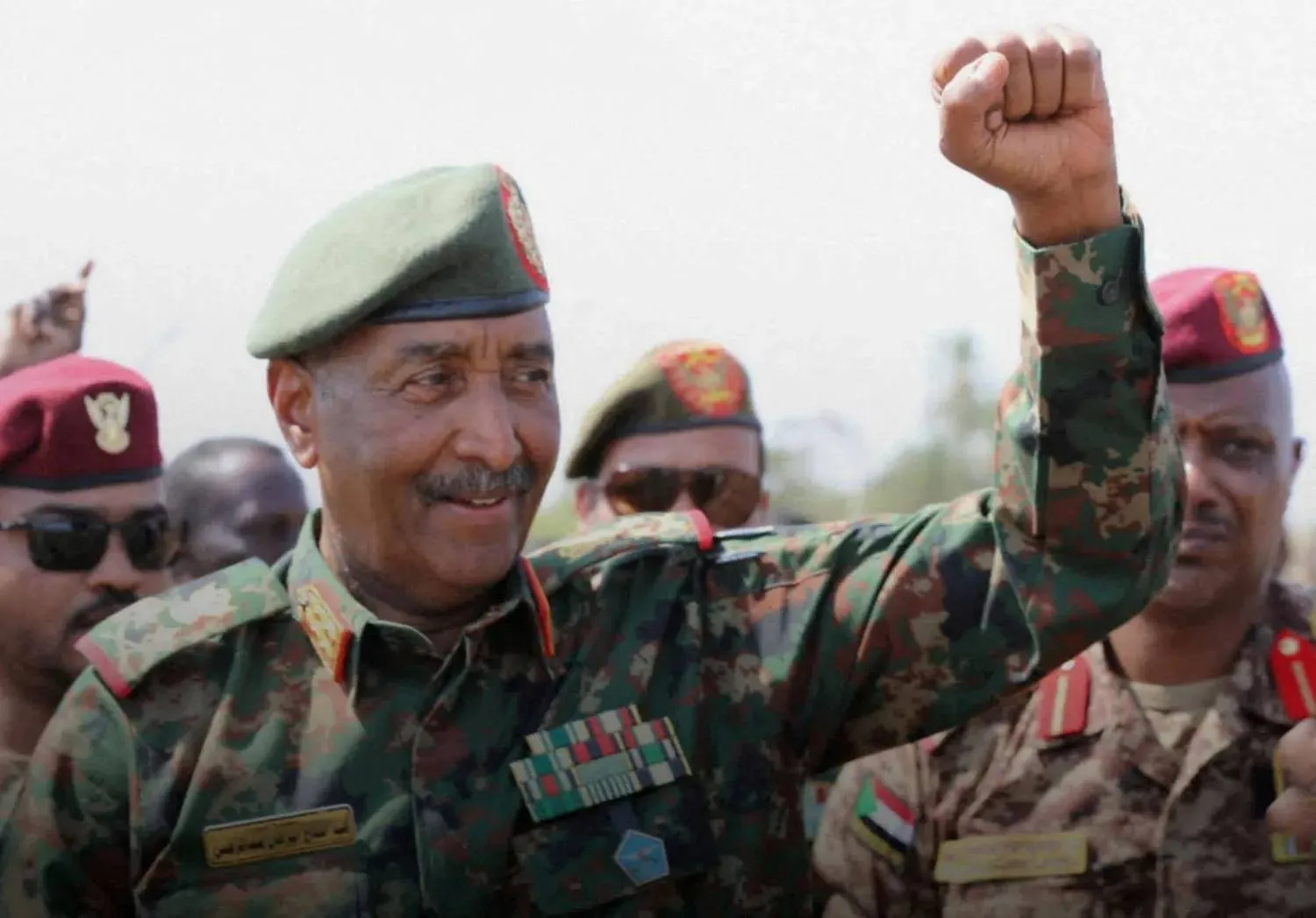
Burhan Rejects Ceasefire Before RSF Surrender as Drone Strike Hits Power Station in Northern Sudan

Sudanese army chief Abdel Fattah al-Burhan attends a group iftar with members of the community police in the final days of Ramadan. (Sudanese Armed Forces – Facebook).
TT

Burhan Rejects Ceasefire Before RSF Surrender as Drone Strike Hits Power Station in Northern Sudan

Sudanese army chief Abdel Fattah al-Burhan attends a group iftar with members of the community police in the final days of Ramadan. (Sudanese Armed Forces – Facebook).

A drone attack blamed on the paramilitary Rapid Support Forces (RSF) struck the town of Al-Dabba in northern Sudan, targeting a power station and the Faculty of Engineering at the University of Dongola, officials said Friday. The strike cut electricity to the town and left at least three people injured.

The attack came hours after Sudan’s army chief and head of the Sovereign Council Abdel Fattah al-Burhan reiterated his rejection of any ceasefire and vowed to continue fighting until the RSF surrenders.

In an Eid al-Fitr address on Thursday evening, al-Burhan said there would be “no truce” unless the RSF withdrew and regrouped under a comprehensive peace plan leading to a permanent settlement, with no armed actors remaining outside state control.

He added that Sudan’s leadership remained open to peace initiatives that meet security requirements and prevent a return to war.

Al-Burhan accused the RSF of committing war crimes, genocide and crimes against humanity, and said any future political process must dismantle the group’s role in Sudan.

He also pledged to “purge” the country of what he described as the “Dagalo militia,” referring to RSF leader Mohamed Hamdan Dagalo, also known as Hemedti, and to rebuild state institutions while advancing civilian governance and peaceful transfer of power.

Al-Burhan last year proposed a UN-backed initiative requiring RSF forces to withdraw to agreed locations in Darfur before negotiations begin. The proposal ran parallel to a plan by the United States, Saudi Arabia, the United Arab Emirates and Egypt calling for a three-month humanitarian truce and a transition to a civilian-led government.

Shortly after his speech, RSF drones struck Al-Dabba, a strategic town in Northern State along the Nile. Local official Mohamed Saber, head of the area’s security committee, said the attack took place early Friday, the first day of Eid al-Fitr, and targeted civilian infrastructure, including the engineering faculty.

He said three people were wounded but did not disclose their condition, accusing the RSF of deliberately targeting civilian sites “to spread fear among unarmed residents.”

According to the official, Sudanese army air defenses intercepted some of the drones, and military and allied forces remain on alert to repel further attacks.

The RSF did not immediately comment on the strike. It has previously said its drones target military positions or civilian sites used by the army and its allies.

Friday’s attack was not the first on Al-Dabba. In October 2025, RSF drones struck the town, killing five people and injuring others.

Al-Dabba, home to tens of thousands, is a key commercial and agricultural hub linking northern, western and eastern Sudan.