


War Deepens Lebanon’s Economic Collapse

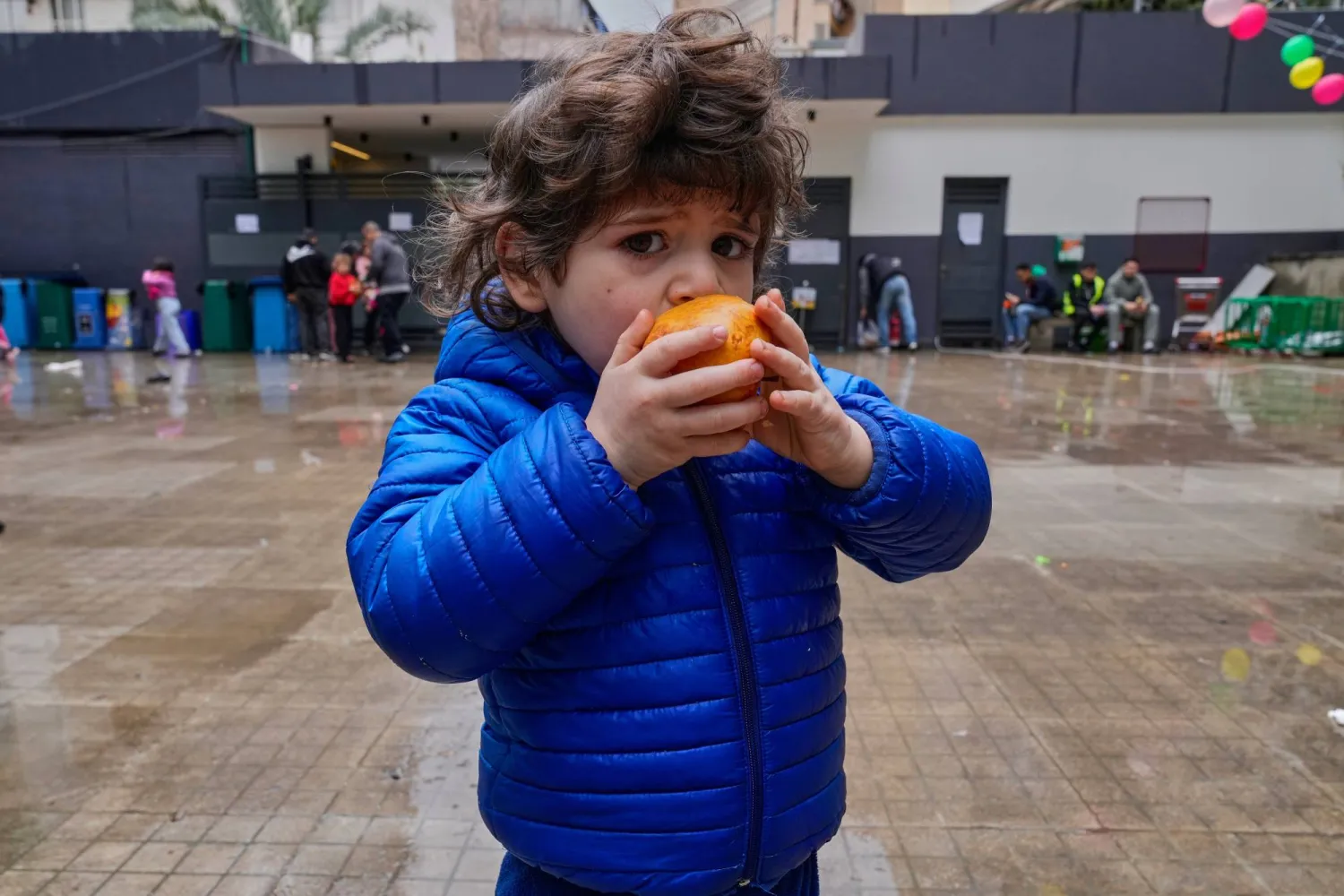
A displaced young girl who fled with her family Israeli airstrikes in southern Lebanon, eats an apple at a playground school that turned into a shelter in Beirut, Saturday, March 21, 2026. (AP Photo/Hussein Malla)
TT

War Deepens Lebanon’s Economic Collapse

A displaced young girl who fled with her family Israeli airstrikes in southern Lebanon, eats an apple at a playground school that turned into a shelter in Beirut, Saturday, March 21, 2026. (AP Photo/Hussein Malla)

Lebanon’s economy barely catches its breath before another crisis hits, tightening the squeeze and deepening its fragility.

The current war has wiped out efforts to revive it, as the country still reels from the 2019 financial collapse, the coronavirus pandemic, the Beirut port blast, and the 2023-2024 war.

After successive governments failed to resolve its structural crisis, the latest military escalation has further weakened the economy and stalled reform efforts, despite the current government's attempts to lay out recovery plans and legislation.

Since the first week of the war, some businesses have halved employees’ working hours to cut wages, while others have shut down entirely, aside from those destroyed in Beirut’s southern suburbs and the south.

The impact has been immediate, with many workers still earning less than half their pre-2019 salaries.

Losses of $100 million a day

Nicolas Chammas, secretary-general of the Lebanese Economic Organizations and head of the Beirut Traders Association, described the war’s impact as “huge,” compounded by years of strain since 2019.

“In 2025, economic growth reached 5%, but that followed a 7% contraction in 2024,” Chammas told Asharq Al-Awsat. “We had already started this year on a negative footing, and the current war has worsened conditions.”

According to the World Bank, the 2024 war cost $14 billion, or about $225 million a day.

“Using that as a benchmark, the current war is costing roughly $100 million a day,” he said, citing damage to infrastructure, reduced economic activity, and the cost of sheltering and assisting displaced people.

Chammas said tourism and travel were among the hardest-hit sectors, with travel down by more than 80%.

“Hotel occupancy is now below 10%, and declines are also severe in car rentals, furnished apartments, and resorts,” he said. “The industrial and commercial sectors are also affected, with the latter down around 50%.”

If the war continues, he warned, growth could flip into a contraction of up to 10%.

Structural contraction

Economist Jassem Ajaka said the war has shifted the downturn from “monetary” to “structural.”

“Under full dollarization, the shock no longer shows in a currency collapse, but in paralyzed economic activity and higher operating costs,” he told Asharq Al-Awsat.

He put total losses from the previous and current wars at about $15 billion, direct and indirect, based on World Bank estimates and updated research for 2026.

With Brent crude above $115, production and dollarized service costs have risen by more than 40%, eroding companies' profit margins, he said.

The agricultural sector has been the hardest hit geopolitically, with losses of about $2.5 billion due to destroyed land and disrupted supply chains. Tourism revenues have fallen 74% compared with the 2024 season, depriving the economy of a key source of foreign currency.

Ajaka said recent Banque du Liban data showed external assets holding at about $12.07 billion, supported by liquid foreign securities.

But he warned that a prolonged war and high oil prices would gradually drain those assets to cover fuel and essential imports, threatening this “artificial stability” in the second half of the year if reserves fall below safe levels.

Latest figures

Ajaka said 30% of small and medium-sized businesses had shut down permanently by the first quarter of 2026, unable to cover dollarized operating costs amid weak demand.

Those still operating have shifted to “emergency cash flow management,” with some paying half salaries or flat dollar wages worth no more than 40% of previous levels.

Unemployment has surged to between 46% and 48%, driven not only by business closures but also by the inability of productive sectors to absorb labor costs amid rising global energy and input prices.



Israeli Settlers Smash Cars and Set Fires in Attacks on Palestinians in the West Bank

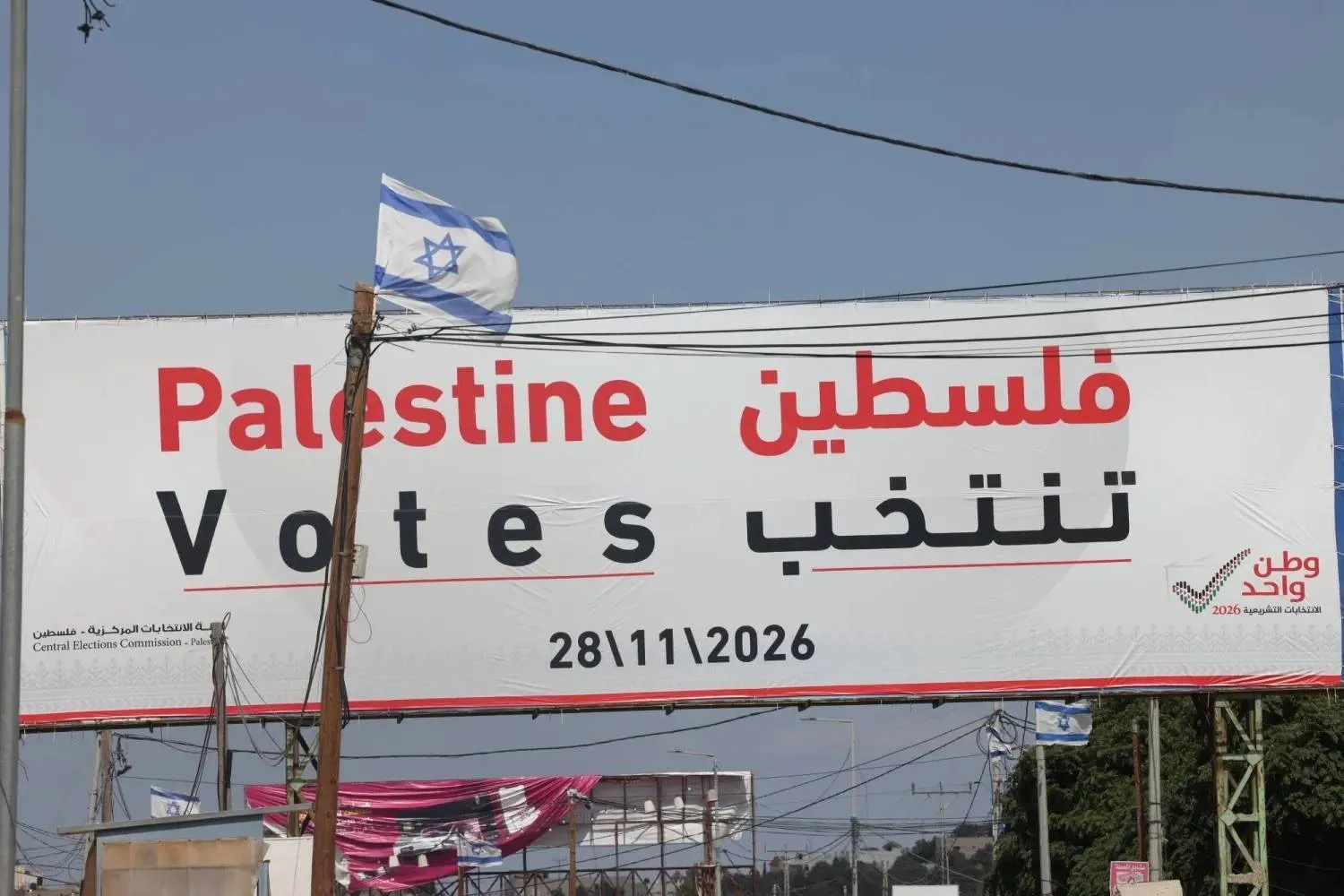
Israeli settlers gesture during a weekly settlers' tour in Hebron, in the Israeli-occupied West Bank, February 7, 2026. REUTERS/Mussa Qawasma
TT

Israeli Settlers Smash Cars and Set Fires in Attacks on Palestinians in the West Bank

Israeli settlers gesture during a weekly settlers' tour in Hebron, in the Israeli-occupied West Bank, February 7, 2026. REUTERS/Mussa Qawasma

Israeli settlers rampaged through multiple Palestinian villages overnight Saturday and into Sunday, smashing cars, setting fires and wounding several men in the latest flare-up of violence in the occupied West Bank.

The official Palestinian news agency WAFA reported attacks in at least six communities on Sunday. The Palestinian Red Crescent Society said at least three Palestinians in the village of Jalud suffered head wounds from beatings and were hospitalized after confronting settlers, who were also reported injured.

The violence came as Israel’s government presses ahead with new settlements in the occupied West Bank. Attacks by settlers have intensified alongside a broader surge in violence since the Iran war started, said The Associated Press.

Israel’s military said it responded to Israeli civilians carrying out “arson against structures and property, as well as engaging in disturbances in the area,” but did not report any arrests or indicate whether investigations were opened.

WAFA reported attacks in the villages of Silat al Dahr and Fandaqumiya, both near Jenin; in Jalud and Salfit, both south of Nablus; and in the agricultural regions Masafer Yatta and the Jordan Valley. Homes and cars were set ablaze, Palestinians were pepper-sprayed and at least five people were wounded in the overnight assaults, which took place during the Eid al-Fitr holiday marking the end of Ramadan, the agency said.

The United Nations Office for the Coordination of Humanitarian Affairs reported 25 Palestinians have been killed by Israeli settlers and soldiers this year as of March 15. The Palestinian Authority has also documented a series of arson attacks, including on mosques, across the territory.


Israeli Military Instructed to Accelerate Demolition of More Bridges, Lebanese Homes in 'Frontline Villages'

Israeli tanks are deployed along the northern Israeli border with Lebanon, 21 March 2026. EPA/ATEF SAFADI
TT

Israeli Military Instructed to Accelerate Demolition of More Bridges, Lebanese Homes in 'Frontline Villages'

Israeli tanks are deployed along the northern Israeli border with Lebanon, 21 March 2026. EPA/ATEF SAFADI

Israel's Defense Minister Israel Katz said on Sunday that he and the Prime Minister had instructed ‌the ⁠military to accelerate ⁠the demolition of Lebanese homes in frontline villages to ⁠end threats to ‌Israeli ‌communities.

"Prime Minister Benjamin Netanyahu and I instructed the IDF to immediately destroy all the bridges over the Litani River that are used for terrorist activity, in order to prevent Hezbollah terrorists and weapons from moving south," Katz said in a statement.

He said the military was also instructed to "accelerate the demolition of Lebanese houses in the contact villages in order to thwart threats to Israeli communities."

Earlier,  Israel said rocket fire from Lebanon killed one person as Hezbollah said it attacked soldiers in northern Israel, the first fatality there in fire from Lebanon since the latest war erupted.


Rocket Fire from Lebanon Kills One in North Israel, Hezbollah Claims Attacks

A damaged vehicle is seen in a residential area after impact amid escalation between Hezbollah and Israel, in northern Israel, March 21, 2026. REUTERS/Tyrone Siu
TT

Rocket Fire from Lebanon Kills One in North Israel, Hezbollah Claims Attacks

A damaged vehicle is seen in a residential area after impact amid escalation between Hezbollah and Israel, in northern Israel, March 21, 2026. REUTERS/Tyrone Siu

Israel said rocket fire from Lebanon killed one person on Sunday as Hezbollah said it attacked soldiers in northern Israel, the first fatality there in fire from Lebanon since the latest war erupted.

Israel's ZAKA 360 emergency response unit said a person was pronounced dead after a strike on their vehicle "carried out by a rocket fired from Lebanon".

Local firefighters said flames had engulfed two vehicles after a "direct hit" in the northern Israeli kibbutz community of Misgav Am.

"We arrived at the scene and saw two vehicles on fire. During the firefighters' extinguishing operations, we identified a man in the driver's seat," paramedics from Israel's Magen David Adom emergency medical service said, adding that he was later pronounced dead.

Hezbollah said in a statement that its fighters targeted "a gathering of Israeli enemy soldiers" in Misgav Am "with a rocket barrage".

It was among a series of attacks the group claimed on Sunday, mainly against Israeli troops in northern Israel and in southern Lebanon, where Israeli soldiers have been carrying out ground incursions.

The Israeli army had earlier announced it had detected "a launch from Lebanon toward a community along the northern border".

Lebanese authorities have said more than 1,000 people have been killed in the country and more than one million others displaced in three weeks of conflict.

On Sunday, Hezbollah said its fighters repeatedly targeted Israeli soldiers and vehicles in or near the border town of Taybeh, as well as in or near Khiam, a strategic town where the group has repeatedly said it has targeted Israeli forces in recent days.

On Saturday, Hezbollah said its fighters clashed with Israeli forces in Khiam and in the coastal town of Naqoura.

The group also claimed attacks on northern Israel on Saturday, including targeting an air defense system in Maalot-Tarshiha, where Israeli public broadcaster Kan 11 reported three people were lightly wounded.